Translate

Posts tonen met het label Eyes on Animals. Alle posts tonen

donderdag 10 september 2026

The Netherlands Food and Consumer Product Safety Authority ( NVWA) takes action against Irish transporters to the Netherlands leaving calves without milk for more than 30 hours


The Netherlands Food and Consumer Product Safety Authority (NVWA) is taking enforcement action against violations involving the long-distance transport of young calves from Ireland to the Netherlands. The authority states that unweaned calves may not be left without milk for more than nine hours during transport. However, on current journeys, they are left without milk for more than 30 hours. The NVWA is the first competent authority in Europe to take enforcement action against this practice.

Violations must stop

They are so hungry, begging for milk

Today, four Irish transporters will receive notice of the NVWA’s intention to impose an order subject to periodic penalty payments. The NVWA is requiring them to stop the violations. The transport companies will be given one year to adapt their practices. After that period, the NVWA may impose financial penalties if further violations occur.

The NVWA has substantiated that unweaned calves may not be left without milk for longer than nine hours during transport. Transporters can avoid this violation by transporting calves only once they are at least two months old, or by limiting journeys involving younger calves to a maximum of eight hours.

Break through 

The NVWA’s action follows an enforcement request submitted in 2024 by Eyes on Animals, Ethical Farming Ireland and Dier&Recht. After years of legal proceedings, the animal welfare organizations are relieved by this breakthrough. Eyes on Animals and Ethical Farming Ireland have been monitoring the transport of young Irish calves for more than ten years.

Caroline Rowley, director of Ethical Farming Ireland: “It’s great to see an authority finally taking a stand to ensure legislation is respected. It’s just a shame this action isn’t coming from Ireland. Numerous studies have shown how much these young and vulnerable animals suffer due to extended feed deprivation during these long journeys, so we very much welcome this move by the NVWA. The Dutch authorities care more about the welfare of Irish calves than our own government does.”

Lesley Moffat, ethologist and director of Eyes on Animals: “Legislation only protects animals if someone actually checks what happens along the way. We recorded the journey times and documented that calves barely three weeks old were left without milk for more than 30 hours. That fieldwork forms the basis for the enforcement request that has now finally prompted the NVWA to take action.”

Frederieke Schouten, director of Dier&Recht and veterinarian: “This step strikes at the very foundation of these transports. The calves must be given warm milk individually during the journey, but this is not practically feasible in a fully loaded truck. The calves are still far too young and need help drinking from a teat. We expect the Dutch veal sector, including VanDrie Group, to finally take both the welfare of these animals and the law seriously and to stop importing unweaned Irish calves.”


donderdag 13 augustus 2026

Animal welfare 'Eyes On Animals' 34 degrees in the shade at a Dutch slaughterhouse pigs in a truck in total panic gasping for fresh air


 Enlarge on YouTube


Panic in a sweltering truck.

We are standing under a large canopy at a Dutch pig slaughterhouse. Outside, it is about 34 degrees in the shade. Legally, transport is still permitted at this temperature.

A truck with pigs drives onto the premises.

In the truck, I see pigs in total panic. They are literally trying to get out of the truck, but have nowhere to go.

One of the pigs has injuries to her face. She may have fought her way to the side of the truck. Desperately, she sticks her nose through the opening of the truck, looking for fresh air. Many other pigs are doing the same.

A pig tries to escape the scorching heat in a livestock truck.

I try to stay calm, because no pig benefits from my anger or sadness. But the driver sees that I am worried.

' I can open the roof ,' he says, as he opens the window of his cab.
 
' Yes ,' I reply. ' Go ahead and open everything. '

Together with my colleague Lara, I retrieve a large fan and we place it in front of the compartments with the most heat stress. Almost immediately, we see the pigs calm down a little.

I am so glad that these fans were purchased on our advice.

I am installing large fans that were purchased on our advice – the overheated pigs are sticking their noses out to catch as much wind as possible.

In the meantime, I call the owner of the slaughterhouse and ask him to give the truck priority during unloading. He gets to work on it immediately. Not much later, the truck drives to the unloading platform.

Good cooperation makes a difference for the animals.
At moments like these, I realize how special and important our cooperation with the sector is. The owner of the slaughterhouse takes our request seriously immediately. The drivers are also friendly and helpful. I sincerely believe that most of them want to do the right thing.

I am also enormously grateful for the many steps we have taken together with the sector. About ten years ago, slaughterhouses had hardly any facilities to protect animals from heat stress. Trucks stood waiting in the full sun.

By now, virtually all slaughterhouses have canopies that provide shade, misting systems, and large fans. That makes a huge difference for countless animals on every hot day.

At the same time, I am overcome by a sense of despondency.

Long waiting times remain a recurring annual problem
. For years, we have been calling attention to the long waiting times at slaughterhouses within the sector, the NVWA, and also through the media. They cause a great deal of animal suffering and are, moreover, in violation of the law.

This year, the problem seems bigger than ever. Because transport above 35 degrees is prohibited, many animals are brought to the slaughterhouse early in the day, before this maximum temperature is reached. But not all these animals can be unloaded at the same time: there are insufficient unloading platforms and the holding pens are not large enough. The consequence: animals have to wait even longer in sweltering trucks.

More than 15 trucks, loaded with pigs, are waiting their turn.

The slaughterhouse has promised to contact us during the next heatwave. We want fewer trucks to arrive per hour so that waiting times decrease, for more portable fans to be purchased, and for an animal welfare officer to be permanently present on hot days to monitor the welfare of waiting pigs.

Perseverance pays off: stricter rules from 2027.
Together with the Dutch Animal Protection Society, we have fought for years for a reduction in the maximum transport temperature – we wrote many reports, published images, and alerted politicians. With success.

From 2027, animals may no longer be transported at temperatures above 30 degrees, whereas the limit is currently 35 degrees. EenVandaag devoted extensive coverage to this and made use of our inspection footage.


Of course, 30°C is still far too hot for pigs. But we are certain that this measure will prevent a great deal of suffering. It shows that perseverance pays off.

We need to have a long-term perspective for structural changes.

That is why we are continuing. With our heat stress inspections, the many conversations with the sector and the NVWA about the long waiting times, and by providing direct assistance at moments like these, when we can really make a difference for pigs in need.

Jack and Lara from Eyes on Animals check on the waiting pigs during the extreme heat.

It is thanks to your support that we can be with these animals, their suffering does not go unnoticed, and we can achieve lasting improvements.


On behalf of all colleagues at Eyes on Animals: thank you very much for your support.

Madelaine Looije
, Inspector, Eyes on Animals

With warm wishes to you all,

Facebook
Twitter
Website
E-mail
Donate to IBAN: NL73 TRIO 0212 3642 19
Copyright © 2026 Eyes on Animals, All rights reserved.
You receive this newsletter because you have subscribed or because you support us.

Eyes on Animals
P.O. Box 59504
Amsterdam , NH 1040 LA
Netherlands

Add us to your address book


Want to change how you receive these emails?
You can update your preferences or unsubscribe from this list .

zondag 12 juli 2026

Dutch organisation for the welfare of farm animals worldwide 'Eyes on Animals' Annual Report 2025: Our mission: we go where animals suffer the most


Dear friends,

Imagine this: a house is on fire.
And people are trapped inside.
 
You don't start by talking about new fire safety regulations.
No, you take immediate action.
 
That is how it feels to us when we walk into a slaughterhouse or livestock market.
 
In Turkey, we see bulls being hung alive by one leg; in Ghana, terrified pigs being clubbed to death; and in the Netherlands, chickens being roughly caught upside down.
 
That is why Eyes on Animals was founded.
 
Our mission: we go to the places where animals suffer the most. And we reduce that suffering now.
 
We roll up our sleeves.
We don't look away.
And we always remain calm and respectful.
 
We work with transporters, livestock markets, and slaughterhouses. Together, we seek practical solutions that are better for the animals. For example:
 

  • Properly stun animals before slaughter
  • Catch chickens upright, not upside down.
  • provide shade for animals on hot days
  • leave calves with their mother
  • stop using methods that cause unnecessary fear and pain, such as hanging animals alive or stunning them with CO2 gas

 
Of course, other work is important too: raising awareness, appearing in the media, and building support in society. But real change takes time.
 
In the meantime, the house is still on fire.
And the animals inside can't wait.

Annual Report 2025

Our annual report shows how we turn your support into concrete action. Action that protects animals from severe suffering today and contributes to a better future.

A few results from 2025:

In Ghana, The clubbing pigs to death at a large slaughterhouse has stopped. Employees now stun the animals first, using equipment and training from us. Three Turkish slaughterhouses now stun animals before slaughter. In Germany, more than 100 veterinarians learned how to catch chickens upright, without pain or panic. And milk from Kalverliefde is now available in Dutch supermarkets: the brand where calves stay with their mothers.


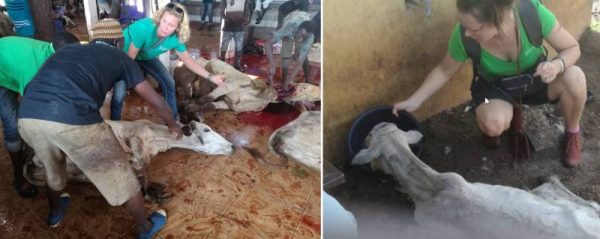
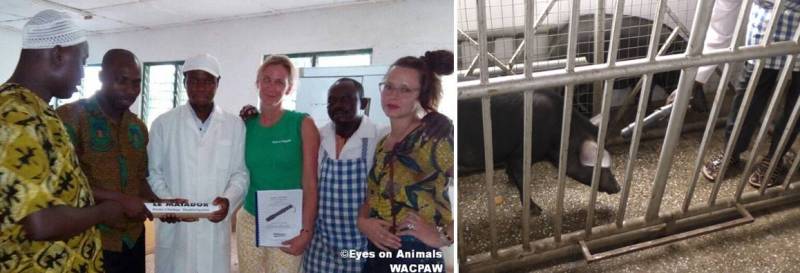
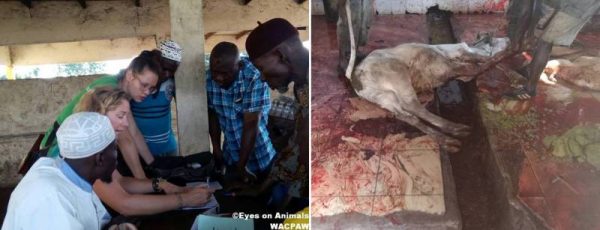
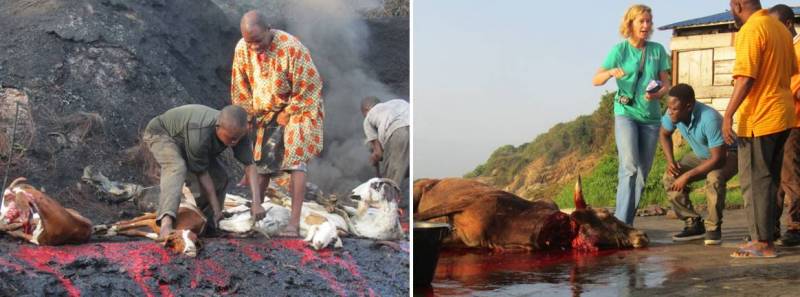
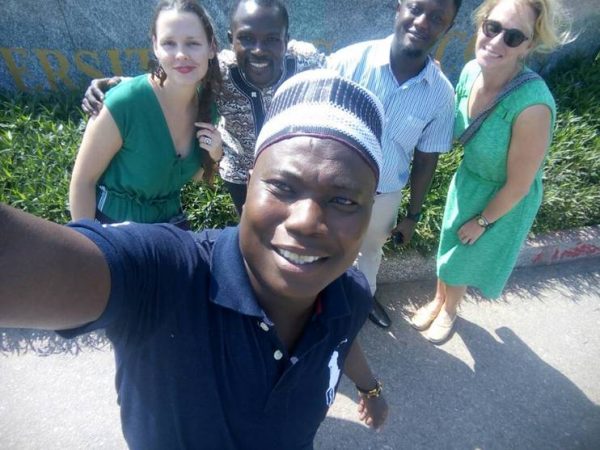
We have just returned from Ghana where we, together with the local inspection organization WACPAW and stunning expert Dr. Fuseini, gave animal welfare trainings to more than 150 slaughterers, transporters and agricultural students. We also visited several slaughterhouses and cattle markets - to give immediate advice and assistance to animals in distress.

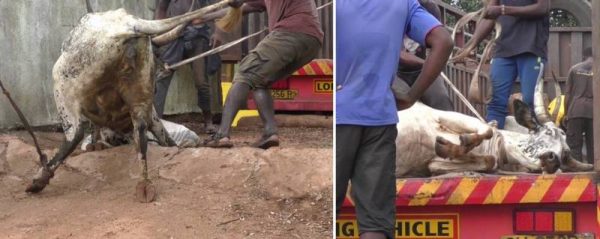
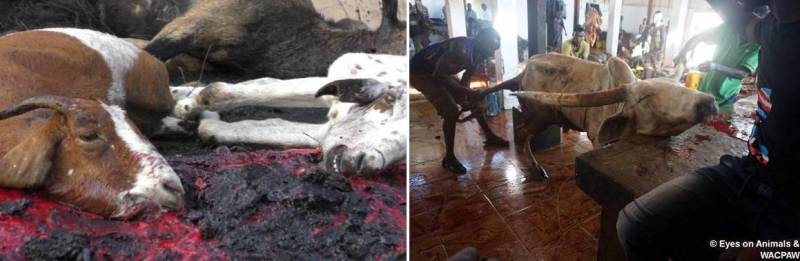
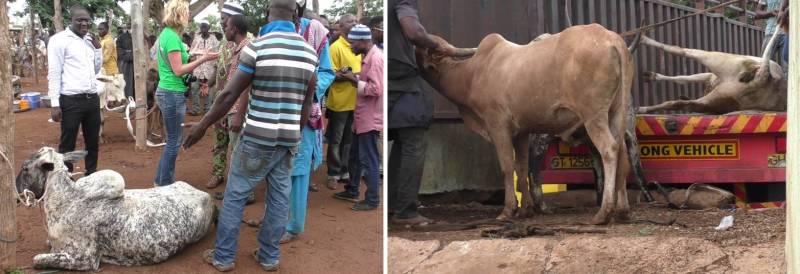
The animal suffering that we saw in Ghana is burned forever in our memories. The completely exhausted cattle being tugged on by their broken tails, the cattle that were transported with all four legs and neck tied up, the cattle that collapsed time and time again when unloaded... the animals that suffered long agonizing deaths after having their necks cut while still conscious and the tethered goats that were screaming while being thrown down from the trucks... The sheer panic and pain that these animals have to go through is almost unbearable.

But we also have hope. Our visit to Ghana shook people awake and delivered concrete results.

RESULTS

In Ghanaian slaughterhouses, the animal's throat is cut without stunning. We therefore purchased and had flown over four captive bolt guns and 8000 cartridges. We donated the captive bolt guns to the Agricultural University of Cape Coast and the University for Development Studies in Tamale. Both universities have a slaughterhouse on campus where many animals are killed every day and meat is sold. The captive bolt guns we gave them are now used to stun all animals before slaughter and to train slaughterers to stun their animals. A major achievement!

The slaughterhouse in Tamale, which was chaotic and horrible, is keen on the design we made on how to improve the slaughterhouse dramatically. As a result, live animals will no longer be dragged through the slaughterhouse and animals will be put out of their misery faster. Also, the drain-pit at the entrance of the slaughterhouse, which animals regularly fell into and injured their legs, will be covered.

At the slaughterhouse in Cape Coast animals only lost consciousness after a long struggle. The knife with which their throat was cut was not sharp enough and the throat wound made contact with the ground. This complicates the bleeding out and, in addition, causes incredible pain. The animals also had to wait for several minutes while they were already tied up in the slaughter area because the slaughterer still needed to sharpen his knives. We also saw that dressing procedures were carried out on animals that were still conscious. We have convinced the slaughterhouse to use sharper knives, to bring animals to the slaughter area only when the slaughterer is ready (to avoid the tethered animals waiting even longer), to monitor the consciousness of the animals before dressing procedures are carried out and to use a v-shaped table to hold sheep and goats - so that the throat wound does not come into contact with the ground.

We advised the cattle market in Tamale to build two proper loading ramps, so that animals can walk by themselves into the truck. Until now animals are beaten, tugged, dragged and lifted with a high degree of violence towards the trucks. We have also raised the issue that the animals have water permanently available and a separate and quiet space made for injured and weakened animals. WACPAW is currently working on these ideas.

We are relieved and proud that together, with the amazing people of WACPAW and Dr. Fuseini, we were able to put some concrete steps into practice right away. But we also realize that structural animal-welfare improvements are only possible if we persist and carry out regular checks. In the coming months, WACPAW will ensure that slaughterhouses, cattle markets and transporters actually do take action. Eyes on Animals will advise them from a distance and visit Ghana again in 2018.

We would like to thank you, our donors, very much. Thanks to your financial and emotional support, our team was able to go to Ghana to record the abuses, give advice and provide assistance.

To continue our project in Ghana, we will need some more financial help. For example, we would like to purchase more captive bolt guns, so that more Ghanaian slaughterhouses can also stun the animals prior to slaughtering them. We also want to check on more slaughterhouses and livestock markets. Will you help us?

Yes, I will help the animals in Ghana

IBAN: NL73TRIO0212364219 / BIC: TRIONL2U

Thank you very much, also on behalf of Dr. Fuseini and the team of WACPAW,

Lesley and Madelaine

Abdul-Rahman Safian, Executive Director WACPAW:
"WACPAW is grateful to EonA for the recent training of Ghanaian academics, slaughter operatives, veterinarians and other stakeholders in the meat industry. The training and provision of captive bolt guns has resulted in a number of abattoirs now stunning animals before killing them. What a change this makes!”


➜ Read the 2025 annual report (in English).
 
We hope you take the time to read it.

Thank you for helping.
Thank you for being there for the animals, together with us.

Kind regards,

Lesley Moffat
Director, Eyes on Animals


0

vrijdag 5 juni 2026

The bond between nomadic herders and their animals is based on respect in Mongolia but times are changing: industrial slaughter with lack of knowledge regarding animal welfare causes suffering


 Director Lesley Moffat Eyes on Animals:

Dear donors, friends, and supporters,

A few years ago, I spoke at an animal welfare conference in England. Afterwards, I struck up a conversation with Liz, an anthropologist at the University of Cambridge. She asked if we could help her improve animal welfare in Mongolia, where she was conducting research at the time.

I didn't have to think about that for long. Where there's a will, there's a way.


Changes in Mongolia
Traditionally, the bond between nomadic herders and their animals is based on respect and reciprocity. But unfortunately, this is changing.

More and more families are moving to the city, where children often stay after their studies. As a result, the demand for meat is growing from the cities. The consequence: animals are being transported over increasingly long distances.

The animals' lives are often good: outdoors, in complete freedom, they can roam around. There are no fences or cages.


The life of many animals in Mongolia: free to go wherever they want.

The slaughterhouses, however, pose the problem. Many are old, with worn-out buildings, facilities, and equipment. But even newer slaughterhouses fall short. Knowledge regarding animal welfare, animal behavior, and correct stunning methods is often lacking.

Our visit to slaughterhouses
This month, the time had come. Eyes on Animals first gave a presentation at a conference in Ulaanbaatar and then went into the field. With great thanks to Liz and her colleague Enkhbat: they have strong contacts with the authorities and the Mongolian meat sector and made all this possible. Their goal: clear animal welfare standards for Mongolia.

Eyes on Animals at the conference in Ulaanbaatar.
Visitors to the conference.

After the conference, we first visited a nomadic shepherd family and witnessed the traditional slaughter.

What Roy and I saw there stood in stark contrast to the industrial slaughter we encounter so often in Europe. No shouting, no rushing, no chaos, no transport stress, and no rough handling.

The animal was killed, admittedly, but it was done with calm, care, and respect.

Roy and I watch the nomadic slaughter. The handling of the sheep is calm and attentive.

We advised the use of captive bolt stunners so that unconsciousness is instantaneous. However, because handling is otherwise already so careful, our primary focus lies with industrial slaughterhouses — there is much more room for improvement there.

The industrial slaughterhouses
In Ulaanbaatar, we visited three commercial slaughterhouses where operations are conducted on a larger scale.

Sheep and horses are now transported over longer distances to commercial slaughterhouses in the larger cities.

One slaughterhouse dated back to 1946 and was built at the time with support from East Germany. It had barely been modernized. We saw broken fences, dangerous holes in the floor, and no protection against rain, cold, or heat. Moreover, there were no proper unloading facilities, meaning animals sometimes had to jump out of the truck from great heights or be pushed down.

Roy checks the electrical installation and I walk through the cattle drive corridor — both date from 1946.

Most concerning were the electrical devices used to 'stun' animals.

Although the managers were convinced that the electrical devices rendered the animals unconscious, something else actually happened: the animals were immobilized. All muscles cramp, preventing the animal from moving but leaving it fully conscious. This causes severe pain and stress. The animals are subsequently defenseless when the slaughter process begins.

Cheap 'sedators' that do not actually sedate the animals, but inflict a lot of pain.

In newer slaughterhouses, too, we saw similar problems: painful immobilization instead of stunning, and animals being hoisted up alive by their legs.

Poor stunning equipment: a broader problem
. What we saw in Mongolia is not an isolated incident.

Since our visit to the World Halal Summit in Istanbul, it has become even clearer to us: many slaughterhouses believe they are stunning animals, while the equipment used actually increases suffering. Meanwhile, these cheap devices are available online everywhere. This must stop.

Action plan
The challenge is significant. There are dozens of slaughterhouses in Mongolia, and our team is small. But every animal we can spare from a long period of suffering is one less animal to suffer. 

Moreover, there is reason for optimism. The companies are open to change. There is a budget and a willingness to learn.

During our visit, we explained how effective stunning works, which equipment is suitable, and where it is available. The first investment plans have already been drawn up.

In early May, a follow-up online meeting will take place with us, Liz, Enkhbat, representatives from various Mongolian slaughterhouses, and manufacturers of suitable equipment.

Later this year, Roy and I hope to return to provide practical on-site training.

A new beginning in Mongolia.
In the meantime, Liz, together with local partners, has established Mongolia's first official animal welfare organization to reduce the suffering of animals in slaughterhouses. Eyes on Animals will take a seat on the board.

That is an important and hopeful step forward.

Our visit also attracted the attention of the Mongolian media. An article about our work will soon appear in a trade journal widely read by nomadic herders and the meat industry.

Roy and I in conversation with a Mongolian journalist, with Liz as interpreter.

Concrete improvements with your support.
Without your support, and without Roy's dedication, we would not have been able to do this work. In just nine days, we laid the foundation for improvements that will reduce the suffering of a huge number of animals.

You enable us to be in the field — exactly where animals need us most — and to work on practical and concrete improvements.

Your support makes a difference for countless individuals.

Would you like to help us continue and expand this work in Mongolia? Then donate via the button below.

Support our work in Mongolia

Thank you very much! 

Kind regards,

Lesley Moffat
Director, Eyes on Animals
Facebook
Twitter
Website
E-mail