What is it like to care for injured donkeys in Gaza?
Join us for a special Zoom call with Dr Ahmed Thabet, who leads Safe Haven’s veterinary team in Gaza, to hear first-hand about the challenges his team faces and how your support helps the team treat donkeys in desperate need:
Tuesday 17 November at 13.00 GMT
You’ll hear directly from Dr Ahmed about his work, and anyone joining live can submit a question for him to answer.
That's why we have a vet clinic in Gaza City, which offers treatment and follow-up appointments until the animal is fully recovered. But we need your support to ensure the team is there and ready to continue treating donkeys in pain.
A gift from you could help support our vets providing life-saving diagnosis, treatment and follow-up care. It could also ensure we are equipped with medicine and other vital supplies, such as bandages, gauze, saline, iodine and gloves.
Without these essentials, wounds cannot be treated effectively and infection can set in, leading to further complications and potentially life-threatening illnesses.
Andy Foxcroft Chief Executive, Safe Haven for Donkeys
P.S. Next week we have exciting news to share - we will be inviting you to a Zoom call with Dr Ahmed Thabet to hear first hand about our work helping donkeys in Gaza. We can't wait for you to meet him.
It’s always lovely to see a donkey thriving after receiving treatment from one of our vets, and this week Dr Rakan has shared an update that I thought you’d enjoy.
You may remember the donkey we told you about in the summer, who was dehydrated and struggling to walk. Seeing the latest photograph, looking so much healthier, is a wonderful reminder of the difference your support makes.
Below, you can catch up with this familiar face and meet a youngster who needed help. Both stories show why the care you help provide in the West Bank – and beyond – matters so much.
Thank you for being part of it.
Update from the West Bank– 29th October 2026
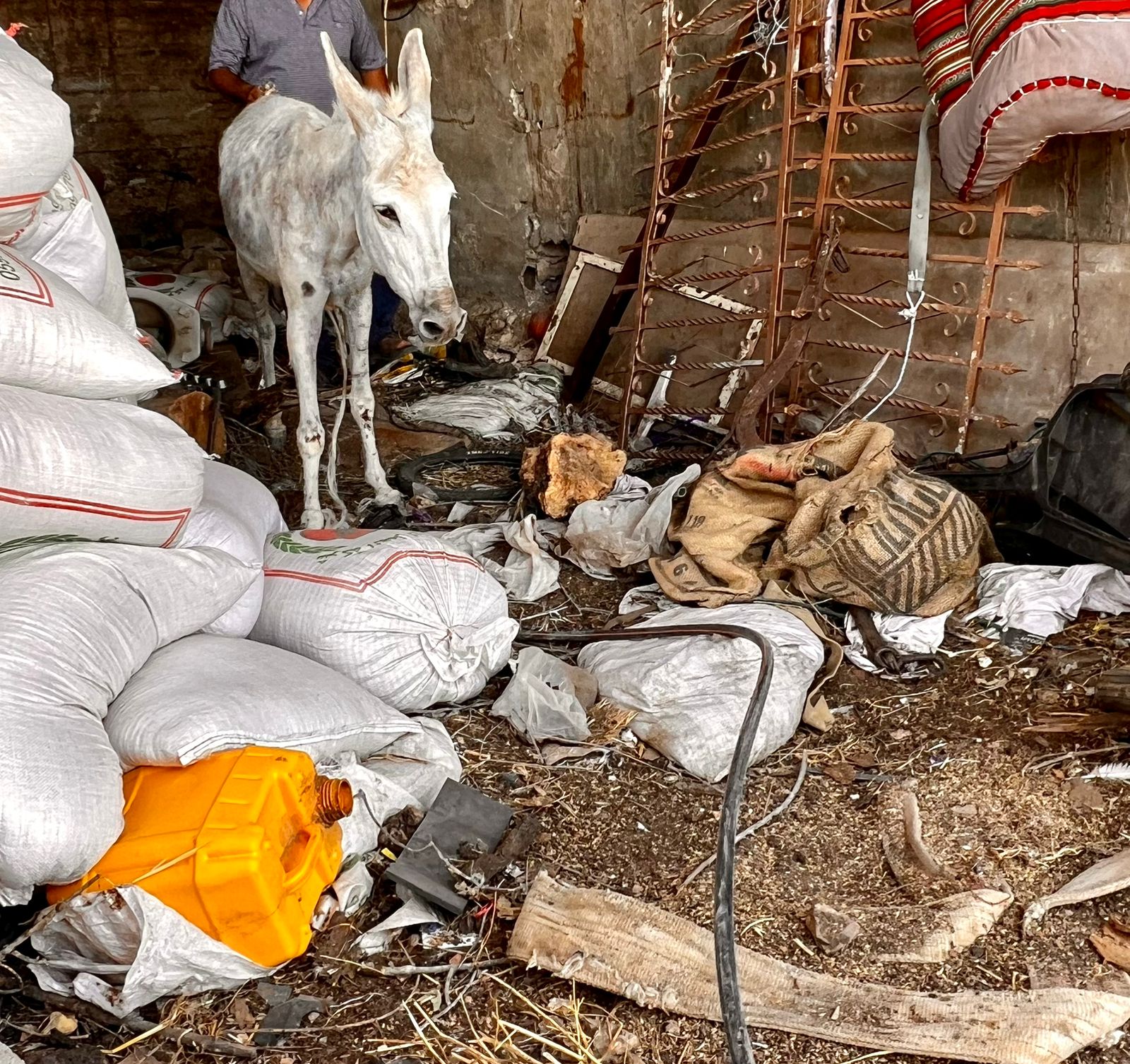
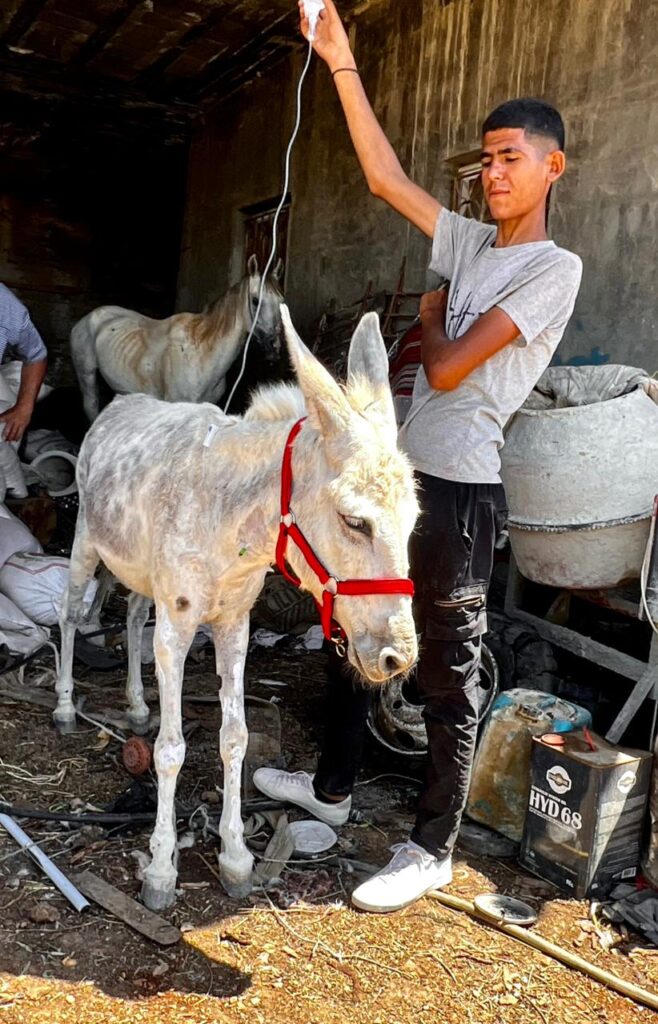
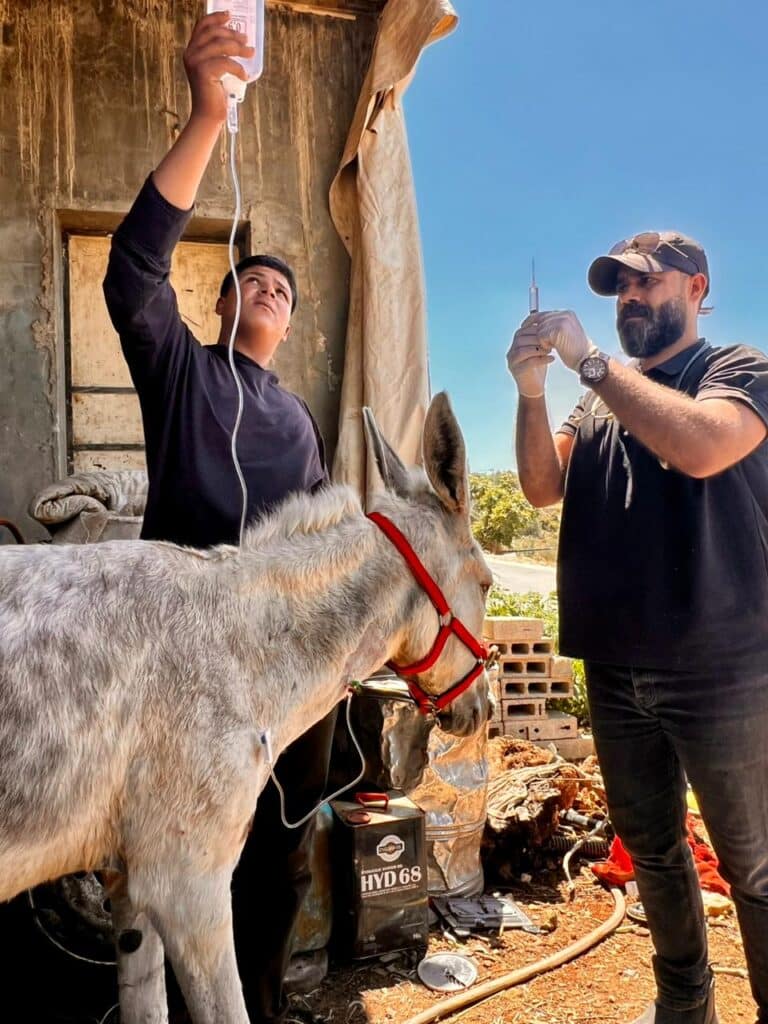
Back in July, we shared the story of this donkey living alongside a horse in a cramped shelter with a rocky, uneven floor. The donkey was dehydrated, with stiff, painful muscles that made walking difficult.
Dr Rakan and the team gave intravenous fluids, pain relief and vitamins. They also spoke with the owner about improving the shelter to help the donkey recover.
Back in July, Dr Rakan helped this donkey – in desperate need of veterinary care.
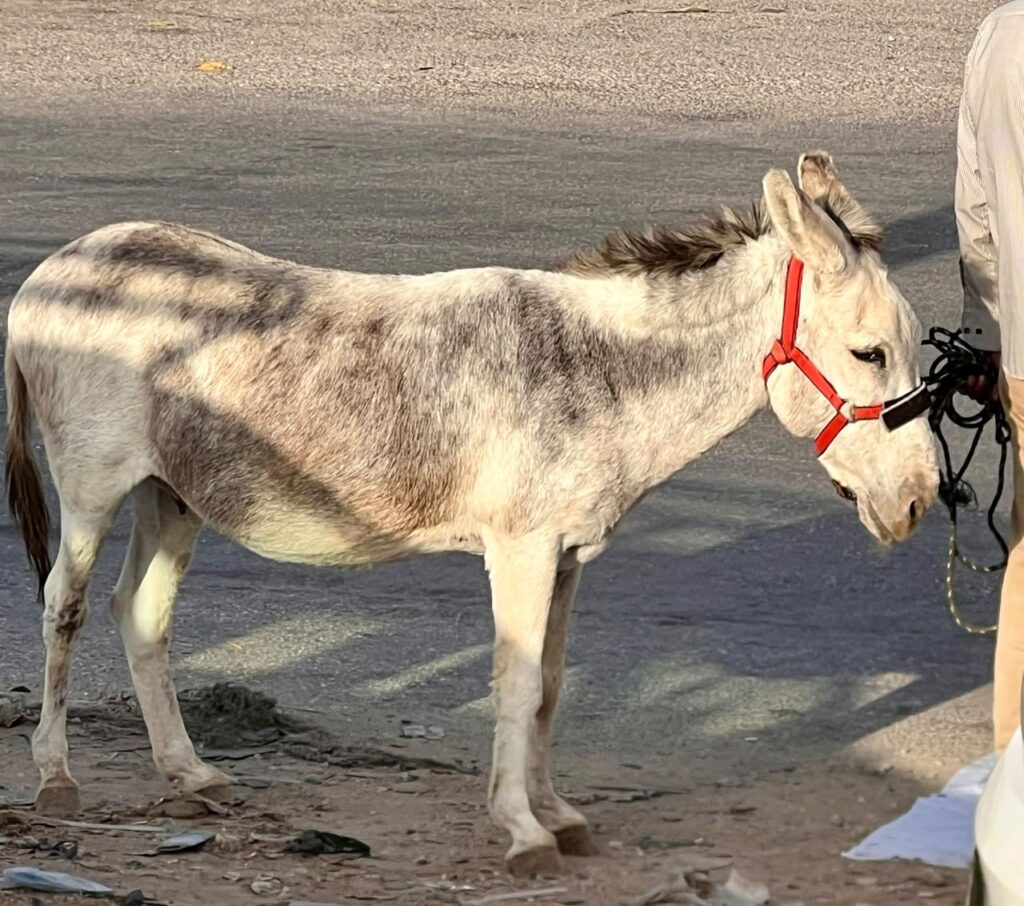
At a recent visit, they were delighted to see such a change. The donkey is now in good body condition, with healthy muscles and a healthy-looking coat.
This latest photograph is a lovely way to share that progress with you. Thank you for helping our team provide treatment when it was needed.
Thanks to your support the donkey is now fully recovered and healthy.
Just this week, a two-year-old horse developed colic during the night, and his owner faced a worrying problem. Dangerous roads and roadblocks around his village made it difficult to get a vet to the farm.
Colic causes abdominal pain and can become life-threatening. Anxious to help, the owner sought veterinary advice by telephone. He also kept sheep, so had some veterinary medicines available.
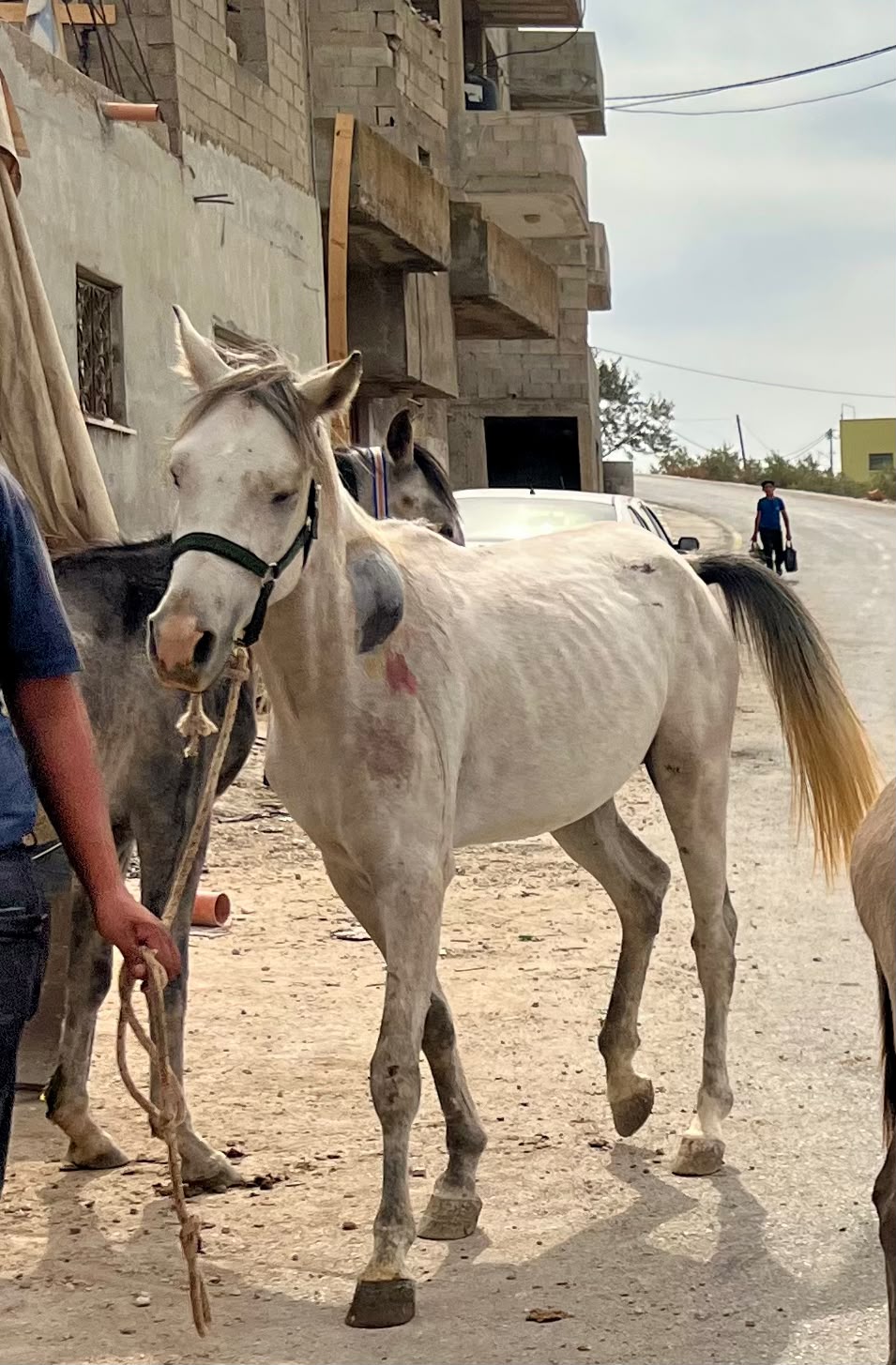
Following that advice, he gave a painkiller. Thankfully, the youngster recovered from the colic. But a large swelling developed on his neck where the injection had been given.
The swelling on the horse’s neck was painful and needed draining.
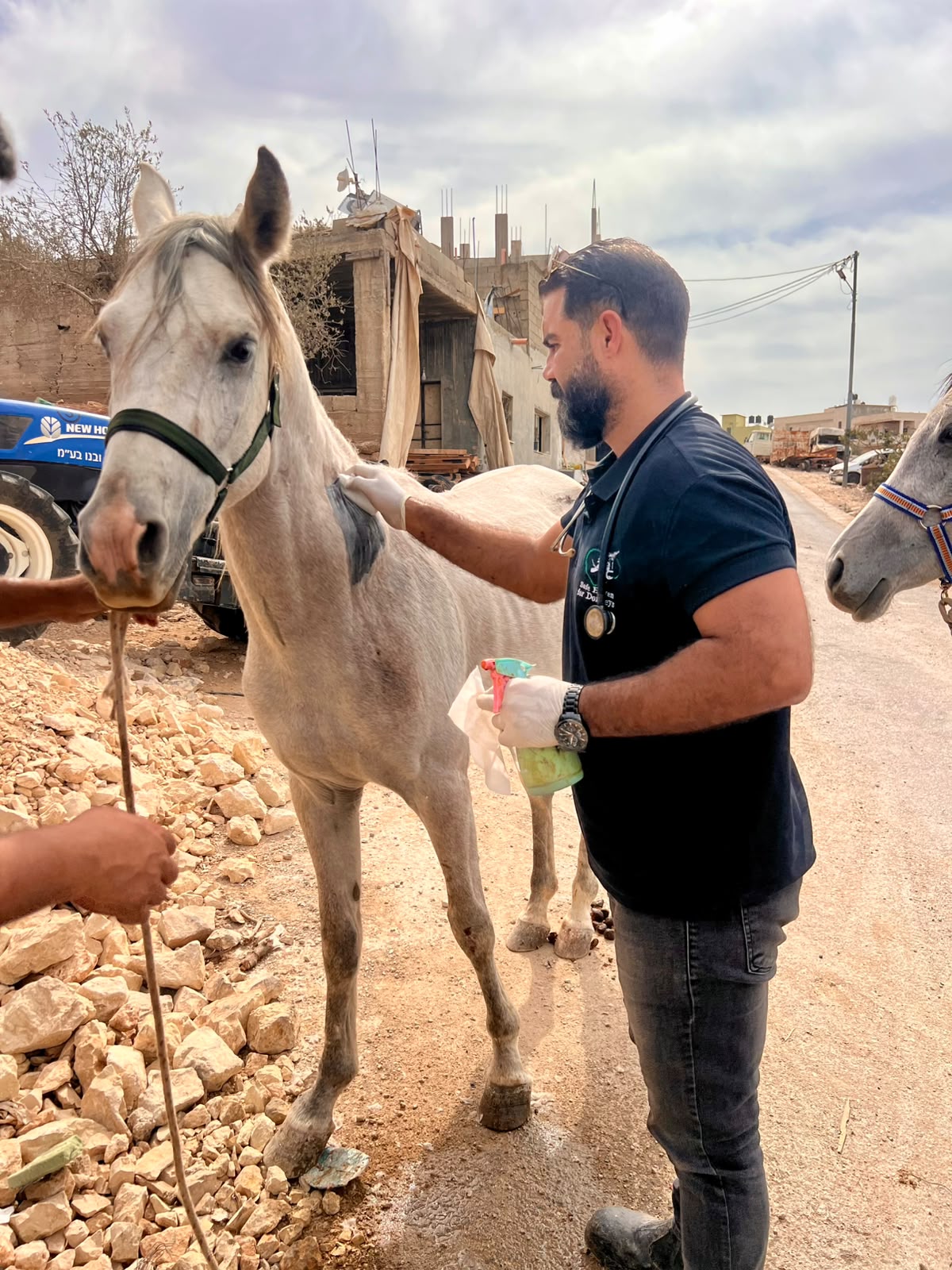
Thankfully, Dr Rakan was able to examine him during our mobile clinic in Mazare’ Al Nobani, near Ramallah.
He carefully clipped the hair around the swelling, cleaned and disinfected the area, then drained the fluid that had collected beneath the skin. Dr Rakan was also able to provide pain relief, antibiotics and ointment so his owner could continue treatment at home.
Dr Rakan was able to provide treatment, including pain relief and antibiotics.
He still needs time to recover, and the team will stay in touch with his owner to check that his neck is healing well.
Your support helps our mobile team reach animals like him, and owners who can struggle to get veterinary help when they need it. Thank you.
Thank you ♥️♥️
With your help, our teams in across the West Bank can treat painful injuries, support recovery and help owners keep their animals healthy.
Your kindness also provides care for rescued donkeys at our sanctuaries and helps our other veterinary teams reach working animals across Gaza and Egypt.
Thank you for helping donkeys and giving them the chance of living healthier, more comfortable lives.
Thanks to your support, this is just one of the donkeys free from pain and back to full health. Thank you for caring.
This week, I wanted to share an update from Dr Ahmed Thabet and our veterinary team in Gaza.
For many injured donkeys, the first visit is only the beginning. As Dr Ahmed’s update shows, checking on an animal and treating them again can make a real difference to their recovery.
Next month, we’ll share more about the team’s work and the challenges they face. For now, thank you for helping them care for Gaza’s working animals.
With warm wishes,
Wendy Safe Haven UK Office
An update from Dr Ahmed in Gaza
On one recent day, 12 working animals came to us for treatment. Most had visited before. Over the past two months, around a third of our cases had remained open because owners had been unable to bring their animals back to complete their care.
We began calling them to check in, explain that treatment is free, and asking them to return. Seeing so many familiar faces that day was encouraging.
The team examines a returning patient. By keeping in touch with owners, they can check how injuries are healing and provide further treatment.
One was a five-year-old donkey who had slipped while carrying a heavy load, leaving painful grazes on her knees. We first treated her in August, but three weeks later her wounds were healing more slowly than we had hoped.
We treated her again and gave her owner wound spray to use at home. We’ve asked him to bring her back so we can keep an eye on her recovery.
Dr Ahmed checks the donkey’s knees when she returns to the team.
Another returning patient had a painful abscess. Two days earlier, we had carefully removed dead skin around the wound. When she came back, we could already see a remarkable improvement.
It was heartening to see, though she still needs us to check that the wound continues to heal.
The team checks how the donkey’s wound is healing after her earlier treatment.
Another donkey returned with wounds caused by fragments from an explosion near her owner’s home six months ago (pictured above and at the top of this email). Although the injuries were relatively shallow, rubbing from her harness has made them difficult to heal.
We treated her wounds again and added soft padding to her metal noseband to protect her from further injury. Her wounds are beginning to improve, and we’ll keep checking her progress when she returns.
Dr Ahmed adds padding to her metal noseband to help protect her from another painful injury.
Seeing these donkeys come back, and seeing their wounds begin to heal, means a great deal to our team. Some still have a long way to go.
Thank you for making it possible for us to keep treating them and to be here when they need us again. Dr Ahmed Thabet.
Thank You♥️♥️
We hope Dr Ahmed’s update has shown what it takes to care for an injured donkey in Gaza - from the first veterinary treatment to the return visits that help wounds completely heal.
Your support helps provide free veterinary care when donkeys, mules and horses need it, across Gaza, the West Bank and Egypt, while caring for rescued donkeys at our sanctuaries.
Our Gaza vet team are working tirelessly to help working animals in need - just like this donkey. Thank you for supporting our work. It really does make a world of difference to the donkeys, mules and horses you're helping.
A few weeks ago, I shared the news that Dr Saif had sadly left Gaza.
Today, I’m very pleased to introduce you to Dr Ahmed Thabet and the vet team who are continuing our work to help Gaza’s donkeys.
Dr Ahmed is joined by two other vets and a veterinary assistant. Together, they strengthen our veterinary capacity in Gaza, allowing us to build on the vital first aid provided by Dr Saif and his team and, where equipment and supplies are available, provide a wider range of more complex treatments.
I know many of you care deeply about the animals caught up in this terrible conflict, so I wanted Dr Ahmed to tell you, in his own words, a little about his team, the challenges they face and the animals they are already helping.
Thank you, as always, for caring.
Wendy Safe Haven UK Office
An update from Dr Ahmed in Gaza
My name is Dr Ahmed Thabet and I work out of a vet clinic in Gaza City. Our team includes three vets - myself, Dr Muath Al-Sir and Dr Mohammed Basal - alongside our veterinary assistant, Ahmed Althawabteh.
We are Safe Haven’s new team providing vet care for working animals whose owners cannot afford or access treatment in Gaza.
Before the war, there were approximately 5,000 donkeys, horses and other equids in Gaza, around two-thirds of them donkeys. Today, we believe around half of these animals have been lost.
Dr Ahmed - pictured above - heads up our new team of three vets and a vet assistant, strengthening our work in Gaza.
Veterinary medicines and essential supplies are also extremely difficult to obtain, so every day we have to make the best decisions we can with the limited resources available to us.
Recently, we treated a jenny (a female donkey) who had been attacked by a dog. With no rabies vaccinations available, we cleaned her wounds as thoroughly as possible, stitched them and are now monitoring her closely.
This female donkey had been attacked by a dog. With veterinary supplies extremely limited, the team is doing everything it can with the resources available.
We also treated a severely malnourished donkey with multiple wounds and painful sharp points on his teeth that were making it difficult for him to eat.
Our new team has the veterinary expertise to carry out more complex procedures, including dental treatment. But much of the specialist equipment we would normally use has been lost or damaged during the war and cannot currently be replaced.
This male donkey was suffering from multiple wounds and severe malnutrition. Painful sharp points on his teeth were also making it difficult for him to eat.
Using the tools available, we were able to carefully file his teeth to provide some relief, as well as clean and treat his wounds. As soon as access allows, we hope to replace essential equipment such as our mechanical dental rasp, enabling us to provide a wider range of treatments for donkeys like him.
As Safe Haven’s new team, we will continue doing everything we can to relieve suffering and provide these remarkable animals.
Thank you for caring for Gaza’s working animals and I’ll look forward to sending you updates in the coming months.
Just two days after our team provided treatment, this severe back wound was already beginning to heal. The team will continue to monitor the donkey’s recovery.
Thank You
Working animals have become even more important to people in Gaza since the war, with donkeys and horses increasingly relied upon for transport and daily livelihoods. This places enormous strain on animals that are already living in extremely difficult conditions.
Thank you for supporting us to provide veterinary care to donkeys and other working animals in desperate need. Your support means we can continue to treat injuries, relieve suffering and give these animals the care they deserve.
Above - Our new Vet Assistant Ahmed stitches the dog bite wound. This is just one example of the wider range of veterinary treatment our new team - headed up by lead vet Dr Ahmed - can now provide in Gaza, thanks to your support.