It's a sad world that we have to de-horn wildlife so that they can survive
South Africa’s anti-poaching and anti-trafficking efforts saw a 16% drop in rhino poaching in 2025 compared to 2024. Minister of Forestry, Fisheries and the Environment, Mr. Willie Aucamp, attributes the decline to “dedication and tactical, swift coordination.” Conservationists, however, caution that the fight against rhino poaching is far from over.
“From January to December 2025, 352 rhinos were poached in South Africa, with 266 being killed on state properties and 86 on privately owned parks, reserves, or farms. This was a decrease of 68 in comparison to 420 rhinos poached in 2024,” said Minister Aucamp.
Mpumalanga was the hardest-hit province, losing 178 rhinos, mostly in Kruger National Park, which reported 175 poached rhinos—up from 88 in 2024. In contrast, Hluhluwe-iMfolozi Park in KwaZulu-Natal saw poaching drop from 198 in 2024 to 63 in 2025, thanks to collaboration through the Integrated Wildlife Zones (IWZ) Programme and support from WWF,Save the Rhino International,Wildlife ACT,andPeace Parks Foundation.
This how it should be, rhinos with horns. Money the root of all evil
Ezemvelo notes that 2025’s reduction was driven by multiple measures: strategic dehorning, advanced detection technologies, early-warning systems, and the Integrity Implementation Plan, including polygraphing of all park law-enforcement personnel.
The National Integrated Strategy to Combat Wildlife Trafficking (NISCWT)is strengthening prosecutions, centralizing cases to give courts a full view of criminal syndicates, including organized crime and money laundering. A key example is ZM Muiambo, aka Thomas Chauke, who was found guilty on 19 charges, including illegal rhino hunting and theft of rhino horns. In April 2025, he was sentenced to 20 years in prison.
Minister Aucamp conveyed his gratitude to private rhino owners and the private sector for their anti-poaching efforts. He emphasized that coordinated action by the government, NGOs, and the private sector is central to sustaining progress.
“South Africa continues to strengthen its international collaboration to curb rhino poaching and wildlife trafficking. These efforts led to the country receiving the Asia Environmental Enforcement Recognition of Excellence Award late last year, which celebrates excellence in enforcement by government officials, institutions, and teams combatting transboundary environmental crimes,” said Minister Aucamp.
“Working together with the South African anti-poaching and anti-trafficking organizations, we remain committed to a balanced, intelligence-driven, and partnership-based approach to rhino protection, recognizing that sustained success requires constant adaptation, integrity, and cooperation across all sectors,” said Minister Aucamp.
“While this is much-needed progress, rhinos remain under serious threat. Urgent and coordinated action across all sectors is needed to stop poaching and ensure these animals have a future in the wild.” — Peace 4 Animals&World Animal News
Members of the public can report suspicious wildlife activities to the environmental crime hotline at 0800 205 005 or SAPS 10111.
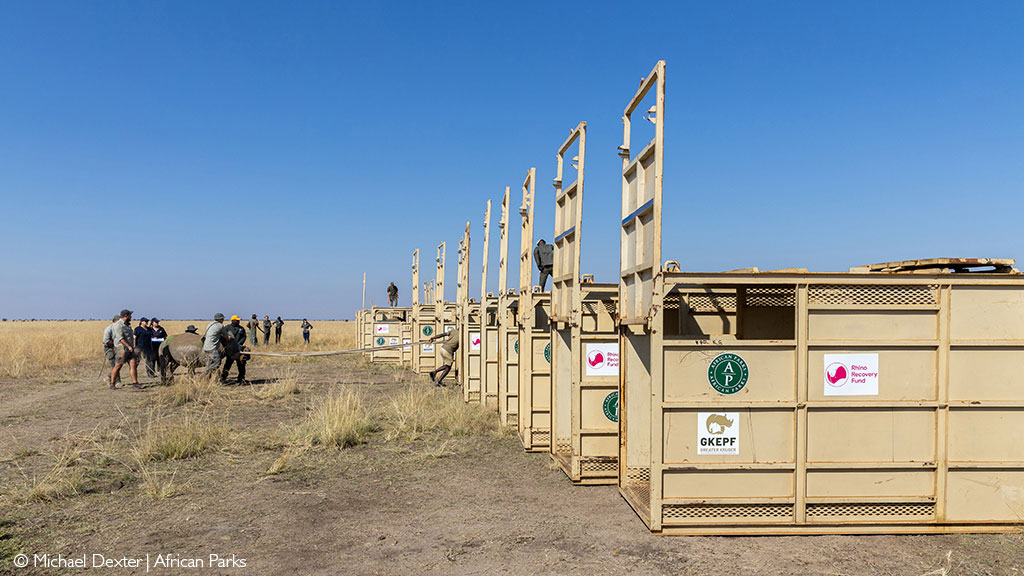
120 southern white rhinos have been successfully translocated to reserves represented by the Greater Kruger Environmental Protection Foundation (GKEPF) in Mpumalanga and Limpopo, South Africa. This translocation is the second move under Rhino Rewild, an African Parks initiative to rewild 2,000 southern white rhinos into secure, protected African areas.
One hundred and twenty southern white rhinos have just been translocated to member reserves of the Greater Kruger Environmental Protection Foundation (GKEPF) in Mpumalanga and Limpopo provinces, South Africa. This boost to the southern white rhino population in the Greater Kruger area is part of African Parks’ Rhino Rewild initiative, an ambitious plan to rewild 2,000 southern white rhinos into secure, protected areas in Africa over the next ten years. This follows the translocation of 40 southern white rhino to Munywana Conservancy in South Africa in May.
GKEPF, established in 2016, is an alliance of nine private reserves, one provincial park, and one national park to service the protection needs of the western and eastern buffers of the Kruger National Park (KNP) and the Greater Limpopo Transfrontier National Park. This translocation comes when poaching rates within GKEPF reserves have significantly declined, indicating the effectiveness of security and anti-poaching measures.
In September 2023, African Parks purchased the world’s largest captive rhino breeding operation from John Hume in a bid to rescue 2,000 southern white rhinos following a failed auction, with one primary objective: to rewild them all to well-managed and secure protected areas, to establish or supplement strategic populations, ultimately helping to de-risk the future of the species.
DID YOU KNOW that African Parks offers safari camps (lodges and campsites) where 100% of tourism revenue goes to conservation and local communities? Find out more and book your African Parks safari.
Through Rhino Rewild, African Parks is dedicated to bolstering healthy southern white rhino populations in South Africa – and recognises the country’s efforts in rhino conservation for the benefit of the African continent.
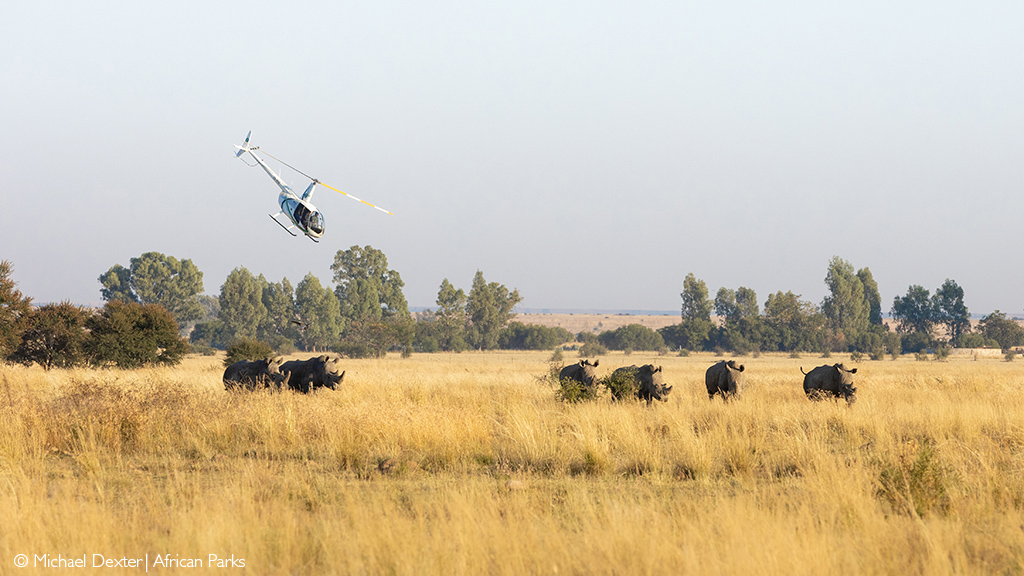
Rhinos are darted with tranquilliser from a helicopter
“Moving 120 rhinos under the Rhino Rewild initiative to GKEPF will augment the existing rhino population in the Greater Kruger and ensure that these rhino are fulfilling their role in their natural environment, which has been our vision from the start,” says Peter Fearnhead, CEO of African Parks. “Despite significant pressures, GKEPF members have played a critical role in the conservation of the Greater Kruger landscape, providing an important buffer to the Kruger, and we support their commendable progress in protecting rhino populations in their native range.”
Sharon Haussmann, CEO of GKEPF, says, “The rewilding itself bears testament to the cumulative knowledge, partnerships, and insights of a protracted period of anti-poaching efforts in the Greater Kruger landscape. That the benefits so clearly outweigh the risks presents a significant opportunity for rewarding the efforts of everyone who has remained committed to safeguarding rhino populations amid extremely challenging circumstances over the past 10 to 15 years.”
Collaboration is at the heart of GKEPF’s mandate. While rhinos will not be released into the KNP itself but into private game reserves along its western boundary, the project received consensus, collaboration, and expert inputs from KNP and South African National Parks (SANParks). This strategic placement to private reserves sharing an unfenced border with the KNP strengthens the rhino metapopulation and lays the groundwork for potential future collaboration as the Kruger continues its fight against poaching.
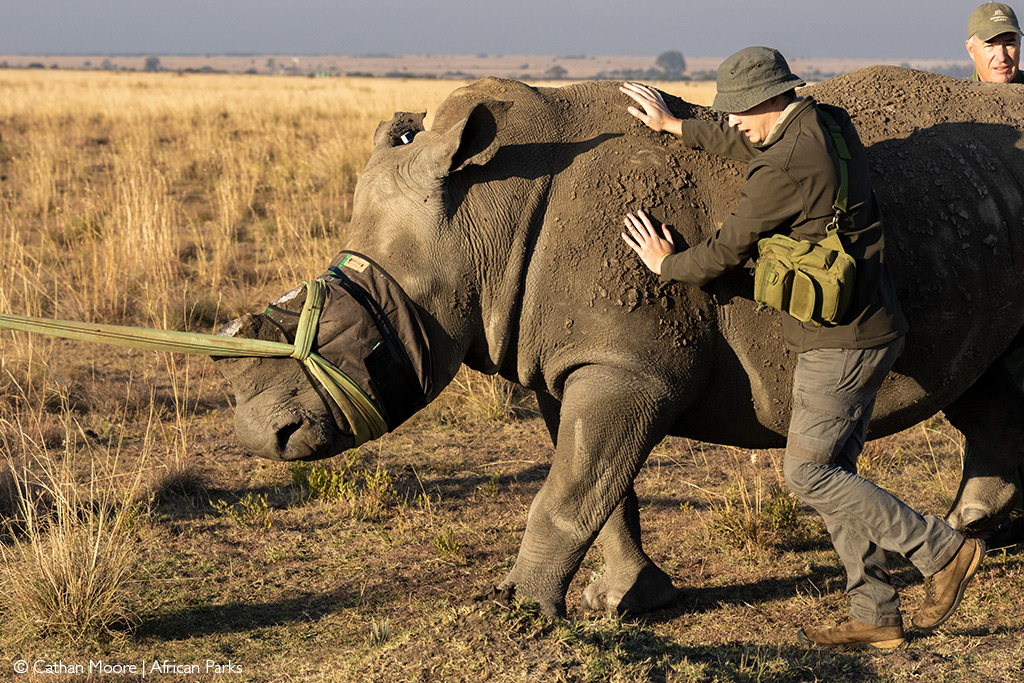
GKEPF vet, Günter Nowak, carefully guides a sedated rhino to a translocation crate
This region of South Africa is an ideal habitat for southern white rhinos. The fertile and water-rich grasslands of the selected release areas are suitable for ensuring optimal rhino health and population growth. Through a decade-long collaborative effort to combat rhino poaching, reserves and stakeholders have developed and shared a wealth of expertise. This has significantly bolstered their ability to proactively and effectively address poaching threats and safeguard the species.
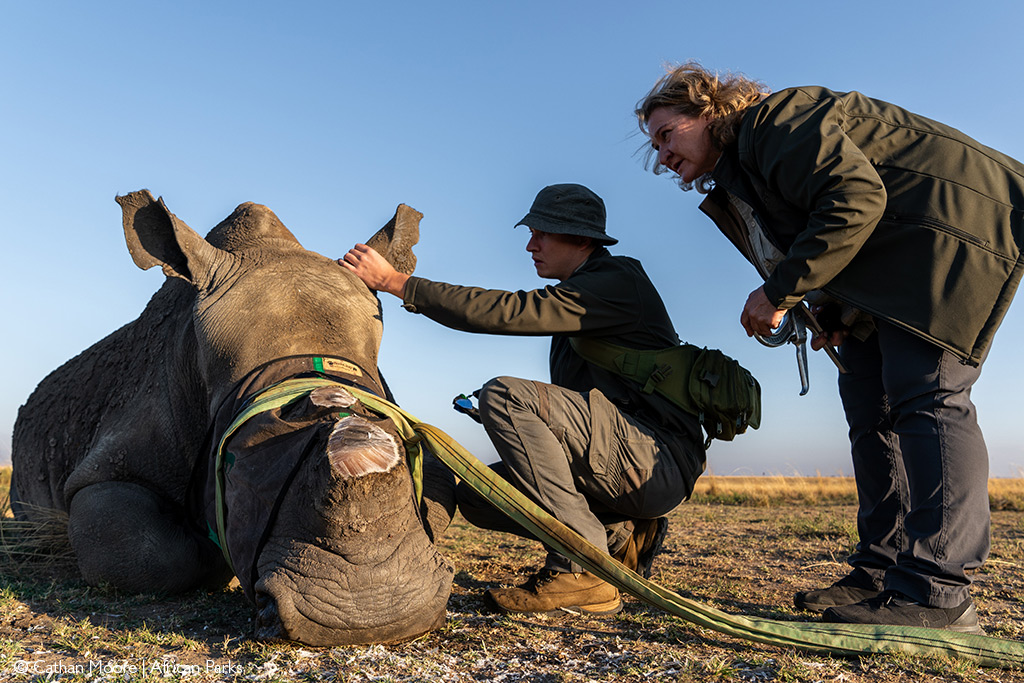
The safety of these translocated rhinos is at the forefront for everyone involved. “The rhino will come in dehorned, which is a very effective way to decrease the poaching risk in this landscape. We’re at a point where this risk is well calculated,” says Markus Hofmeyr, a wildlife vet and Director of the Rhino Recovery Fund. “This will be the first reintroduction of rhinos into this landscape in about 50 years,” he adds.
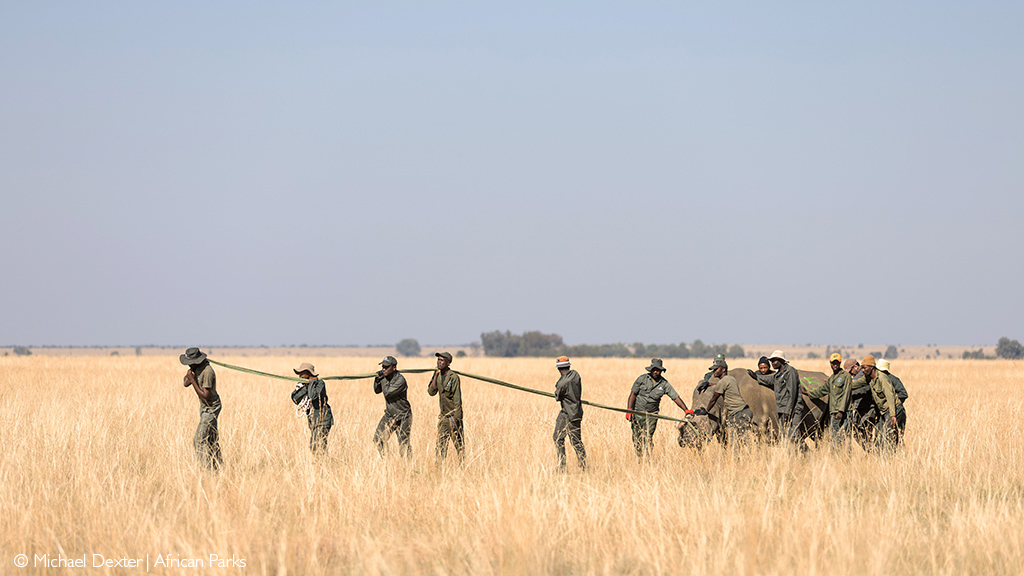
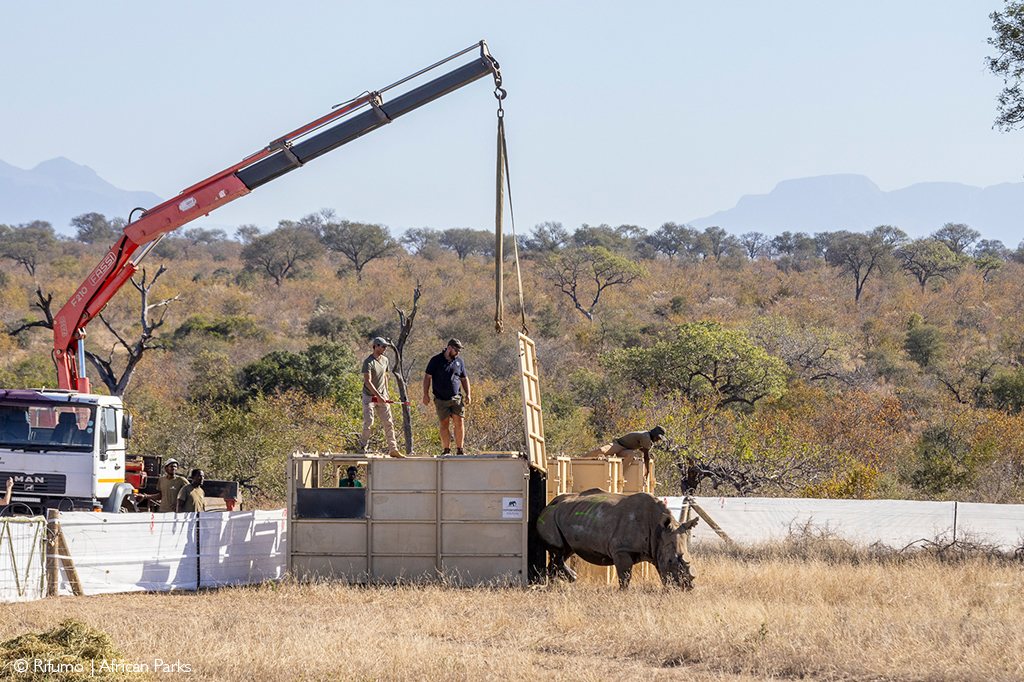
A rhino is led towards transportation crates
Moving 120 rhinos is an enormous undertaking in every way, and it has taken, as Haussmann explains, “many, many sleepless nights” and extensive funding. African Parks is donating the animals to the reserve, with GKEPF donors contributing to the translocation costs and the subsequent ongoing monitoring of the rhino, a critical element for the project’s long-term success.
A word of thanks from African Parks: The Rob Walton Foundation and the Pershing Square Foundation are the initial funders of Rhino Rewild. Thanks to the OAK Foundation, Rhino Recovery Fund, Hancock Family, Max Planck Institute & Contemplate Wild, and Land Rover Sandton/SMH Group for their support of this translocation to GKEPF.
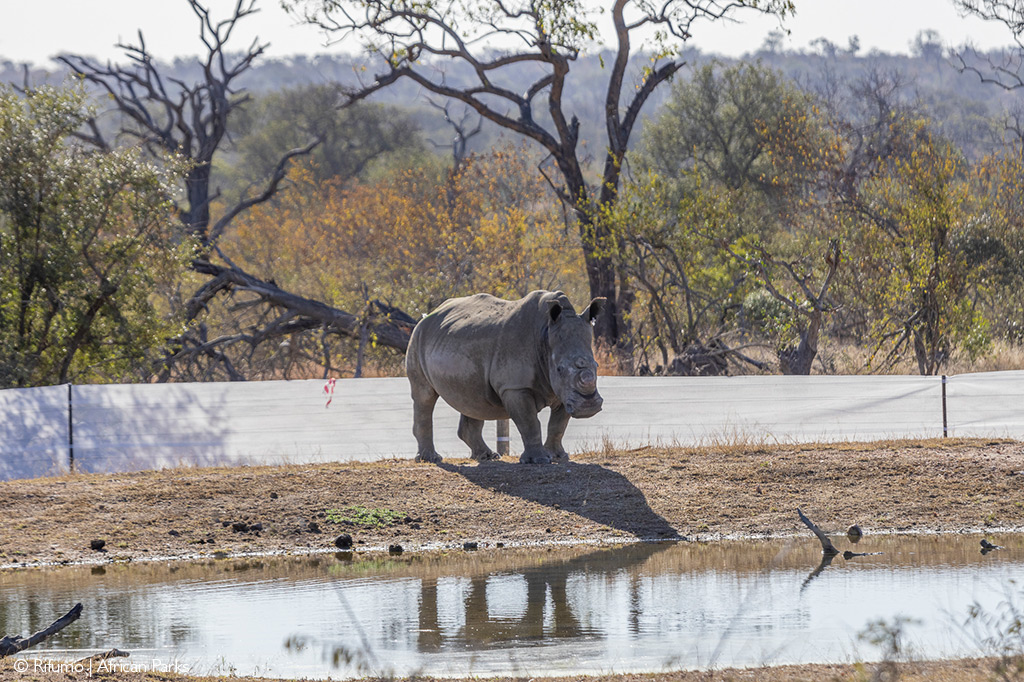
The translocation team leads a rhino towards a crate for translocationGünter Nowak and GKEPF CEO Sharon Haussmann inspect the ear of a tranquillised rhino prior to attaching a tracking deviceA rewilded rhino takes it first steps into Greater Kruger from a transport crateA rewilded rhino approaches the water hole inside the boma in Greater KrugerMoving animals over thousands of kilometres is a serious endeavour. With 30 animals, chartered jumbo jets are the best way. This requires considerable veterinary and logistical coordination to capture the animals, load into crates, transport to the aircraft, load as quickly as possible, unload similarly, transport to the site and release into well-sited and secure bomas. Documentation needs to be in order with customs and immigration officials on both ends to make it as smooth as possible.
Travel with us. Travel in Africa is about knowing when and where to go, and with whom. A few weeks too early / late and a few kilometres off course and you could miss the greatest show on Earth. And wouldn’t that be a pity? Browse our ready-made packages or answer a few questions to start planning your dream safari.


 DID YOU KNOW that African Parks offers safari camps (lodges and campsites) where 100% of tourism revenue goes to conservation and local communities?
 .
