News 2026 Action for Primates UK https://actionforprimates.org/
Macaques suffered in meaningless research in Japan to study motivation in people
PublicDomainPictures.net
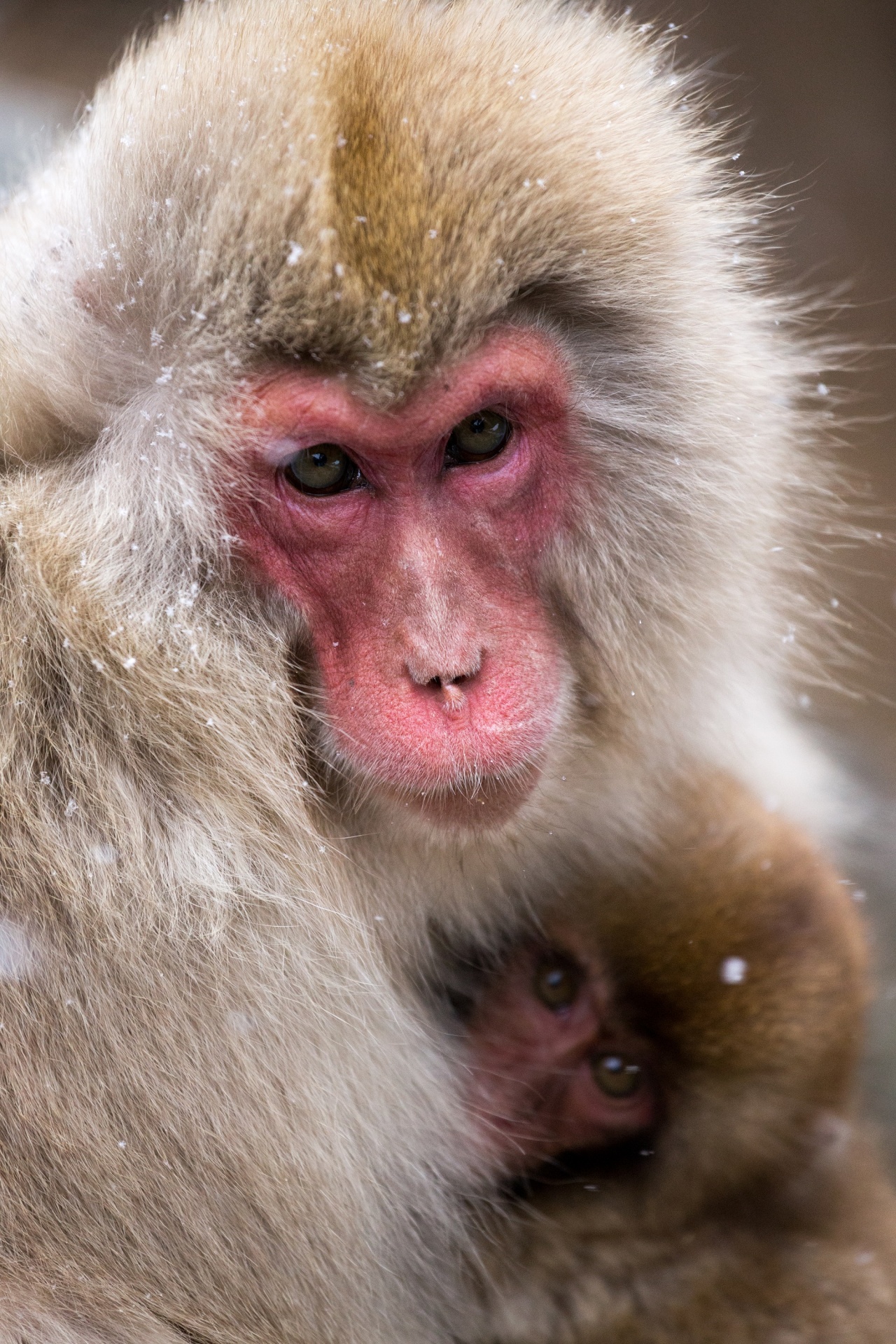
In research to study human motivation under aversive conditions, Japanese macaques were subjected to brutal head surgery and killed at Kyoto University, Japan (OH 2026). This inhumane research which had no clinical applicability to people—in whom the information is easily obtained—was approved by the university's animal use committee (approval number 24097).
Two adult Japanese macaques (also known as snow monkeys) were subjected to craniotomy, a highly invasive surgery through the skull, in order to implant a recording chamber using bone cement and screws. Although antibiotics were given after the surgery, there was no mention of any pain relief. After "full recovery", another surgery was done to remove the skull over the target regions of the brain.
The macaques were "trained" to respond to certain stimuli by restricting water availability sufficiently to create a degree of dehydration (thirst) that would 'motivate' them to respond. This inhumane fluid restriction was continued throughout the testing period.
Testing was done using electrodes driven into the brain. Viral proteins were also injected into brain. The tests were done with the macaques restrained in a soundproof dark booth. In order to get a fluid reward, the macaques had to look at a point in space. Puffs of air to the face were used to try to dissuade the macaques from responding in order to test their degree of "motivation". A test drug was injected into the brain to modify the responses. After the testing was done, the macaques were killed under anaesthesia to get brain tissue.
The researchers were using the macaques to try to understand "motivation". The situation in the macaques, however, is not analogous to the situation in humans. The macaques had to endure the stress of captivity in a laboratory, the pain and suffering of invasive head surgery, being without sufficient water for periods of time and, ultimately, death for something of no value to their species and which could easily be determined in humane, ethical studies in human volunteers.
OH, Jung-min N.; Satoko Amemori; Ken-ichi Inoue; Kei Kimura; Masahiko Takada and Ken-ichi Amemori 2026-01-09 Motivation under aversive conditions is regulated by a striatopallidal pathway in primates Current Biology S0960-9822(25)01688-4
| Craniotomy: This is a surgical procedure to access the brain. Typically, an area on the head is shaved. An incision is made through the skin and tissues underlying it, down to the surface of the skull, in such a way as to create a flap that can be pulled away to expose the skull. Depending on what type of access to the brain is required, holes may be drilled through the skull into the brain cavity, for example for injections, or a portion of the bone may be cut out in order to implant a bank of electrodes. When done, bone cement may be used to fill in the hole in the skull and the overlying tissues sutured. | 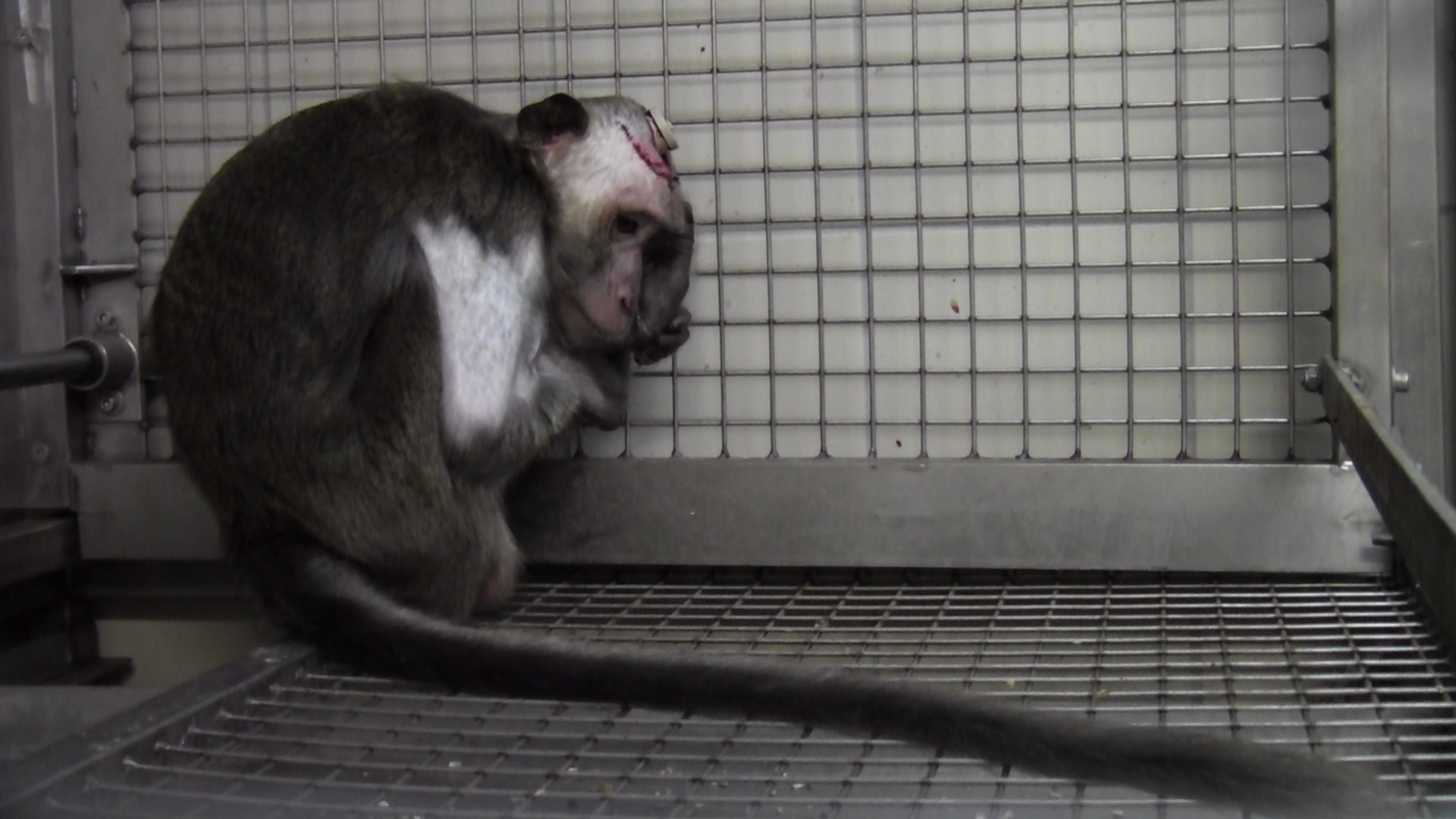 |
We do not believe we need to accept nor expand upon the researchers' reasons or justifications for doing any research involving non-consenting beings such as non-human primates. Any information gained is at an unacceptable moral cost.