Translate

Posts tonen met het label inhumane. Alle posts tonen

vrijdag 12 september 2025

Rhesus monkeys used in an inhumane and wasteful experiment simulating human exposure to high voltage power lines in Iran ( the experiment has been done with humans making this cruelty senseless

  In Iran, rhesus macaques used to study impact of high voltage power transmission
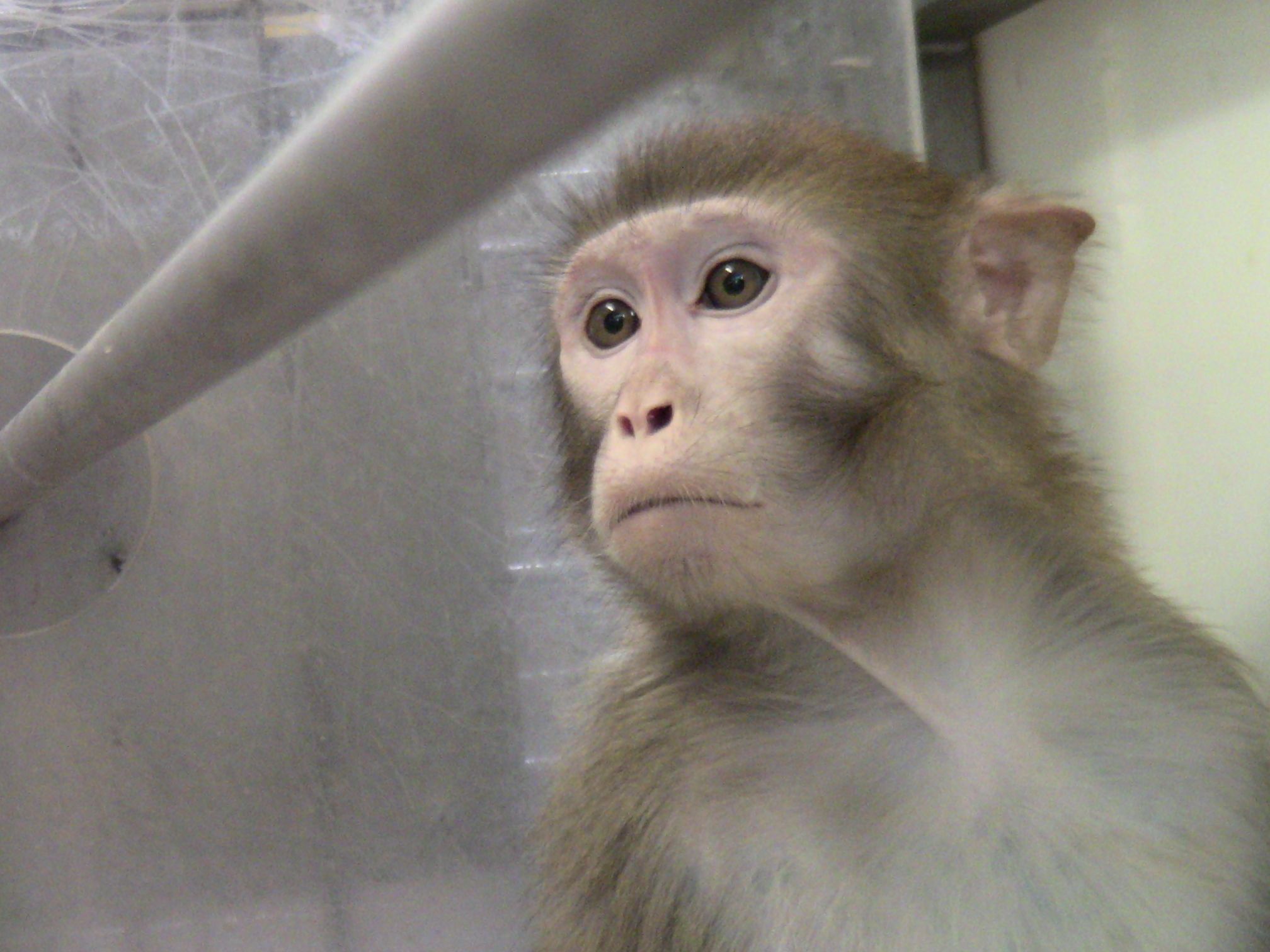
Rhesus macaque in laboratory cage; Cruelty Free International/SOKO Tierschutz
Rhesus macaque in laboratory cage
Cruelty Free International/SOKO Tierschutz

Two adult male rhesus macaques were used in an inhumane and wasteful experiment simulating human exposure to high voltage power transmission lines in Iran. The work was approved by the Baqiyatallah University of Medical Sciences institutional review board.

The macaques were kept in a controlled environment for 12 months to adapt. One of the individuals was exposed to a high voltage electric field for 4 hours a day for a month. The electric field was simulated using two metal sheets, each two x two metres. A crane was used to place the sheets at the bottom and on top of a cage, which was only one x one x one metres. The sheets were exposed to a voltage of six kV to create the electric field. The other macaque was kept outside this field as a "control".

Tests designed to determine memory were done before, during and after the exposure to the electric field. The tests comprised the ability of each macaque to find food comprising a peanut in different settings, several times a day. The macaques were deprived of food for 17 hours before tests. The macaques were also subjected to magnetic resonance imaging (MRI) to determine activity in the brain. The fate of the macaques was not stated.

These two macaques had to live in tiny cages, under laboratory conditions, deprived of any meaningful social contact, in a scientifically poor study that had no value for human health. The researchers pointed out that there have already been numerous studies in humans to determine the effects of electromagnetic radiation. Given that literally tens of thousands of humans live in close proximity to high voltage transmission lines worldwide, humane and relevant studies could be carried out with them. This experiment is just another example of the unwillingness of the research industry to use and improve methodologies that do not depend on subjecting non-human primates to exceptionally inhumane experiments and conditions.   Action for Primates)


Reference:

Aliyari, Hamed; Hosseinian, Mohsen; Menhaj, Mohammad Bagher; Sahraei, Hedayat; Shabani, Mohsen and Kazemi, Masoomeh 2025-01-01 Effect of High-voltage Electrical Field Exposure on Neurobiological Factors and Visual Working Memory of Macaques Basic and Clinical Neuroscience 16(Spec Issue):251-264

donderdag 21 augustus 2025

Inhumane conditions!! Action for Primates received information that in May 2025, 800 monkeys were transported by air for 43 hours involving 7 flights in 7 countries to Miami


Trown away not useful anymore for lab testing

https://actionforprimates.org/public/archives/afp_news_2025.php#20250820

 Concerns raised over Mauritius' compliance with CITES Convention regarding monkey trade and transportation

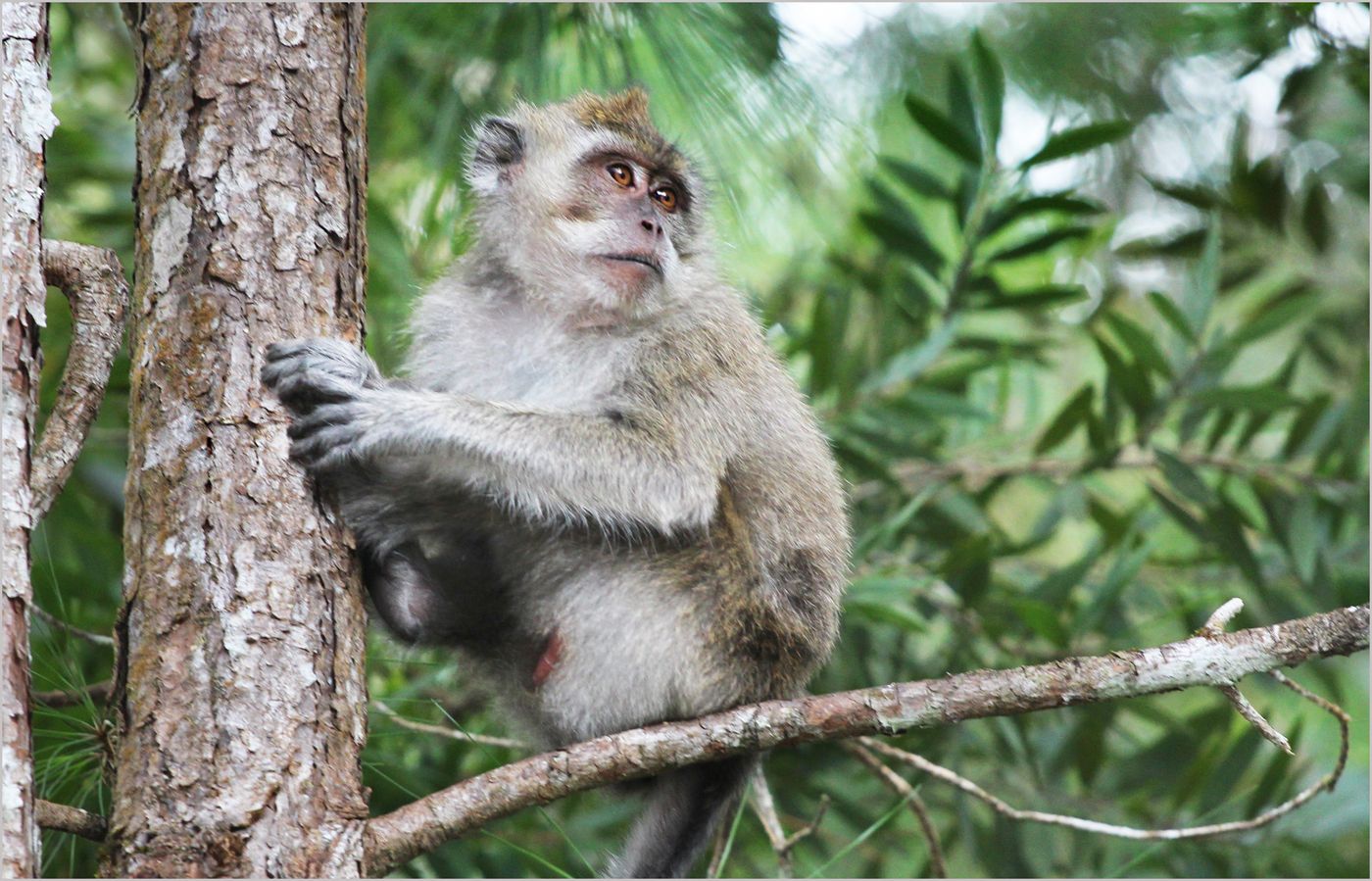
Long-tailed macaque living freely in Mauritius

Information uncovered by Action for Primates points to a failure by Mauritius to comply with its obligations under the CITES Convention in issuing CITES permits for the export of long-tailed macaques—a CITES Appendix II listed species—and their export from Mauritius during which they are subjected to inhumane and lengthy air transportation. Dr Buyukmihci, veterinary adviser and co-founder of Action for Primates, has written to the CITES Secretariat requesting that it investigate the status of Mauritius's compliance with its obligations under Article IV of the CITES Convention.

There has been an alarming escalation in the numbers of long-tailed macaques exported from Mauritius in recent years for research and testing purposes—primarily to the USA—up from 7,691 individuals in 2019 to 14,623 in 2024, and a resurgence of the wild-caught trade. According to the CITES trade database, between 2020 and 2023, 12,304 long-tailed macaques sourced as wild-caught were exported (1).

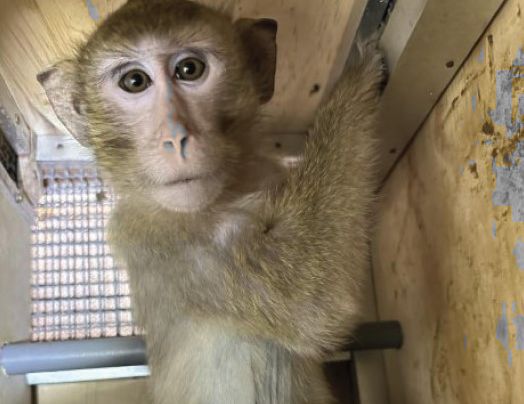
Long-tailed macaque in transport crate; Animal Rights
Long-tailed macaque in transport crate
Animal Rights

Under clause (a) Article IV of the Convention on International Trade in Endangered Species of Wild Fauna and Flora (CITES) (Regulation of Trade in Specimens of Species Included in Appendix II). This clause states that an export permit shall only be granted when a Scientific Authority of the State of export has advised that such export will not be detrimental to the survival of that species (2). This involves establishing a quota and providing an explanation of the scientific basis by which it was determined that the quota would not be detrimental to the survival of the species in the wild. These are known as Non-Detrimental Findings or NDFs (3).

A request was made to the National Parks and Conservation Service (the Mauritius CITES Management Authority) seeking information on what basis CITES export permits were issued for the export of wild-caught long-tailed macaques between 2020 and 2023, and on what basis they were currently being issued. In response, the director stated that NDFs for long-tailed macaque exports are not necessary:

The Non Detriment Finding (NDF) for the wild monkeys in Mauritius is not warranted given that the population is an exotic invasive species and that extraction has no incidence in the wild.

This policy, however, is at odds with what is required by CITES. NDFs are required by the Convention for any export of a CITES-listed species, regardless whether the population is native or introduced.


An NDF usually involves population surveys. No population census on wild long-tailed macaques, however, has been carried out in Mauritius since the 1980s. If there are no recent population surveys, the Mauritius authorities cannot conclude that the export trade does not have an impact. Wild long-tailed macaques are also captured by macaque farms for breeding purposes, which has a further impact on the population.

The Mauritius authorities have regularly pushed the narrative that, as an 'introduced' species, the long-tailed macaque in Mauritius is a 'pest' and, by implication, not worthy of conservation concerns. The species is persecuted, and it is in the interests of those who benefit commercially from the primate trade for the people of Mauritius to maintain a negative attitude towards the macaques, to view them as a problem and trapping and exporting as solutions.

Concerns were also raised about Mauritius' compliance with clause (c) of the Article IV of the CITES Convention: ...a Management Authority of the State of export is satisfied that any living specimen will be so prepared and shipped as to minimize the risk of injury, damage to health or cruel treatment... Long-tailed macaques exported from Mauritius by air are being subjected to inhumane and lengthy transportation times. For example, in May 2025, Action for Primates received information that 800 long-tailed macaques transported by air from Mauritius to Miami, were subjected to a journey of over 43 hours, involving seven flights and stop-overs in Ethiopia, Greece, France, Iceland, Boston, New York and Miami; there was an eight and a half hour stop-over in Paris. The 43 hours does not include the hours spent at Sir Seewoosagur Ramgoolam International Airport, nor the unloading in Miami and the onward journey by road to the US importer's premises.

We believe that the Mauritius CITES Management Authority is allowing unacceptable and inhumane conditions for exporting long-tailed macaques.

For more information, read this article by environmental journalist, Tracy Keeling::

Probe points to rule breach in Mauritius' lab monkey business. Mauritius says the sustainability assessments required under global regulations are 'unwarranted' in its trade of long-tailed macaques: https://tracyk.substack.com/p/probe-points-to-rule-breach-in-mauritius

References:

  1. https://trade.cites.org/
  2. Article IV of the CITES Convention: An export permit shall only be granted when the following conditions have been met: (a) a Scientific Authority of the State of export has advised that such export will not be detrimental to the survival of that species; (b) a Management Authority of the State of export is satisfied that the specimen was not obtained in contravention of the laws of that State for the protection of fauna and flora; and (c) a Management Authority of the State of export is satisfied that any living specimen will be so prepared and shipped as to minimize the risk of injury, damage to health or cruel treatment... (https://cites.org/eng/disc/text.php)
  3. https://cites.org/eng/prog/ndf/index.php