Translate

Posts tonen met het label research. Alle posts tonen

zondag 30 augustus 2026

Indonesia has resumed plans to export long-tailed macaques for use in research and testing, putting thousands of these intelligent, social animals at risk of capture, confinement, transport, and painful experimentation.


PETITION TARGET: Indonesia’s Minister of Forestry Raja Juli Antoni, Director General of Natural Resources and Ecosystem Conservation Satyawan Pudyatmoko, and Director of Species and Genetic Conservation Ahmad Munawir

Indonesia has resumed plans to export long-tailed macaques for use in research and testing, putting thousands of these intelligent, social animals at risk of capture, confinement, transport, and painful experimentation.


Macques being taken from the wild

In 2026, Indonesia submitted a CITES export quota for 1,928 long-tailed macaques — the first such quota since 2022.

A new macaque breeding and holding facility has also been established in Mesuji, Lampung. Operated by PT Biomedika Nusantara Indah, the facility can hold around 4,000 macaques and already houses hundreds of animals.

Wild macaques from areas described as experiencing human–macaque conflict are being used as founder animals for breeding. Residents are also reportedly being offered money for macaques handed over to the company.


This risks creating a financial incentive for wild macaques to be removed from their natural habitats.

Previous investigations in Indonesia have exposed the severe cruelty involved in capturing wild macaques. Footage has documented animals being beaten, dragged and violently restrained, dominant males being killed, and nursing infants being torn from their mothers.

For the animals who survive capture, the suffering may only be beginning.

Long-tailed macaques are widely used in toxicity testing and other experiments that can involve repeated restraint, forced administration of drugs or chemicals, invasive procedures, infection studies, and other tests that cause fear, pain, distress, and death.

The long-tailed macaque is classified globally as Endangered by the IUCN, with populations decreasing. Yet the species remains unprotected under Indonesian national law and continues to be exploited for commercial purposes.

Human–macaque conflict must not be used as an excuse to capture animals for the international laboratory trade.

Conflict is often driven by habitat loss, development, agricultural expansion, poor waste management, and human feeding. Removing macaques does not address these underlying causes. Humane, evidence-based coexistence measures are needed instead.

The renewed export trade is also moving in the wrong direction scientifically. There is growing awareness of the unreliability of using animals in research and testing, and increased scrutiny from regulators and governments worldwide.

The United States, EU, and the U.K. are now actively developing strategies to transition away from animal testing and accelerate the adoption of non-animal alternatives, such as in vitro systems, organ-on-chips, and AI modeling.

Jakarta Animal Aid Network, Action for Primates, and Lady Freethinker are calling on the Indonesian Government to protect long-tailed macaques rather than allow them to be captured and supplied to overseas laboratories.

Please urge Indonesia’s Minister of Forestry and relevant authorities to:

• Immediately suspend the export of long-tailed macaques for biomedical research

• End the capture of wild macaques for commercial breeding and export

• Strengthen legal protection for long-tailed macaques in Indonesia

• Replace capture-based responses to human–macaque conflict with humane, evidence-based coexistence measures

• Support modern, non-animal research approaches rather than expanding the supply of primates for laboratory experiments

Indonesia’s long-tailed macaques are part of the country’s natural heritage. They should be protected in the wild — not treated as commodities for the global laboratory trade.

Please sign this petition and urge the Indonesian Government to protect long-tailed macaques from capture and export for research and testing.


PETITION


https://ladyfreethinker.org/sign-protect-indonesias-long-tailed-macaques-from-cruel-laboratory-export/


dinsdag 6 juli 2021

Kariega 'Game Reserve South Africa' zoekt 9 research volunteers voor 3 weken in november 2021.....Heeft u belangstelling? Alle informatie ook in het Engels

HEEL VEEL DELEN GRAAG

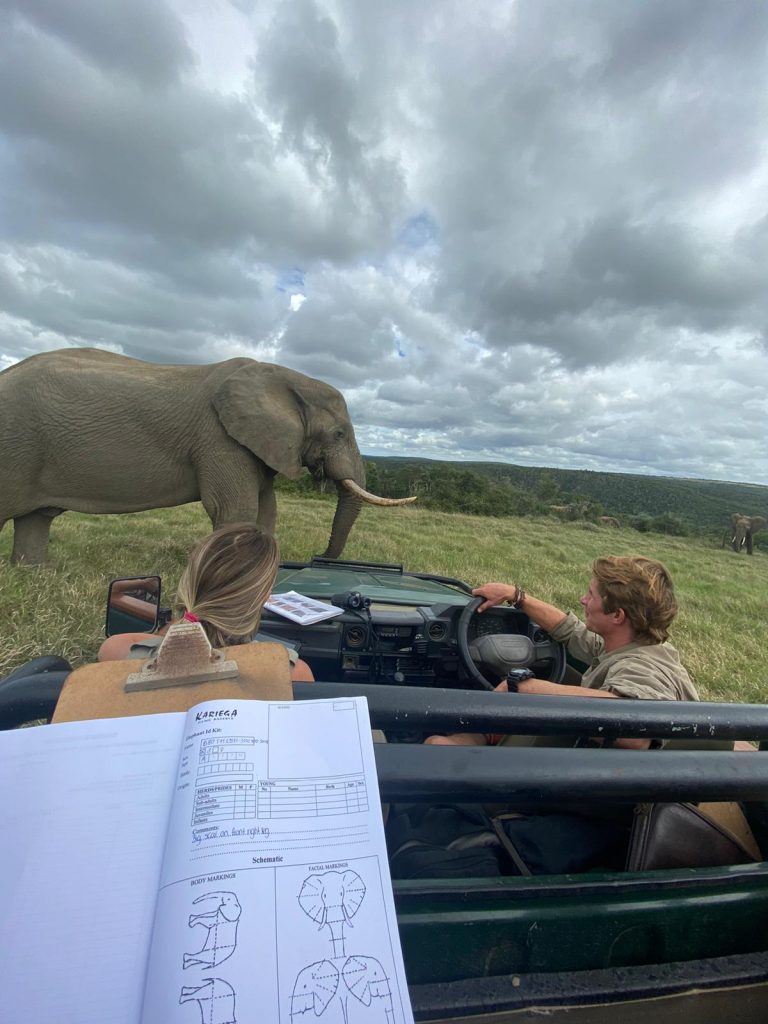
Goed nieuws: we kunnen eindelijk op grotere schaal verder met ons onderzoek in Zuid-Afrika! In november gaat een groep van maximaal 9 “pionier vrijwilligers” samen met ons aan de slag in Kariega Game Reserve. Het doel is onderzoek te doen naar het gedrag van olifanten en naar manieren om de lokale bevolking bij natuurbescherming te betrekken. Verder gaan de pioniers, samen met de lokale bevolking, aan de slag met het opzetten en uitvoeren van olifantenlessen op lokale scholen. Een onvergetelijke ervaring voor de deelnemers en een belangrijke bijdrage aan de bescherming van olifanten en dorpsontwikkeling. Lees meer.


De Nederlandse Antoinette van de Water, oprichter BTEH

 As a pioneer research volunteer, you can help Bring The Elephant Home (BTEH) with research projects focusing on elephant and human well being in South Africa. Tasks vary from elephant behaviour monitoring, elephant identification, educational and community programs, as well as tasks related to communication, data analysis and running a conservation NGO. We look forward to your application. You can find all you need to know on this web page.

Will you join the pioneer group?


Bring The Elephant Home is now recruiting max 9 pioneer research volunteers to help develop the program, collect and analyse data, thereby making a valuable contribution to elephant conservation and community engagement. As a pioneer student, you will focus on developing key activities for future interns, elephant research possibilities, and educational and community programmes. During your stay, you will have a unique opportunity to connect with local people and learn about elephant behaviour and conservation challenges.

Where: Kariega Game Reserve, South Africa

When: November 10-30, 2021

Student tasks

You will help to develop and test all activities, which may vary from:

  • Tracking wild elephants.
  • Recording elephant behaviour.
  • Developing an elephant identification kit and database.
  • Developing an African elephant workbook and facilitating elephant educational programs at local schools.
  • Helping to facilitate participatory community workshops and conducting questionnaires to collect data on the value of elephants and the reserve for the neighbouring communities.
  • Data analysis, discussions about interpretation, contributing to a research article.
  • Developing the program for future interns in collaboration with local partners. 
  • Other tasks to support elephant conservation: (social) media, website, graphic design, etc.

Other benefits

  • Regular game drives (at least 3 times a week) with expert guides.
  • A visit to Addo Elephant National Park.
  • Endless possibilities to emerge yourself in nature, form meaningful connections, and observe natural animal behaviour. A highlight will be a sleep out under the stars with the sounds of wildlife around you.
  • Besides many opportunities to observe elephants, you will be exposed to numerous other species such as lion, rhino, buffalo, giraffe and zebras.
  • Experience at an international conservation organisation.
  • Network opportunities: Developing and testing programs in collaboration with local partner organisations.
  • On days off (one day per week), there are plenty of opportunities to explore the nearby coastal area: hiking, canoeing, spending time on the beach, going on a marine safari (in November you have a chance to see Southern Right Whale and Humpback Whales, as well as dolphins, penguins, and seals) (additional trips at own expense).

Pioneer research volunteers qualifications

The most important requirements are that you are passionate about elephants and people, and motivated to make a real change. As this is the development phase of the field station, we welcome people who:

  • Are independent, have great team-spirit and dependability
  • Have an optimistic and flexible attitude
  • Have the ability to think in terms of creative and practical solutions.
  • Speak and write English proficiently
  • Are aged over 21 years old
  • Preferably have a drivers licence

We welcome a maximum of 9 research volunteers with different skills and experience useful for all activities. A few examples of skills we value: science (e.g. social, animal behaviour or environmental), communication, GIS, (conservation) education, community engagement, graphic design, video editing, social media, app development, database management, and more.

Time commitment

  • Preference for students who can commit to 3 weeks full-time
  • Arrival on Wednesday November 10, departure on Tuesday November 30, 2021

Not ticking all the boxes?

If you are super motivated but not sure if you can meet all the requirements, you might be able to help us reach our goals in a different way. Please contact us with your ideas and we can discuss options.

An introduction at arrival for this position will be provided. You will work together with the other pioneers (maximum 9), partners, and local communities. You will work closely together with Antoinette van de Water, founder of BTEH. Vera Praet, the first intern of BTEH in South Africa, and an active member of BTEH’s volunteer team, will be the volunteer coordinator and available for questions and assistance.

Location and accommodation

We will be staying at the Kariega Conservation Center at the border of Kariega Game Reserve.

  • Shared accommodation with the other pioneers.
  • Boma area with a campfire, braai, and rockpool.
  • Comfortable living room, kitchen, office, and workshop space for all our conservation discussions, program preparation and other activties.

Program costs

3 weeks: 1.200 euros ($ 1,450).

  • This includes shared accommodation, coffee/tea/water, (limited) internet access, elephant monitoring game drives on Wednesday afternoon, Saturday and Sunday, all research and community engagement activities, cultural exchange, conservation discussions, and a once in a lifetime African bush experience. Coordination by Antoinette van de Water and the manager of Kariega Conservation Center.
  • The costs exclude flights, land transfers, insurance, vaccinations, food, and personal expenses (e.g. local SIM card, activities on days off, snacks, etc).
  • We can provide all applicants with personal fundraiser pages so you can raise financial support for your contribution to elephant conservation and limit your personal costs.

Application and selection process

  • You can apply through this form.
  • In case of any questions, please contact us at volunteer@bteh.org
  • After the application, we will contact you with more information about the next steps. We will make a selection of suitable applicants and inform you personally. 
  • Before we can confirm your stay, we would like to have a video call to get to know you better, talk about your preferred activities, and decide which tasks would suit you. 
  • As soon as possible after meeting you we will confirm whether you can join the program.

Please express your interest as soon as possible!

Mission of Bring The Elephant Home

Elephants are disappearing as they are struggling for their survival in many parts of the world. As a direct result of human action, there is a chance that we will lose a species that plays a key role in some of the world’s greatest ecosystems. To save this magnificent species from extinction, BTEH aims to create a world in which people and elephants live together in harmony. This goal is pursued by combining community participation, education, research, capacity building and practical action to realise positive change.

Questions or suggestions? 

We are very interested in any suggestions to make our program better. Please contact us at volunteer@bteh.org.

Interested in our future volunteer and student program in South Africa?

Are you not able to join as the pioneer group, but interested in joining the program later as a student or volunteer, let us know at volunteer@bteh.org and we will send you information when the program is up and running.

Pictures by Liesbeth Sluiter and Antoinette van de Water.

Participation costs €1200

How do you wish to pay?