Translate

Posts tonen met het label bear bile farming. Alle posts tonen

zondag 19 april 2026

30 Celebrities are backing an open letter to Vietnam's new Prime Minister, urging to end bear bile farming and release the last 185 bears


https://www.animalsasia.org/support-us/free-the-final-bears-letter/?utm_medium=pr&utm_source=press

Dame Judi Dench, Stephen Fry, Alan Cumming, Chris Packham, and Dame Joanna Lumley are among more than 30 celebrities backing an open letter to Vietnam’s new Prime Minister today, urging an end to bear bile farming.


The letter, coordinated by Animals Asia, calls for the release of the last remaining bears used in the bile industry, an action that would make Vietnam the first country in the world to fully end bear bile farming. The charity is also urging the public to join the campaign by writing to the Prime Minister HERE!


Pills made from bear bile. 

A new poll released alongside the letter suggests overwhelming public opposition to the trade in Vietnam, with 87% of respondents saying they want the immediate release of bile bears. The survey, commissioned by Animals Asia, also indicates declining demand for bear bile in traditional medicine, with just 13% of respondents reporting they had purchased or consumed bear bile products, compared to 22% in 2010.

The letter states: “As animal lovers with a deep commitment to compassionate animal welfare, we join the people of Vietnam in their concern for the 150 bears trapped in tiny metal cages, sick, suffering, and alone on former bear bile farms across the country.”


Extracting bile from a sedated bear

Around four bears are estimated to die each month, making the rescue of the remaining animals increasingly urgent. Although bile extraction was outlawed in Vietnam in 2005, farmers have been permitted to keep bears in captivity. A 2017 agreement between the Vietnamese government and Animals Asia committed to ending bear bile farming entirely, a goal the charity says is now within reach.

The letter continues: “That’s why we are calling on you, your Excellency, to take the crucial and caring step of urgently mandating the release of the last surviving bears, allowing Animals Asia to take them into their care, before it’s too late. Securing the freedom of these last victims of the brutal trade of bear bile will reflect the Vietnamese public’s own support for an end to the cruelty.”

Actor and comedian Ricky Gervais, who previously supported an Animals Asia bear named Derek, stated: “I had to sign this letter, it’s too important an issue to ignore. These bears have suffered for long enough, with years of bile extraction and the horror of life in a cage. As a bear guardian to Derek Bear, who sadly died three years ago, I know the incredible recovery they experience at the Animals Asia sanctuary. They all deserve to end their days in safety and comfort as Derek did. I urge the Vietnamese government to finish their brilliant work to end bear bile farming there forever, and ensure these final survivors are freed.”

Sir Stephen Fry added: “I’m deeply saddened by the plight of the last remaining bears on bile farms in Vietnam. There’s a beautiful sanctuary waiting for them to live out the rest of their lives in peace. They just need to be released by the farmers. I do hope our letter to the Vietnamese Prime Minister means their cages will be opened, and they can be urgently rescued. With four dying every month, there is no time to waste.”

Dame Joanna Lumley stated: “Any sort of animal cruelty or suffering is so deeply heartbreaking to witness. Broken bears in cages little bigger than their bodies, barely surviving the brutality they have been subjected to for decades, is very hard to watch. I desperately hope that adding my name to this vital letter plays some part in helping to secure the release of the very last survivors of bear bile farming in Vietnam. With four dying in their cages every month, these poor majestic animals must urgently be freed.”

Dr. Jill Robinson, Founder and CEO of Animals Asia, stated: “The Vietnamese government is an incredible beacon for animal welfare across Asia. They have done more to end bear bile farming than any other country in the world. Now we ask for one final act of compassion for Vietnam’s very last bile bears still trapped and suffering in cages. We have everything ready to rescue these broken bears, but just need the government to help secure their release. Only then can we celebrate the end of bear bile farming forever in Vietnam. We desperately hope that these last survivors can finally see sunshine and can live out their remaining years in the peace and safety of our sanctuary.”

Animals Asia has rescued more than 700 bears since 2007 and currently cares for 185 bears across its two sanctuaries in Vietnam.

Most bears used in bile farming were taken from the wild as cubs and confined to small cages for life, often unable to stand or turn around. Many endured repeated bile extraction and lived in severe neglect, suffering disease, malnutrition, and extreme confinement for decades. Bears can survive in such conditions for up to 30 years.

Rescued bears are rehabilitated at Animals Asia’s sanctuaries, where they receive medical care, specialist diets, and physiotherapy. They spend the rest of their lives in more than 11 hectares of sanctuary space, where they can walk on grass, feel sunlight, swim, and interact with other bears for the first time.

Bear bile remains a significant driver of the illegal wildlife trade in East Asia and has contributed to major declines in Asiatic black bear populations. The species is now listed as vulnerable, with global populations having declined sharply in recent decades. Ending bear bile farming in Vietnam is seen as a critical step toward preventing further decline and potential extinction.

Help Animals Asia provide lifelong care for bears rescued from bile farming. Please donate HERE!

woensdag 7 januari 2026

South Korea ends bile farming: for decades, bears were confined to tiny, barren cages, often unable to stand or turn around, many suffered chronic infections, open wounds, and immense pain from repeated bile extraction


As of January 1, 2026, South Korea has officially put an end to its cruel bear bile farming industry, a long-overdue and historic step forward for animal welfare. This monumental decision follows a 2022 agreement between the South Korean government, bear farmers, and animal protection organizations to phase out bile extraction and ban the breeding of bears for this inhumane practice.


For decades, mainly Asiatic black bears were confined to tiny, barren cages, often unable to stand, turn around, or move freely. Many suffered chronic infections, open wounds, and immense pain from repeated bile extraction, a practice condemned by veterinarians and animal welfare advocates worldwide. This ban directly confronts these inhumane conditions and confirms what advocates have been saying for years: the industry was built on extreme cruelty.

The 2022 agreement, led by the Ministry of Environment in partnership with the Bear Farmers Association and animal welfare organizations, set the stage for this historic transition. It provided a clear timeline to end bile extraction and breeding, while also establishing support for farmers as the industry was phased out. Under the new law, any extraction of bile after the grace period carries legal penalties.

The government has committed to overseeing the relocation and lifelong care of the remaining bears, many of whom have never known anything but captivity. While sanctuary space and funding remain challenges, and disputes over compensation continue, the decision represents a major shift toward compassion, accountability, and ethical treatment of animals.

South Korea’s bear bile industry began in the early 1980s, driven by demand for traditional medicine. Ending it would not have been possible without decades of tireless advocacy. Organizations such as World Animal Protection and Green Korea United (GKU), along with countless activists and concerned citizens, played a critical role in raising public awareness and building the momentum to make this change possible.

Maya Pastakia, Global Campaign Manager – Wildlife, Not Medicine, at World Animal Protection, stated:

“This is the result that we, in partnership with Green Korea United, have been tirelessly campaigning and working towards for over 18 years – we are absolutely thrilled. Captive bile bears are cruelly exploited and commodified. They live out their lives in tiny, cramped cages, enduring immense mental and physical suffering – unable to climb trees, play and forage for food as they would in the wild.

“The South Korean government has taken a bold stand for bears – something made all the more impactful by the Bear Farmers Association and animal welfare organizations joining hands and making this momentous decision.


Animals Asia and World Animal Protection

vrijdag 20 juni 2025

Video and 16 photos: Vietnam will stop with bear bile farming in 2027 : Therefore a race against the clock where hundreds of bears living for decades in cages in deplorable conditions are to be rescued by Animals Asia


 With Spring's new growth celebrating warmth and sunshine in Vietnam, this week could not have been more appropriate to have been invited by the authorities to rescue more bears. At lightning speed, conversations turned into action, and we were driving to the government offices of the Hanoi Forest Protection Department to meet the officials who had transported three bears from two bear farms, after the farmers had been willing to give them up. 

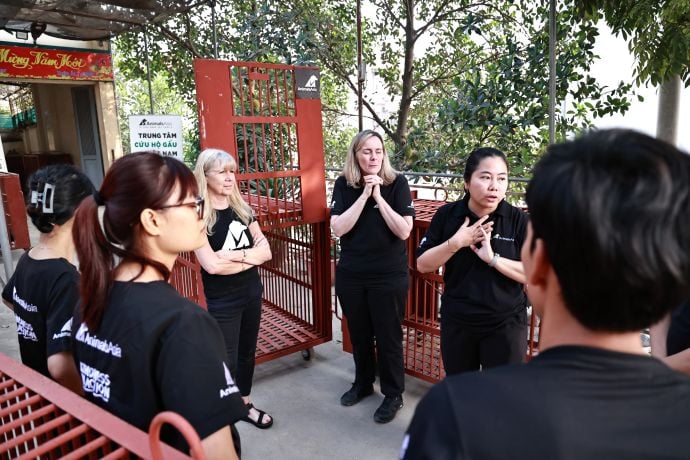
The team discusses final details before the rescue begins.

The farms were in the notorious stronghold of bear bile farming – Phung Thuong, on the outskirts of Hanoi – and we were relieved to be heading back there again. The previous months had seen a re-organisation within government departments across the country, and consequent delays in such rescues, but now we could be optimistic that the authorities were committed to their confiscation of the bears, and to the spirit of our Memorandum of Understanding that, together, we would end bear bile farming in Vietnam.

The Head of FPD Phung Thuong, Mr Ha greets Jill, Heidi, Trinh and team on arrival at the FPD premises housing the bears.

Arriving at the office building just after 7am, we were immediately greeted by the wonderful Mr Ha, Head of the Hanoi Forest Protection Department Unit 5, beaming from ear to ear, despite the fact that he and his colleagues had stayed over at the office to guard the bears, all sleepless night.

Just as we were getting over that surprise, Heidi, our Vietnam Director, our bear and vet team and I were invited by Mr Ha to meet the bears who had languished in cages on the farms for almost 20 years.
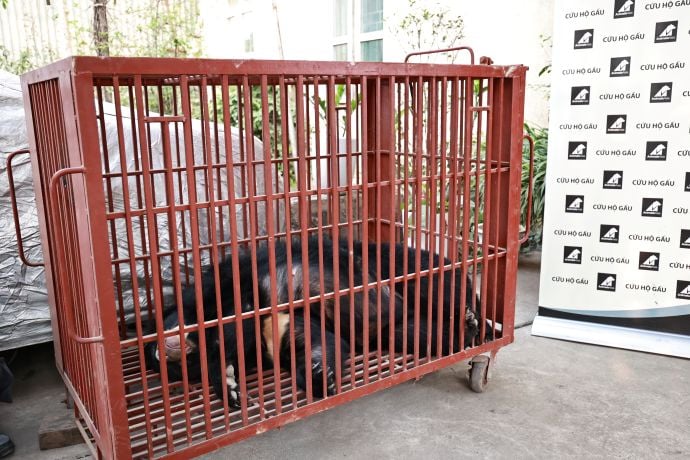
Our first glimpse of the bears in the care of FPD - Bud sleeping off that morning's transfer anaesthetic.

Just behind him was a cage with one very sleepy bear who had been anaesthetised at dawn that morning and brought over from the farm. Looking surprisingly well on the surface, we knew not to be over confident of his or her health given the years of bile extraction this bear would have suffered. Confidently, we all looked at what we were sure was a male bear – long and strong, with handsome boy looks, we named this bear Bud for the vibrant growth of spring.

Just behind Bud were another two cages containing two feisty females who we quickly named Bloom and Sprout, again in celebration of the new beginnings of spring. All three bears were now safely in the FPD's own wildlife cages and now our vet and bear care team had the challenging task of transferring them consciously into our own transport cages in preparation for the two-day journey home by road.
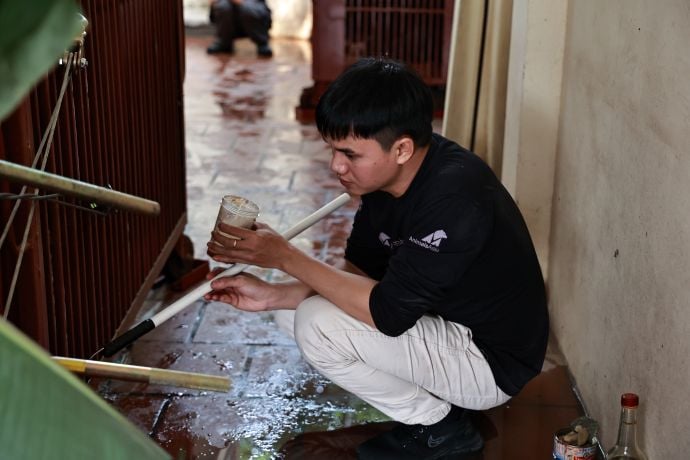
Bud is encouraged by rescue team member Tot, to transfer from the FPD cage to Animals Asia's transport cage for the trip home to Bach Ma.

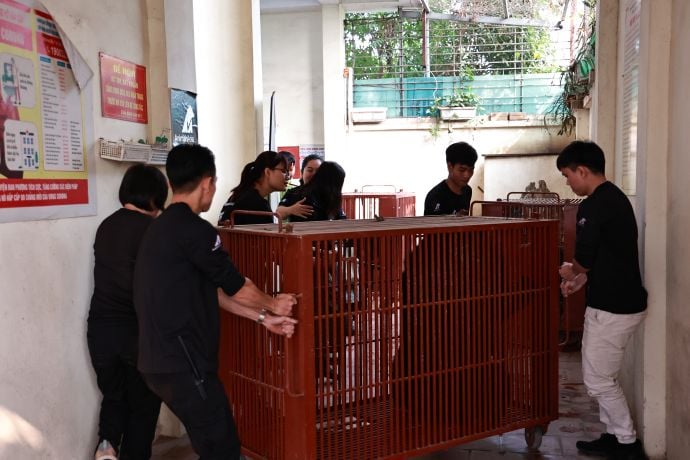
While it took some time, Bud and Bloom were eventually coaxed into the cages by our resourceful and patient team. Tot and Nhung were especially calm and professional as they won the bears' confidence, with a little help from spoonfuls of caramel sauce and raspberry puree – and now they were loaded carefully on to the truck. After transfer to the transport cage, Bloom is moved out of the building ready for loading onto the truck.
Poor Sprout was so stressed throughout, and despite what must have been whole bunches of chopped bananas gently encouraging her from cage to cage over the next two hours, her nerves got the better of her and she stayed firmly put in her original cage. Vets Huong and Han decided that the government cage was robust and would be safe to feed and clean Sprout on the road, and she too was now loaded onto the back of the truck.
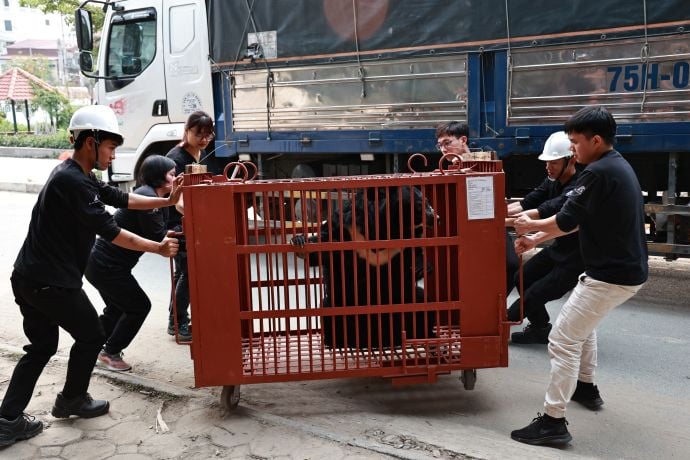
Bloom is moved to the truck for loading. 

Soon, we were waving Mr Ha and the officials farewell as we piled into the bus ready to follow our three new bears home to their new sanctuary in Bach Ma National Park in central Vietnam. Animals Asia's truck - a secure space for the bears on the journey home.
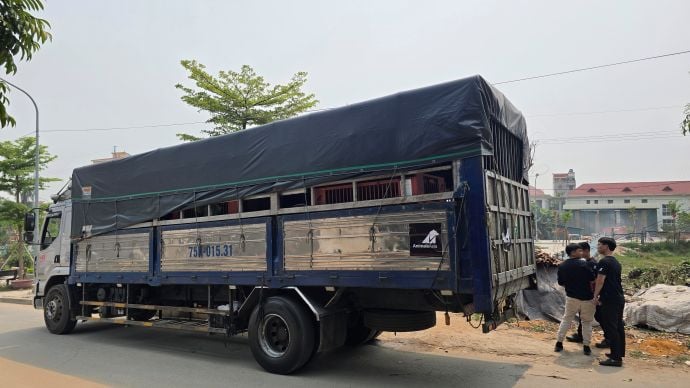
The next two days went by in a blur as the most dedicated carers, led by our Bach Ma Sanctuary Manager, Thuy, stopped every two or three hours to water, feed and clean the bears, to make notes of anything unique about every individual; to record if they ate or left kibble, how calm or reactive they were, and perhaps remember if one liked carrots, or another liked pears. Notes that would not only help on the journey but once they arrived back at the sanctuary, to assist with their ongoing care.
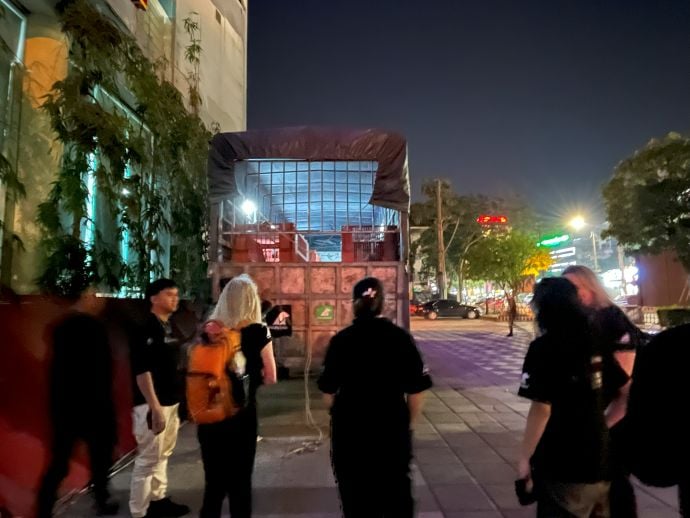
Stops are made along the way to feed and water the bears and check on their well-being.

At the back of the truck, we could hear Bud vocalising and moving around, now that the anaesthetic had worn off. Vet Han had been on a mission to determine the gender of this bear, and was now almost certain that Bud was a female. With that news announced, there were sheepish smiles all round knowing that this gorgeous, boyish bear had fooled almost the entire team.
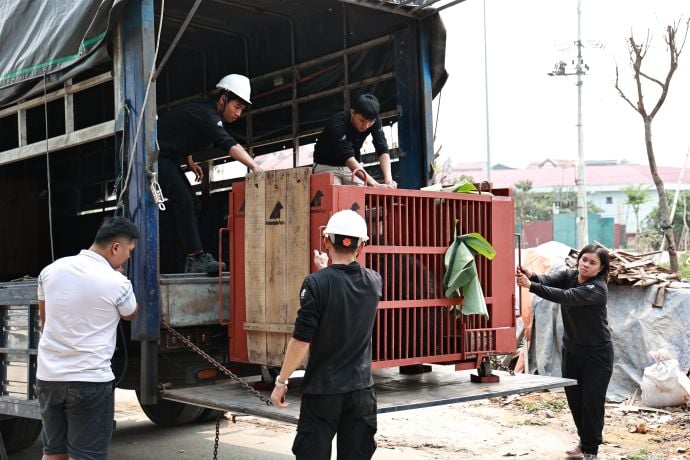
Our bear Bud at loading time. 

As the feeding breaks continued along the road, we wondered what the bears would be thinking each time. Previously on the farm, with groups of people around them, this would often have meant one thing – the painful extraction of their bile. Now people gathering around them heralded only gentle voices, water bowls filled and a rich rainbow tapestry of dragon fruits, apples, carrots, oranges, bananas and kibble. 
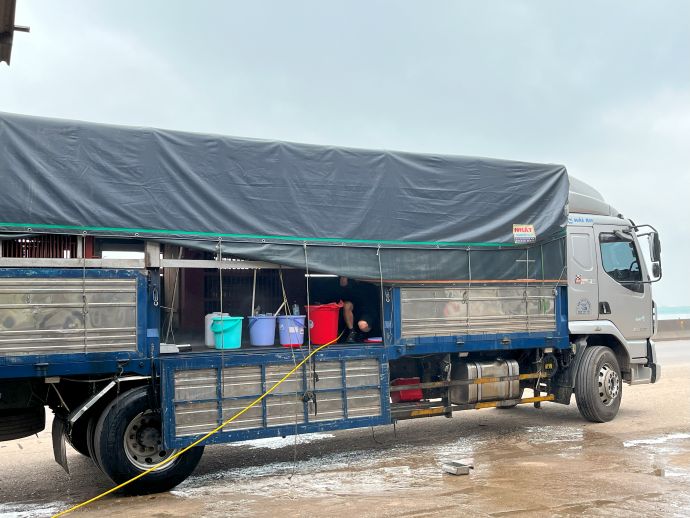
On the road bear care every two to three hours. 

Being at the back of the truck where the doors open to the outside world, Sprout took on the role of gate-keeper – and gave warning "huffs" as our team of carers hopped nimbly inside and began chopping up their food. After a few seconds, all three curious faces turned towards the delicious smells as something told them that these strange, but tempting, delights were all for them. Noses exploring, food bowls emptying, and we could even celebrate such milestones that they were pooping normally too!
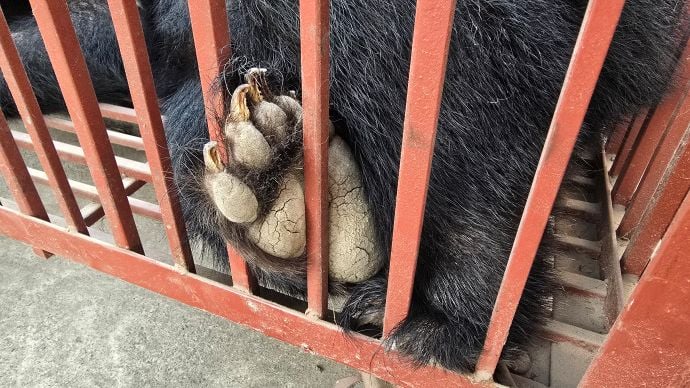
All of the bears have dry, cracked pads from years of standing only on cage bars.

Initial observations of them all revealed that there were wounds on Bloom's head from previous head rubbing on the bars of her farmed cage, and all three bears had cracked and calloused pads from the years of standing only on cage bars. Future health checks will inevitably reveal more but, for now, they were bright, curious and feisty – and alive.

On the second day, they continued to do well. it was clear that they continued to eye us with caution as they ate, but perhaps just a little less suspiciously than before. We knew that it would be a while before they would trust people for the very first time, but meanwhile, it was special to see them exploring food that they had never tasted before. Sprout suspiciously picked a piece of dragon fruit out of her bowl, before placing it on the back of her "dinner plate" paw. And sniffed. Finally reassured that this morsel was really OK to eat, she tucked in with gusto. I couldn't help smiling, knowing that once she enjoyed such treats every day, and her confidence had returned, she would likely become picky with her food!

And what must they have thought when everyone jumped back off the truck? Nothing hurt them, tummies full, before the truck doors closed, and the rumble of the road lulled them back to sleep.
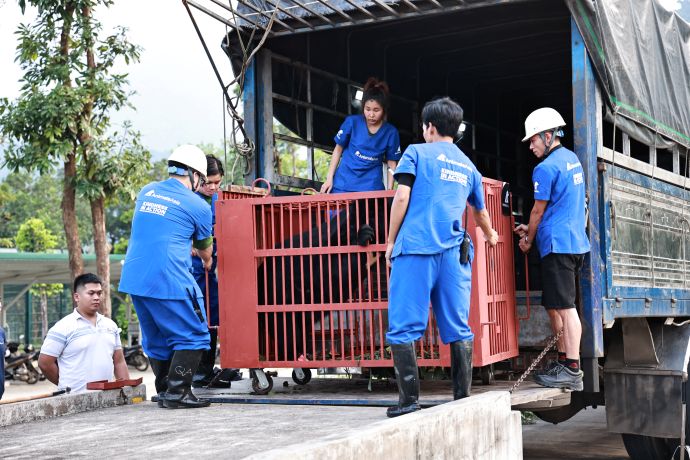
Bud, Bloom and Sprout arrive at the Bach Ma Bear Rescue Centre.

Finally, we rolled into Bach Ma that evening – and again I wondered what on earth they were thinking. From a dingy bear farm in a noisy street of Hanoi, to the forest of the National Park, with its choir of langurs hooting, birds singing, and the vision and smell of nature all around.
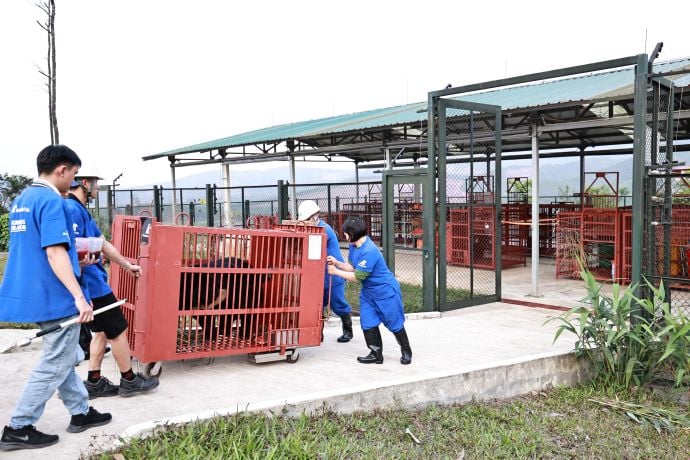
Bloom enters the Quarantine Area at Bach Ma, where the three bears will spend time adjusting to their new surroundings. 

I think we all shed a tear as Bear Manager Ellie and team slickly offloaded them all from the truck and transferred them into quarantine. Here they'll spend 30 days being cared for, understood and loved, until finally being integrated together with new friends, and placing bar-weary paws onto sweet earthy grass.
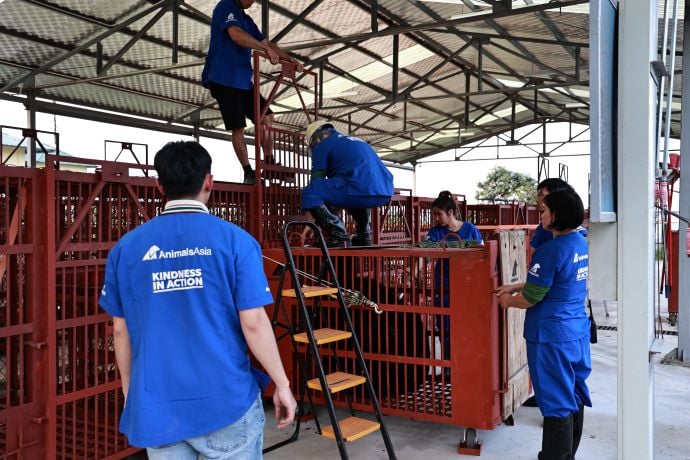
Bud transfers into her double-size quarantine cage - the first step on the road to her recovery. 

Over those two remarkable and emotional days, I thanked the heavens for a team whose only focus was those three broken bears. Professional, seamless and smiling throughout as they joined together to give these bears sanctuary. Bud, Bloom and Sprout are home.

And with endless gratitude to all the government departments of Vietnam who are implementing the full letter of the law and helping these animals to finally take their steps from farms to freedom.
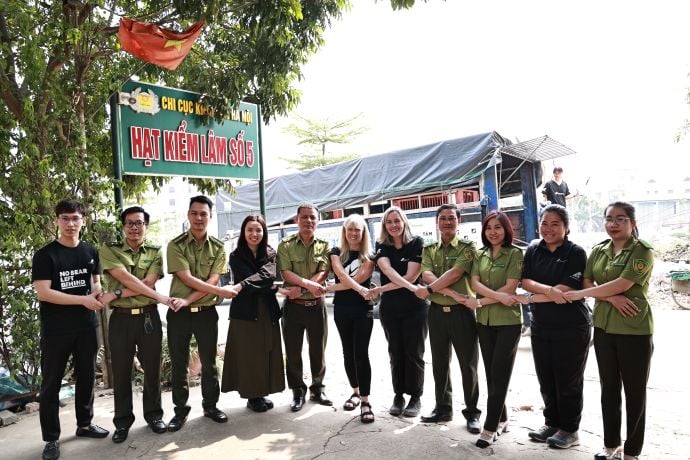
Thanks to Mr Ha, Mr Linh and the FPD Phung Thuong team whose tireless work resulted in this rescue. 

And last but not least, our deepest thanks to those reading this Blog who have helped us to reach and rescue 703 bears, and to those who will help us free more. The promise we have made together draws closer… … as no bear is left behind.