Translate

Posts tonen met het label South Korea. Alle posts tonen

woensdag 11 maart 2026

Humane World for Animals: Two years ago South Korea officially passed a ban on dog meat: of the 17000 dog meat farms 1,204 have closed but with heavy hearts we know we cannot save all the dogs


Today marks two years since the ban on dog meat officially passed in South Korea. Since enforcement began, 1,204 dog farms—or about 78% of all dog farms in the country—have closed. When we started advocating for an end to the industry, about a decade ago, government estimates indicated that there were more than 17,000 dog meat farms.


The phase-out of this industry—from 17,000 dog meat farms to now just over 330—represents a huge achievement. For decades, these facilities had been sites of suffering and death for millions of dogs and would have gone on to torment and kill countless more had the ban not been passed. And this progress is possible because of continued efforts from Humane World for Animals Korea and other Korean animal welfare groups during the phase-out period of the dog meat industry. We’re working to ensure that awareness of and support for the ban remains high so full implementation can be smoothly achieved.


We are also continuing our efforts to rescue dogs from dog meat farms, giving them the chance to live full, loving lives. Later this month, we will be flying 16 dogs we rescued last year from meat farms to Canada for adoption. Additionally, in the spring, we plan to conduct another rescue as part of a farm closure operation.


Because the dog meat ban has no specific directive related to rescuing dogs, our rescues have become even more meaningful. With heavy hearts, we know we cannot save them all, but every life matters. In total, we have rescued nearly 2,800 dogs from dog meat farms in South Korea since our Models for Change program began over a decade ago.


Meanwhile, our teams are working across Asia to end the dog and cat meat trade:

In China, we’ve been partnering and supporting Vshine in its efforts to end the dog and cat meat trade. A survey in Dalian, a major city in Northeastern China, found that 95% of citizens support legislation to protect companion animals and 99% support Dalian banning dog and cat meat; these results boost support for a companion animal protection law, which would include provisions prohibiting the sale and consumption of dog and cat meat in this city. A legislative proposal has been submitted by Vshine and if approved this would make Dalian the third city in China to ban the dog and cat meat trade. And in Yulin, infamous for the dog meat “festival,” which is held each summer, Vshine produced a comprehensive report showing that most residents in Yulin don’t support this notorious event. A petition, endorsed and signed by over 180,000 animal welfare advocates worldwide, called upon the Guangxi and Yulin authorities to shut down the dog and cat meat trade within the province and the city of Yulin.

In India, we are working closely with authorities in the northeast of the country to address the illegal cross-border dog meat trade, in which thousands of dogs are sourced from the state of Assam and transported to neighboring states. We have also launched a livelihood conversion program—this program supports vulnerable women who work in the dog meat markets in transitioning out of the trade and into humane, sustainable livelihoods—and are engaging with authorities to stop the dog meat trade.

In Indonesia, a bill that proposes an explicit ban on the dog and cat meat trade, which is backed by four major political parties, including the ruling party, will be debated this year. This milestone was possible because of continued advocacy by the Dog Meat Free Indonesia coalition, of which Humane World for Animals is a founding member.

In Viet Nam’s Dong Nai province, we’re working on disrupting cross-border transportation of dogs and cats for the meat trade. In Thai Nguyen we are advancing public awareness raising programs to alert people to the dangers of rabies linked to the dog and cat meat trade and deter consumers, and in Ho Chi Minh City—the country’s second largest metropolis—we are in discussion regarding a potential three-year partnership to address the dog and cat meat trade in this city.

It is thanks to advocates all over the world that public perceptions of animals are changing. More people are welcoming companion animals into their lives, and there seems to be a wider acknowledgment that animals deserve to be treated with care and respect. In Asia, the younger generation has been at the forefront of the paradigm shift, demanding action to end the dog and cat meat trade.

When we first began our efforts to close dog meat farms in South Korea, we were told that achieving a ban on the dog meat industry in the country would be impossible. But we put our idealism into action: As our program shut down dog meat farms and transitioned farmers to more humane ways of earning a living, this work ultimately served as a model for the implementation of the nationwide ban. Now, the dog meat ban in South Korea will come into full effect next year, in February 2027.

As part of our mission to end the trade across Asia, we issued a report last year, Ending the Dog Meat Industry in South Korea: Building a more compassionate society toward dogs, which captures how animal advocates, policymakers and citizens came together to end dog meat cruelty. This is a story of how political will, shifting cultural values and strong partnerships can create lasting change for animals. And we will continue to work toward the kinder, more compassionate world at the center of our vision by advocating for a permanent end of the dog and cat meat trade wherever it exists.

Kitty Block is president and CEO of Humane World for Animals. Follow Kitty Block.
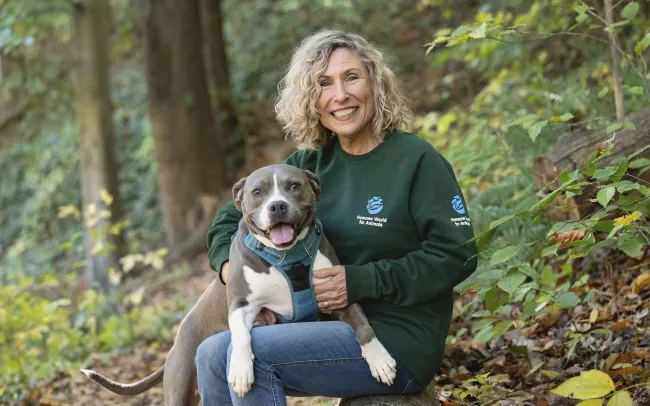
Kitty Block, President and CEO of the Humane World for Animals, poses with Mini

About the Author

Kitty Block is the chief executive officer and president of Humane World for Animals, as well as the chief executive officer of Humane World Action Fund.


woensdag 7 januari 2026

South Korea ends bile farming: for decades, bears were confined to tiny, barren cages, often unable to stand or turn around, many suffered chronic infections, open wounds, and immense pain from repeated bile extraction


As of January 1, 2026, South Korea has officially put an end to its cruel bear bile farming industry, a long-overdue and historic step forward for animal welfare. This monumental decision follows a 2022 agreement between the South Korean government, bear farmers, and animal protection organizations to phase out bile extraction and ban the breeding of bears for this inhumane practice.


For decades, mainly Asiatic black bears were confined to tiny, barren cages, often unable to stand, turn around, or move freely. Many suffered chronic infections, open wounds, and immense pain from repeated bile extraction, a practice condemned by veterinarians and animal welfare advocates worldwide. This ban directly confronts these inhumane conditions and confirms what advocates have been saying for years: the industry was built on extreme cruelty.

The 2022 agreement, led by the Ministry of Environment in partnership with the Bear Farmers Association and animal welfare organizations, set the stage for this historic transition. It provided a clear timeline to end bile extraction and breeding, while also establishing support for farmers as the industry was phased out. Under the new law, any extraction of bile after the grace period carries legal penalties.

The government has committed to overseeing the relocation and lifelong care of the remaining bears, many of whom have never known anything but captivity. While sanctuary space and funding remain challenges, and disputes over compensation continue, the decision represents a major shift toward compassion, accountability, and ethical treatment of animals.

South Korea’s bear bile industry began in the early 1980s, driven by demand for traditional medicine. Ending it would not have been possible without decades of tireless advocacy. Organizations such as World Animal Protection and Green Korea United (GKU), along with countless activists and concerned citizens, played a critical role in raising public awareness and building the momentum to make this change possible.

Maya Pastakia, Global Campaign Manager – Wildlife, Not Medicine, at World Animal Protection, stated:

“This is the result that we, in partnership with Green Korea United, have been tirelessly campaigning and working towards for over 18 years – we are absolutely thrilled. Captive bile bears are cruelly exploited and commodified. They live out their lives in tiny, cramped cages, enduring immense mental and physical suffering – unable to climb trees, play and forage for food as they would in the wild.

“The South Korean government has taken a bold stand for bears – something made all the more impactful by the Bear Farmers Association and animal welfare organizations joining hands and making this momentous decision.


Animals Asia and World Animal Protection

maandag 19 mei 2025

Breaking News: 67 dogs saved from South Korea's dog meat trade living in filthy cages with wire flooring, find sanctuary in the US (5 photos of the rescue)


All photos from Humane World for Animals

Over the weekend, 50 dogs rescued from a South Korean dog meat farm began a new life in the U.S., thanks to Humane World for Animals. Once confined to cramped, filthy cages with wire flooring, deprived of basic care, affection, or even the chance to run, these dogs have now stepped onto solid ground, felt soft bedding, and received gentle hands instead of fear.


Their journey took them from South Korea to JFK Airport in New York. From there, they travelled to the Humane World for Animals’ care and rehab center in Maryland, where they will receive veterinary care and emotional rehabilitation before finding adoptive families. An additional 17 dogs, mothers and puppies, will follow once they’re old enough to travel, bringing the total number of dogs rescued from the dog meat farm to 67.


The rescue operation was part of a broader effort to end South Korea’s dog meat industry, which is in its final chapter. With a government ban set to take full effect in 2027, nearly 40% of farms have already closed. Humane World for Animals has been instrumental in this progress, shutting down 18 farms and rescuing over 2,700 dogs since 2015.


One such farm, operated by Mr. Yu in Cheongju, was recently shut down for cruelty violations. For 40 years, Mr. Yu bred dogs for slaughter, serving their meat in his restaurant and selling them to markets. Now, he’s transitioning to chili farming, proof that alternative livelihoods are possible and necessary.


Joining the rescue was Korean American actor Daniel Henney, a longtime advocate against the dog meat trade. On-site in Cheongju, he helped remove terrified dogs from their cages and also adopted a golden retriever named Juliette, herself a survivor of the dog meat trade.

“As a huge dog lover, and dad to a dog meat farm survivor, it was incredibly challenging to see the suffering of these dogs who have endured so much. It makes me all the prouder to have supported Humane World for Animals’ successful campaign to achieve a ban because it means no more dogs like these will suffer like this again,” said Henney. “South Korea is embracing a new chapter where dogs are our friends not food, and that couldn’t make me more thrilled. I’m looking forward to following the journey of these dogs as they find their forever homes in the United States and put the dog meat industry behind them.”  

The rescued dogs, mostly Jindo mixes, now face a future filled with love and stability. But for too many still trapped in this cruel system, time is running out. Humane World for Animals’ campaign not only offers a second chance for individual dogs, but also challenges the cultural stigma that still surrounds meat farm survivors in South Korea.

“While the law is successfully dismantling the dog meat industry, we are happy to be able to provide a bright future for the dogs on this farm. For them the dog meat industry is over, and they have nothing but soft beds, full bellies and lots of love ahead of them,” said Sangkyung Lee, campaign manager for Humane World for Animals Korea.

donderdag 9 september 2021

Pearl - The last dog rescued from a dog meat farm in South Korea ( video )

Humane Society International     https://www.hsi.org/


Meet Pearl, the last dog rescued from the cages of a dog meat farm on Jindo Island in South Korea. She is one of 66 dogs that were rescued from a cruel fate with our partner LIFE. Pearl is now on her way to a brighter future, and a forever home!

Across Asia, millions of dogs and cats are brutally killed for meat. HSI works all year round in China, South Korea, Indonesia and Viet Nam to end the cruelty. In most countries, dogs are stolen pets or grabbed from the streets. In South Korea, dogs are farmed in appalling conditions.


Dog and cat traders snatch animals from the streets, steal pets from backyards or buy them from owners. They are crammed together on the back of trucks and driven for days—sick, hungry, thirsty, injured and afraid—then beaten to death or hanged in slaughterhouses or markets. In South Korea, dogs are bred in barren cages, without proper food, water or protection from the elements. Most people across Asia don’t eat dog or cat, and HSI is working with local groups to lobby for change.

Dog meat trade facts:

  • Our Chinese partner activists work all year round to rescue thousands of dogs and cats from the meat trade. Whether crammed onto trucks—where they endure dehydration, starvation, broken limbs, shock and disease—or huddled in the corner of a filthy slaughterhouse, our activist partners are these animals’ last hope.
  • In South Korea, dogs are killed by electrocution; elsewhere, they are usually bludgeoned, hanged or more rarely, boiled alive.
  • Across Asia, there is increasingly vocal local opposition to this trade due to cruelty, criminality and human health concerns.
  • Dog meat is mainly, but not exclusively, eaten by older, male consumers under the misapprehension of health benefits.
  • In South Korea and China, most people don’t eat dogs, but there are hot spots and times of year when and where consumption increases. In South Korea, more dog meat is consumed during Bok Nal (the hottest days in summer) than at other times of the year. In China, there is increased consumption in “hotspot” provinces such as Guangdong, Yunnan, Guangxi (where the infamous Yulin dog meat festival takes place), Jilin and Liaoning.
  • The World Health Organization warns that the trade, slaughter and consumption of dogs poses human health risks from trichinellosis, cholera and rabies.
  • Dog meat bans exist in Hong Kong, the Philippines, Taiwan, Thailand and Singapore; most recently, Indonesia pledged support for a ban.