Translate

Posts tonen met het label ban. Alle posts tonen

vrijdag 20 maart 2026

New York City has taken a step forward to ban Foie Gras French for fatty liver produced by force-feeding: a list of countries where the production has been banned


A positive list of countries where the production of foie gras has been  banned

https://proanimal.org/where-is-foie-gras-banned-complete-guide-by-country-2026/

For over a decade, Animal Equality has been on a global mission to end the force-feeding of ducks and geese for foie gras


Foie gras, French for “fatty liver,” is produced by force-feeding ducks and geese until their livers swell up to ten times their normal size. This process involves inserting long metal tubes down the birds’ throats multiple times per day and pumping their stomachs with large amounts of food. After slaughter, their livers are processed into an expensive dish that has been banned in several countries.

“Voters For Animal Rights is overjoyed with this historic victory for animals and grateful that New York City’s right to govern itself remains intact,” said Allie Taylor, president of Voters for Animal Rights (VFAR).


“Today’s ruling not only upholds the city’s ability to make decisions in the best interest of its residents, human and nonhuman alike, but also shows the power of citizens coming together for justice and compassion.

“This is a momentous step forward in creating a kinder, more humane world, and it proves that meaningful change is possible when people refuse to accept cruelty as the status quo,” added Taylor.

While the ruling allows the city to enforce the ban, separate litigation from foie gras producers is still pending, which could delay full implementation.

If fully enforced, the law would make New York City one of the largest jurisdictions in the U.S. to ban foie gras. Advocates say the decision reflects growing momentum nationwide to address cruelty in food production and signals a brighter future for animals.

woensdag 11 maart 2026

Humane World for Animals: Two years ago South Korea officially passed a ban on dog meat: of the 17000 dog meat farms 1,204 have closed but with heavy hearts we know we cannot save all the dogs


Today marks two years since the ban on dog meat officially passed in South Korea. Since enforcement began, 1,204 dog farms—or about 78% of all dog farms in the country—have closed. When we started advocating for an end to the industry, about a decade ago, government estimates indicated that there were more than 17,000 dog meat farms.


The phase-out of this industry—from 17,000 dog meat farms to now just over 330—represents a huge achievement. For decades, these facilities had been sites of suffering and death for millions of dogs and would have gone on to torment and kill countless more had the ban not been passed. And this progress is possible because of continued efforts from Humane World for Animals Korea and other Korean animal welfare groups during the phase-out period of the dog meat industry. We’re working to ensure that awareness of and support for the ban remains high so full implementation can be smoothly achieved.


We are also continuing our efforts to rescue dogs from dog meat farms, giving them the chance to live full, loving lives. Later this month, we will be flying 16 dogs we rescued last year from meat farms to Canada for adoption. Additionally, in the spring, we plan to conduct another rescue as part of a farm closure operation.


Because the dog meat ban has no specific directive related to rescuing dogs, our rescues have become even more meaningful. With heavy hearts, we know we cannot save them all, but every life matters. In total, we have rescued nearly 2,800 dogs from dog meat farms in South Korea since our Models for Change program began over a decade ago.


Meanwhile, our teams are working across Asia to end the dog and cat meat trade:

In China, we’ve been partnering and supporting Vshine in its efforts to end the dog and cat meat trade. A survey in Dalian, a major city in Northeastern China, found that 95% of citizens support legislation to protect companion animals and 99% support Dalian banning dog and cat meat; these results boost support for a companion animal protection law, which would include provisions prohibiting the sale and consumption of dog and cat meat in this city. A legislative proposal has been submitted by Vshine and if approved this would make Dalian the third city in China to ban the dog and cat meat trade. And in Yulin, infamous for the dog meat “festival,” which is held each summer, Vshine produced a comprehensive report showing that most residents in Yulin don’t support this notorious event. A petition, endorsed and signed by over 180,000 animal welfare advocates worldwide, called upon the Guangxi and Yulin authorities to shut down the dog and cat meat trade within the province and the city of Yulin.

In India, we are working closely with authorities in the northeast of the country to address the illegal cross-border dog meat trade, in which thousands of dogs are sourced from the state of Assam and transported to neighboring states. We have also launched a livelihood conversion program—this program supports vulnerable women who work in the dog meat markets in transitioning out of the trade and into humane, sustainable livelihoods—and are engaging with authorities to stop the dog meat trade.

In Indonesia, a bill that proposes an explicit ban on the dog and cat meat trade, which is backed by four major political parties, including the ruling party, will be debated this year. This milestone was possible because of continued advocacy by the Dog Meat Free Indonesia coalition, of which Humane World for Animals is a founding member.

In Viet Nam’s Dong Nai province, we’re working on disrupting cross-border transportation of dogs and cats for the meat trade. In Thai Nguyen we are advancing public awareness raising programs to alert people to the dangers of rabies linked to the dog and cat meat trade and deter consumers, and in Ho Chi Minh City—the country’s second largest metropolis—we are in discussion regarding a potential three-year partnership to address the dog and cat meat trade in this city.

It is thanks to advocates all over the world that public perceptions of animals are changing. More people are welcoming companion animals into their lives, and there seems to be a wider acknowledgment that animals deserve to be treated with care and respect. In Asia, the younger generation has been at the forefront of the paradigm shift, demanding action to end the dog and cat meat trade.

When we first began our efforts to close dog meat farms in South Korea, we were told that achieving a ban on the dog meat industry in the country would be impossible. But we put our idealism into action: As our program shut down dog meat farms and transitioned farmers to more humane ways of earning a living, this work ultimately served as a model for the implementation of the nationwide ban. Now, the dog meat ban in South Korea will come into full effect next year, in February 2027.

As part of our mission to end the trade across Asia, we issued a report last year, Ending the Dog Meat Industry in South Korea: Building a more compassionate society toward dogs, which captures how animal advocates, policymakers and citizens came together to end dog meat cruelty. This is a story of how political will, shifting cultural values and strong partnerships can create lasting change for animals. And we will continue to work toward the kinder, more compassionate world at the center of our vision by advocating for a permanent end of the dog and cat meat trade wherever it exists.

Kitty Block is president and CEO of Humane World for Animals. Follow Kitty Block.

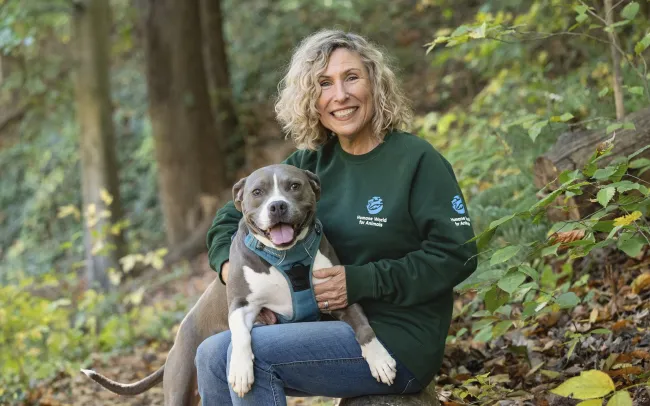
Kitty Block, President and CEO of the Humane World for Animals, poses with Mini

About the Author

Kitty Block is the chief executive officer and president of Humane World for Animals, as well as the chief executive officer of Humane World Action Fund.


vrijdag 5 december 2025

Poland has become the 18th country in the EU to ban fur farming: being the second largest fur producer in the world of 3 million mink, foxes, raccoons, chinchillas each year


Poland has officially become the 18th country in the European Union to ban fur farming after President Karol Nawrocki signed the legislation into law. The decision marks a monumental breakthrough for animal protection, especially as Poland is Europe’s largest fur-producing nation and the second-largest in the world after China. Every year, around 3 million mink, foxes, raccoon dogs, and chinchillas are raised and killed on fur farms in Poland.

The ban follows strong cross-party political support in the Sejm and Senate and comes just weeks after a devastating report from the European Food Safety Authority. The report concluded that animal suffering is inherent to fur farming and that keeping animals in small, barren, wire cages for their entire lives can never meet basic welfare needs. The findings were requested by the European Commission after a Fur Free Europe petition gathered 1.5 million signatures calling for an EU-wide ban.


“This is a historic moment for animal protection in Poland that will end the suffering and death of millions of animals kept on fur farms. Fur farming is not part of Polish heritage, and most Poles oppose fur cruelty, as evidenced by opinion polls and the more than 76,000 petition signatures we recently submitted to the office of President Nawrocki,” said Iga Głażewska-Bromant, Poland Director at Humane World for Animals Europe, while welcoming the ban.


“Today, we can proudly say that Poland becomes the 18th country in the European Union to introduce a ban on fur farming, and we hope this will be a crucial catalyst for change as the European Commission considers the case for banning fur farming EU-wide,” continued Głażewska-Bromant.

Fur farming is one of the cruelest forms of animal exploitation. Animals confined in wire cages are denied everything natural to them, space to roam, dig, play, or express normal behaviors. Many suffer from open wounds, infections, self-mutilation, and extreme psychological distress. The industry has also been linked to dangerous disease outbreaks, including COVID-19 and avian influenza, resulting in mass killings of farmed mink and foxes across Europe.


Poland’s historic decision puts increasing pressure on the few remaining EU countries that still allow fur farming, including Finland, Denmark, Spain, Hungary, and Greece. More than 6 million animals remain on nearly 1,200 fur farms across the EU, even though 24 Member States now fully or partially restrict the practice.

The new law will take effect 14 days after publication, preventing the establishment of any new fur farms. Poland’s existing 200 farms must close by January 2034, with compensation encouraging many to shut down much earlier. Farmers who apply within the first five years will receive the highest payments, accelerating the decline of the industry.

Polish animal protection groups Otwarte Klatki and Viva! have campaigned for years to end fur farming, and Humane World for Animals Europe has worked alongside them as part of the Fur Free Alliance. Their combined efforts, bolstered by shifting public opinion and a global move away from real fur in fashion, helped drive this landmark victory.

Most leading designers now have fur-free policies, including brands such as Max Mara, Saint Laurent, Gucci, Alexander McQueen, Balenciaga, Valentino, Prada, Armani, Versace, Michael Kors, Jimmy Choo, DKNY, Burberry, and Chanel. In total, more than 1,600 fashion brands and retailers worldwide have committed to going fur-free. As real fur becomes increasingly unmarketable and ethically indefensible, more fashion houses are choosing to innovate with sustainable, cruelty-free alternatives.

As the fashion industry continues to move away from real fur, Poland’s ban marks a powerful step toward a cruelty-free future for fashion. We will continue urging the rest of the world to follow suit and #MakeCompassionYourFashion.

donderdag 9 oktober 2025

News:The total ban Indonesia of the cruel practice of dancing monkeys, 10,000 pangolins killed each year for their scales, 3 leopard kittens rescued and more

 Jakarta Animal Aid Network https://www.jaanindonesia.org/

Mano’s Next Step Toward Freedom


Mano, our brave sun bear cub, has reached an important milestone. On 8 September 2025, she was relocated from Tjing’s Forest School to Forest School 2 inside TNWK National Park: the very place where she will one day be released. For now, her dedicated surrogate parents will continue walking with her daily in the forest, guiding her as she learns to adapt and grow more independent.

Forest School is where orphaned wildlife learn the skills they would normally gain from their mothers, skills that can take years to master. For sun bears, cubs stay with their mothers for about two years, so our team steps in to provide that round-the-clock care and guidance.

Mano’s journey began when she was rescued as a tiny cub from the illegal wildlife trade. After months of intensive care, she entered Forest School in October 2024. Now, with her transfer to Forest School 2, she has taken her next big step toward freedom.

BBC Podcast with Femke about the Dancing Monkey ban in Indonesia


JAAN made history in Indonesian animal welfare by leading the fight to end the cruel practice of dancing monkeys. Years of relentless advocacy paid off: Jakarta introduced a ban in 2013, followed by all of Java in 2016, and finally a nationwide ban across Indonesia in 2020.

To commemorate this milestone, the BBC made a podcast! Listen to the 10 minute podcast here https://www.bbc.com/audio/play/w3ct74jl

3 of the 300+ ex-dancing monkey's we rescued since 2013

Amel, Kancil and Meli were rescued in October 2024. Together with a group 15 other ex-dancing monkeys, they are now undergoing a rehabilitation process of 2 years(!) in total. Next year, they will be released back into the forest, together with their new family.
Pangolins are the world’s most heavily trafficked mammals, accounting for as much as 20% of all illegal wildlife trade


Indonesia currently loses up to 10,000 pangolins a year to illegal trade. They are killed in brutal ways for their scales, which are being sold to the traditional medicine market.

On 1 September 2025, our K9 Wildlife Crime Unit confiscated 80 kilograms of pangolin scales (which equals the death of more than 160 pangolins!) and one live pangolin. Our canine heroes, led by Bailey, continue to play a vital role in detecting wildlife at seaports and airports, helping fight against this cruel illegal trade.

Our first detection dog, Bailey, uncovered 289 birds hidden inside a minibus.

On 12 september, our K9 wildlife team worked through the night along the main smuggling route between Sumatra and Java. The birds were rescued and the trader arrested, though sadly, some birds did not survive the journey to our center. The survivors will soon reclaim their much deserved freedom once again.

The illegal bird trade is extremely cruel; wild birds are often captured using inhumane methods like mist nets and glue traps, leading to severe injury or death. Those who survive face cramped, unsanitary conditions during transport and captivity, resulting in high mortality rates. Many are destined for the pet trade, where they endure further suffering due to inadequate care and confinement.
A rare Cuvier’s beaked whale stranded on Gilimanuk Beach, West Bali


Thanks to the swift response of the fishermen, the whale was safely guided back to deeper waters. This rescue highlights the vital role of community training and quick collaboration in protecting marine life.

Umah Lumba works with local communities and authorities across Bali to ensure first responders can act immediately during strandings. After every incident, our team monitors the site for 24 hours to prevent re-stranding. Thankfully, the whale didn’t return. We are deeply grateful to the Pesisir Asih fishermen, BKSDA, and Polairut for their coordinated efforts that helped this magnificent animal find its way home.

Protecting Birds & Boosting Ecotourism: A New Path Forward in Pejarakan
 

In August 2025, Pejarakan Village in West Bali, in partnership with JAAN Indonesia, issued an official advisory banning the capture, keeping, and trade of protected wild birds (such as the Bali Starling and Crested Serpent Eagle) and it promotes community-driven birdwatching and sustainable ecotourism.

The initiative includes training local youth and women as birdwatching guides and establishing new trails to turn conservation into opportunity. This landmark move sends a strong message: protecting wildlife and empowering communities can go hand in hand.

Read more about this success story in our news article

🚨RESCUE UPDATES

On 11 July, we rescued a baby langur who has since been named Sesil. When she came into our care, Sesil was in very poor condition and required intensive treatment. Langurs are delicate animals with highly specific dietary needs, and at her age she should still have been nestled safely in her mother’s arms. Instead, we now rely on a dedicated surrogate caregiver and our trusted veterinarian to provide the constant care she needs to survive.

On 14 July, our team in Sumatra stepped in to care for 170 songbirds from seven different species, all confiscated during a joint operation with our K9 Wildlife Unit. Thanks to the incredible work of our loyal dogs (Bailey, Raju, Bibi, and Sprockel) these birds were saved from the illegal wildlife trade and given a second chance at freedom.
 

On 15 July, our Wildlife Crime Team succeeded in rescuing a Sumatran agile baby gibbon (Hylobates agilis) from a wildlife trader we had been tracking for some time. Working closely with the police in Depok, West Java, we were able to set a trap for the trader and bring the infant to safety. The little gibbon is now receiving round-the-clock care from a surrogate caregiver and our veterinarian, giving this fragile life a chance to recover.


16 August 2025  We received a severely wounded long tailed macaque in West Bali we named Michelle. Michelle was dumped by the owner in the harbor area of Gili Manuk and our team went to catch her with the sedation blow pipe and a trap cage. Finally we managed to bring her to our clinic, and it was clear that if we waited any longer she would have died alone in agony: she had horrific wounds from the chain growing inside her skin and needed multiple surgeries and she will need months of treatment as her skin was already necrotic and the wound severely deeply infected.

August 25 2025  In Tasikmalaya, West Java, our team responded to a report of a severely malnourished long-tailed macaque forced to perform as a dancing monkey in the city center. With the support of the authorities, we located both the monkey and his handler and immediately intervened. Now safely at our center, the macaque (whom we named Ciko) has begun his rehabilitation journey alongside other rescued long-tailed macaques, including those saved in late 2024 from the last major dancing monkey training facility in West Java.
⭐NEWS UPDATES

On 13 august, a man was walking his dog near the West Bali national park and discovered three abandoned leopard cat kittens, only about three weeks old. Unable to find their mother, he brought them to our veterinary clinic at the Umah Lumba Center in West Java. Leopard cats are endangered and very sensitive, making their care a real challenge. Sadly, one kitten did not survive, but the other two are now receiving round-the-clock care from our team, giving them a fighting chance.

Since joining JAAN in 2019, veterinarian Deny Ramadhani has become a leading expert in marine mammal medicine through his dedicated care for rescued dolphins and sea turtles at the Umah Lumba Center. His expertise is now recognized across Indonesia. Since 2023, he has been invited by five universities to train students and give presentations on marine mammal medicine and welfare. We are incredibly proud of Deny and the impact he is making for both animals and future veterinarians.

On 10 September, Bali experienced it's worst flooding in years. Our team assisted a dog shelter in Denpasar by relocating the dogs to a safe new shelter. The floods devastated many homes and displaced both people and animals across Denpasar and Jembrana.

Lobby for change. In Bali we work towards a total ban on keeping primates as pets and we are very close to success. This will become an example for Indonesia as the ban includes non protected primate species like the long tailed macaques. On October 3, 2025 we held a ground breaking meeting leading closer to the ban. 


For those of you who support us through a monthly donation: thank you!!🧡This means the world to us. We will keep fighting to end wildlife cruelty in Indonesia!

Haven't started with monthly donations? Please consider starting today and help us continue with our crucial work🙏
⭐Start supporting JAAN monthly⭐
...