Translate

Posts tonen met het label wildlife. Alle posts tonen

zondag 4 oktober 2026

The war on wildlife: Trump's latest ridiculous move: Killing wild animals to boost numbers of other animals for hunters to kill. 


Last week, President Trump issued a new executive order directing federal agencies to expand hunting and permit the use of lead ammunition and fishing tackle on public lands. The order is called: “Reinvigorating America’s Hunting Heritage.”  

And it is a farce. 

Make no mistake: This is all part of this administration’s wider war on wildlife. 

This latest move comes right on the heels of another attack on the Endangered Species Act, and it could lead to, indeed, a “reinvigorated” hunting of animals such as wolves, bears and mountain lions on public lands. It could also result in the spread of lead in sensitive ecosystems and habitats, a toxicity that harms everyone, people included.   

The executive order operates on a false premise—that hunting helps conservation, and so loosening hunting restrictions is good. Let us disabuse anyone of the notion that this is true: 

1. Lead is dangerous to animals and humans at any level. 

First, it is nothing less than absurd to take steps backward on lead ammunition and tackle. Because of the wide acknowledgment of its toxicity, lead has been removed from gasoline, pipes, house paint and many other common products. The restrictions on lead ammo and tackle that exist are there for good reason.  

More than 130 species of wild animals have suffered from the effects of lead poisoning from spent lead ammunition and fishing tackle. Lead poisoning is one of the leading causes of death for bald eagles and California condors. Raptors ingest lead ammunition fragments left behind by hunters or the carcasses of animals that hunters shoot but don’t recover. In birds, a single ingested shotgun pellet or bullet fragment is sufficient to cause brain damage, impairing critical neuromuscular, auditory and visual responses. Often, the ingestion results in death. Poisoned animals who survive often experience long-term negative effects that make them more susceptible to predation and dangers such as car collisions.   

And of course, a human child exposed to lead can suffer from all kinds of health and developmental problems—which is why it’s common practice for pediatricians across the U.S. to screen children for lead exposure.  

So, why would we take steps backward and sanction the use of lead in ecosystems?


This golden eagle was outfitted with a GPS transmitter. She was found dead 1.5 miles outside of Yellowstone National Park. A necropsy revealed she died from lead poisoning.

2. Ridiculous: Killing some animals to boost numbers of other animals for hunters to kill.  

The executive order says that “The Secretary of War, the Secretary of the Interior, and the Secretary of Agriculture shall coordinate with State agencies to align management practices and conservation plans to promote the growth of game species populations through the… targeted management of predators, competing species, and other population-limiting factors.”  

The “targeted management”—the killing—of wild carnivores (such as grizzly bears, black bears, wolves, mountain lions, coyotes, bobcats and foxes) for the purpose of increasing populations of game species (such as deer, elk and moose) is a ridiculous plan.  

It’s been proven that predator control schemes do not work, in part because populations of deer, elk and other game species are affected by many environmental factors. So, killing wild carnivores to grow other species will not increase ungulate herd sizes, but will only cause pain and suffering, shattering family social structures (when a wolf pack loses even one breeding member, for example, the whole pack can disintegrate leaving orphaned pups) and wreaking havoc on ecosystems.  

Recently, Utah, Nevada and Oregon have killed dozens of mountain lions and coyotes in an attempt to augment bighorn sheep herds. Bighorn sheep populations are in decline because of historic overhunting, and now the animals are facing debilitating diseases which have been spread from domestic sheep.  

And Alaskan officials are killing dozens of brown bears annually too, to ostensibly help flagging caribou herds, who are harmed by a warming climate. 

As if that weren’t enough to ardently oppose this approach to “wildlife management,” the methods used to kill these wild carnivores are often the height of cruelty; steel-jawed leghold traps, strangling neck snares and packs of hounds are just some of examples.  

3. Increased hunting will not bolster the economy. Wildlife watching is more popular and economically significant than hunting. 

Wildlife watching reaches a much broader public than hunting and generates substantially greater economic activity, too, according to the federal government’s own data.  

  • In 2023, the U.S. Fish and Wildlife Service reported that 145.3 million people watched wildlife in 2022, compared with 14.4 million who participated in hunting—that’s roughly ten wildlife watchers for every hunter. In 2022, wildlife watchers spent over  $250 billion, while hunters spent over $45 billion. Wildlife-watching expenditures were more than five times higher than hunting-related expenditures.  
  • In 2024, visitors to national parks spent an estimated $29 billion in local gateway regions, supporting jobs, labor income, value added and broader economic output.  
  • In 2024, the total outdoor recreation spending reached just over $540 billion with hunting and trapping accounting for only 1.24% of that total, according to the Bureau of Economic Analysis. 

These federal sources show that wildlife watching is not only more widely practiced than hunting, but also a larger driver of outdoor recreation spending and local economic benefits. Only 4.6% of Americans hold a paid hunting license in 2026, according to governmental data. Contrary to the myth that hunters pay for wildlife, the truth is that wildlife watchers subsidize hunters.   

Public lands belong to all of us 

Americans value living wildlife and natural places. America’s public lands encompass hundreds of millions of acres and provide a home to thousands of wildlife and fish species. Nearly half the land in the American West is publicly owned and federally managed. These lands are not a private playground for special interests; they are a shared national trust, and they should be managed in ways that sustain healthy ecosystems.  

If the government is meant to represent the interests of the American people, then it should listen to the American people and invest in science-based conservation that protects biodiversity, reduces lead contamination and ensures wild animals can thrive. 

Five ways you can help wildlife right now 

Kitty Block is president and CEO of Humane World for Animals. Follow Kitty Block on X. Sara Amundson is president of Humane World Action Fund.
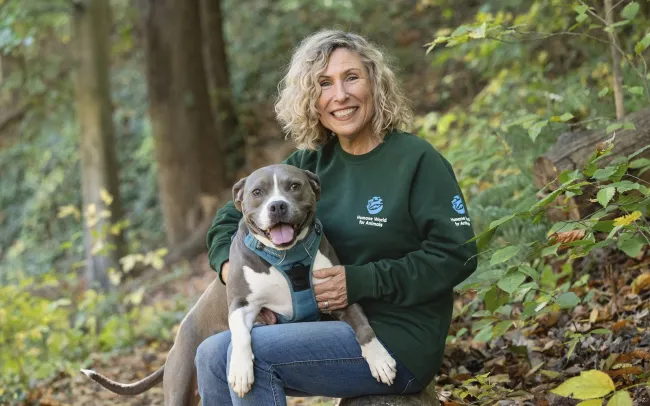
Kitty Block, President and CEO of the Humane World for Animals, poses with Mini

About the Author

Kitty Block is the chief executive officer and president of Humane World for Animals, as well as the chief executive officer of Humane World Action Fund.

zondag 13 september 2026

Trafficking of wildlife is big business 5 baby orangutans found in India are center of a major investigation: how did the critically endangered wild orangutans get to India from Indonesia


Update:      (How it all started under this article)

Indonesia is working to bring five young orangutans discovered in Odisha, India, home as authorities investigate the suspected wildlife-trafficking network behind the operation.


According to Indonesia’s Ministry of Forestry, the orangutans were discovered on September 8 in a forested area of Bhogarai/Udaipur in Jaleswar, Balasore District, near Odisha’s border with West Bengal. Initial information provided to the Ministry indicates that the five young orangutans are approximately 1 to 1.5 years old. They are now being cared for at Nandankanan Zoological Park in Bhubaneswar. https://www.nandankanan.org/ 

Preliminary observations suggest the orangutans may have originated from Sumatra. However, DNA testing is still needed to determine which species of orangutan they are and where they came from.


Indonesia’s Ministry of Forestry is coordinating with India’s CITES Management Authority, the Indian Embassy in Jakarta, the Indonesian Embassy in New Delhi, Indonesia’s scientific authority, and other government agencies as it works to verify the orangutans’ origins and pursue their possible return to Indonesia. The Ministry says the process must comply with both national law and international CITES requirements.

If the orangutans are returned to Indonesia, they would undergo health examinations, quarantine, genetic identification, behavioral assessments, and rehabilitation tailored to the needs of each individual. If they later meet the necessary criteria, they could be considered for eventual release back into their natural habitat.

The Ministry said protecting the five orangutans remains a priority as authorities continue working to uncover the trafficking network involved.

__________________________________

Five young orangutans found in Odisha, India, are now at the center of a major investigation into suspected illegal wildlife trafficking.

The orangutans were discovered Tuesday morning near Badapai village in Odisha’s Balasore district. Residents reportedly noticed them in the trees and contacted forest officials, who then brought all five into their care.

Orangutans are native to the rainforests of Indonesia and Malaysia and are not found in the wild in India. All three species are Critically Endangered, making the discovery especially concerning.

Authorities are now trying to establish where the animals originated, how they reached Odisha, and whether they were being moved as part of a larger illegal wildlife trafficking network.

The discovery comes as wild orangutans continue to face growing threats across their remaining habitat in Indonesia.

Forest and land fires are currently devastating parts of Indonesia, placing even greater pressure on orangutan habitat already destroyed and fragmented by agricultural development and palm oil expansion.

Indonesia’s meteorological agency, BMKG, has warned of continued fire risk during the current dry period. On September 2, officials recorded 463 high-confidence hotspots in Kalimantan and 264 in Sumatra, both regions where wild orangutans live.

On August 30, an adult male orangutan named Sempurna was found severely weakened and struggling to breathe in a dry ditch inside a community palm oil plantation while the nearby forest was burning. Indonesian wildlife authorities suspected smoke exposure had affected him. Despite rescuers’ best efforts to save him, Sempurna tragically died.

Orangutans are protected under Appendix I of CITES, which provides the convention’s highest level of international trade protection for species threatened with extinction.

There is currently no evidence linking Indonesia’s forest fires to the five orangutans found in India.

As the investigation continues, authorities will be working to identify where the animals came from, how they were transported, and whether other individuals or a wider trafficking network were involved.

World Animal News will continue following this developing story and share updates as additional information is confirmed by wildlife authorities.


www.worldanimalnews.org


dinsdag 21 april 2026

After the Chernobyl disaster 26th April 1986, 40 years ago, the abandoned exclusion zone has seen a remarkable recovery of local wildlife :what happened to the many dogs?


In the decades since the Chernobyl disaster, the abandoned exclusion zone has seen a remarkable recovery of local megafauna. Herds of grazing ungulates and the large predators that feed on them have repopulated the landscape in the total absence of human beings, along with countless small animals.


Telling the story of Chernobyl in numbers 40 years later involves dauntingly large figures and others that are even more vexing because they’re still unknown. A look at numbers that hint at the scope of the world’s worst nuclear accident, the explosion and fire at the Chernobyl nuclear power plant on April 26, 1986:


On April 26, 1986, a routine safety check gone wrong led to one of the worst nuclear disasters in history. While the Ukrainian people mourned the loss of human life and the necessary abandonment of their homes, the earth mourned the loss of over 600 hectares of pine trees and the destruction of an entire ecosystem. The only living things that remained were the animals left behind. The forgotten ones, the abandoned ones, the ones who now had to learn how to survive in a nuclear wasteland. The wild dogs of Chernobyl.

When the canine population grew to a point that was uncontrollable, something had to be done—humanely. The solution was an animal-first project that involved mass sterilization of the dogs living on the site carried out by the Dogs of Chernobyl program, part of the Clean Futures Fund (CFF).


Forced exclusion by the thousands

In the aftermath of the nuclear disaster, the surrounding 30-kilometer area now known as the Chernobyl Exclusion Zone saw the evacuation of around 300,000 including the entire population of the nearby worker town of Pripyat. Those who didn’t evacuate, though, were the dogs. To dog owners, fleeing your hometown without your beloved four-legged friends may seem unthinkable, but the panic that followed the explosion, alongside authorities’ instructions to leave everything behind, including pets, meant that many furry friends became homeless and familyless overnight.


With no vets, families, or even people left in the exclusion zone, the dogs of Chernobyl were left to fend for themselves, all while radioactive matter from the explosion seeped into their bones. The radioactivity can cause major health issues, and fear of animal-human contamination also prevents the dogs from being released into society.

Fast-forward to 2017 and there were an estimated 1,000 stray dogs living throughout the exclusion zone. Somehow, despite countless hardships and grueling living conditions, these dogs survived, reproduced, and continued to live on the abandoned site of the Chernobyl Nuclear Power Plant.

The sheer number of dogs was becoming a problem, and efforts by Soviet authorities to cull the dogs were far from well-received by the Ukrainian population. Workers at the plant—who are now working on the decommissioning process—had taken an interest in building shelters and feeding the dogs and wanted to enlist help to care for them as breeding spiraled out of control. That’s where Erik Kambarian and Lucas Hixson came in. The two met in 2015 on visitor trips to the power plant with a group of professionals with backgrounds in nuclear energy and emergency response, and quickly saw the need for some sort of intervention to help both the humans and the animals affected by the disaster.

Building the program

In 2016, Kambarian and Hixson established the Clean Futures Fund (CFF)—an organization that provides support to communities affected by industrial accidents—and subsequently launched human and animal healthcare programs in 2017, including the Dogs of Chernobyl initiative. Portland-based Jennifer Betz, Veterinary Medical Director and Board Member at the program, explains that the initial goal of the project was to “do some sort of spay-neuter program and just keep them from reproducing, but allow them to live as happy as they possibly can.” Betz was contacted by the founders to join the program as she’d worked with organisations worldwide on similar projects: “We go into areas where they can’t afford veterinary care or there isn’t veterinary care, like Chernobyl, and we provide free spaying and neutering to help control the population, veterinary care, vaccinations, deworming, and wellness care.”

The first project was launched in 2017 when the CFF team and volunteers flew from the US to Ukraine to start the spay and neuter program. Despite the fearful nature of the dogs, Betz and her team were able to capture and treat 300 dogs during the first mission. Why not more? These dogs aren’t like your childhood pup—they’re feral. “They are not aggressive, but they’re very fearful,” Betz explains. “You can get close to them, but a lot of times you can’t touch them. So capturing them is very difficult.” During each mission on the site, a lot of time is spent building a trust that will enable the CFF team to provide medical care and help the dogs understand that these are good people.

Projects like these don’t come cheap, and while the travel expenses for the trip are covered by each individual volunteer, the organization still forks out around $20,000 per Chernobyl mission in order to bring all the supplies they need, and provide food, transportation, and accommodation on the ground. However, some crucial equipment was kindly donated by SPCA International, a huge help for the Dogs of Chernobyl project. “They had purchased all of our surgical instruments, surgery tables, and drapes,” Betz recalls.

Successes, but unexpected roadblocks

After effective programs in 2017, 2018, and 2019, the Dogs of Chernobyl team had successfully sterilized between 85-90% of the dog population, Betz explains. And then, the unthinkable happened: a pandemic and global lockdown, halting international travel and thus, temporarily suspending the organization’s spay-neuter project. During this time and without the presence of the CFF team, the non-sterilized dogs reproduced and new litters of pups were born. The new dogs came from, Betz suspected, a particular pack living on the site that was even more fearful than the others. “When you would try to catch them, they would take off and go into areas that you can’t access, like under fences. This population of dogs has been a problem for us ever since 2017,” Betz says. It wasn’t until the 2022 mission that Betz and her team were able to resume their on-site work.

Working with the dogs of Chernobyl is a physically demanding job. From setting up surgical clinics to building shelters, installing automatic feeders, and training feral dogs, this type of work isn’t for everyone. But Betz and her team are determined to help these dogs. Even with the many obstacles they’ve faced, this project is one close to their hearts: “Yes, Covid stopped us for a little while, but we’re here. We’re here to help,” she says.

A seemingly simple solution would of course be to screen the dogs for contamination risk, and then let them be adopted into warm, loving homes. But Betz explains that the process is harder and riskier than you might think. In an initial trip to the exclusion zone, the CFF team found an abandoned litter of puppies, and then a second litter after that. With about 34 small, vulnerable dogs on their hands, the team went through a taxing process to get the puppies off the site. “We had to get special permission from the exclusion zone, from the power plant, from all of the authorities—about 100 signatures to allow us to remove these dogs from the zone because you cannot legally remove anything from the exclusion zone due to radioactive contaminants,” Betz says. “So we petitioned them and said we will take care of them, vaccinate them, monitor them, and house them as long as we can to determine that there isn’t anything that’s coming out in their feces—which takes about three months—to assure that they were not going to pose a threat to the humans.” Add to that a six-month quarantine and about $4,000 to get the pups into the US or Canada and the whole process is expensive, exhausting, and—especially—it can be traumatizing for the dog.

So while 34 radioactive dogs were successfully adopted, the organization decided “they would act as ambassadors of our program so we could follow them and continue to see how they’re doing, find out if they’re developing any cancers later on in life,” Betz says. Their goal isn’t to disrupt the dogs’ lives by removing them from their home, but “to make them as comfortable as they possibly can be where they live. Yes, I’d love for all of them to have a great home, but their home isn’t so bad where they are.”

image
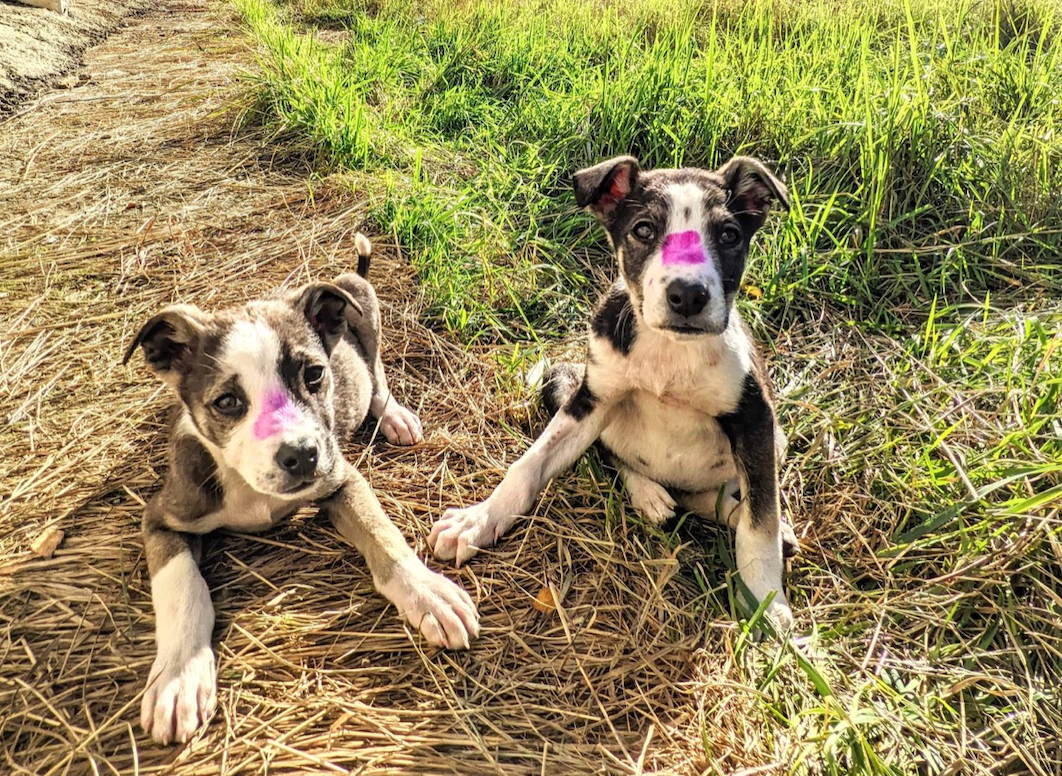
Sterilized dogs with temporary ink marks to ensure they don’t get rcaught by the CFF team. Photo credit: CFF

Working on radioactive grounds

While the radiation levels on the Chernobyl site were deemed safe for workers in recent years, the dugouts and trenches created during the Russian invasion of the site in March 2022 have potentially released new masses of radioactive matter previously buried in the soil. A research project currently being carried out by Greenpeace Germany, with the approval of the Ukrainian government and in cooperation with scientists from the State Agency of Ukraine on the Exclusion Zone Management (SAUEZM) to determine the current levels of radioactivity in the area.

Working on a radioactive wasteland comes with droves of precautionary measures and stringent safety procedures. Betz explains that a typical day starts out with radiation control: “They do a whole body count of you and take measurements to see what you have as far as radiation contaminants. And then we are issued dosimeters that we are to wear for basically 24 hours.” In terms of clothing, anyone who enters the site has to be fully covered in protective gear. “When we’re there we have to wear long sleeves, special long coats, special long pants, and special boots that stay in the area,” Betz says. After a long day of treating and feeding the dogs, the team “turn in our dosimeters and then go back to radiation control our whole body, count our measurements and everything once more.”

The impact of the war

When Betz and the team planned to perform a “scouting mission” in May of this year, their goal was to figure out how to catch the uncatchable dogs. However, Russia’s invasion of Ukraine in February put an abrupt halt to the organization’s campaign. With the Russian Armed Forces controlling the Chernobyl exclusion zone, the dogs were left without the food and care they had come to know from the workers at the plant. While some workers managed to occasionally sneak out and feed the pups, many of the dogs were starving to death.

Once the Ukrainians regained control of the exclusion zone and power plant site, the workers on the ground were able to go back out to the dogs and feed them. While recovering health and strength is a huge positive, Betz says this also created problems: “These dogs were fattened back up and got healthy and then started breeding,” and with breeding come puppies, and with puppies come risks. Betz says she knew she and her team had to do something: “We were going to have a bunch of new litters before winter. They were going to freeze to death. They were going to suffer.”

Betz and the Dogs of Chernobyl team assembled a small group of volunteers and took a risk: they were to sneak into Ukraine in the middle of a war and resume their efforts to help the dogs. In June 2022, after a flight from the US and a train from Poland, along with permission from Ukrainian authorities to enter the Chernobyl site, Betz and her crew set out on a five-month mission to spay and neuter the remaining, until now uncatchable dogs. Instead of embarking with a big group of volunteers, Betz says the strategy this time was different, “We only took specialized people that we’ve had in the past. We only brought basically six people and then [we worked with] the Ukrainians.”

Among the medical supplies, food, and outdoor sleeping equipment (because hotels weren’t an option this time around) the team also brought care packages for the Ukrainian soldiers they met along the way to the site. “Each one of us brought little goodie bags that we made, with little things for the military at the checkpoints. They had socks and hand warmers, beef jerky, and things for them to have. Those were purchased by the volunteers themselves,” Betz explains. The CFF organization as a whole has been supporting the Ukrainian population since the invasion began: “We’ve provided over $100,000 since the beginning of the war in assistance to the people of Ukraine,” Betz says.

The power of social media

The Dogs of Chernobyl project has gained a lot of traction on social media, particularly trough Tik Tok, where the CFF team shares videos of the dogs on the site to raise awareness of their efforts. Betz explains that a lot of what they do on social media is educational, especially for the younger generations. “There’s a lot of people that don’t know [what happened]. Younger people weren’t around in 1986, so they don’t know anything about Chernobyl so we try to educate as best we can.”

The organization’s presence online has also led to a lot of adoption requests. Unfortunately, it can’t be done. Betz says people all over the world want a Chernobyl puppy, “I get 10 or 15 emails a day asking ‘can I adopt a dog?’” But she encourages people to instead adopt locally and “go next door to your shelter,” as there are plenty of dogs that need homes without traveling across the world.

Because of the sensitive situation of the organization’s most recent mission, social media campaigns for funding were halted. Betz explains how broadcasting that a group of Americans would be traveling to Chernobyl in the middle of a war wouldn’t have been safe. However, this affected the number of donations they were able to collect for this mission. “We usually get a lot of donations beforehand in preparation for our campaign, so we weren’t able to do that [this time]. We didn’t post anything until everybody was safely back home, so we are getting some donations from there now but nowhere near what we normally do for a campaign, but that’s just the nature of the beast for right now, it’s the way things are.”

Cover photo: ChNPP
Feature photos: Clean Futures Fund

maandag 26 januari 2026

Video:The most hated dog in Australia: The Truth About Dingoes! : A message for Tourists 'respect wildlife in Australia and leave them alone'


K'gari dingoes involved in death of Canadian backpacker Piper James euthanased

A dingo sniffs the sand on K'gari

Queensland government officials have euthanized the dingoes involved in the death of Piper James. (ABC Wide Bay: Pat Heagney)

In short:

The Queensland government has put down six dingoes involved in the death of a Canadian backpacker on K'gari, with more to be culled in the coming days.

At least one dingo was observed behaving aggressively towards a camper in the past week, Environment Minister Andrew Powell said.

What's next?

Traditional owners say they were not consulted about the decision and are considering legal action.