President Nawrocki signed the legislation into force today, making Poland the 24th country in Europe to end fur farming. As Europe’s top fur producer with mink, fox, chinchilla and raccoon dog farms housing around 3.4 million animals, this is a significant signal to the EU as it considers a Union-wide ban.
The legislation has made steady progress since 2024, with the parliament previously voting in favour of the motion as MPs from across the political spectrum showed support for a nation-wide ban on the cruel farming practice.
Investigations into Poland’s fur farms have repeatedly revealed animals confined in cramped and dilapidated individual cages, with poor access to food and water and without any enrichment.
Co-drafted by Anima International and MP Małgorzata Tracz, the key provisions of the legislation include:
An immediate ban on establishing new fur farms;
An 8-year transition period for existing operations;
Degressive compensation for breeders over the first 5 years;
12 months’ severance pay and career transition support for farm workers.
Peaking in size in 2015, the Polish fur industry has been in steady economic decline, now contributing only around 0.01% to GDP.
Public support for the ban has consistently increased over the years, with the most recent study from November 2025 showing that 68.2% of respondents support the ban on fur farming.
This is a breakthrough, historic moment, one that Poles have been waiting decades to see. We are delighted that legislation is finally reflecting public sentiment and that the President along with the majority of MPs have chosen to ban fur farming.
Małgorzata Tracz, Polish MP
As Poland becomes the 24th country in Europe to implement restrictions or a ban, a very strong opposition to the industry is clear across the Union.
The European Commission is still to announce their final decision on the Fur Free Europe European Citizens’ Initiative, and there is a clear need to implement a unified approach across the EU in support of the decisions of Member States and citizens.
I read this news for the first time and can hardly believe this is Poland, a member of the European Union ! The Netherlands has a Political Party for Animals ( PvdD) and I can assure you that I will be asking them questions next week. I will update as soon as possible.
Hundreds of poultry farms in Poland operate without the required environmental permits and therefore remain largely out of sight of regulators. Research by The Bureau of Investigative Journalism (TBIJ) shows that these are 'ghost companies', which hardly exist on paper. But in reality, these ghost chicken farmers keep animals on a large scale, including for export.
The problem goes beyond administrative sloppiness. Because these companies are not properly registered, these 'ghost chicken farmers' often remain out of sight of supervision. Different bodies point at each other, so that supervision is lacking. There is often a lack of central responsibility, which means that control becomes fragmented in practice. Because what is not in the system simply does not exist.
Ghost chicken farmers
However, the consequences are not phantoms. There are known cases in which significantly more animals are kept than allowed. There are also signs of illegal discharges and water pollution, with bacteria such as E. coli being found in surrounding areas. Local residents, including children, are said to have developed health problems as a result.
The risks are also high within the farms themselves. Due to the large number of animals close together and the lack of supervision, the risk of disease outbreaks increases. To control this, intensive poultry farming often uses antibiotics, which are subject to strict rules.
According to a recent report by the European Medicines Agency, Poland ranks second in the EU in terms of total sales of antibiotics for veterinary use. According to The Bureau of Investigative Journalism, this means that an average broiler chicken in Poland receives three to four courses of antibiotics during its short life of about six weeks and is therefore under treatment for almost half of its life.
This raises questions about resistance and its broader public health implications. For example, salmonella can become resistant to antibiotics. Recent EU audits also point to serious shortcomings in the control of this bacterium in Poland. It is striking that official figures on infections are considerably higher than the figures reported by producers themselves, which raises the question of whether the true extent of the problem is fully understood.
Out of the picture, no supervision
Although European regulations were tightened in 2022 to reduce the risk of so-called 'superbugs', research shows that the use of antibiotics that are crucial for human healthcare actually increased on Polish poultry farms in 2023. At the same time, monitoring is lagging behind the rapid growth of the sector, partly due to staff shortages and limited resources at inspection services.
Increasing the number of animals in more intensive farming not only increases the risk of resistance, but also of the spread of other diseases, such as bird flu. Between 2021 and 2023, almost two hundred outbreaks were registered in Poland. In one case, contaminated turkey meat was even exported to other EU countries before the contamination was discovered.
Animal welfare
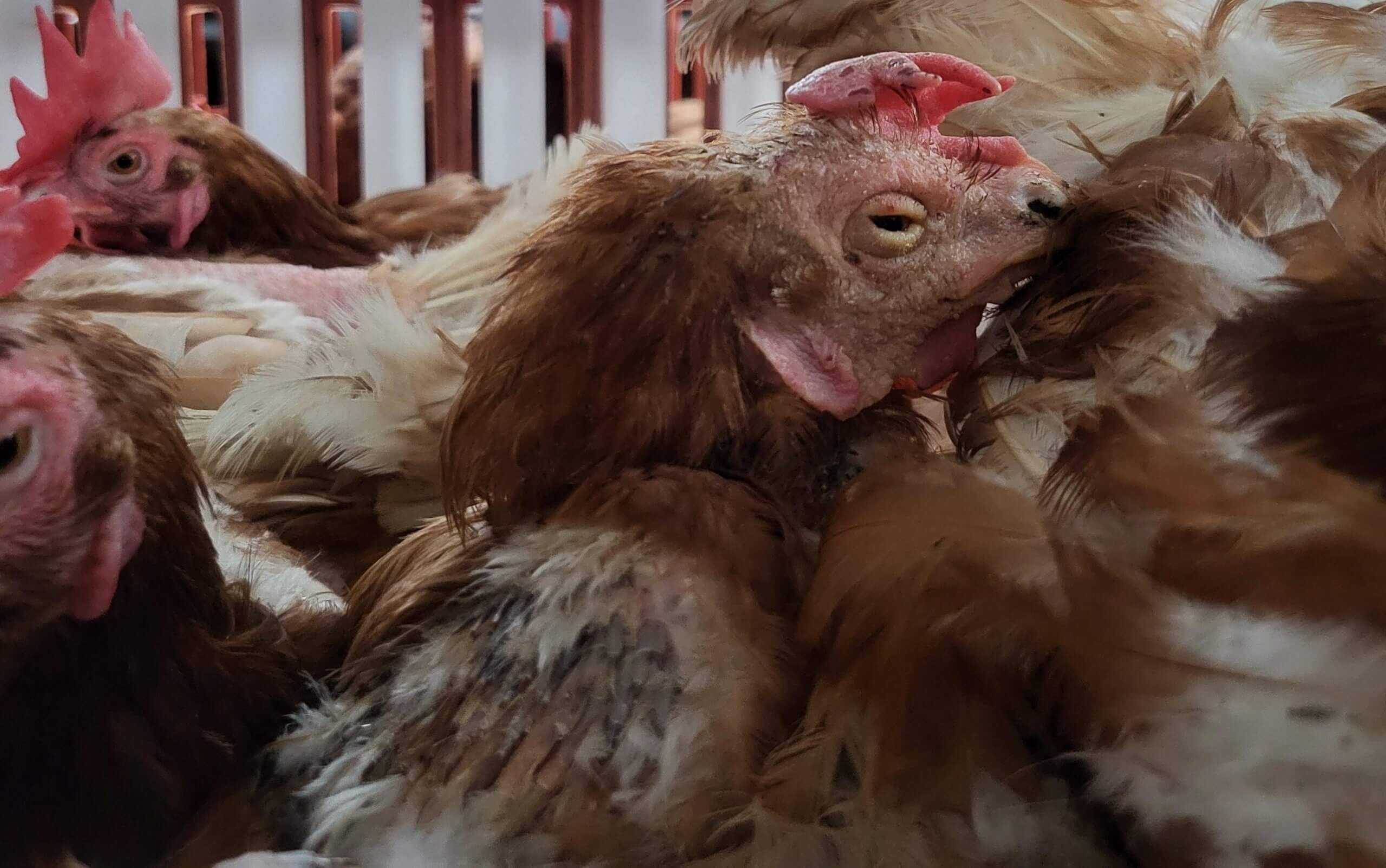
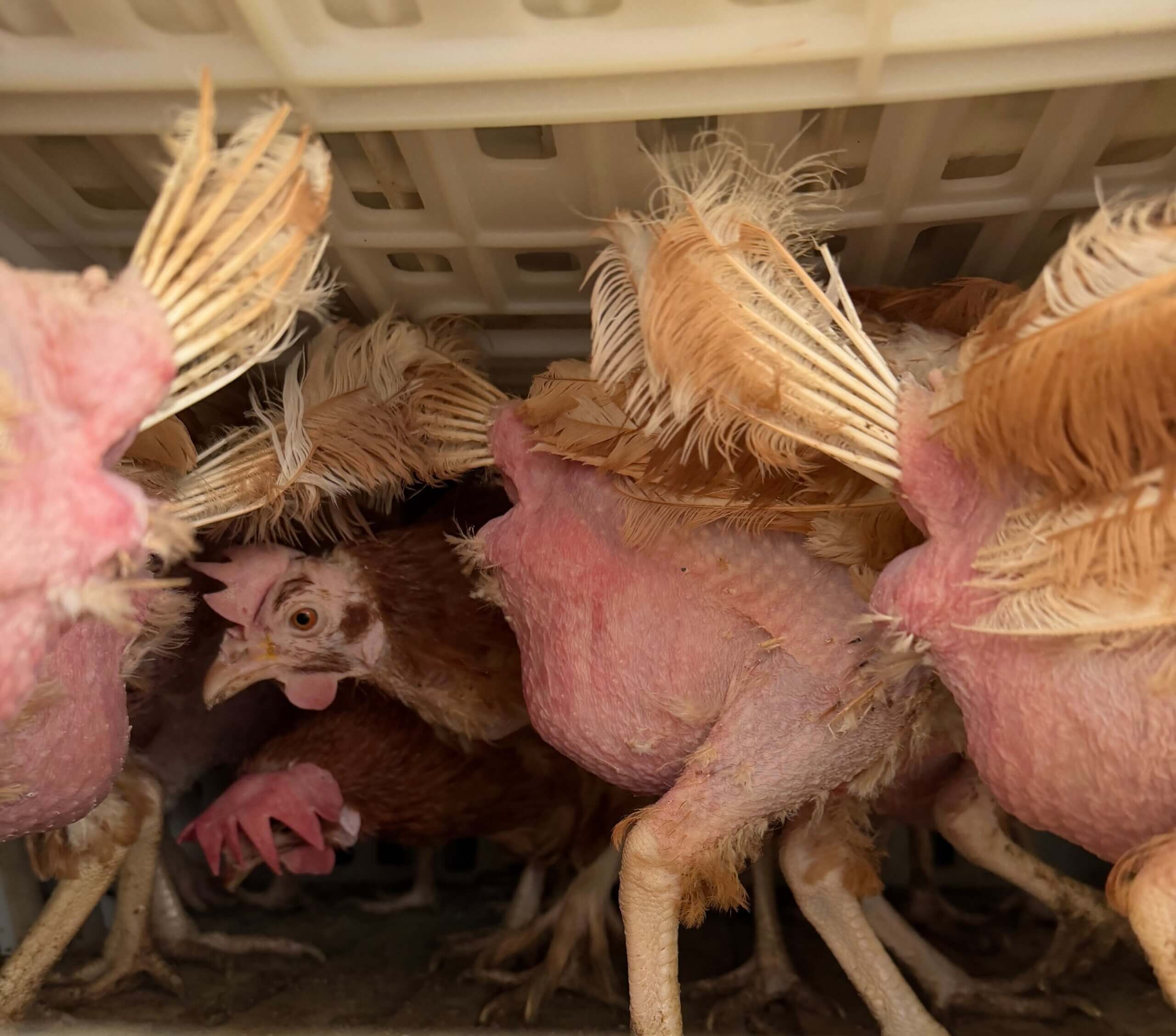
At the same time, what goes on within these companies remains largely out of the picture. This naturally raises the question: what does this mean for the animals themselves? If it is not clear how many animals there are, their welfare will also remain completely out of the picture. Exactly how many animals are kept, under what conditions and with what care, is often unclear. It is precisely this invisibility that makes the situation worrying.
Although there is no insight into these ghost farms, it is known what the conditions in intensive poultry farming usually look like. Chickens live in their thousands in enclosed barns, with little or no room to show natural behaviour. Even under regular supervision, their well-being is already under pressure. What this means for animals on farms that operate outside that supervision is anyone's guess and certainly not reassuring.
Not a far from my bed show
The fact that ghost chicken farmers are not a local problem is evident from Poland's role as one of the largest producers and exporters of poultry meat and eggs in Europe. A large part of this production is for export and also ends up on European plates, including in Dutch supermarkets.
Although the situation in Poland is striking because of its size, signs of underregistration and exceeding numbers are also known closer to home. In the Netherlands, for example, outbreaks of bird flu revealed cases in which more turkeys were kept than allowed.
System too vulnerable
A system that depends on registration, but at the same time leaves room to operate out of sight, is by definition vulnerable. Because what does not officially exist, you cannot control. And if this is not enforced, it can continue to exist, regardless of the consequences for animals, people and the environment.
Poland has officially become the 18th country in the European Union to ban fur farming after President Karol Nawrocki signed the legislation into law. The decision marks a monumental breakthrough for animal protection, especially as Poland is Europe’s largest fur-producing nation and the second-largest in the world after China. Every year, around 3 million mink, foxes, raccoon dogs, and chinchillas are raised and killed on fur farms in Poland.
The ban follows strong cross-party political support in the Sejm and Senate and comes just weeks after a devastating report from the European Food Safety Authority. The report concluded that animal suffering is inherent to fur farming and that keeping animals in small, barren, wire cages for their entire lives can never meet basic welfare needs. The findings were requested by the European Commission after a Fur Free Europepetition gathered 1.5 million signatures calling for an EU-wide ban.
“This is a historic moment for animal protection in Poland that will end the suffering and death of millions of animals kept on fur farms. Fur farming is not part of Polish heritage, and most Poles oppose fur cruelty, as evidenced by opinion polls and the more than 76,000 petition signatures we recently submitted to the office of President Nawrocki,” said Iga Głażewska-Bromant, Poland Director at Humane World for Animals Europe, while welcoming the ban.
“Today, we can proudly say that Poland becomes the 18th country in the European Union to introduce a ban on fur farming, and we hope this will be a crucial catalyst for change as the European Commission considers the case for banning fur farming EU-wide,” continued Głażewska-Bromant.
Fur farming is one of the cruelest forms of animal exploitation. Animals confined in wire cages are denied everything natural to them, space to roam, dig, play, or express normal behaviors. Many suffer from open wounds, infections, self-mutilation, and extreme psychological distress. The industry has also been linked to dangerous disease outbreaks, including COVID-19 and avian influenza, resulting in mass killings of farmed mink and foxes across Europe.
Poland’s historic decision puts increasing pressure on the few remaining EU countries that still allow fur farming, including Finland, Denmark, Spain, Hungary, and Greece. More than 6 million animals remain on nearly 1,200 fur farms across the EU, even though 24 Member States now fully or partially restrict the practice.
The new law will take effect 14 days after publication, preventing the establishment of any new fur farms. Poland’s existing 200 farms must close by January 2034, with compensation encouraging many to shut down much earlier. Farmers who apply within the first five years will receive the highest payments, accelerating the decline of the industry.
Polish animal protection groups Otwarte Klatkiand Viva!have campaigned for years to end fur farming, and Humane World for Animals Europe has worked alongside them as part of the Fur Free Alliance. Their combined efforts, bolstered by shifting public opinion and a global move away from real fur in fashion, helped drive this landmark victory.
Most leading designers now have fur-free policies, including brands such as Max Mara, Saint Laurent, Gucci, Alexander McQueen, Balenciaga, Valentino, Prada, Armani, Versace, Michael Kors, Jimmy Choo, DKNY, Burberry, and Chanel. In total, more than 1,600 fashion brands and retailers worldwide have committed to going fur-free. As real fur becomes increasingly unmarketable and ethically indefensible, more fashion houses are choosing to innovate with sustainable, cruelty-free alternatives.
As the fashion industry continues to move away from real fur, Poland’s ban marks a powerful step toward a cruelty-free future for fashion. We will continue urging the rest of the world to follow suit and #MakeCompassionYourFashion.



.jpg)

