Translate

Posts tonen met het label RSPCA. Alle posts tonen

dinsdag 21 juli 2026

A small monkey dehydrated and frightened found in bus 302 in London hidden in a cage inside a laundry bag: RSPCA "more abandoned monkeys will follow due to new legislation"


Photos RSPCA  Royal Society Prevention of Cruelty to Animals

Abandoned monkey found in laundry bag on London bus

Animal welfare charities say marmoset could be ‘first of many’ since new law on primate licenses and microchipping

A “stressed and dehydrated” monkey has been found in a laundry bag on a London bus in what animal welfare charities warn could be the “first of many” abandonment's now owners must obtain primate licenses.

The female common marmoset was discovered on a 302 bus waiting in Kensal Rise, north-west London, on Friday by a passenger whose buggy was obstructed by the bag containing the monkey in a cage. The monkey has since been named Oyster after the London transport payment system.

The bus driver contacted the RSPCA, which handled 238 reports of primate neglect and cruelty between 2021 and 2025.

New legislation passed in April mandated that all primates kept in England are licensed and micro chipped. Owners who failed to obtain a license by 6 April risk an unlimited fine or jail

Oyster was abandoned on a 302 bus in Kensal Rise, north-west London, in a cage inside a laundry bag. 

Alison Cronin, the director of Monkey World and a contributor to the new legislation, said over the past decade “a lot of well-meaning people … have fallen victim to people on social media promoting these wild animals as good domestic pets”.

She said UK breeders were “making a killing” out of this misconception, though she welcomed the law change’s requirement for them to ensure they were only selling monkeys into homes with suitable environments.

Although a Born Free survey in January suggested there had been limited uptake of the new licensing system, Cronin said she had observed that many owners have since obtained licenses.

She said abandoned monkeys were “nothing new” and not necessarily a reflection of the law change. “These animals have been out there and subject to abuse and neglect for all of the years running up to this,” she said.

The driver and Metroline staff are aiding RSPCA inquiries to trace the person responsible for dumping the marmoset, which had not been microchipped.

Clare Dew, RSPCA London’s chief investigator, said Oyster’s abandonment “was clearly intentional”, and she suspected it was “a direct result of the new legislation”.

The “frightened marmoset” was well concealed in the bag, Dew said. “She’d been left with some apple but was, understandably, very stressed and dehydrated.”

Oyster is now healthy and living in a sanctuary with specialist primate facilities, where she “settled in really well over the weekend” and will be introduced to a male companion shortly.Evie Button, a RSPCA exotic animals expert, described primates as “highly intelligent and social wild animals who need a lot of space, mental stimulation and appropriate companions – needs that can’t be met by human company alone”.

She added: “There is a real concern that keepers who cannot or do not want to license their pet may now instead abandon them.”

The government estimates that 5,000 primates are kept as pets in England.

Chris Lewis, the captivity research and policy manager at Born Free, called on local authorities and the government to raise greater awareness of the law change.

“Primates are complex, intelligent animals whose needs cannot be met when kept as a pet,” he said. “Although not the complete ban which experts and primatologists advocated for, the introduction of the Animal Welfare (Primate Licences) (England) Regulations represented an important step towards protecting privately kept primates, but their suspected it was “a direct result of the new legislation”.

The “frightened marmoset” was well concealed in the bag, Dew said. “She’d been left with some apple but was, understandably, very stressed and dehydrated.”

Oyster is now healthy and living in a sanctuary with specialist primate facilities, where she “settled in really well over the weekend” and will be introduced to a male companion shortly.

skip past newsletter promotion


zaterdag 11 april 2026

‘It’s not AI, it’s real’: shock as RSPCA releases images of 250 dogs found at property: dozens of dogs crammed into a living room space


Dozens of dogs were found crammed into single living room space at property in undisclosed location in UK


More than 250 dogs have been found at a property in scenes so shocking that the RSPCA was forced to deny allegations that the images were faked by artificial intelligence.

The animal welfare charity said it took in 87 dogs from the property at an undisclosed location in the UK and the remainder went to the Dogs Trust, another charity.

After the RSPCA posted images of the property online showing dozens of the animals crammed into a living room space, members of the public accused the charity of generating the photos with AI tools.

But the RSPCA said the images were real and it had seen a 70% rise in multi-animal incidents across England and Wales since 2021, referring to calls involving 10 or more animals.

The property owners told RSPCA inspectors they had lost control of the breeding of the poodle-cross dogs and the situation quickly “got out of hand”.

The property owners told RSPCA inspectors they lost control of the breeding of the poodle-cross dogs. Photograph: Brett Harkness/RSPCA

Jo Hirst, an RSPCA superintendent, said: “This shocking image is the reality of many multi-animal cases and the situation our frontline officers seem to be confronting more and more – with reports of cases involving 10, 20 and even 100 animals on the rise.

“We understand that people are so aghast they don’t believe what they are seeing. But this photo is not AI, it’s real. This is the staggering reality of what can happen when even well-meaning owners become overwhelmed – over-breeding can take over and conditions can spiral out of control.”

It is understood the owners in the case were considered “extremely vulnerable” by the charity, which decided not to prosecute them for any criminal offences.

The charity said cases of large numbers of animals being kept at one address could be linked to mental health struggles, the cost of living crisis, or breeders operating with poor practices. RSPCA experts say initially well-meaning individuals often see situations get out of hand.

Cocker spaniel Stevie, recovered in the rescue, is blind and deaf and needs to be rehomed. Photograph: RSPCA

Two of the dogs who were among the 250 found in the recent multi-animal rescue are Stevie and Sandy, both now looking for forever homes out of the RSPCA’s Southridge Animal Centre.

Last year, the charity responded to 4,200 incidents that involved at least 10 animals at the same address across England and Wales.

donderdag 10 juli 2025

Video: Welcome to RSPCA South Australia and some of their animal rescues


https://www.rspcasa.org.au/

Rescuers Enter Dilapidated House And Find Over 100 Animals Living Inside


In 2024, RSPCA South Australia received troubling news about a nearby property where scores of animals were reportedly living in neglect. Worried investigators quickly headed to the scene, and once inside, their hearts dropped.

dog on shelf
RSPCA South Australia

The rescuers found over 100 animals tucked in tight quarters among dust and debris. Cages and crates, many containing cats and dogs, were stacked haphazardly in the entryway. In the kitchen, puppies hid in cupboards and cowered on shelves.

dogs on shelves
RSPCA South Australia

“Dirt extended up walls and over benchtops, and heavy cobwebs hung from the ceilings,” RSPCA South Australia wrote in a press release.

Rescuers felt increasing shock as they walked through each room. There weren't just cats and dogs hiding among the clutter — there were birds, sheep and even a group of 11 kangaroos on the back patio. 

kangaroos in shed
RSPCA South Australia
dog at vet
RSPCA South Australia

Later, advocates returned to the property to help the rest of the group. They didn't stop until they'd rescued every animal, including the kangaroos, whom they safely relocated to more suitable homes.

“Of the 111 animals seized from this property, we rehomed 90 and transferred 16 (mainly native animals and birds) to other rescue organisations,” RSPCA South Australia Chief Inspector Andrew Baker said in the press release.

Making sure each animal ended up safe, happy and healthy wasn’t easy, but determined rescuers didn’t stop until the job was done.

“Given the fact that almost every animal required some degree of veterinary treatment, and in some cases significant treatment and rehabilitation, this was an incredible outcome for these animals after their rescue from this house of horrors,” Baker said.

zaterdag 25 maart 2023

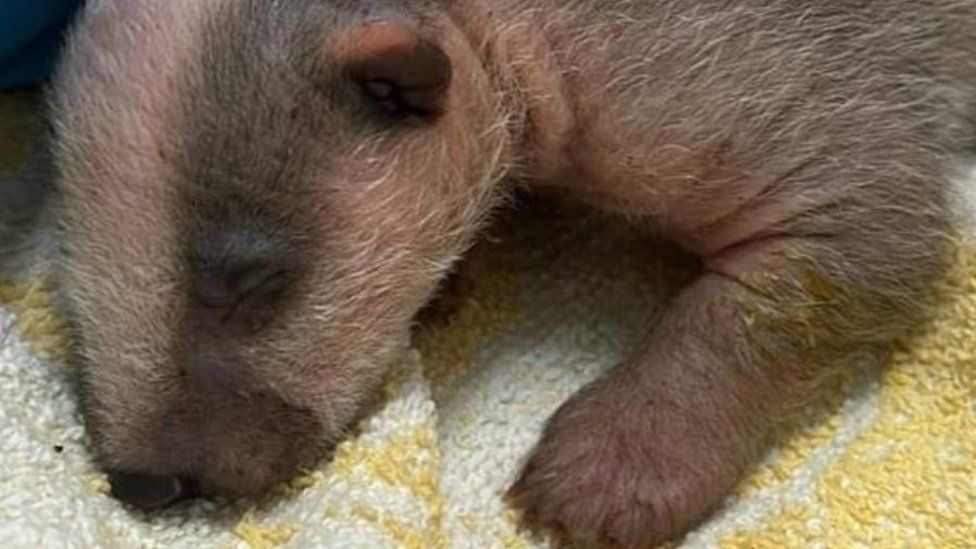
Dassenwelp van nog geen 2 weken oud gevonden in een bos in de buurt van Londen helemaal bevroren ( schattige foto )

 De welp krijgt kunstvoeding met de hand

Een kleine dassenwelp die "bevroren vast" in een bos wordt gevonden, gaat "de goede kant op" nadat hij door experts met de hand is grootgebracht.

Het weeskind werd gevonden door een hondenuitlater in Lincolnshire en warm gehouden in een jas totdat de RSPCA arriveerde .Royal Society voor Protection of Animals  RSPCA

Medewerkers van het East Winch Wildlife Centre van de liefdadigheidsinstelling in Norfolk zeiden dat de welp, genaamd Bertha, aan het aankomen was.

Ze hopen haar voor te stellen aan een andere verweesde das, zodat het paar samen kan opgroeien.

Toen de hondenuitlater de welp voor het eerst zag in het bos bij Market Rasen, dacht ze dat hij dood was.

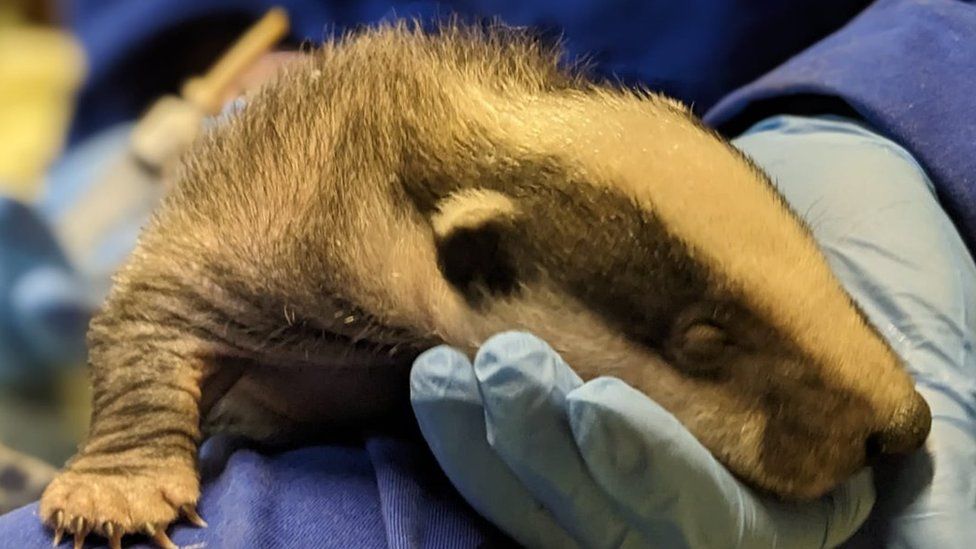
Baby dasBRON AFBEELDING,RSPCA
Bijschrift afbeelding,
De dassenwelp zou nog geen twee weken oud zijn toen ze werd gevonden.

RSPCA-inspecteur Dan Bradshaw zei dat als de welp niet was gevonden "ze het waarschijnlijk niet veel langer zou hebben volgehouden".

Hij zei dat toen de welp eenmaal was opgewarmd, ze om voedsel riep en hij nam haar mee naar het wildcentrum in East Winch, in de buurt van King's Lynn.

Baby dasBRON AFBEELDING,RSPCA
Bijschrift afbeelding,
De das heeft haar ogen geopend sinds ze in het ziekenhuis werd gebracht

Medewerkers schatten dat de baby minder dan twee weken oud was toen ze werd gevonden, omdat ze haar ogen nog niet had geopend.

Sla twitter bericht over door RSPCA East Winch Wildlife Centre
De BBC is niet verantwoordelijk voor de inhoud van externe sites.
Einde twitter bericht door RSPCA East Winch Wildlife Centre

Nu, enkele weken later, postte het centrum op Twitter om te zeggen dat de welp "goed groeide, aankwam en in de goede richting ging - we doen ons best met haar".

Evangelos Achilleos, centrummanager, zei: "De kleine dassenwelp doet het tot nu toe goed en wint aan en is nu meer dan 900 g (bijna 2 pond).

"Ze is erg vocaal en gaat door veel kunstvoeding [melk].

"We weten niet zeker waarom onze dassenwelp alleen werd gevonden, een gedachte is dat de moeder gewond was en de welp uit de sett kroop om haar te vinden, of mogelijk was de zeug onervaren en liet de welp in de steek.

"Zij - bijgenaamd Bertha - is nog steeds kwetsbaar gezien haar leeftijd, maar ze heeft net haar ogen geopend - we doen er natuurlijk alles aan om haar een vechtkans te geven."

Baby dasBRON AFBEELDING,RSPCA
Bijschrift afbeelding,
De RSPCA hoopt dat als er nog een verweesde welp wordt gevonden, ze kunnen opgroeien als metgezellen

Volgens de RSPCA worden dassenwelpen meestal geboren van begin februari tot eind april en blijven ze ondergronds en komen ze pas uit hun sett als ze acht tot 10 weken oud zijn.

presentatie grijze lijn

Vind BBC News: East of England op Facebook, Instagram en Twitter. Als je een suggestie voor een verhaal hebt, stuur dan een e-mail naar eastofenglandnews@bbc.co.uk

Gerelateerde internetlinks

De BBC is niet verantwoordelijk voor de inhoud van externe sit