Translate

zondag 12 juli 2026

Dutch organisation for the welfare of farm animals worldwide 'Eyes on Animals' Annual Report 2025: Our mission: we go where animals suffer the most


Dear friends,

Imagine this: a house is on fire.
And people are trapped inside.
 
You don't start by talking about new fire safety regulations.
No, you take immediate action.
 
That is how it feels to us when we walk into a slaughterhouse or livestock market.
 
In Turkey, we see bulls being hung alive by one leg; in Ghana, terrified pigs being clubbed to death; and in the Netherlands, chickens being roughly caught upside down.
 
That is why Eyes on Animals was founded.
 
Our mission: we go to the places where animals suffer the most. And we reduce that suffering now.
 
We roll up our sleeves.
We don't look away.
And we always remain calm and respectful.
 
We work with transporters, livestock markets, and slaughterhouses. Together, we seek practical solutions that are better for the animals. For example:
 

  • Properly stun animals before slaughter
  • Catch chickens upright, not upside down.
  • provide shade for animals on hot days
  • leave calves with their mother
  • stop using methods that cause unnecessary fear and pain, such as hanging animals alive or stunning them with CO2 gas

 
Of course, other work is important too: raising awareness, appearing in the media, and building support in society. But real change takes time.
 
In the meantime, the house is still on fire.
And the animals inside can't wait.

Annual Report 2025

Our annual report shows how we turn your support into concrete action. Action that protects animals from severe suffering today and contributes to a better future.

A few results from 2025:

In Ghana, The clubbing pigs to death at a large slaughterhouse has stopped. Employees now stun the animals first, using equipment and training from us. Three Turkish slaughterhouses now stun animals before slaughter. In Germany, more than 100 veterinarians learned how to catch chickens upright, without pain or panic. And milk from Kalverliefde is now available in Dutch supermarkets: the brand where calves stay with their mothers.


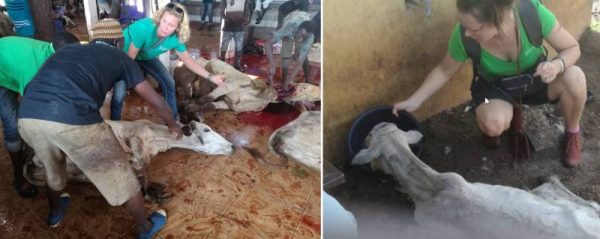
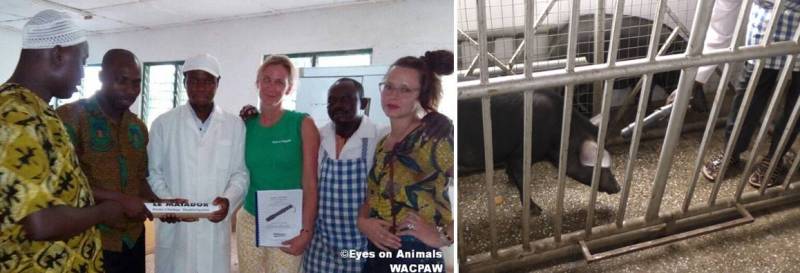
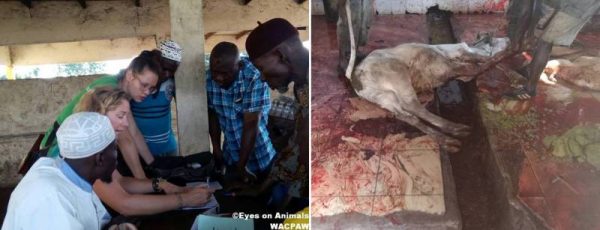
We have just returned from Ghana where we, together with the local inspection organization WACPAW and stunning expert Dr. Fuseini, gave animal welfare trainings to more than 150 slaughterers, transporters and agricultural students. We also visited several slaughterhouses and cattle markets - to give immediate advice and assistance to animals in distress.

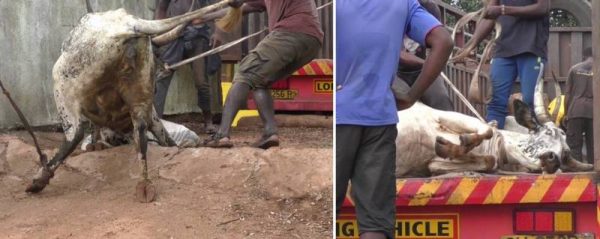
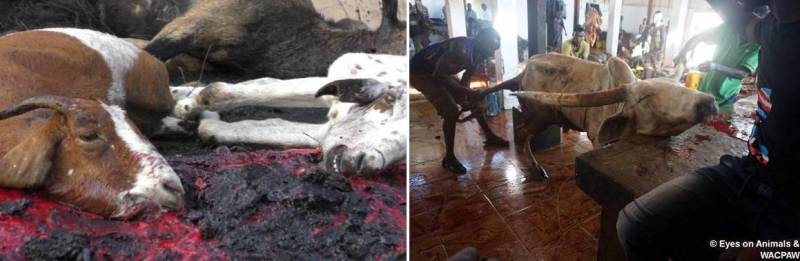
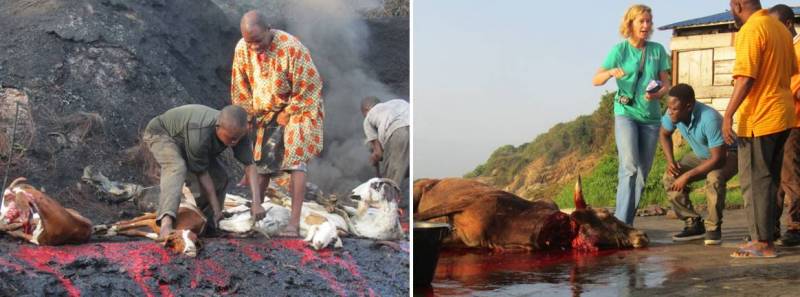
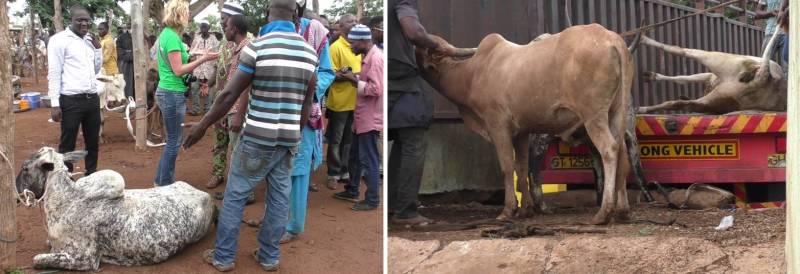
The animal suffering that we saw in Ghana is burned forever in our memories. The completely exhausted cattle being tugged on by their broken tails, the cattle that were transported with all four legs and neck tied up, the cattle that collapsed time and time again when unloaded... the animals that suffered long agonizing deaths after having their necks cut while still conscious and the tethered goats that were screaming while being thrown down from the trucks... The sheer panic and pain that these animals have to go through is almost unbearable.

But we also have hope. Our visit to Ghana shook people awake and delivered concrete results.

RESULTS

In Ghanaian slaughterhouses, the animal's throat is cut without stunning. We therefore purchased and had flown over four captive bolt guns and 8000 cartridges. We donated the captive bolt guns to the Agricultural University of Cape Coast and the University for Development Studies in Tamale. Both universities have a slaughterhouse on campus where many animals are killed every day and meat is sold. The captive bolt guns we gave them are now used to stun all animals before slaughter and to train slaughterers to stun their animals. A major achievement!

The slaughterhouse in Tamale, which was chaotic and horrible, is keen on the design we made on how to improve the slaughterhouse dramatically. As a result, live animals will no longer be dragged through the slaughterhouse and animals will be put out of their misery faster. Also, the drain-pit at the entrance of the slaughterhouse, which animals regularly fell into and injured their legs, will be covered.

At the slaughterhouse in Cape Coast animals only lost consciousness after a long struggle. The knife with which their throat was cut was not sharp enough and the throat wound made contact with the ground. This complicates the bleeding out and, in addition, causes incredible pain. The animals also had to wait for several minutes while they were already tied up in the slaughter area because the slaughterer still needed to sharpen his knives. We also saw that dressing procedures were carried out on animals that were still conscious. We have convinced the slaughterhouse to use sharper knives, to bring animals to the slaughter area only when the slaughterer is ready (to avoid the tethered animals waiting even longer), to monitor the consciousness of the animals before dressing procedures are carried out and to use a v-shaped table to hold sheep and goats - so that the throat wound does not come into contact with the ground.

We advised the cattle market in Tamale to build two proper loading ramps, so that animals can walk by themselves into the truck. Until now animals are beaten, tugged, dragged and lifted with a high degree of violence towards the trucks. We have also raised the issue that the animals have water permanently available and a separate and quiet space made for injured and weakened animals. WACPAW is currently working on these ideas.

We are relieved and proud that together, with the amazing people of WACPAW and Dr. Fuseini, we were able to put some concrete steps into practice right away. But we also realize that structural animal-welfare improvements are only possible if we persist and carry out regular checks. In the coming months, WACPAW will ensure that slaughterhouses, cattle markets and transporters actually do take action. Eyes on Animals will advise them from a distance and visit Ghana again in 2018.

We would like to thank you, our donors, very much. Thanks to your financial and emotional support, our team was able to go to Ghana to record the abuses, give advice and provide assistance.

To continue our project in Ghana, we will need some more financial help. For example, we would like to purchase more captive bolt guns, so that more Ghanaian slaughterhouses can also stun the animals prior to slaughtering them. We also want to check on more slaughterhouses and livestock markets. Will you help us?

Yes, I will help the animals in Ghana

IBAN: NL73TRIO0212364219 / BIC: TRIONL2U

Thank you very much, also on behalf of Dr. Fuseini and the team of WACPAW,

Lesley and Madelaine

Abdul-Rahman Safian, Executive Director WACPAW:
"WACPAW is grateful to EonA for the recent training of Ghanaian academics, slaughter operatives, veterinarians and other stakeholders in the meat industry. The training and provision of captive bolt guns has resulted in a number of abattoirs now stunning animals before killing them. What a change this makes!”


➜ Read the 2025 annual report (in English).
 
We hope you take the time to read it.

Thank you for helping.
Thank you for being there for the animals, together with us.

Kind regards,

Lesley Moffat
Director, Eyes on Animals


0

vrijdag 10 juli 2026

Animal Defenders International Colombia bans bestiality: Congress is making sex with animals a criminal offence (In which countries is bestiality still legal?)


 Colombia criminalizes sex with animals as a crime 

Good news from Colombia : Congress considers sex with animals a criminal offense. The bill states that anyone engaging in sexual relations with an animal can face imprisonment, fines, and a ban from working in the animal industry.


Good news from
Colombia : Congress considers sex with animals a criminal offense. The bill states that anyone engaging in sexual relations with an animal can face imprisonment, fines, and a ban from working in the animal industry.


The proposal was drafted by Senator Esmeralda Hernández and approved by the Congress of the South American country. With this, the proposal has reached the final phase and only needs to be ratified by the president to become law.

Sex with animals punishable by law

Under the legislative proposal, perpetrators of bestiality can receive a prison sentence of 48 to 55 months, accompanied by fines ranging from 30 to 50 times the current monthly minimum wage, as well as a professional ban of two to four years for professions related to animals. In the presence of aggravating circumstances, the sentence may be increased to a maximum of 140 months. These include acts that take place in public spaces, in the presence of minors, or that are recorded for pornographic purposes.

According to Hernández, sexual abuse of animals must not be normalized, and she warns that sex with animals often causes serious harm to the animal. The senator therefore emphasizes the need to introduce criminal sanctions. Esmeralda Hernández:

We must not normalize the sexual abuse of animals, which almost always leads to their death. Dogs, cats, chickens, donkeys, and all kinds of other animals are victims daily in Colombia, and we must not tolerate that.

Esmerálda Hernandez after the final round of voting in the Colombian Chamber of Deputies on criminalizing sex with animals.

Information campaigns

In addition to criminal measures, the new law also provides for the development of information and awareness campaigns. The aim of this is to inform citizens about the classification of crimes and the legal consequences.

Prevention of child abuse

Senator Hernández also points out the importance of this law for the prevention of other forms of violence. The senator is referring to scientific research which has shown that some child rapists have previously committed sexual abuse of animals. The new law would therefore also contribute to the prevention of sexual abuse of children.

Sources:

©AnimalsToday.nl Jennie Cools – Regional Editor Latin America

Understanding Bestiality

Bestiality, also known as zoophilia, is the act of engaging in sexual activity with animals. It is a taboo practice that has been the subject of much debate and controversy. Many people consider it a form of animal abuse and a violation of animal rights. Others argue that it is a personal choice and should not be criminalized

The Legal Status of Bestiality Around the World

The legality of bestiality varies from country to country. Some countries have strict laws that prohibit any form of sexual activity with animals, while others have more relaxed laws that allow certain forms of sexual contact. In some countries, the legal status of bestiality is unclear or ambiguous.

Bestiality Laws in North America

In North America, bestiality is illegal in most states and provinces. In the United States, bestiality is a criminal offense in 37 states, while in Canada, it is a criminal offense under the Criminal Code. The penalties for bestiality vary depending on the severity of the offense and can range from fines to imprisonment.

Bestiality Laws in Europe

In Europe, the legal status of bestiality varies from country to country. Some countries, such as the United Kingdom, Germany, and France, the Netherlands, have strict laws that prohibit any form of sexual activity with animals. Other countries, such as Denmark and Sweden, allow certain forms of sexual contact with animals under certain circumstances.

Bestiality Laws in Asia 

In Asia, the legal status of bestiality varies widely. In some countries, such as India and Pakistan, bestiality is illegal and punishable by law. In other countries, such as Japan and Thailand, the legality of bestiality is unclear or ambiguous. 

Bestiality Laws in Africa

In Africa, bestiality is illegal in most countries. The penalties for bestiality vary depending on the severity of the offense and can range from fines to imprisonment.

Bestiality Laws in South America

In South America, the legal status of bestiality varies from country to country. In some countries, such as Brazil and Argentina, bestiality is illegal and punishable by law. In other countries, such as Colombia and Peru, the legality of bestiality is unclear or ambiguous.

Bestiality Laws in Australia and Oceania 

In Australia and Oceania, bestiality is illegal in most countries. The penalties for bestiality vary depending on the severity of the offense and can range from fines to imprisonment.

Countries with Ambiguous Bestiality Laws

Some countries have ambiguous bestiality laws that make it difficult to determine the legality of the practice. Examples of such countries include Thailand, Colombia, and Peru.

Controversies Surrounding Bestiality Laws

The legality of bestiality is a controversial issue that has been the subject of much debate. Supporters of bestiality argue that it is a personal choice and should not be criminalized. Opponents argue that it is a form of animal abuse and a violation of animal rights.

The Psychological and Societal Impacts of Bestiality

The psychological and societal impacts of bestiality are complex and varied. Some studies suggest that people who engage in bestiality may suffer from psychological disorders, while others suggest that it may be a harmless sexual behavior. The societal impacts of bestiality are also controversial, with some arguing that it may lead to the normalization of animal abuse.

Conclusion: The Future of Bestiality Laws 

The future of bestiality laws is uncertain. As society becomes more accepting of alternative sexual practices, the legality of bestiality may come into question. However, it is likely that bestiality will continue to be a taboo practice that is illegal in most countries around the world.


donderdag 9 juli 2026

A fun video: 2,200-pound elephant seal called Neil is back in Tasmania and causing havoc, has 1,4 million TiK ToK followers

 “It’s N


l

WELLINGTON, New Zealand — Like plenty of local boys before him, Neil has come home to the stretch of Australian coast where he was born. Unlike most of them, he trails fame, fans and property damage in his wake. He is also a 2,200-pound elephant seal.


In June, the bellowing and blubbery 5-year-old mammal hauled himself onto land for his twice-yearly tour of beachside towns in southern Tasmania state after months of feeding at sea. That’s posing problems now that he weighs as much as a small car and has a social media following more than double Tasmania’s human population.

His rampage through local infrastructure has claimed bent traffic bollards, a sign warning the public about seals and a fence that did not survive Neil’s attempt to vault it. The rest of the time he lies placidly any place he likes, which is sometimes the middle of the road, bringing towns he visits to a standstill.

But officials say their biggest concern is that Neil’s popularity could lead to ill-advised human-seal encounters that are dangerous for both sides.

Neil, the only male elephant seal to visit Tasmania in years, has commanded an enthralled TikTok following of 1.4 million in part because he acts like kind of a jerk. During this visit to shore, his 12th, his crimes have included picking fights with parked cars and smashing through barriers erected to keep him off roads.

Those antics have prompted some online to hail Neil as a kind of anti-authoritarian hero. But experts say it’s normal experimentation for a growing seal.

Juvenile male elephant seals need to practice for dominance battles in which adults rear up and crash their chests together as they compete for breeding opportunities, said Sophia Volzke, an elephant seal scientist based at the University of Tasmania in Hobart.

Australia Neil the Seal
Officials expressed concern that Neil’s popularity could lead to human-seal encounters that are dangerous for both sides.Sam Volker / via AP
With no other juveniles to practice with, Neil can only rehearse on Toyota's.

Local officials fear that Neil is the latest wild animal whose social media stardom has outgrown what’s good for him.

“Neil’s fame is a bit of a double-edged sword,” said Kris Carlyon from Tasmania’s Department of Natural Resources and Environment, at a news conference in Hobart on Thursday in which he asked the seal’s fans to give him privacy

“We have had some pretty silly behavior, instances with people carrying their small babies up close to him and simply trying to get that shot for Instagram,” he said.

Officials have urged the public to refrain from identifying the town Neil is currently delighting or terrorizing, depending on whom you speak to. They fear a disastrous encounter between the seal and an admirer could force rangers into a risky operation to move him elsewhere.

Carlyon also warned of worse. In a 2023 episode, a walrus known as Freya who drew huge crowds in Norway was euthanized after officials cited a growing risk to human safety.

“There is a risk here of essentially loving Neil to death,” Carlyon said.

It’s usual for seals to return biannually to the place they were born to rest, fast and shed fur. Many species roam inland during visits to shore, sometimes leading them into beachside towns.

What’s unusual about Neil is that he’s the only male elephant seal hauling ashore in Tasmania.

Sub-Antarctic islands south of Tasmania are home to breeding populations of elephant seals, and Neil’s mother would have arrived from one of them to give birth, Volzke said. Females have been spotted ashore in Tasmania before, but topping out at the size Neil reached when he was a year or two old, they don’t cause the same kind of chaos, she added.

“Humans got rid of those animals and now maybe they are coming back and repopulating areas that they were previously seen in,” she said. “We do need to find a way to coexist.”

Australia Neil the Seal
It’s usual for seals to return biannually to the places they were born to rest, fast and shed fur.Sam Volker / via AP

That could prove tricky for Neil, and for the rangers, police officers and security guards who follow in his wake. If he survives to adulthood, Neil could grow up to 16 feet in length and weigh triple what he does now.

However, about 90% of male elephant seals die before they reach a breeding age of around 10, Volzke said.

For now, Neil the seal is occupying a stretch of sidewalk, unmoving and unbothered. Sometimes he canoodles with an orange traffic cone, to the delight of his online followers. It isn’t clear why he prefers that location, which he has returned to even after being ushered away by rangers.

“He’s obviously decided this puddle surrounded by bollards, which are horizontal at the moment, is his spot,” said Carlyon on Thursday.

His fans can relate. The locals have mixed feelings.

“He’s one of our biggest exports at the moment,” said Dale Creamer, a resident of the town that the seal is currently trashing, who has not been personally inconvenienced. “It’s Neil’s world and we’re just living in it.”

Walrus Freya in Norway 

Carlyon also warned of worse. In a 2023 episode, a walrus known as Freya who drew huge crowds in Norway was euthanized after officials cited a growing risk to human safety.

Norwegian authorities on Sunday took the sad step of euthanizing Freya, a beloved boat-sinking walrus, after crowds of fans gathered too close to watch her sunbathe in the Oslo fjord.

The 1,320 lb walrus had become stressed by human visitors who had — despite warnings to stay away — taken to approaching her to pose for pictures. Officials grew concerned she may become aggressive or territorial and injure an onlooker. 

Though officials previously called euthanasia "the last option" for managing the walrus, the decision to humanely kill the creature was made based on an "assessment of the continued threat to human safety," a Sunday statement from the Norwegian Directorate of Fisheries read.

dinsdag 7 juli 2026

OPINION: Peoples Ethical Treatment of Animals ( PETA): "If you wouldn't eat a dog why eat a pig? " (graphic photo)


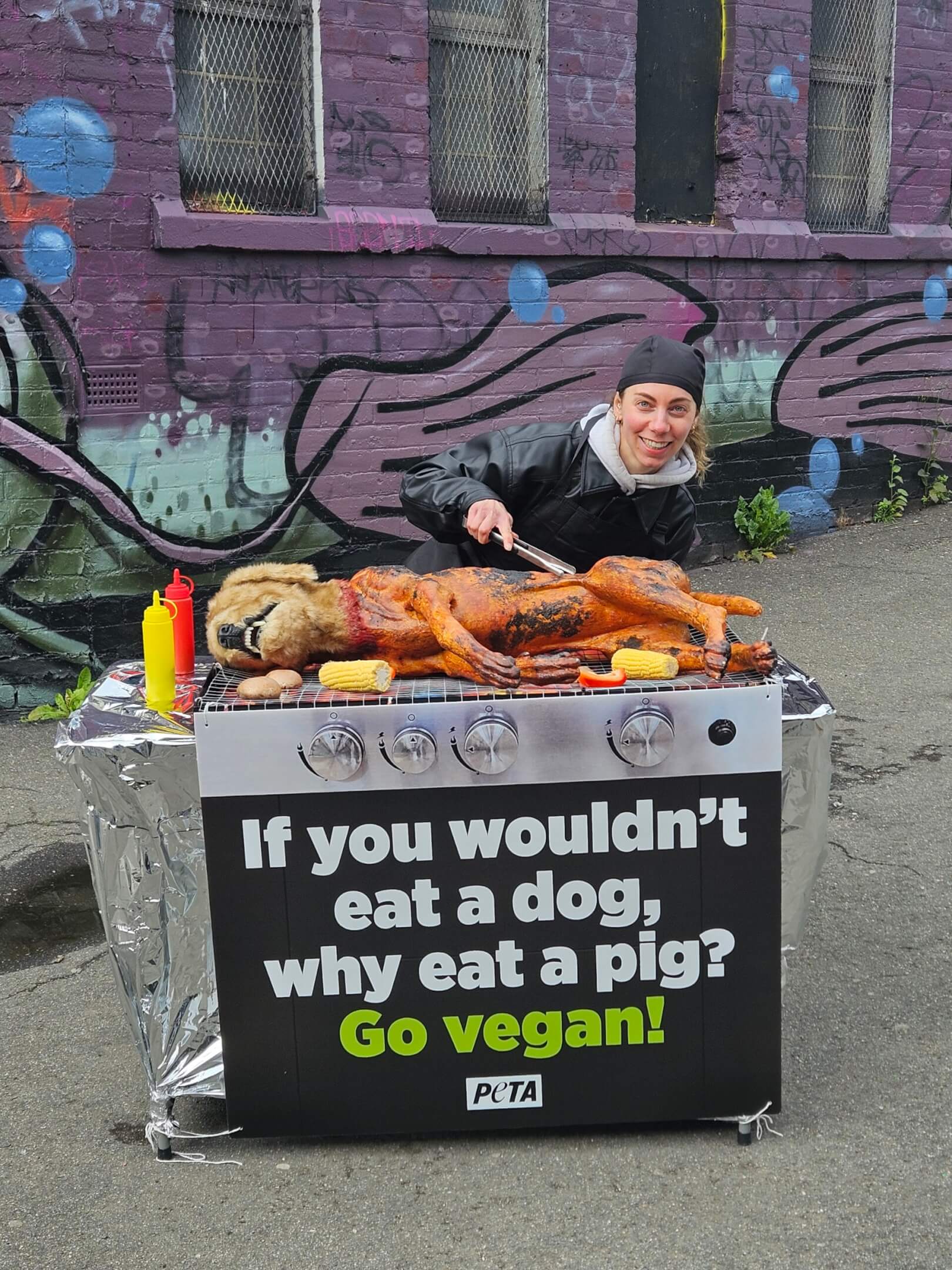
Last Friday PETA supporters confronted festival goers with a lifelike “dog” being grilled on a barbecue bearing the words, “If You Wouldn’t Eat a Dog, Why Eat a Pig? Go Vegan!”

A “chef” at the scene urged onlookers to question why they recoil at the idea of eating one animal while accepting the suffering of others.

Whether they’re a dog, a pig, or any other sentient individual, there’s no excuse to eat animals. Pigs, cows, and chickens are thinking, feeling beings who value their lives, just as dogs do. Yet meat-eaters make arbitrary distinctions based on species, not an animal’s capacity for suffering.
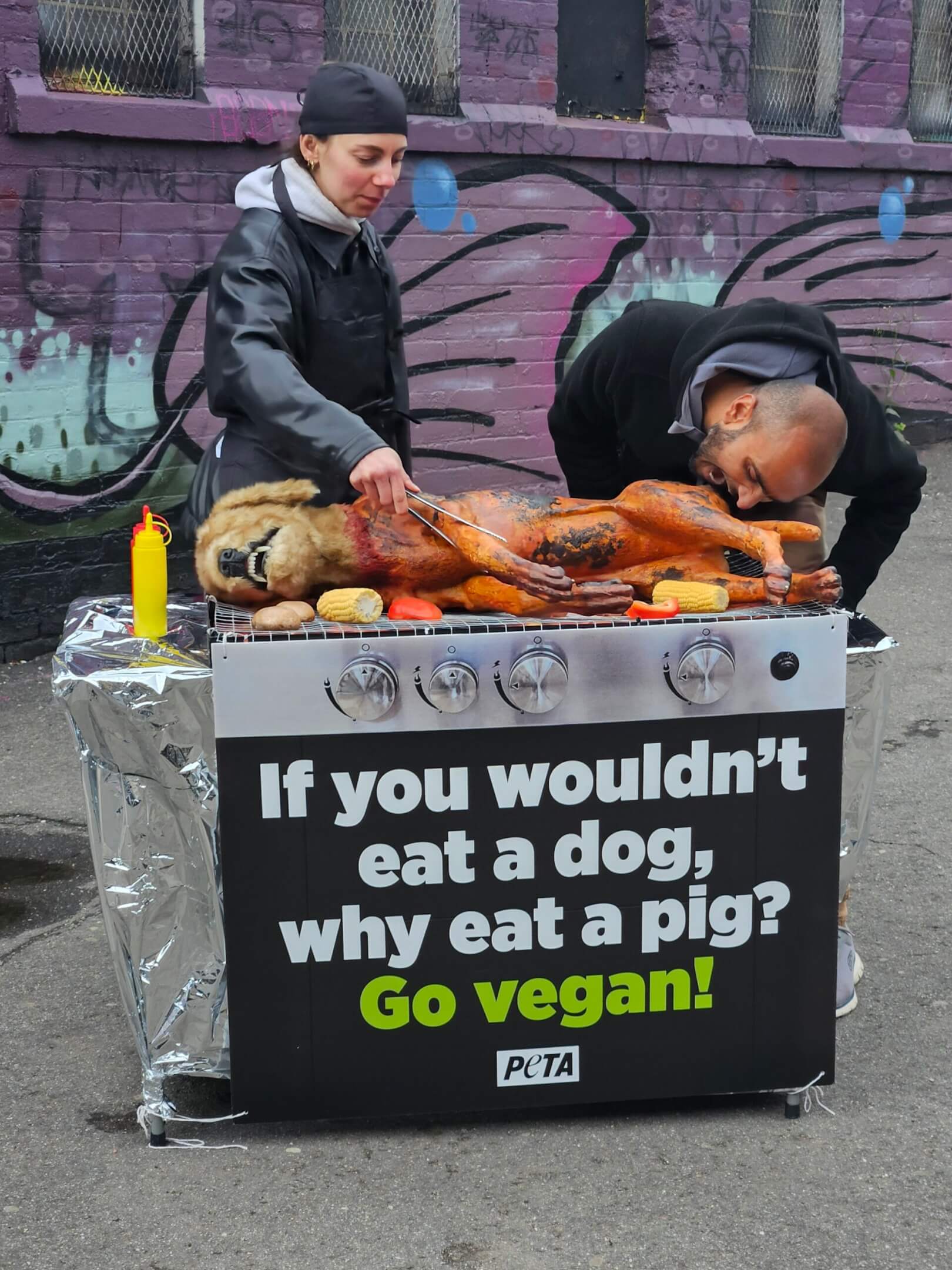
Eating Pigs, But Not Dogs, Is Speciesism

This inconsistency is speciesism –  a misguided belief that one species is more important than another. Just as we reject other forms of discrimination, we should reject the arbitrary hierarchy that places some animals on sofas and others on plates. As PETA President Ingrid Newkirk famously observed, “When it comes to pain, love, joy, loneliness, and fear, a rat is a pig is a dog is a boy. Each one values his or her life and fights the knife.” Our compassion shouldn’t stop at the animals we happen to share our homes with.

The Reality of Animal Agriculture 

In the UK, pigs are subjected to painful mutilations as standard practice. Workers cut off piglets’ tails, clip their teeth with pliers, and castrate males – all without pain relief. Many are crammed into barren, overcrowded sheds where they’re denied the chance to root, explore, or engage in natural behaviours.

Their lives end in slaughterhouses, where they’re killed violently for “food” that people don’t need to eat. Each person who goes vegan spares nearly 200 animals every year, while also reducing their environmental footprint and lowering their risk of developing life-threatening diseases such as heart disease, some cancers, and type 2 diabetes.

dinsdag 30 juni 2026

Sheriff Confirms Many Dogs Found Decomposing At Miranda’s Rescue in California: 730+ Animals Still Unaccounted For


Image source: Justice for the Animals of Miranda’s Rescue

UPDATE: 6/29/26

Authorities have completed their three-day search of the Miranda’s Rescue property in Northern California, where investigators found many dogs in various stages of decomposition, along with numerous skeletal remains. Officials say the investigation is far from over.

During an informal press conference, Humboldt County Sheriff Billy Honsal outlined the next phase of the investigation, confirming that the FBI and the Department of Justice continue assisting with the case as investigators examine evidence recovered from the property.


More than 730 animals remain unaccounted for after over 900 animals were transferred to Miranda’s Rescue from January 2025 through this spring. Investigators are now reviewing microchip data in an effort to identify the animals and help provide answers to the shelters, rescue organizations, and individuals who transferred dogs to Miranda’s Rescue.

Sheriff Billy Honsal stated:

“We found many dogs in various stages of decomposition in several locations. In the area we were digging behind Miranda’s Rescue in their open field. We also found a lot of skeletal remains. All those reviewed by our forensic veterinarians that were on site.

“We have a lot of chip data that we are going over. Many of the decomposing dogs had chips. There will be lots of follow-up that now transpires from all of this evidence that was located here today.

“Our investigators, as well as the FBI and the Department of Justice, will be reviewing the data and will be double-checking with a lot of the people that transferred dogs to Miranda’s Rescue.

“Many people have reached out to us over the last month and a half and were concerned about dogs that were turned over to Miranda’s Rescue. We have not been able to reach out to a lot of those people that have given us chip data.

“Now that we have data on this end, we’ll be reaching out to those people that have provided us chip data to try and match up animals with previous owners.

“We’re wrapping up here. This investigation is far from over. It is now just beginning. And again, if anyone has any information, please reach out to the Humboldt County Sheriff’s Office and provide us with that information. We would be happy to talk to them.

“We will release more information tomorrow once we have our final numbers, and then if there’s a need to have a press conference this next week to discuss some of the evidence, we will do so.”

Our hearts are with everyone awaiting answers about the animals they entrusted to Miranda’s Rescue, and we remain deeply grateful to the investigators, forensic teams, and animal welfare professionals working tirelessly to uncover the truth and seek justice for these precious animals. 

__________________________________

A large-scale investigation into Miranda’s Rescue in Fortuna, California, continues as federal, state, and local authorities carry out a second search warrant operation at the property, including an authorized excavation, in connection with allegations of animal cruelty, fraud, theft, and conspiracy.

According to the Humboldt County Sheriff’s Office, investigators returned to the rescue on June 23 to excavate the property after determining that a significant number of the hundreds of dogs transferred to the rescue remain unaccounted for. Authorities believe additional deceased animals may be buried on the property.

The investigation was launched on April 22, 2026, after the Humboldt County Sheriff’s Office received credible reports alleging felony animal abuse, animal cruelty, fraud, and conspiracy involving Miranda’s Rescue.

Due to the seriousness and complexity of the allegations, the Sheriff’s Office Major Crimes Division was assigned to lead the investigation. A search warrant was later obtained for both the residence and business property and executed on May 1, resulting in the seizure of evidence related to the case.

Since then, investigators have interviewed dozens of animal shelters throughout California, as well as some shelters outside the state. Detectives have also interviewed witnesses and victims while receiving hundreds of tips from members of the public.

“At the Humboldt County Sheriff’s Office, we understand the public’s desire for answers and accountability,” said Lt. Jesse Taylor. “Our investigators are committed to thoroughly examining all evidence and pursuing every credible lead. We appreciate the patience, support, and assistance we have received from the community during this ongoing investigation.”

Investigators say the inquiry has revealed that hundreds of dogs were transferred or surrendered to Miranda’s Rescue by private citizens and animal shelters, with a significant number of those animals still unaccounted for.

The latest search warrant operation is being conducted by the Humboldt County Sheriff’s Office in collaboration with the Humboldt County District Attorney’s Office, California Attorney General’s Office, California Department of Justice, the Federal Bureau of Investigation (FBI), the United States Department of Agriculture Office of Inspector General (USDA OIG), the USDA Animal and Plant Health Inspection Service (APHIS), and the United States Attorney’s Office for the Northern District of California.

Assisting with the excavation are members of the Cal Poly Humboldt Anthropology Department, the Animal Legal Defense Fund, and private forensic veterinarians.

Anyone with information related to this investigation is encouraged to contact the Humboldt County Sheriff’s Office at (707) 445-7251.

zaterdag 27 juni 2026

5 bear cubs rescued, their mum's killed, from wildlife trade: malnourished and frightened, but are now receiving around-the-clock care from our experienced bear care and veterinary teams.


https://www.instagram.com/reel/DaFh9UguuGv/


Dear valued supporter

A week ago, we shared the difficult news that three bear cubs we were on our way to rescue, had disappeared within the illegal wildlife trade.


Today, we're incredibly relieved to report that the cubs were found by authorities and are now safe with us at Luang Prabang Wildlife Sanctuary.

But that's not all.

In a separate operation authorities confiscated two more moon bear cubs from the illegal wildlife trade, bringing the total to five rescued cubs in one extraordinary week, and 11 cubs rescued this year.

Watch the rescue

These bears have all had a very traumatic start to life and the original three cubs are particularly fragile at the moment. They are malnourished and frightened, but are now receiving around-the-clock care from our experienced bear care and veterinary teams.

We want to thank you for the outpouring of kind messages we received last week, as we navigated one of the many challenges that come with combating wildlife crime across Southeast Asia – staying ahead of those who seek to profit from the illegal wildlife trade.

Thank you for always standing up for bears. Without continued support, rescues like these simply would not be possible.

Read more
Cub Care Kit donation
A$35.00
Help us provide milk formula and other essential cub supplies to these vulnerable new rescues.
View