Translate

Posts tonen met het label pigs. Alle posts tonen

donderdag 30 juli 2026

Horrific events called “pig wrestling” and “hog-bagging” exploit young pigs who are abused and tormented for public amusement.( video)


Horrific events called “pig wrestling” and “hog-bagging” exploit young pigs who are abused and tormented for public amusement. They are being planned again for 2026 in Texas and Wyoming. Defenseless pigs are treated like disposable props, enduring repeated attacks and injuries as spectators watch. Urge event organizers and community leaders to end these spectacles of cruelty and brutality. 

Pig Wrestling, Teton County Fair — July 18–26, 2026 (WY)

After a six-year hiatus, the Teton County Commissioners voted 3-1 to reinstate pig “wrestling” at the Teton County Fair. Children and women will chase and tackle pigs, then force them into a mud pit or barrel. Opponents of the decision included a veterinarian who called pig “wrestling” outdated and needlessly violent, comparing it to ancient gladiator fights and emphasizing that modern understanding of animal intelligence and suffering should compel society to abandon such cruelty.

While these are the major 2026 events, similar hog-bagging, pig-wrestling, and other forms of animal abuse are planned at county fairs and rodeos nationwide. Please speak out in your community to stop them.

Like all animals, pigs are sensitive and emotionally complex, and they have been shown to be more intelligent than a 3-year-old human child. Yet they are brutalized and mocked for trivial pastimes at rodeos and county fairs before being killed.

It is long past time to end the use of animals for anything, much less for entertainment. Farmed animals endure horrendous abuse and pain in all animal farming, including forced breeding, mutilations, separation from their families, extreme confinement, and slaughter. In addition, countless animals are subjected to further suffering for youth contests, research, and at state and county fairs. They are the most tortured and killed animals on the planet, and each deserves our defense.

Thanks to animal advocates and undercover investigators like Unparalleled Suffering, who witness, document, and speak out against this unconscionable and legal torment of animals, public awareness is growing. More people are recognizing that no tradition, habit, or profit justifies harming any animal. 


These events terrorize pigs, some barely a month old, as they are chased, slammed to the ground, yanked by tails, legs, and ears, and dragged across arenas, as they scream and desperately try to escape. Witnesses have reported seeing pigs denied food and water, and often with bloody wounds or limping. After these brutal assaults, like all farmed animals, they are later forced into the hell of a slaughterhouse. Multiple events occurred in 2023, 2024, and 2025, with more now scheduled for 2026.

In Defense of Animals


zondag 12 juli 2026

Dutch organisation for the welfare of farm animals worldwide 'Eyes on Animals' Annual Report 2025: Our mission: we go where animals suffer the most


Dear friends,

Imagine this: a house is on fire.
And people are trapped inside.
 
You don't start by talking about new fire safety regulations.
No, you take immediate action.
 
That is how it feels to us when we walk into a slaughterhouse or livestock market.
 
In Turkey, we see bulls being hung alive by one leg; in Ghana, terrified pigs being clubbed to death; and in the Netherlands, chickens being roughly caught upside down.
 
That is why Eyes on Animals was founded.
 
Our mission: we go to the places where animals suffer the most. And we reduce that suffering now.
 
We roll up our sleeves.
We don't look away.
And we always remain calm and respectful.
 
We work with transporters, livestock markets, and slaughterhouses. Together, we seek practical solutions that are better for the animals. For example:
 

  • Properly stun animals before slaughter
  • Catch chickens upright, not upside down.
  • provide shade for animals on hot days
  • leave calves with their mother
  • stop using methods that cause unnecessary fear and pain, such as hanging animals alive or stunning them with CO2 gas

 
Of course, other work is important too: raising awareness, appearing in the media, and building support in society. But real change takes time.
 
In the meantime, the house is still on fire.
And the animals inside can't wait.

Annual Report 2025

Our annual report shows how we turn your support into concrete action. Action that protects animals from severe suffering today and contributes to a better future.

A few results from 2025:

In Ghana, The clubbing pigs to death at a large slaughterhouse has stopped. Employees now stun the animals first, using equipment and training from us. Three Turkish slaughterhouses now stun animals before slaughter. In Germany, more than 100 veterinarians learned how to catch chickens upright, without pain or panic. And milk from Kalverliefde is now available in Dutch supermarkets: the brand where calves stay with their mothers.


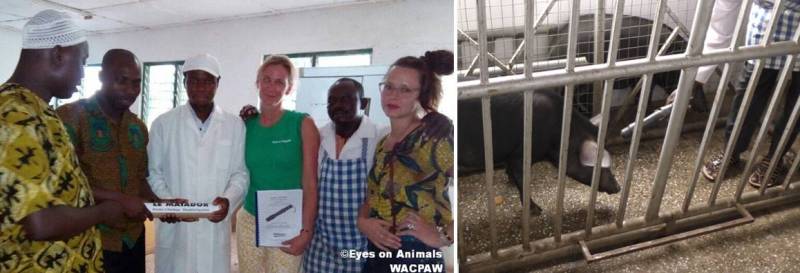
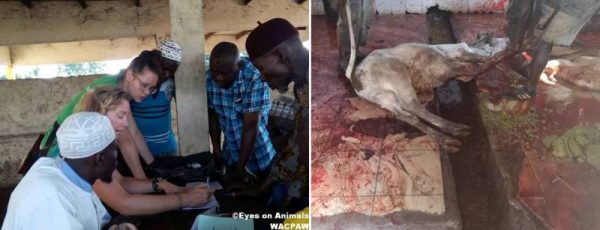
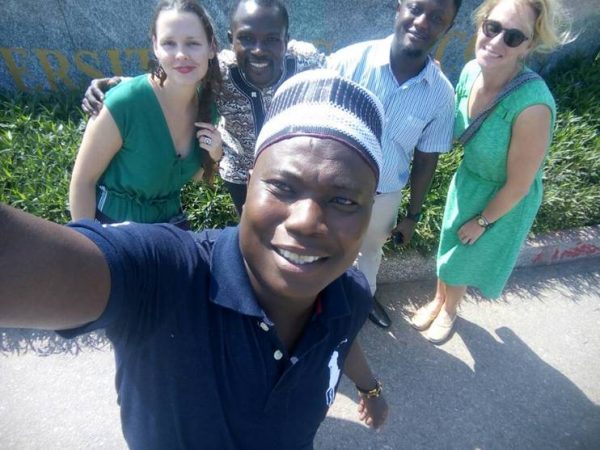
We have just returned from Ghana where we, together with the local inspection organization WACPAW and stunning expert Dr. Fuseini, gave animal welfare trainings to more than 150 slaughterers, transporters and agricultural students. We also visited several slaughterhouses and cattle markets - to give immediate advice and assistance to animals in distress.

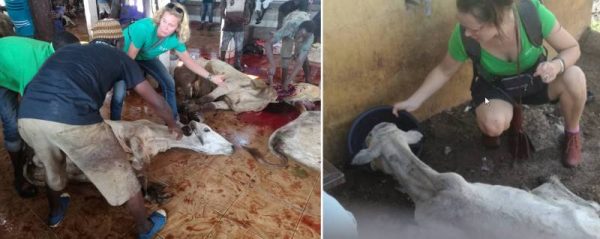
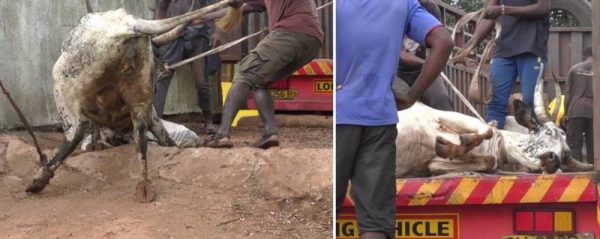
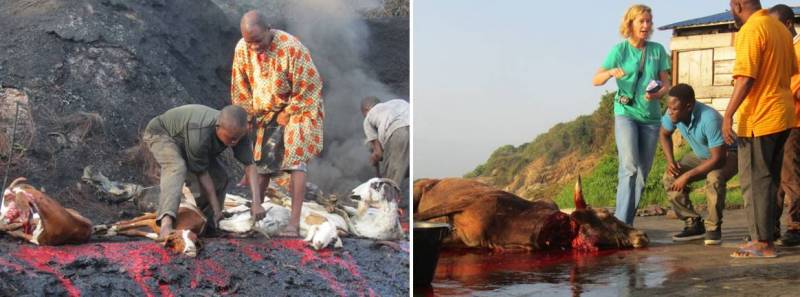
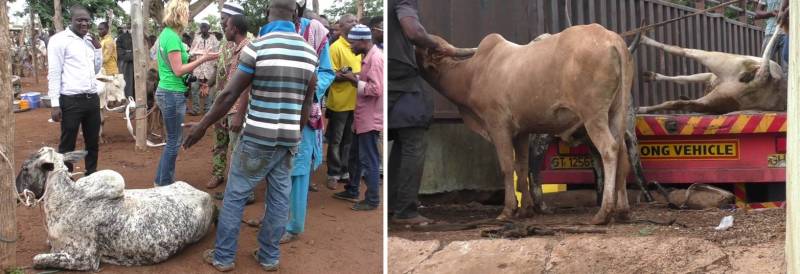
The animal suffering that we saw in Ghana is burned forever in our memories. The completely exhausted cattle being tugged on by their broken tails, the cattle that were transported with all four legs and neck tied up, the cattle that collapsed time and time again when unloaded... the animals that suffered long agonizing deaths after having their necks cut while still conscious and the tethered goats that were screaming while being thrown down from the trucks... The sheer panic and pain that these animals have to go through is almost unbearable.

But we also have hope. Our visit to Ghana shook people awake and delivered concrete results.

RESULTS

In Ghanaian slaughterhouses, the animal's throat is cut without stunning. We therefore purchased and had flown over four captive bolt guns and 8000 cartridges. We donated the captive bolt guns to the Agricultural University of Cape Coast and the University for Development Studies in Tamale. Both universities have a slaughterhouse on campus where many animals are killed every day and meat is sold. The captive bolt guns we gave them are now used to stun all animals before slaughter and to train slaughterers to stun their animals. A major achievement!

The slaughterhouse in Tamale, which was chaotic and horrible, is keen on the design we made on how to improve the slaughterhouse dramatically. As a result, live animals will no longer be dragged through the slaughterhouse and animals will be put out of their misery faster. Also, the drain-pit at the entrance of the slaughterhouse, which animals regularly fell into and injured their legs, will be covered.

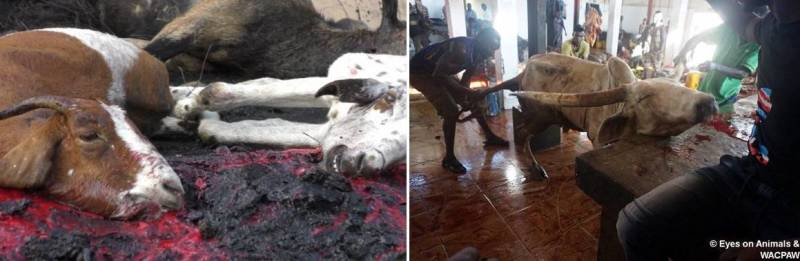
At the slaughterhouse in Cape Coast animals only lost consciousness after a long struggle. The knife with which their throat was cut was not sharp enough and the throat wound made contact with the ground. This complicates the bleeding out and, in addition, causes incredible pain. The animals also had to wait for several minutes while they were already tied up in the slaughter area because the slaughterer still needed to sharpen his knives. We also saw that dressing procedures were carried out on animals that were still conscious. We have convinced the slaughterhouse to use sharper knives, to bring animals to the slaughter area only when the slaughterer is ready (to avoid the tethered animals waiting even longer), to monitor the consciousness of the animals before dressing procedures are carried out and to use a v-shaped table to hold sheep and goats - so that the throat wound does not come into contact with the ground.

We advised the cattle market in Tamale to build two proper loading ramps, so that animals can walk by themselves into the truck. Until now animals are beaten, tugged, dragged and lifted with a high degree of violence towards the trucks. We have also raised the issue that the animals have water permanently available and a separate and quiet space made for injured and weakened animals. WACPAW is currently working on these ideas.

We are relieved and proud that together, with the amazing people of WACPAW and Dr. Fuseini, we were able to put some concrete steps into practice right away. But we also realize that structural animal-welfare improvements are only possible if we persist and carry out regular checks. In the coming months, WACPAW will ensure that slaughterhouses, cattle markets and transporters actually do take action. Eyes on Animals will advise them from a distance and visit Ghana again in 2018.

We would like to thank you, our donors, very much. Thanks to your financial and emotional support, our team was able to go to Ghana to record the abuses, give advice and provide assistance.

To continue our project in Ghana, we will need some more financial help. For example, we would like to purchase more captive bolt guns, so that more Ghanaian slaughterhouses can also stun the animals prior to slaughtering them. We also want to check on more slaughterhouses and livestock markets. Will you help us?

Yes, I will help the animals in Ghana

IBAN: NL73TRIO0212364219 / BIC: TRIONL2U

Thank you very much, also on behalf of Dr. Fuseini and the team of WACPAW,

Lesley and Madelaine

Abdul-Rahman Safian, Executive Director WACPAW:
"WACPAW is grateful to EonA for the recent training of Ghanaian academics, slaughter operatives, veterinarians and other stakeholders in the meat industry. The training and provision of captive bolt guns has resulted in a number of abattoirs now stunning animals before killing them. What a change this makes!”


➜ Read the 2025 annual report (in English).
 
We hope you take the time to read it.

Thank you for helping.
Thank you for being there for the animals, together with us.

Kind regards,

Lesley Moffat
Director, Eyes on Animals


0

dinsdag 31 maart 2026

The smell was the first thing that struck 'We Animals' photo journalist Resha Juhari: exposing the animals within our food systems

https://weanimals.org/

INSIDE BALI'S UNREGULATED PIG SLAUGHTER

Bali Slaughter
The face of a pig who stares out of a tiny metal cage, called a “blangsung”, at a slaughterhouse. Undisclosed location, Badung Regency, Bali, Indonesia, 2025. Resha Juhari / We Animals

“It was horrible to see pigs being killed in such a way. They were beaten over the head with clubs, then their throats were slit. This was the first time I had seen it in person.” — Muhammad Fajri, photojournalist

The smell was the first thing that struck We Animals photojournalist Resha Juhari when he stepped into a roadside slaughterhouse in Bali, Indonesia. Even through a mask, the stench of urine and decay was overwhelming. A pig looked out from inside a metal cage, next to piles of intestines, blood, and butchered meat. The scene was not an isolated case.


We were able to obtain unprecedented access to these facilities and took the opportunity to document what was inside. Across Bali’s Badung regency, photojournalists Resha Juhari and Muhammad Fajri visited eight small slaughterhouses. They documented conditions and practices inside facilities that appear to operate with little oversight, raising concerns about animal welfare, worker safety, and public health.

For most consumers, slaughter remains out of sight. But as global concern grows around animal welfare, food safety, and environmental protection, the conditions documented in these facilities raise a difficult question: how much oversight exists behind the pork that reaches the table?

We have shared these visuals with local NGOs advocating for change, and hope that our investigation will encourage authorities in Indonesia to consider implementing legal protections for animals.

[Content warning: Contains confronting images and/or video footage]

READ MORE

PHOTO OF THE MONTH

Buffalo Racing
A jockey and a pair of yoked buffaloes begin a Kambala buffalo race. The jockey hits the animals with a bamboo cane to increase their speed and steers them with a plough handle. Loud vocalizations are made by the people present to urge the buffalo on. Mulki Kambala Track, Mulki, Karnataka, India, 2025. Manju N Gowda / FIAPO / We Animals
Good photographs transport us.

This image, by Indian photojournalist Manju N Gowda, was captured at a 2025 Kambala buffalo race. A jockey and a yoked pair surge forward through water and mud. He strikes them with a bamboo cane to increase their speed, steering with a plough handle. Around them, spectators are yelling, cheering.

We’re often told not to anthropomorphize. But here, it is difficult not to. In this frame, we are inside the chaos. We feel the water splash. We brace for the strike of the cane. There is no option but to run.

Context

Kambala is a traditional buffalo race rooted in the culture of the Tulu people in coastal Karnataka, India. Once held in paddy fields as village entertainment, it is now staged at large, sponsored events, often organized by local politicians and Kambala committees.

This photo is part of a larger assignment done in partnership with FIAPO (
Federation of Indian Animal Protection Organisations)
 to challenge the narrative that Kambala is a harmless cultural tradition and advocate for new state-level legislation.
VIEW THE FULL GALLERY

JOIN OUR TEAM

Hiring Director of Development

As our team continues to grow, we’re hiring a Director of Development. 

This senior role will lead and grow our fundraising program, build meaningful donor relationships, and strengthen the systems that support our work. It’s both strategic and hands-on, shaping direction while leading day-to-day fundraising efforts.

Deadline to apply: April 26

LEARN MORE & APPLY

TRANSFORMING THE WAY WE SEE AND TREAT AQUATIC LIFE

Celebrate World Aquatic Animal Day with us on April 3—join in person or online.

At George Washington University, our founder, Jo-Anne McArthur, will deliver the keynote address at this year’s World Aquatic Animal Day. The theme: The Human Gaze: Impacts on Aquatic Animals.

Alongside leading advocates Amy P. Wilson, Lori Marino, Randall Abate, and Kathy Hessler, the panel will explore how the fields of law, science, and photojournalism “see” aquatic animals, and what that means for their lives.

REGISTER FOR THE EVENT

OUR WORK IN THE WORLD

Los Angeles Times
Why Look at Animals?
Salut Bonjour
Montreal SPCA

HOURS LEFT TO DOUBLE YOUR IMPACT

Double Your Impact
A rescued red fox looks into the camera while The Fox Project (TFP) staff discuss her care. We Animals founder Jo-Anne McArthur visited TFP in Kent, UK in late 2025 to document their work. Jo-Anne McArthur / The Fox Project / We Animals