
https://sey.fi/sled-dogs/ Please sign the petition and share.
Business at the dogs’ expense
Many of the dogs bred for the sled dog business spend almost half of the year in an outdoor cage with inadequate exercise or stimulus. The dogs working at husky safaris can receive insufficient care and, in the worst case, both the feed and the living conditions are entirely unfit for keeping dogs.
The demand for husky safaris and sled dog operators has surged alongside growing tourism in Lapland.
The growth in the industry has been partly at the expense of the dogs’ wellbeing. Many of the operators that had previously offered dog sledding on a smaller scale, have grabbed the opportunity to grow their business.
This page contains images and videos that may be upsetting.
1. Thousands or tens of thousands of dogs?
The rapid rise in tourism is visible in the companies that offer husky safaris in many ways. For instance, a company which used to have a few dozen sled dogs, may suddenly have hundreds of dogs.
All dogs in Finland should be registered to a national dog registry, but in practice, dogs working for husky safaris are rarely registered. Therefore the officials, or anyone else, don’t know the exact number of dogs.
2. Dogs’ living conditions don’t bear scrutiny
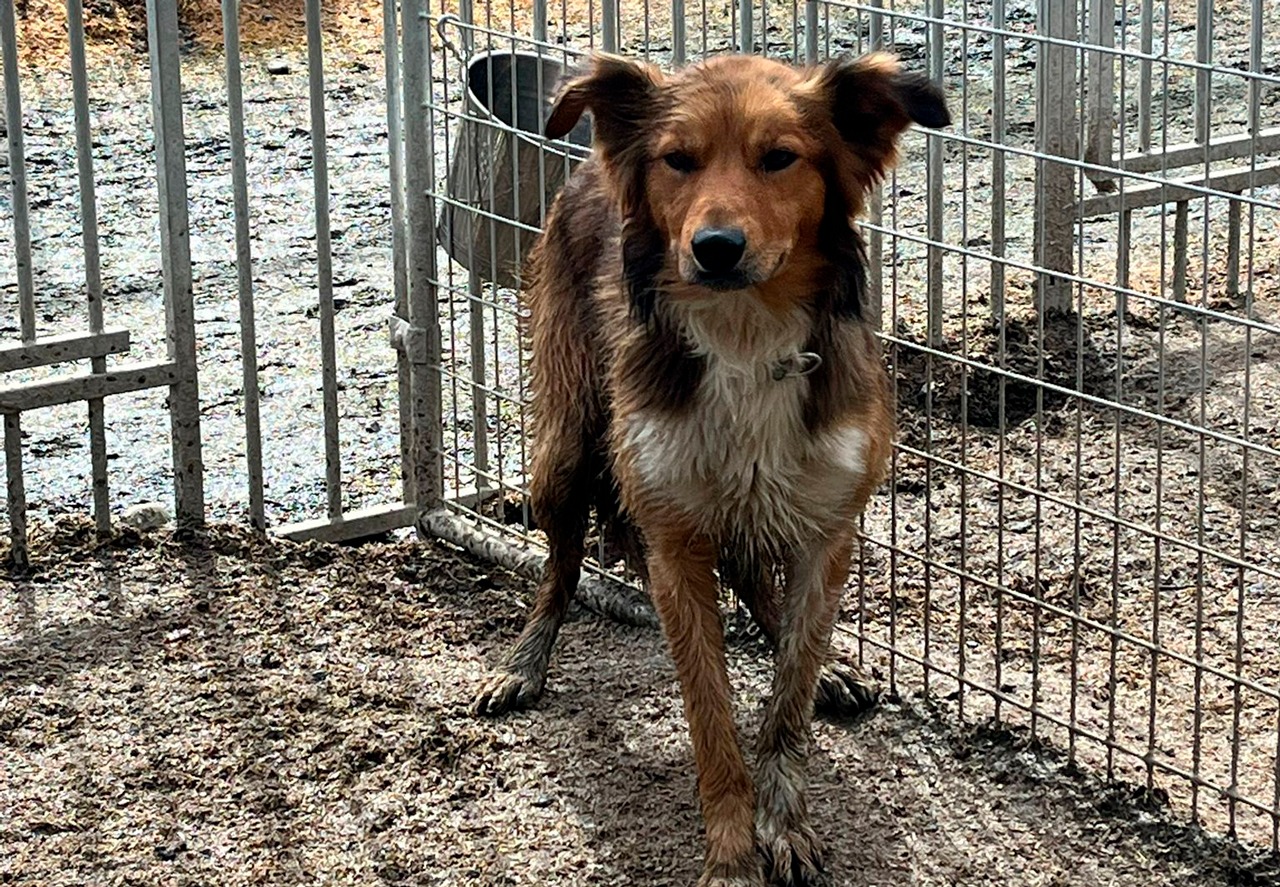
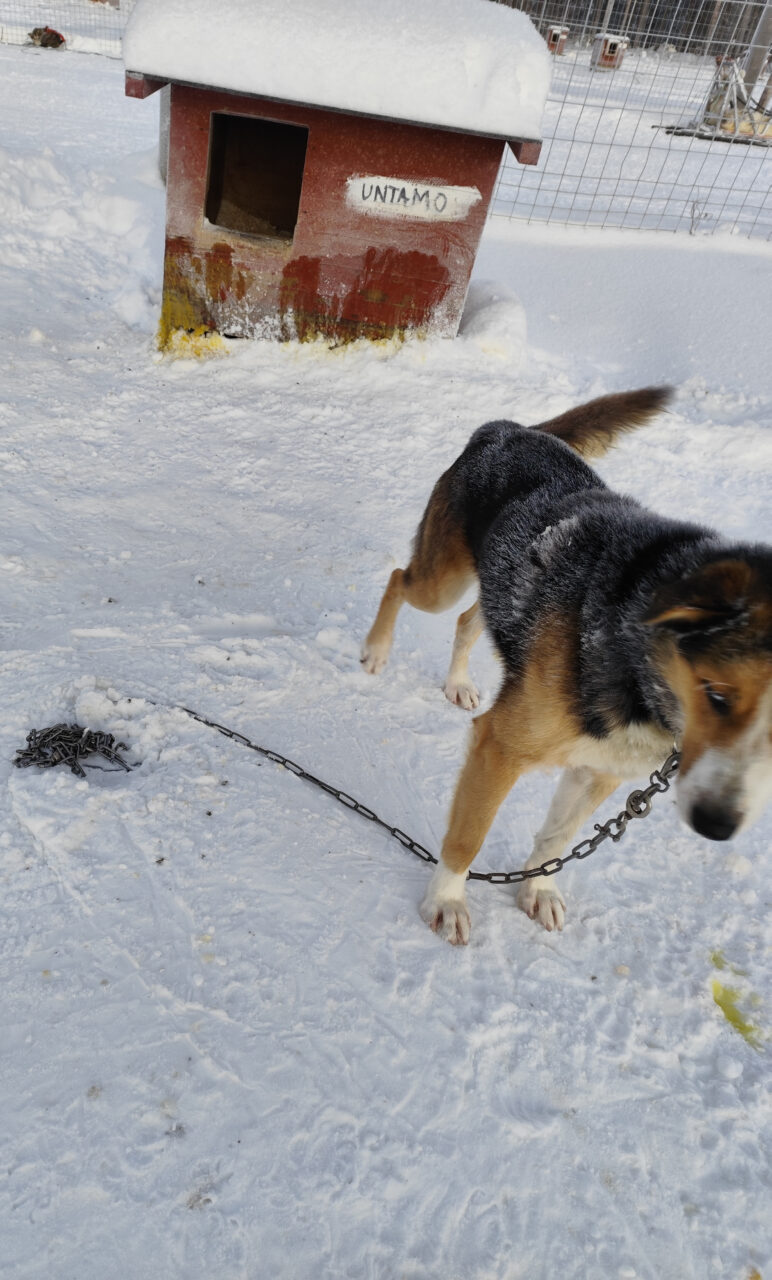
The safari dog lives either in a cage the size of a few square meters, or at the end of a few meter long chain. In practice, dogs have often been kept in even smaller cages or shorter chains. The dogs may have a doghouse, but they may lack insulation. The winter temperatures up North can fall to -30 or -40 degrees Celsius.
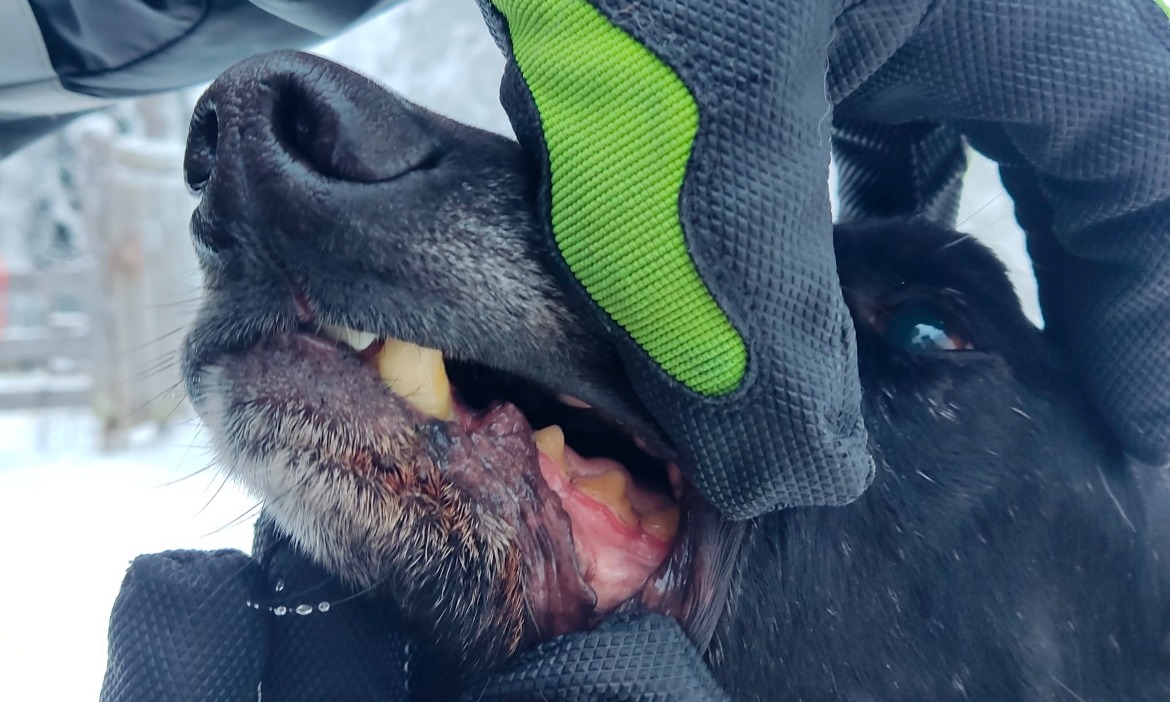
Among the common issues with husky safaris are: small cage sizes in relation to the size of dogs kept in them, the shortness of the chains the dogs are connected to, structural and/or insulation deficiencies in the kennels of puppies and nursing mothers and thin furred dogs during the winter, sparse bedding, not cleaning the kennels and dental problems.
3. Without work, the dogs have nothing to do
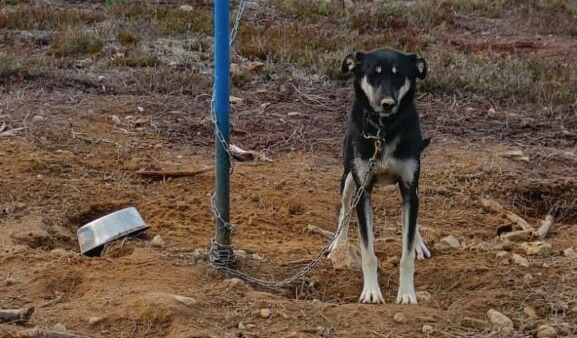
Summers are a particularly miserable time for safari dogs, as they are rarely, if ever, let out of their cages or off their chains. There is a smaller workforce at the husky farms during the summertime, and the dogs can end up spending days or even weeks in their cages or connected to a short chain.
4. Neglecting the dogs’ health care
SEY has seen a large on seen a large amount of evidence sent by ex-workers of husky safari companies detailing numerous deficiencies, and hundreds of images and video footage of the conditions at many different companies providing husky safaris.
According to the workers, it’s typical that dogs aren’t taken to the veterinarian when necessary, and that only the most severe cases or the most valuable individuals receive medical attention.
5. The origin of the dogs often remains unclear
Some of the sled dog operators import their dogs with improper documentation. According to information obtained by SEY, several sled dog operators operating in numerous municipalities have imported dogs multiple times by van from France, Poland, Norway and Sweden. The dogs have been obtained from local kennels without the necessary entry documentation.
As the demand for dogs speeds up, the means can be unscrupulous: dogs are imported regardless of import regulations or vaccinations, or the dogs are bred at an unsustainable rate. Accidental litters are also common.
In the worst cases, the dogs aren’t vaccinated, dewormed or taken for veterinary care when needed. Even dozens of dogs have been imported at once.
6. The competence of the workers and company owners is often lacking
The sled dog industry often attracts young, foreign seasonal workers, who don’t necessarily have any previous knowledge of handling animals.
There is no qualification for setting up a sled dog business. In practice, anyone can start up a company offering sled dog safaris and purchase hundreds of dogs.
According to the information acquired by SEY, some of the husky safari operators are employing untrained or minimally trained sled dogs on their safaris. Also, the training and handling of the dogs might be based in old-fashioned beliefs or e.g. violence.
7. Officials don’t have the time to pursue the cases
The Regional State Administrative Agency should, by law, be informed before starting up a professional sled dog business. Many companies observe this, but because it is common practice in the industry to use subcontractors, it’s possible that some of these dogs never get registered by the authorities.
In many cases, the operator moves to an other municipality or even to a different country when they encounter problems with the authorities in one place. SEY knows of many cases where the operator has been condemned for animal welfare offences in Finland, but has transferred their activities to Sweden or Norway, or vice versa. Often, they flee the area before sentencing, as the Finnish, Swedish and Norwegian authorities don’t have systematic cooperation on sled dog related issues.
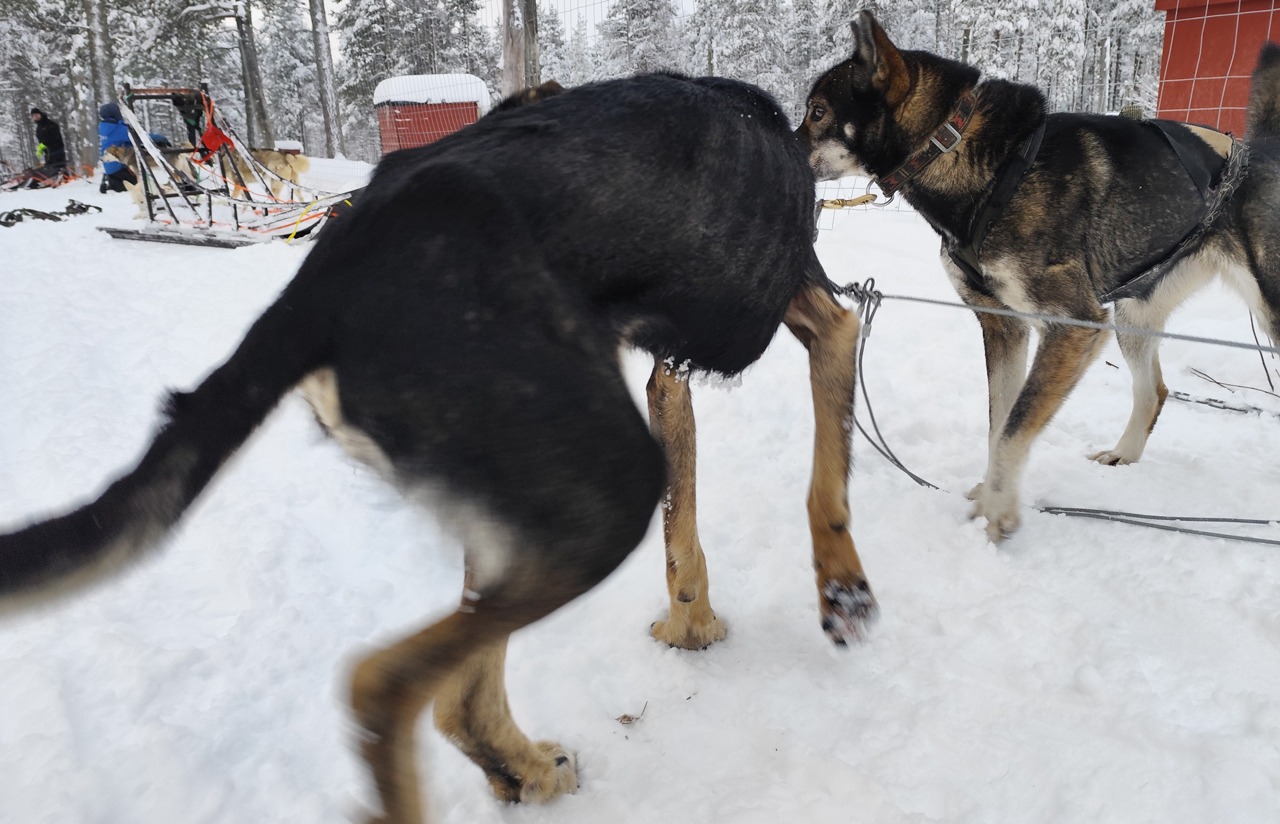
8. Thin furred dogs are used in safaris
Winter weather in the north of Finland can be merciless. The Alaskan Husky is typically used in the sled dog business. It is not approved by the Finnish Kennel Club as an official dog breed. It is a breed that has been developed by crossbreeding Siberian Husky with e.g. Greyhounds and other fast running hound-type breeds. There are lineages within Alaskan Huskies, which are considered as “proper” Alaskans by some enthusiasts. In practice, any crossbreed used as a sled dog is called an Alaskan Husky.
Some of the sled dog operators use so called hound type short haired dogs. These dogs can’t handle cold environments even with a jacket and boots. Frostbite and freezing are common.
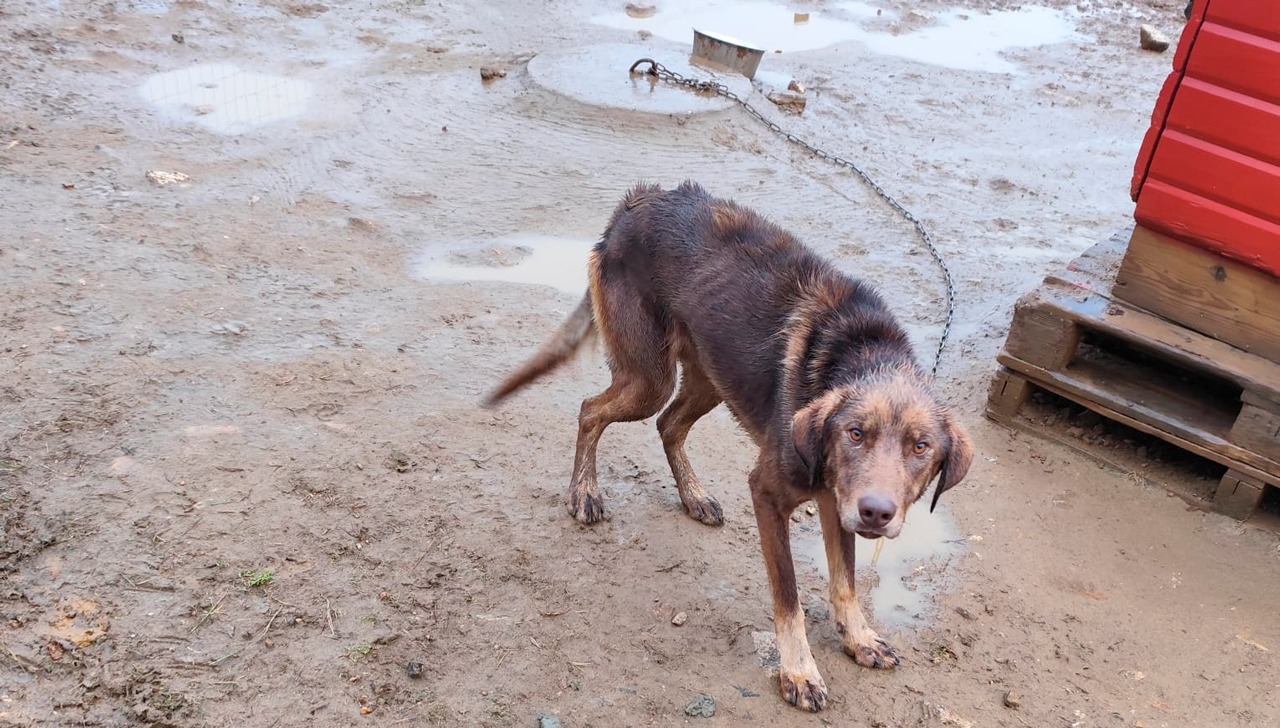
9. No water for the dogs
According to the Animal Welfare Act, dogs must have constant access to water. At the moment, however, the law allows for an exception specifically regarding drinking water for sled dogs. According to the law, when the ground is frozen, it is not necessary to provide constant access to water for the sled dogs, but instead, considers it sufficient to provide water three times a day. SEY believes this is insufficient especially considering these are hardworking animals.
In practice, many sled dog operators provide water even fewer times a day than the legal requirement. According to the information acquired by SEY, it is typical for some of the companies to provide the morning feed in a soupy form and provide water only once later in the day. The dogs eat snow to quench their thirst, but to get enough liquids out of snow, the dogs would need to eat substantial amounts of snow.
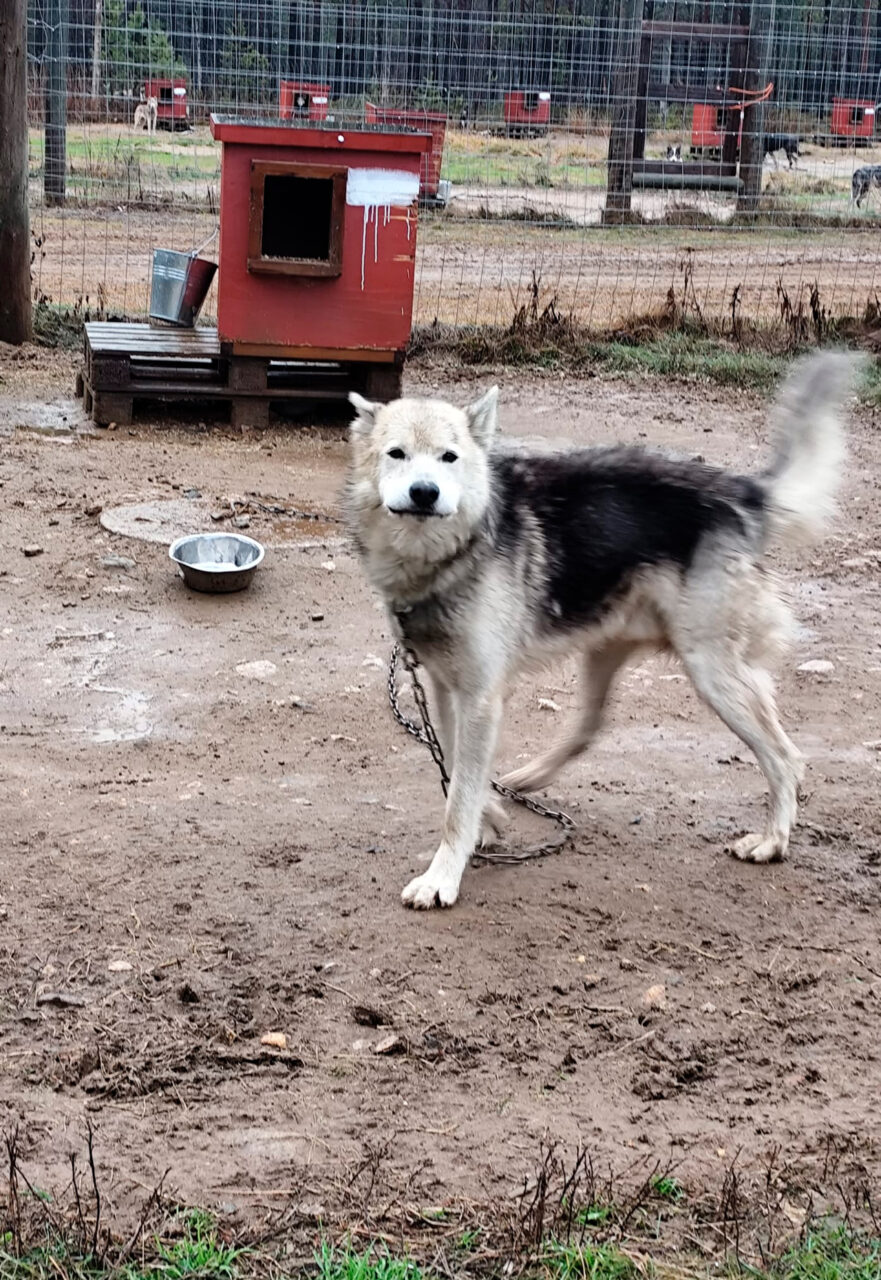
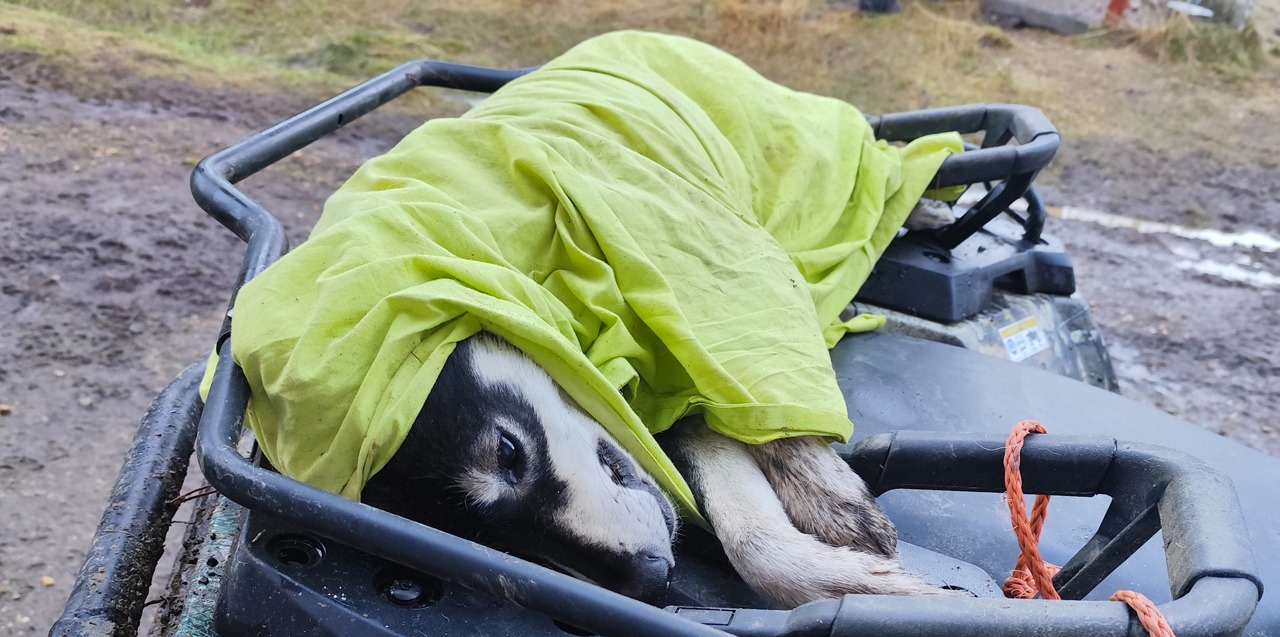
10. All is not well in the end
The life of a safari dog typically ends when the dog can no longer work. Some farms take the dogs that are unfit for work at the end of the season, and put them down e.g. by shooting them, others just leave the dogs at the farm. Living at the farm is not necessarily cosy for a canine pensioner, if the dog is not able to move outside of the cage or chain, and if it isn’t able to have veterinary care when necessary.
Some farms give the old dogs up for adoption, but very few farms have responsible and ethically operating adoption programmes.

Sinua saattaa kiinnostaa myös

What to remember when you want to see animals on your visit to Lapland
How to know if the animals encountered during your travels in Finland are…

Geen opmerkingen:
Een reactie posten