Translate

Posts tonen met het label Exposed. Alle posts tonen

donderdag 27 november 2025

Illegal Wildlife Trafficking in Bali Exposed : Is there hope this abuse will ever end? For the first time in Indonesia a man has been sent to prison for trafficking macaques


Video taken in 2022  (Jakarta Animal Action Network)

Bali Tourists Beware: Suffering for Sale

Obtaining animals in order to sell them is a horrific business. Baby monkeys are often illegally abducted from their jungle homes after hunters kill their mothers.
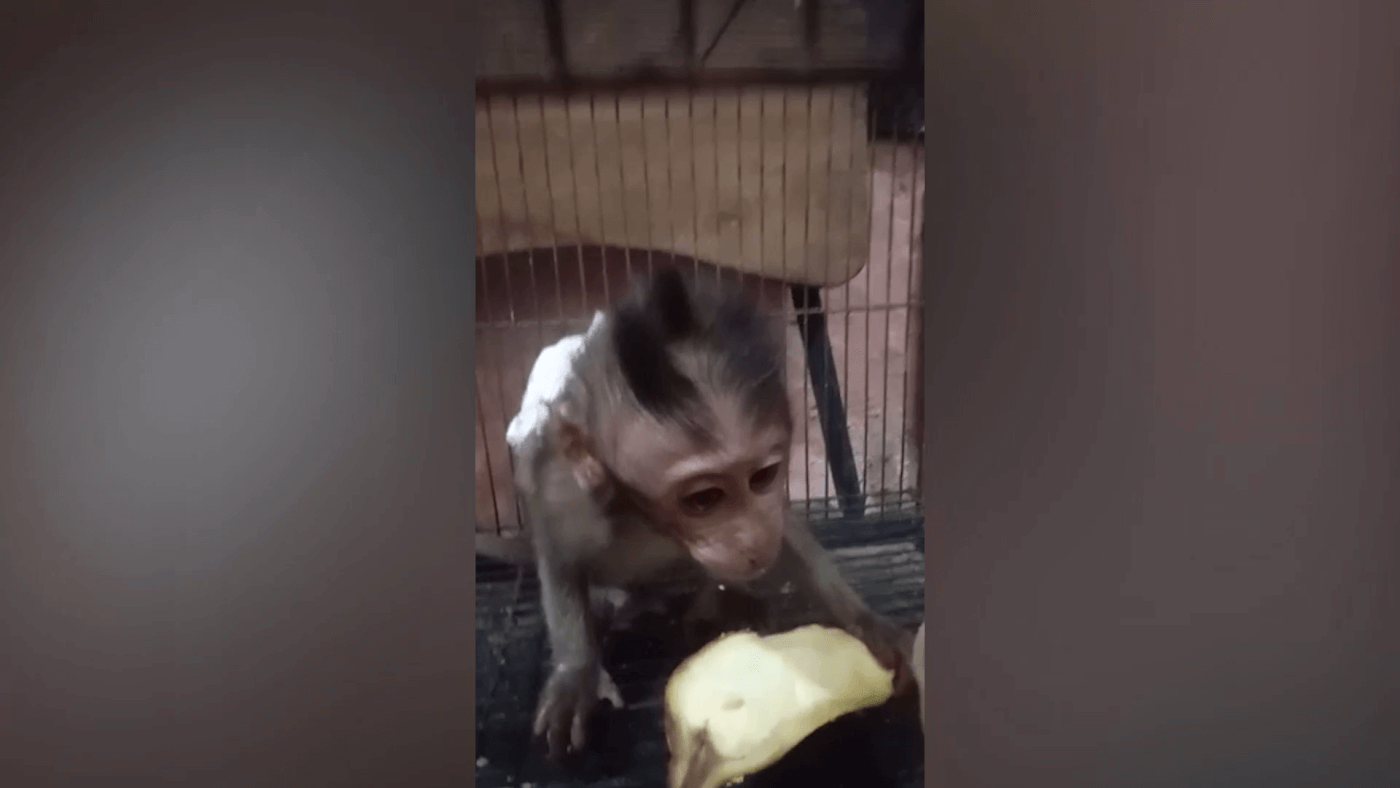
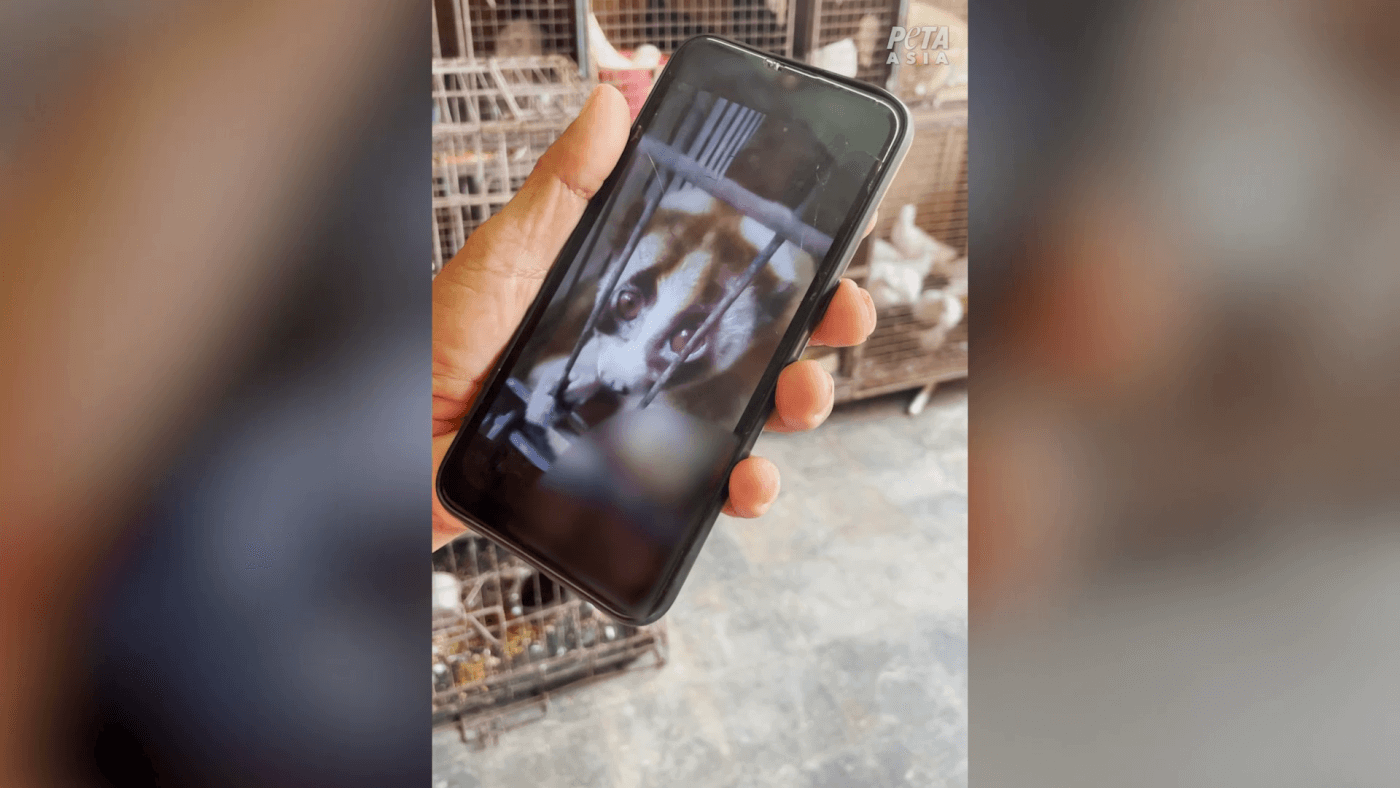
The bite of a slow loris is highly venomous and can be deadly to humans. For this reason, the “pet” and tourist industries often remove their teeth – without anaesthetic – using pliers or other tools. This excruciating procedure is torture and can lead to infection and even death.

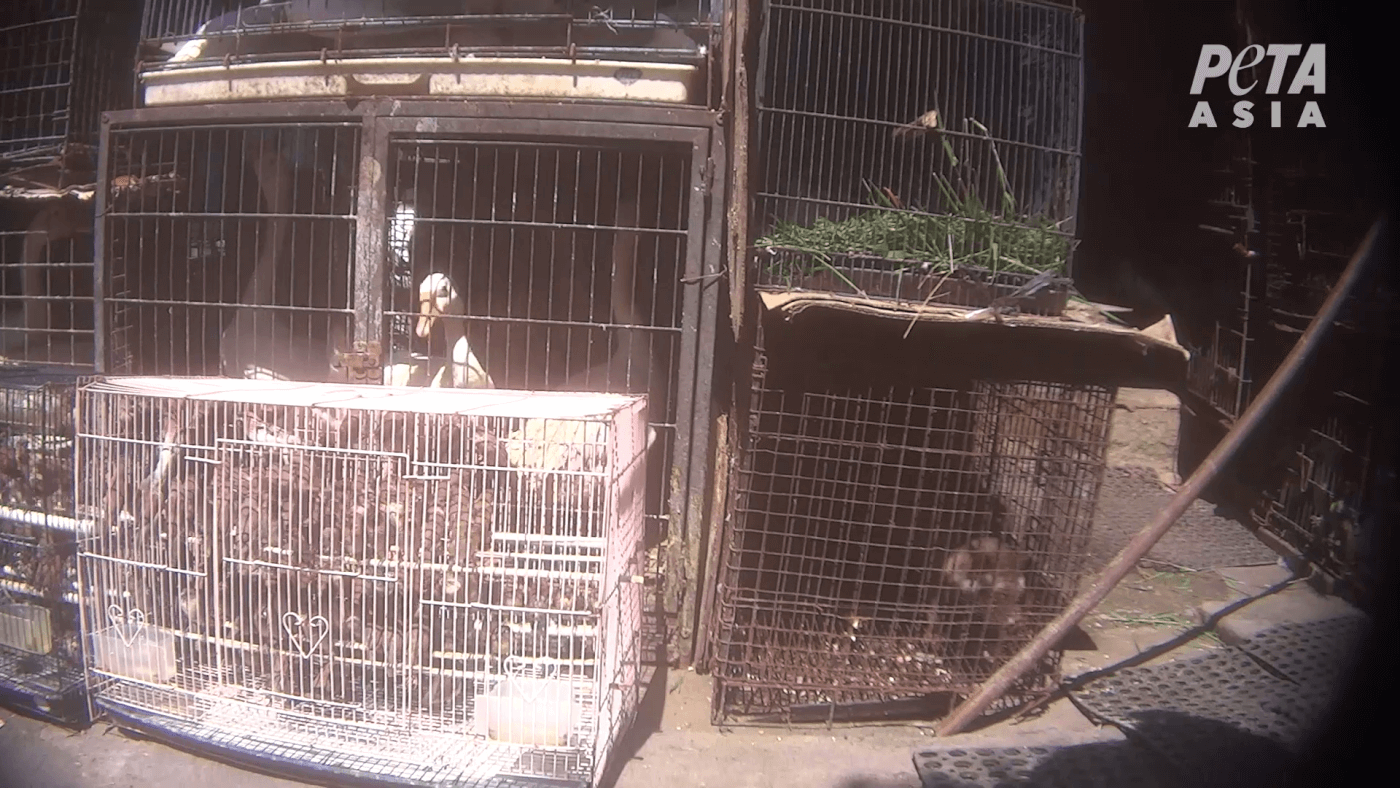
The slow loris at this market was kept in a small, barren cage without access to water. These sensitive animals are nocturnal primates, which means the noisy, brightly lit environment would have been incredibly stressful for them. There was no official record of the animal, who was being sold “off the books”.
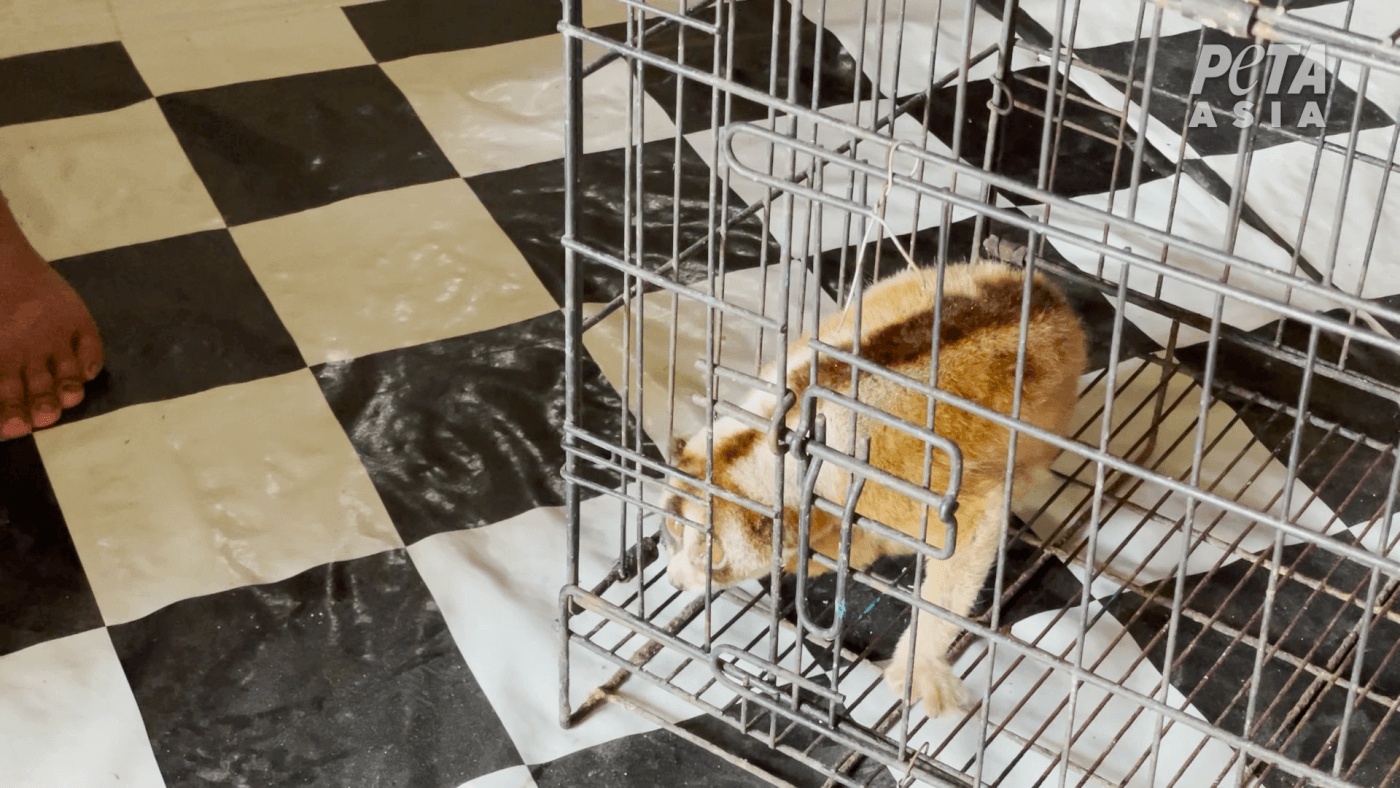
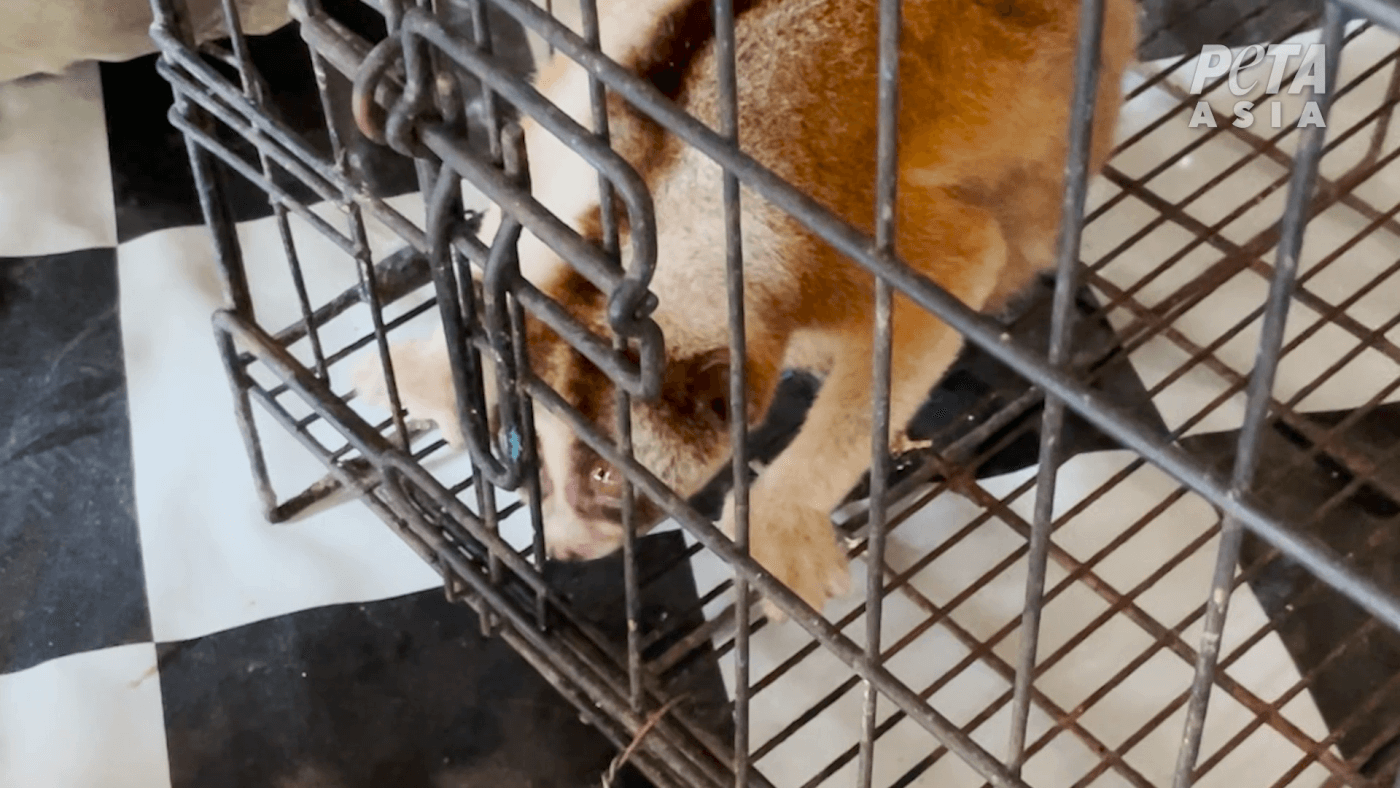
Many exotic animals who are sold to ill-informed buyers or acquired as novelties on a whim die prematurely or are abandoned when buyers are no longer able or willing to care for them.

Failing Law Enforcement

PETA Asia is calling on Indonesia’s law-enforcement authorities and Ministry of Environment and Forestry to investigate this illegal, violent trade and file appropriate charges against the perpetrators.
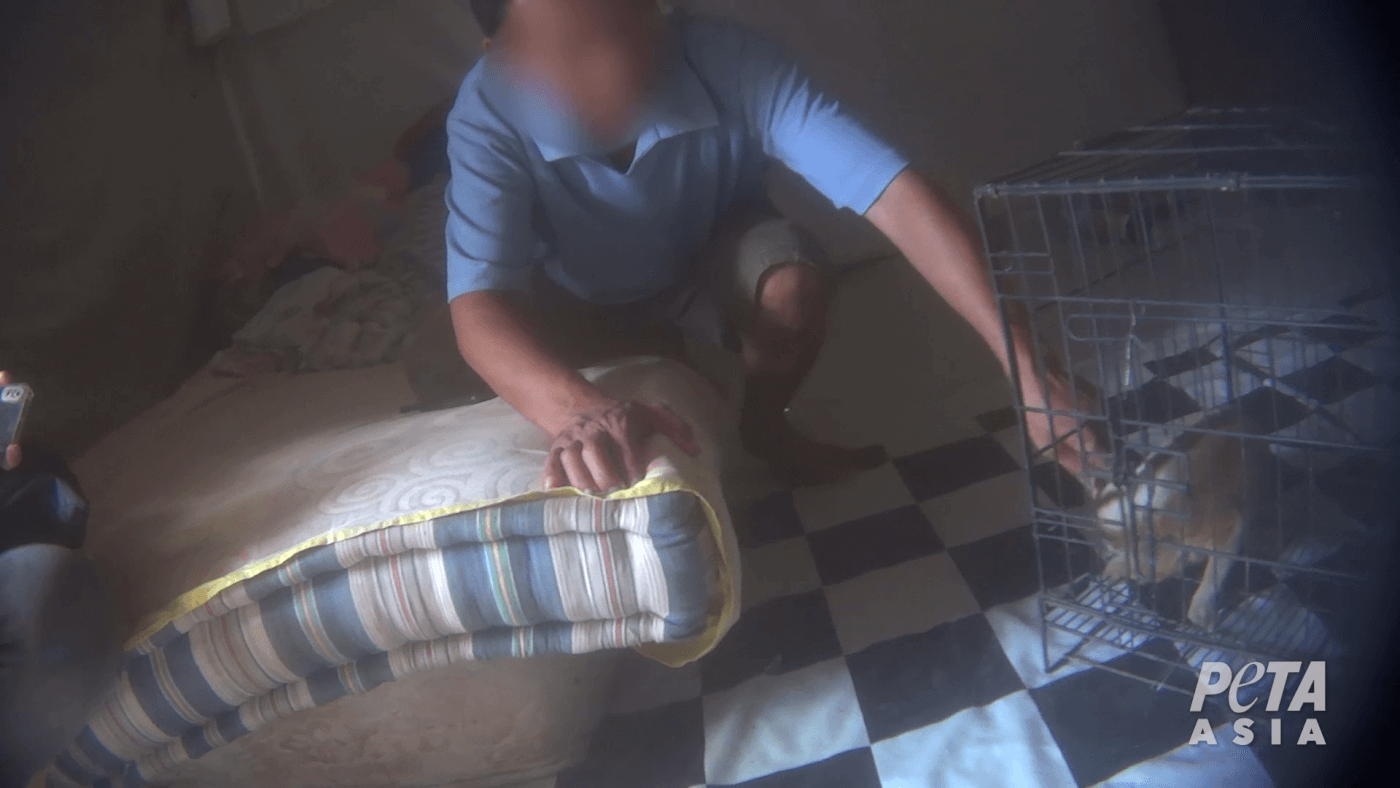
This is the third time in as many years that illegal wildlife trafficking has been exposed at this market. Just last year, the same shop was caught selling monkeys, who were confiscated. The shop was given a warning and agreed never to sell monkeys again. Yet it brazenly continues to sell illegally imported animals. The wildlife trafficker even compares his activities to those of the Mafia.

Authorities’ ineffectual warnings have clearly done nothing to deter vendors. Meaningful enforcement must be implemented without delay.
Threat to World Health

It’s estimated that 75% of all new infectious diseases originate from animals other than humans. Animal markets, like the one at which the novel coronavirus that led to the global pandemic is believed to have originated, are potential breeding grounds for viruses that cause zoonotic diseases, including COVID-19, SARS, and monkeypox.

Markets where there is direct contact between customers and live animals provide the ideal environment for viruses to jump from one host to another. Faeces and bodily fluids can easily and unknowingly be carried into restaurants, homes, and other places on the shoes and clothing of anyone who visits such markets. Rabies, which has a mortality rate of almost 100%, and herpes B virus, which is fatal to nearly 70% of humans who do not receive timely treatment, can be transferred from macaques to humans.
What You Can Do

Regardless of where you are in the world, never buy animals at markets, from dealers, or from pet shops. Animal shelters are filled with dogs and cats who need loving homes.

Animals such as slow lorises are not suitable animal companions. These fascinating individuals are nocturnal and like to travel long distances at night. Keeping them enclosed in brightly lit environments is cruel. They have highly complex nutritional needs and often become obese when guardians fail to meet them.

People who later realise that taking care of these animals is more work than they expected abandon thousands of “exotic pets” each year. Learn more about why you should never support the exotic-pet trade:

News 2025  There is hope:

This landmark case sets an important precedent in the fight against wildlife trafficking in Indonesia. It sends a clear message that the illegal capture, trade, and abuse of wild animals will no longer be tolerated. Justice can and will be pursued for the victims of the wildlife trade!


For the first time in Indonesia, a suspect identified as S (59) was sentenced by the Denpasar District Court Judge Gede Putra Astawa S.H.M.H to a fine of Rp 500,000 or seven days in prison for trafficking long-tailed macaques at the Satria Bird Market.

‍

This result follows a legal report filed by JAAN Indonesia and Sintesia Animalia with law enforcement officials and with support from the Natural Resources Conservation Agency (BKSDA) and the Denpasar Public Order Police Unit (Satpol PP). The report was issued after a foreign tourist discovered yet another critically ill baby monkey (we named Satria after the rescue). The baby monkey is currently receiving intensive care at the Umah Lumba rehabilitation center, part of JAAN Indonesia.

‍

(1) Femke receives Satria. (2) Example of monkey trade in Bali.

‍

The director and founder of JAAN Indonesia, Femke Den Haas, emphasized that the practice of wildlife trafficking is not only illegal but also causes suffering for the animals affected. "This is the result of years of struggle. Many monkeys are taken from outside Bali, such as Sumatra, to be sold in markets. Tourists often email us with complaints and they often end up buying a monkey to save them from their poor living conditions. Ironically, this empathy actually encourages traders to continue selling due to increase in demand. In 2022, we, along with the Bali Natural Resources Conservation Agency (BKSDA) and the Animal Husbandry Service, installed signs at Balinese animal markets that prohibite the primate trade. Then, in 2024, we conducted outreach activities with the Denpasar Public Order Agency (Satpol PP) and our partners at BKSDA Bali. However, because the suspect, who had previously promised to stop trading wild animals, continued his actions, in 2025 we decided to pursue legal action when hard evidence was gathered about the trade and suffering these monkeys endure," said Femke.

‍

"The violation committed by the perpetrator falls under the category of animal abuse. This is in accordance with Article 28 paragraph (1), which states that everyone is prohibited from torturing animals or livestock." Wayan Anggara Bawa, from the Investigation and Criminal Investigation Unit of the Public Order Police Unit, added.

‍

Veterinarian Farida Ulya presented in court the suffering and torture the long tailed macaques endure in this cruel trade. Satria, the last victim from the Balinese market, was near death when we received him for treatment at our center.  

‍

In accordance with the provisions of Article 42 paragraph (1), (2) of Bali Provincial Regulation No. 5 of 2023 concerning the Implementation of Public Order, Public Tranquility, and Community Protection, perpetrators of wildlife trafficking can be subject to a maximum criminal penalty of 3 (three) months in prison and/or a fine of up to IDR 50,000,000 (fifty million rupiah).

‍

Example of monkeys being sold at a market‍

The long-tailed macaque (Macaca fascicularis), which is currently listed as 'Endangered' according to the IUCN Red List due to the rampant wildlife trade and the destruction of its natural habitat. The illegal capture and sale of this species not only disrupts its wild population but also accelerates the decline of biodiversity in Bali and the surrounding areas.

If you see animals for sale illegally, contact the local authorities immediately.

dinsdag 22 april 2025

Cruel and distressing’ animal conditions exposed at China’s oldest zoo


Cruel and distressing’ animal conditions exposed at China’s oldest zoo

Polar bear and elephants locked up
Footage shows the distressing scenes inside Beijing Zoo (Picture: Edina Delic)

African elephants confined to ‘tiny prison cells’ without access to water. Polar bears locked indoors with nothing but a ‘dirty’ pool. Dogs stuffed into cramped cages.

These are some of the distressing scenes confronting tourists at Beijing Zoo, where concerns are mounting over the treatment and welfare of the animals.Edina Delic, from Dublin, spoke with Metro about the conditions in China’s oldest public zoo in the Xicheng District, that left her in floods of tears.

The 29-year-old was on holiday in the Chinese capital when she visited the park — an area of 80 hectares, also known as a centre for zoological research that breeds rare animals from across the world.

Dr Peter Li, a policy expert, said it is ‘not unheard of’ for some zoos in China to dye the fur of dogs to look like other animals.

‘This doesn’t align with the ethical treatment of dogs or any animal but alas many zoos across China have woefully inadequate standards in terms of animal welfare and wellbeing,’ he told Metro.

Chow Chow dogs painted as panda's

There have been recent examples of Chow Chows being dyed black and white to look like pandas, and orange and black to look like tigers.Dr Li explained that zoos in China do not operate under internationally-recognised standards.

While some Western practices have been implemented, the conditions in a typical zoo in China fall short, he said.Dr Li added: ‘Chinese zoos are a huge business empire where animals are commodities for profit.

‘Many zoos are rogue facilities with no educational or welfare element at all, and some even subject animals to cruel and demeaning circus-like acts.

‘Instead of being truly educational facilities, they do the opposite because the animals can be so depressed and inactive in their barren and small environments, that the paying public see nothing of the true nature of wild animals as they would behave in the wild where they belong.’ 

Metro contacted the China Zoo Association (CZA) for comment but has received no response.

Dear Readers I am in touch with Zoo Check and Wildlife Welfare. I will keep you informed about a change in the situation in zoos in China. Tomorrow I wil send a request to Animals Asia what is being doen for the animals in horrible zoos.?

Get in touch with our news team by emailing us at webnews@metro.co.uk.


dinsdag 28 januari 2025

Exposed: the hidden suffering of monkeys transported from Vietnam to Manchester Airport for UK testing laboratories


The hidden suffering of monkeys transported to the UK to be used in testing laboratories, has been revealed following the release of inspection reports and 'never-before-seen' photographs of monkeys inside transit crates destined for Manchester Airport. The findings have raised major animal welfare concerns, and renewed calls by animal protection groups, Cheshire Animal Rights Campaigns and Action for Primates and Animal Welfare Party, to the UK government and Manchester Airport to end the import of primates to the UK.


The reports and images were released to the Dutch-Belgian based organisation Animal Rights, following a freedom of information request submitted to Brussels Airport, a key transit hub for the global trade in monkeys. These reveal that thousands of long-tailed macaques, some just two years of age, are transported as cargo on airlines to Brussels airport each year, primarily from Mauritius and Vietnam. In some cases, the monkeys continue by air from Brussels to the UK or the USA. Others are transported by road to laboratories and suppliers across Europe.

Monkeys destined for the UK are transported from Brussels by cargo carriers to Manchester Airport. On arrival, the monkeys are loaded onto a truck and driven by road to their final destination – the testing laboratory, primarily contract testing facilities. At these laboratories, the monkeys are subjected to toxicity tests, the main area in which long-tailed macaques are used.


The photographs show distressed monkeys, including those destined for the UK, cowering inside the small wooden crates used to transport them, while the inspection reports reveal disturbing situations, including:

  • On 28th May 2024, one monkey had a suspected rectal prolapse, yet inspectors at Brussels Airport allowed him to be loaded onto an aircraft and transported to Manchester Airport. Photographs show the rear end of the monkey stained with blood, and blood smeared on the inside of the crate.
  • On 24th July 2023, inspectors at Brussels Airport reported that the temperature in the cargo hold of an aircraft could not be controlled and was estimated to be about 10°C, which they acknowledged ...is too cold for the animals. The transport was, nevertheless, approved to fly to Manchester Airport.
  • On 17th July 2024, during an inspection of a shipment of monkeys destined for the USA, officials reported that one monkey was found dead in the transit crate.

Transportation by air is a stressful ordeal for monkeys, who may become so distressed that they can become ill or die in transit. Shipped as cargo, monkeys spend many hours confined singly in small transit crates, cruelly deprived of the companionship of others, whom they would normally hold onto for comfort under stressful conditions. Journey times to the final destination, including air and ground transit times, can be extremely long, and the monkeys may have to endure inadequate ventilation, unfamiliar and loud noise, extreme temperature fluctuations and delays en route.

Animal Welfare Party and Cheshire Animal Rights have been campaigning for Greater Manchester councils, who are stakeholders in Manchester Airport, to take a stand against the airport's role in the global primate trade. A 'Shareholder of Shame' protest is to be held outside Manchester City Council meeting on Wednesday 27th November, between 9-10AM at Manchester Town Hall, M2 5DB. Manchester City Council hold the largest share – 35% – in Manchester Airport. Further details: https://www.facebook.com/photo?fbid=989343943229486

Jane Smith, deputy leader, Animal Welfare Party, said: The import of live monkeys destined for UK vivisection laboratories brings shame on Manchester Airports Group plc, its council stakeholders and the North West region. We are calling on MAG plc to end this horrific practice immediately as part of the movement to consign testing on primates to the dustbin of history where it belongs.

Hannah Bell, Cheshire Animal Rights Campaigns, stated: For decades, there have been calls for Manchester Airport to stop accepting flights that import animals for laboratories and in particular primates. It is a secretive business that took years of investigating to uncover. Thanks to the latest expose, we can put a face to the clandestine "cargo" that the airport accepts - and that face is utterly heartbreaking, the suffering unacceptable. Manchester Airport must stop facilitating this trade and close its gateway to hell on shipments of monkeys imported for laboratories.

Sarah Kite, Co-founder, Action for Primates, stated: These distressing revelations and images have placed the secretive world of the primate research and toxicity testing industry firmly in the spotlight. Sentient and intelligent monkeys are being subjected to a terrifying and traumatic ordeal as they are shipped as cargo in small crates on long journeys across the world to the UK. This is a cruel and inhumane trade in monkeys' lives and we call upon the UK Government to end it.

Long-tailed macaques are intelligent and highly social non-human primates with unique cultures and behaviours. They contribute to biodiversity and play an important ecological role in their native ecosystems. Their conservation status was recently elevated to Endangered by the International Union for Conservation of Nature (IUCN) Red List of Threatened Species, reinforcing the importance of protecting the specie


 Jail for women in UK monkey torture case

Two women have been imprisoned for their part in a global monkey torture ring that paid for and ordered baby monkeys to be tortured and killed in Indonesia to create videos to be circulated online. Holly LeGresley, who was sentenced to two years and Adriana Orme, who was sentenced to 15 months, both pleaded guilty to charges of publishing an obscene article and causing unnecessary suffering to a protected animal.

The sentences have been welcomed by animal protection groups Action for Primates and Lady Freethinker, who have spent over three years investigating the sadistic world of animal torture groups. The convictions are part of an international effort by law enforcement agencies in several countries, in particular the UK and the USA, to identify and prosecute those groups and individuals who facilitate the torture of baby monkeys. Several people in the USA are already serving prison sentences.

Sarah Kite, spokesperson for Action for Primates, and who assisted the UK police with their investigation, stated: We are extremely grateful to West Mercia Police for bringing these charges. Anyone involved in this type of behaviour must be held to account, and others need to know that such extreme cruelty and depravity will never be tolerated. We hope these sentences will deter others from becoming involved in these perverted and sadistic activities.

Nina Jackel, Founder, Lady Freethinker, stated: The horrors being inflicted on innocent, baby monkeys for online videos are sickening, and strong actions must be taken to protect animals from such brutality at the hands of humans. Those involved in the creation or distribution of animal torture content for 'enjoyment' pose a threat to both animals and humans, and they must be held accountable.

LeGresley and Orme were members of a Telegram group run by Michael Macartney from Virginia, USA, who called himself "the Torture King". Macartney, who was recently sentenced to three years and four months in prison for conspiring to make and distribute "animal crush" videos, ran several online Telegram groups that facilitated the 'torture, murder and sexually sadistic mutilation' of baby long-tailed macaques for 'fun'. LeGresley, who called herself "The Immolator", was an administrator of this group and even ran a poll for group members to vote on the method of torture they wanted to see inflicted upon a monkey for a video to be made, funded by the group. The choices included sealing a monkey inside a jar with red ants, applying a painful substance to the wounds created by a cheese grater or gluing together various parts of a monkey's body.

The perverted 'enjoyment' LeGresley and Orme obtained from watching baby monkeys brutally tortured and abused in the most sadistic ways is horrifying and evident in the sickening comments they made in group chats on Telegram:

Orme: I love mental torture. It's funny what you can reach and see how they change.
I would start fucking them up mentally, then slowly bit by bit physically, torture them, heal them, torture them, heal them. Keep them alive like this for as long as possible.
Yeah beatings or dragging and then feeding with its mouth taped lol.

LeGresley: I feel very satisfied when I see monkeys suffer too. It makes me happy.
I like it, the little rat got sliced up good and proper, and it survived long enough to suffer! whats the point in just killing them? Thats no fun.
I wonder if they could simply lower a baby monkey into boiling water. I'd quite like to see one try to swim as it burns alive.

Members of these online torture groups are primarily active on platforms such as Telegram and get 'pleasure' from watching helpless and vulnerable infant monkeys – some just a few days old – in terror and pain fighting for their lives. The extreme cruelty inflicted upon the baby monkeys included being set alight; having parts of their body cut off, including limbs, genitals, fingers and toes; their bones broken with a hammer; their heads squeezed in a clamp; beaten viciously; and having their eyes drilled out with a power tool.

The evidence obtained during the investigations by Action for Primates, a UK-based project that advocates globally on behalf of non-human primates, and Lady Freethinker, a US-based animal protection organisation, has been given to various law enforcement agencies and spurred the BBC investigation and documentary about online monkey torture gangs – "The Monkey Haters" – which helped lead to the inclusion of animal cruelty in the UK Online Safety Act.

Disturbingly, many graphic and violent videos paid for by members in Telegram groups – depicting extreme violence and sexual abuse inflicted upon baby monkeys, including genital mutilation – have appeared on mainstream social media platforms such as Facebook. By allowing these people to operate and post monkey torture content, social media companies are facilitating criminal activity on their platforms.

Notes to Editor:

About Action for Primates: Action for Primates is a UK-based project that campaigns on behalf of non-human primates globally. Action for Primates raises awareness about the plight of and threats to non-human primates around the world and works to end their exploitation, whether in captivity or in the wild. Action for Primates Website: https://actionforprimates.org/

About Lady Freethinker: Founded in 2013, LFT is a Los Angeles-based nonprofit organisation dedicated to exposing and stopping the suffering of animals, humans and the planet. Through its undercover investigations, news reporting, and petitions, LFT brings to light suffering that may otherwise go ignored and works toward lasting, systemic change. LFT also provides direct aid to animal rescue. LFT Website: https://ladyfreethinker.org/

For further information:

Sarah Kite
E-mail: info@actionforprimates.org
Website: hhttps://actionforprimates.org/

Nina Jackel
E-mail: Nina.J@LadyFreethinker.org
Website: https://ladyfreethinker.org/