Translate

Posts tonen met het label captivity. Alle posts tonen

zondag 16 augustus 2026

Historic milestone : The first dolphin sanctuary in Europe where dolphins, from captivity will not be performing in a chlorine pool anymore but swimming in the salty sea


The world view toward keeping dolphins in aquaria for entertainment purposes is shifting.

 Sao Paolo Dolphin Refuge is the first dolphin sanctuary in Europe. It is located in an enclosed stretch of sea near Tarante, in southern Italy. The sanctuary was founded by the Italian organization Jonian Dolphin Conservation, especially for dolphins that can no longer stay in a dolphinarium and cannot return to the wild. Often these animals need permanent care. This sanctuary was developed with a team of partners, including World Animal Protection and cetacean experts.

Sao Paolo Dolphin Refuge

"This final permit is a historic milestone. For the first time in Europe, there will be a marine sanctuary where dolphins from captivity can live in a more natural environment, without interaction with tourists and with their welfare first," says Sanne Kuijpers, campaign manager Wild Animals. "These kinds of projects are an essential part of solving the serious welfare problems in captive cetaceans. No more concrete basins, but the rhythm of the sea. A place where they can be dolphins again, instead of entertainers. It brings us one step closer to a future where the orcas and dolphins that now live in captivity will be the last."

What is a marine dolphin sanctuary?

These are spacious enclosures in a fenced-off piece of sea, where dolphins that now live in captivity can live. The welfare of the dolphins is paramount and the dolphins can show more natural behavior. Not performing in a chlorine pool for a screaming audience, but swimming around and diving in the salty sea, where they belong. No new dolphins are bred for a life in captivity.

The dolphins are provided with a more natural and challenging habitat, while receiving the care and guidance they need after years of living in a confined environment.
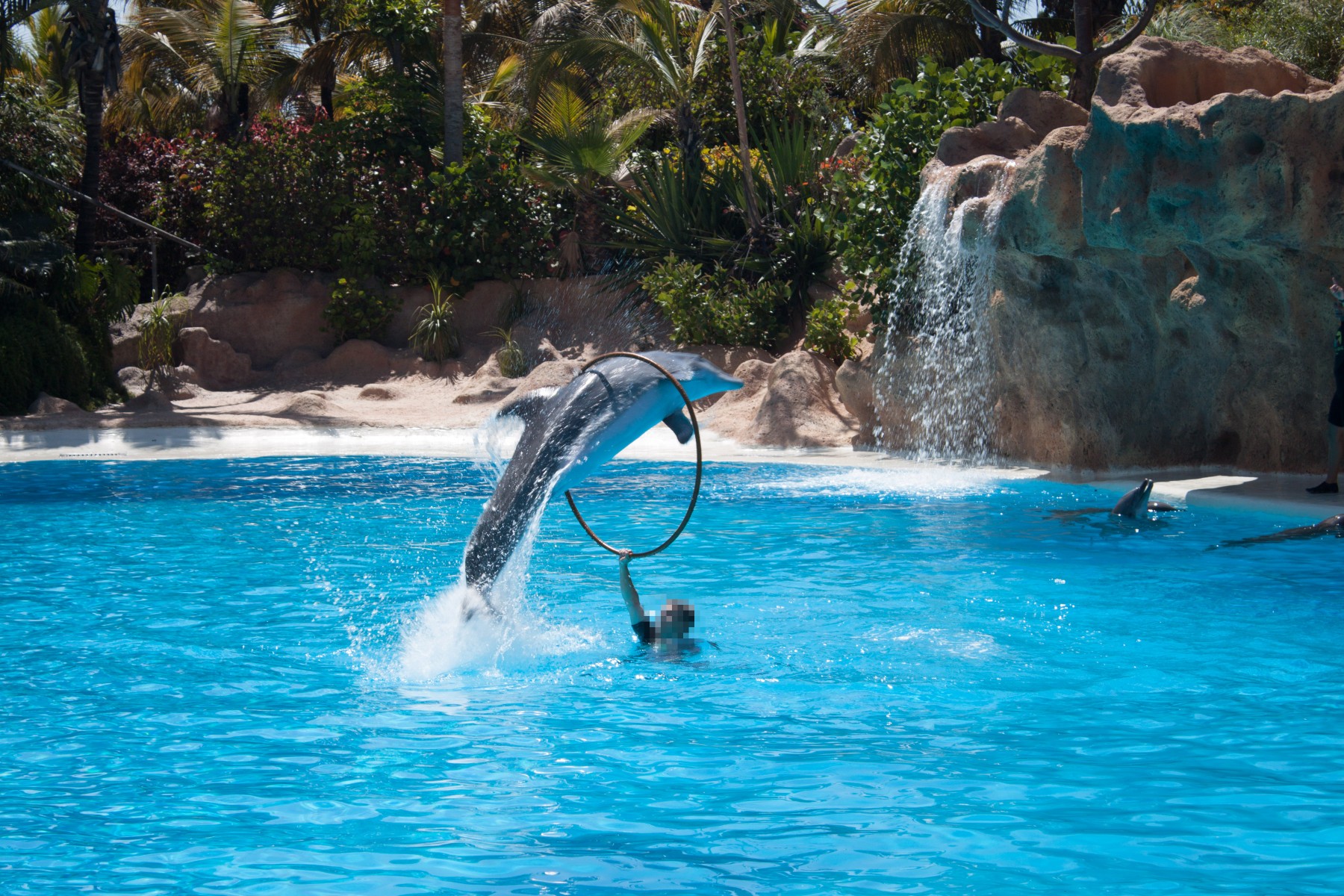
Dolphin show

The urgency of reception places

The popularity of dolphinariums is declining. Visitor numbers are falling, legislation is changing and parks are closing. In the past five years, several parks in France and Belgium, for example, have closed or are threatened with closure. This is a good development, because wild animals are not supposed to do shows in chlorine baths. But the dolphins that are born in captivity often cannot go back into the wild. The only option is often a move to another park, where breeding and performing and tricks continue. That is why World Animal Protection www.worldanimalprotection.nl has been working on the development of shelters for marine mammals for years.

In addition to the reception in Italy, reception places are being developed in Canada and Greece, among others. 


maandag 14 juli 2025

Argentina is the first country in the world to voluntary relocate captive elephants to a sanctuary in Brazil: The story of elephant Kenya the last elephant to leave


Today marks a monumental step in the journey of Kenya, a 44-year-old female African elephant, as Global Sanctuary for Elephants (GSE) begins transporting her from Ecoparque Mendoza in Argentina to Elephant Sanctuary Brazil (ESB).


 Kenya’s departure closes a chapter spanning 136 years of elephant captivity in Argentina, which began in 1889 when the first elephants arrived in Buenos Aires. With this relocation, Argentina becomes the first country in the world to voluntarily and ethically relocate all its captive elephants to sanctuary. 

This momentous move is the culmination of years of careful preparation, training and respect for Kenya’s pace, and she is now en route to a life of healing, autonomy and potential companionship in the vast, wild sanctuary habitat.


Arriving at Global Sanctuary for Ellephants in Brazil she enjoys a sand bath

For four decades, Kenya has lived in the confined, sterile environment of Ecoparque Mendoza, a small, hard-packed yard surrounded by concrete with little to engage her mind or her senses. Despite her imposing size and striking beauty, Kenya’s life has been marked by loneliness, boredom and frustration. But now, all of that begins to change as she embarks on a new chapter of her life, one where her needs will be met with the respect and care she deserves. Kenya has shown remarkable progress in her training, and today, she willingly entered her transport crate, ready for the next phase of her journey. Her GSE caregivers and ecoparque staff have ensured that her comfort and well-being are prioritized at every step of her move.

“This is not just about relocating Kenya. It’s about restoring her dignity, her autonomy and her sense of self as an elephant,” said Scott Blais, co-founder and CEO of GSE. “We owe Kenya a future where healing is possible, where her voice is heard and where she’s free to just be an elephant — on her own terms.”

This move reflects a significant shift in how the world is beginning to view elephants in captivity. Across the globe, more and more facilities like Ecoparque Mendoza are voluntarily relocating their elephants to sanctuaries, recognizing that the needs of these intelligent and emotionally complex individuals cannot be fully met within the confines of traditional captive environments. 


Kenya's journey to ESB is part of a growing movement that prioritizes the emotional, physical and social well-being of elephants, offering them the opportunity to live as close to their natural lives as possible. This trend is a clear signal that the world is starting to understand and respect elephants not just as attractions, but as beings deserving of dignity and autonomy.

The relocation journey is underway, and Kenya is being transported under the watchful care of experienced elephant caregivers, veterinary professionals and a security team to ensure her comfort and safety throughout the process. Over the course of the five-day journey, every aspect of Kenya’s physical and emotional welfare will be carefully attended to.

Once she arrives at ESB, Kenya will be given access to a vast natural habitat where she can roam, forage and interact with the life that thrives in her space. For the first time in nearly 40 years, she will have the opportunity for companionship with another elephant, Pupy, a female African elephant who was welcomed to ESB in April 2025. At ESB, Kenya will be able to reconnect with her natural behaviors, build new bonds if she chooses and begin healing from the years of isolation and captivity she has endured.

“This is a turning point in Kenya’s life,” said Blais. “We’re grateful for the support of Ecoparque Mendoza and the many individuals who have helped make this moment possible.”

Kenya’s journey is a reminder of the incredible resilience of elephants and the transformative power of sanctuary. For updates on her relocation and to learn more about how you can support Kenya’s transition, visit:

globalelephants.org/a-promise-for-kenya

About Global Sanctuary for Elephants:

Global Sanctuary for Elephants is a U.S. 501(c)(3) nonprofit organization committed to protecting, rescuing and providing sanctuary for captive elephants worldwide. At their accredited, wild-habitat sanctuary, Elephant Sanctuary Brazil, they deliver unmatched care to elephants rescued from zoos, circuses and other detrimental environments. Their approach is characterized by an integrative view of elephant welfare, a dedication to recognizing the individuality of each elephant and a commitment to providing them with the highest level of autonomy possible.

Global Sanctuary for Elephants is the recipient of the Global Federation of Animal Sanctuaries’ 2022 Outstanding International Sanctuary Award and Candid’s 2025 Platinum Seal of Transparency.

Kara Edwards
Global Sanctuary for Elephants
+1 615-219-9445
email us here
Visit us on social media:
LinkedIn
Bluesky
Instagram
Facebook
YouTube
TikTok
X

woensdag 28 mei 2025

From Concrete Cage to Forest Freedom: Felix the Bear Begins a New Life After 34 Years in Captivity


The Rescue Of Bear Felix

A remarkable new chapter for an elderly bear 


The story of an elderly Slovenian 'restaurant bear' has taken a happy turn after over three decades in captivity. At the impressive age of 34, Felix has embarked on a new chapter at BEAR SANCTUARY Arbesbach in Austria, where he will be able to live out the rest of his life in a natural and species-appropriate environment.


Bear Felix sedated and ready to leave the cage in which he lived for 34 years

Born in 1991, Felix spent his life in a small concrete enclosure next to a busy road, where he served as an attraction for restaurant guests. In May 2025, a team from FOUR PAWS transported Felix to his new forever home.


There goes Felix on his way to a free wonderful life. Thank you Four Paws

The importance of advocacy

Since 2004, it has been illegal for private individuals in Slovenia to keep bears taken from the wild, but with exceptions for those who obtained bears before the law was enacted and could not release them. In 2022 FOUR PAWS assessed the living conditions of the remaining privately kept bears in Slovenia which included bear Felix. Following protests, the two responsible Slovenian Ministries conducted inspections of bear owners and imposed sanctions to improve their living conditions. In Felix's case, the authorities were successful, and the owner agreed to voluntarily hand him over to FOUR PAWS. This marks a significant step forward for animal welfare that sets a precedent for other bears in similar situations.

We thank the authorities involved for their support and the owner of Felix for making the right decision to give Felix the chance of a better life. But bears Mici and Tim are still suffering and continue to live in cruel, substandard conditions without specialised veterinary care. FOUR PAWS therefore appeals to their owners to follow the example of Felix's owner and we call on the authorities to continue working to end the private keeping of bears in Slovenia once and for all.

Enjoying the fresh air and sunshine


Still showing a zest for life

For bear Felix, decades of inappropriate living conditions have likely contributed to various health problems. During his time in captivity, Felix developed degenerative joint disease, resulting in stiffness in his hind legs, and his eyesight also appears to be impaired. However, despite these challenges and his advanced age, Felix remains curious and food-oriented, displaying a zest for life. During his health check Felix was also dewormed and vaccinated so that he is ready for the transfer to BEAR SANCTUARY Arbesbach soon.

Bear Felix should also not be confused with another brown bear named Felix, who has been in our care at BEAR SANCTUARY Müritz in Germany since 2007. For 12 years, he also lived in a small concrete enclosure and since arriving at the sanctuary he has transformed from a very shy and reserved bear into a self-confident and curious one.

A new home, a new chapter


After his time in Quarantine, Felix will also be able to play in a pool of water.. Have a great live Felix you deserve it !!

After an eight-hour journey from Slovenia to Austria, we are thrilled to say that this gentle soul arrived safe and sound at BEAR SANCTUARY Arbesbach. This mission was not easy—as it has been nearly three years since we began our work to help the saddest bears in Slovenia, but it is an indescribable feeling to see results like this.

Now, Felix will have time to adjust to his new surroundings, while his dedicated caretakers provide everything he needs to feel comfortable and welcome in his forever home. On the first night of his arrival, he snuggled up in his warm bed filled with straw and had a well-deserved long sleep. For the first few weeks, Felix will stay in the adaptation enclosure, allowing the team on-site to monitor him closely before he is released into his large forest enclosure. 

We want to extend our gratitude to the authorities who supported this mission and to the owner who made the right decision in allowing Felix the chance at a better life. And, of course, a heartfelt thank you to everyone who has been part of Felix’s journey and continues to support our mission to make his world a better place. 

Felix's story reminds us of the importance of raising awareness and fostering change for those who cannot speak for themselves. Together, we can work towards a future where all animals are treated with the respect and care they deserve.

Settling in well to his forever home

It’s been just over a week since bear Felix arrived at his new forever home in our BEAR SANCTUARY Arbesbach, and we’re thrilled to say that he continues to settle in beautifully! While he’s still in quarantine for a little longer, he’s adapting well and showing a healthy appetite especially for favourites like grapes, apples, and anything with honey or jam. 

His meals also serve a medical purpose: his painkillers (for his teeth and hind legs) are hidden in bread with jam — a combination he knows from his past keeping and that he still enjoys very much. Lately, he’s luckily started a healthier bear diet — trying cucumbers and carrots, and we’re gradually introducing more vegetables and nuts into his diet to make sure he gets all the nutrients he needs. 

After eating, Felix typically retreats to his cosy straw bed for a long and well-deserved nap. Although his enclosure is smaller due to quarantine, he’s making good use of it and doesn’t seem to be disturbed by the presence of his caretakers. In the outdoor section of his space, he continues to have fun digging in the soil and even unearthed a few sizeable rocks, showing he still has impressive strength. 

The Arbesbach team have not settled on the perfect nickname for him yet, but we’re sure that with neighbours like 'Queen' Brumca, 'Big Boy' Erich, and 'Teddy Bear' Mark, it’s only a matter of time before Felix earns a title of his own!


woensdag 12 februari 2025

The 18th Beluga Whale Death At Marineland Canada: Belugas swim long distances in the wild no wonder so many die in captivity: End this cruelty !


https://en.wikipedia.org/wiki/Beluga_whale  Information about Belugas

We are deeply saddened to report that another beluga whale, named Eos, has tragically died at Marineland. At just seven years old, Eos was euthanized after a prolonged battle with multiple medical conditions. The province’s Animal Welfare Services team confirmed her death on Thursday.

Eos’ passing marks the 18th beluga to die at the Niagara Falls, Ontario, entertainment attraction since 2019. Additionally, three other belugas sold to a Connecticut aquarium in 2021 have also died, underscoring a growing pattern of loss at this facility.

The repeated deaths of these sentient species reveal the dire consequences of keeping cetaceans in captivity. These creatures are not meant for confinement in small tanks. In the wild, they can travel thousands of miles across our oceans, yet in captivity, they are forced to swim in cramped enclosures for their entire lives—without the freedom to engage in their natural behaviors or form meaningful social bonds. Such confinement leads to both physical and psychological distress, which can result in serious health issues, as seen in the tragic deaths of beluga whales at Marineland.

“What’s happening now at MarineLand is exactly what we forewarned would happen when we first spoke out in 2012. It’s sad to see that not enough is being done to stop it. The fight continues,” Phil Demers, co-founder of UrgentSeas, told WAN.

In 2023, Canada’s last remaining killer whale in captivity, Kiska, passed away after years of isolation and deteriorating health. Over the past five years, other animals, including one dolphin, two sea lions, and two Magellanic penguins, have also died at the park. The heartbreaking question remains, how many more animals must suffer before we say enough is enough?

Eos was diagnosed with renal disease in 2021 and had been battling infections that required intensive treatment. Despite several recoveries, her health declined in recent months, leading to the decision to euthanize her. This is not an isolated tragedy—this is the reality faced by marine mammals in captivity.

These intelligent, social animals are denied their natural environment, which is essential for their physical and mental well-being. The relentless stress of captivity often results in premature death for most cetaceans held in captivity.

It is time to put an end to this cruelty worldwide and ensure that no more cetaceans are exploited for entertainment. Their lives are worth more than profit. They deserve freedom, respect, and the chance to live in the wild, where they truly belong.


 World Animal News