What a quarter it has been. From a sperm whale rescue, to the release of rehabilitated macaques into protected forest, to wildlife crime raids in Java and a massive confiscation in North Maluku that brought over 100 animals into safety.
The support we have felt from this community (in words and in donations) during our most urgent rescue operations has been incredible. Thank you!!
A warm welcome too to everyone joining us from the Ellis Park community. We are so happy you are here. Read on to discover all the animals we have been fighting for this quarter.
Kinds regards, Femke Den Haas Co-founder & Director, JAAN Wildlife
Stranded sperm whale rescued in West Bali
On December 23rd, our Umah Lumba team worked side by side with the Marine Police and Forestry authorities through an entire day (six attempts, hours of tension) to refloat a stranded sperm whale off the coast of West Bali. Read the full story (or watch the YouTube video) of how this magnificent creature finally took three deep dives and disappeared into the open ocean.
From a smuggler's box to the treetops of Sumatra: 24 macaques finally home
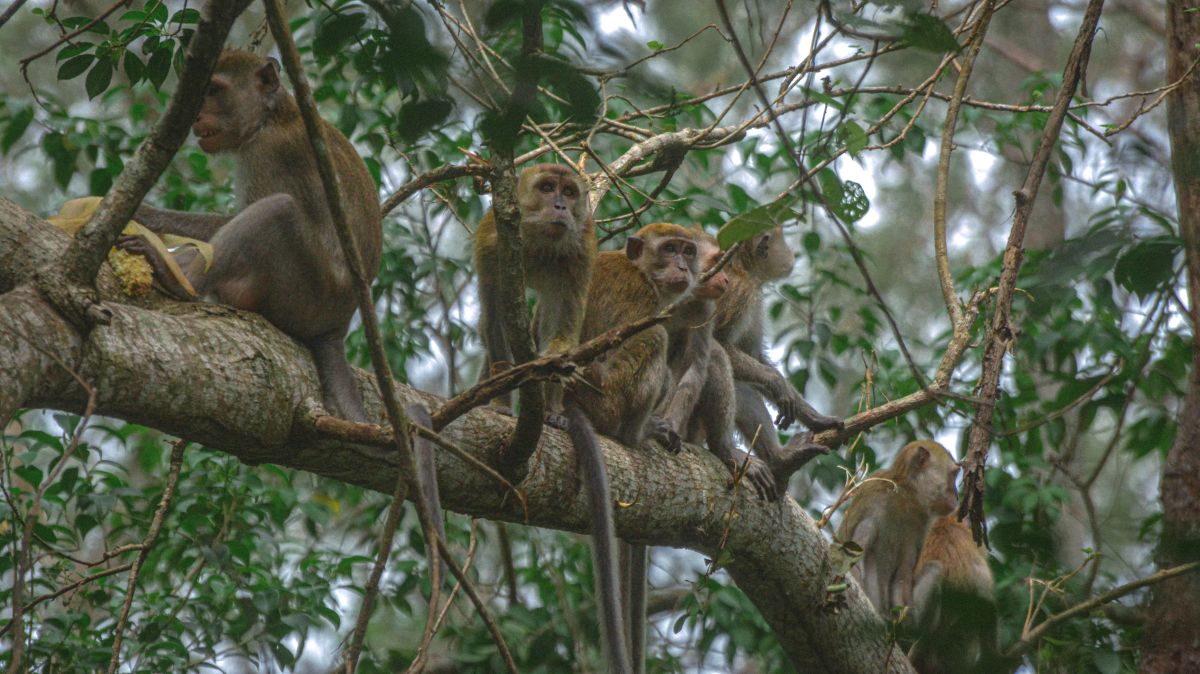
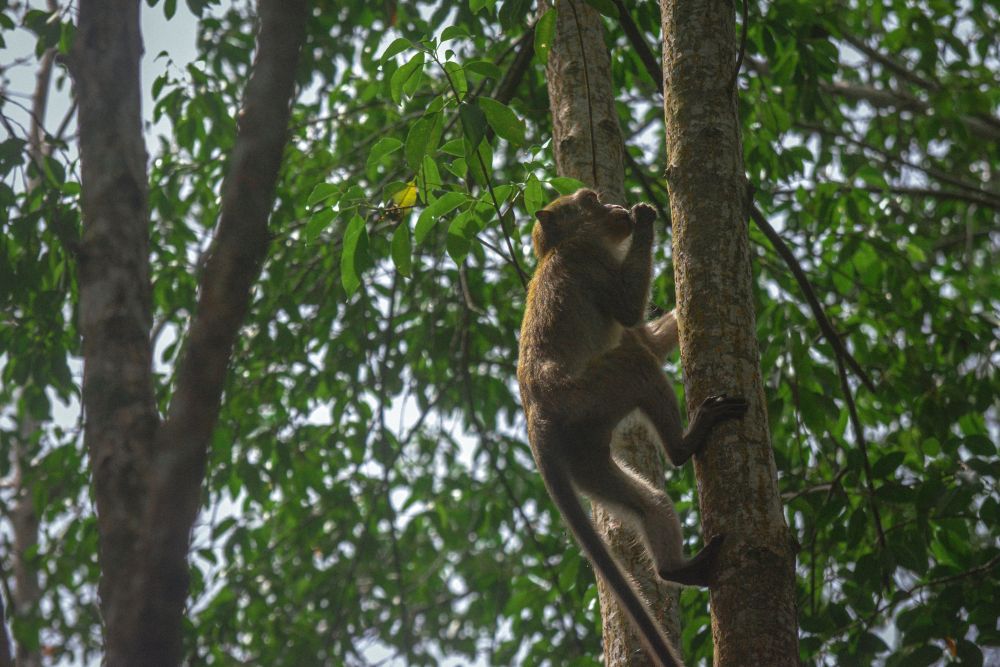
Rescued as infants from Indonesia's illegal pet trade, 24 long-tailed macaques spent years in rehabilitation at our Sumatra Wildlife Center before making the long journey to the mangrove forests of Berbak Sembilang National Park. Discover the full story and witness the moment they leapt into the trees for the very first time.
114 Papuan animals confiscated and a month-long race to bring them home.
In February 2026, authorities intercepted a vessel carrying 114 Papuan animals (tree kangaroos, cuscuses, pythons and more) crammed into pipes, cages, and the ship's cabin toilet. Read how our team joined a month-long operation to care for the survivors and return them to the forests of Papua where they belong.
Freek Vonk went to Sumatra and became a baby monkey mum
When Dutch biologist and TV personality Freek Vonk visited our Sumatra Wildlife Center, he didn't just observe! He rolled up his sleeves and became a temporary surrogate mum (and long-term sponsor) for two of our ten rescued baby macaques.
The little ones had been intercepted by our K9 sniffer dog team at a port in South Sumatra, about to be smuggled to Java. The 10 of 13 survivors are now receiving round-the-clock care at our center and will start a 3-year rehabilitation journey before they can be released into protected rainforest as confident, independent adults.
You can be part of their journey. By sponsoring one of the baby monkeys, you directly cover the costs of their medical care, nutrition, and full rehabilitation program.
117 and counting: another family of macaques returns to the Bali forest
Bali has taken a landmark stand for primates. By banning the trade and private ownership of primates, the island has created something rare: a place where positive change and real enforcement is possible.
The ban came into force last year, after years of campaigning by JAAN. Since then, we have been able to rescue and release 117 primates back into the wild. This quarter, another family of 17 rehabilitated long-tailed macaques was released into a protected forest reserve in West Bali, with full coordination and attendance of local authorities.
That same ban also gave us the tools to act fast when reports came in of people walking along Canggu Beach with baby pig-tailed macaques dressed in clothing, offering them for tourist photo shoots. At least one monkey has also been sold to a foreigner. Working alongside BKSDA Bali, we tracked down the traders and confiscated the macaques.
Bali is setting the example. Now, all of Indonesia needs to follow!
Our wildlife crime investigators led a raid on a poacher's home in Central Java, with assistance of the police. They found kilos of pangolin scales, one live pangolin covered in bite wounds from the poacher's dogs (who died shortly after rescue), two young leopard cats, a baby siamang, and a yellow-crested cockatoo. Legal proceedings are underway, and our team is determined to see the traders held accountable.
The investigators identified two more illegal wildlife traders and they coordinated a raid with undercover police. During the operation, local residents gathered and attacked the team! Luckily, police backup arrived quickly and both the traders and all 18 eagles were taken into custody. The birds are now in our care at the Sumatra Wildlife Center.
Indonesia's first K9 anti-poaching unit (run by JAAN) recorded 21 violations in national park territory within its first two months alone. In February, two of our handlers and their dogs completed their official certification with IFAW, making them fully operational. With only tens of Javan rhinos left in the wild, the work of this team has never been more critical.
From the forest to the sea: a quarter of rescues and releases across Indonesia
Sari the leopard cat, rescued as a tiny cub in August 2025, was successfully released back into the wild on December 27 after six months in our care.
In Denpasar, a baby pig-tailed macaque was found abandoned in a rubbish bin and is now being cared for ahead of relocation to our Sumatra Wildlife Center.
A mouse deer that had wandered into a Sumatran village in a panic was evacuated and safely released within 12 hours, and a green sea turtle in poor condition was brought into our UmahLumba sea turtle hospital in West Bali.
Later in January, two brown booby seabirds (a species we had never rescued before) were found exhausted on the West Bali coast, likely disoriented by storms, and are now recovering at our center.
On January 27, a stranded pygmy sperm whale was rushed to our marine mammal rehabilitation center, but despite 20 hours of intensive care, the animal did not survive. A heartbreaking reminder of how fragile these situations can be..
Finally, our Sumatra Wildlife Center took in 33 confiscated non-native reptiles, including alligator snapping turtles and Amboina box tortoises, handed over by seaport quarantine authorities.
Alam, who has been through so much suffering, has found her forever home at Ellis Park!
She was kept by someone in a tiny cage on the streets of Jakarta for over 6 years. It left her exposed and vulnerable. Kids would often bully her and at some point poked her with a sharp stick. The wound grew into an enormous tumor, covering almost her entire face!
Thanks to your support and donations, we were able to rescue Alam. She underwent surgery and received intensive veterinary care. Now, she's sharing a beautiful and spacious enclosure with Pearle, a blind female macaque. Her recovery is going well and she's slowly getting used to her new forever home at Ellis Park.
It's another painful example of why we need a nationwide ban on keeping monkeys as pets! And that's exactly what we are going to keep fighting for.
"I just want to thank all our supporters of Ellis Park. With your help the team is able to work to their best abilities. What an incredible community we have created.
Love, Warren Ellis" Ellis Park co-founder
February Survey results
In February, we sent out a short survey asking for your thoughts on our new newsletter layout and content. The response was clear: the quarterly frequency works well and the content is much appreciated. Two things you'd love to see more of: updates from Ellis Park and more insights into our ongoing programs and projects (including how you can contribute). We'll be adding more of both into every edition going forward.
Finally, congratulations to Julia. You won the survey raffle! We sent you an email yesterday and you will have the special opportunity to name one of our most recent rescues!
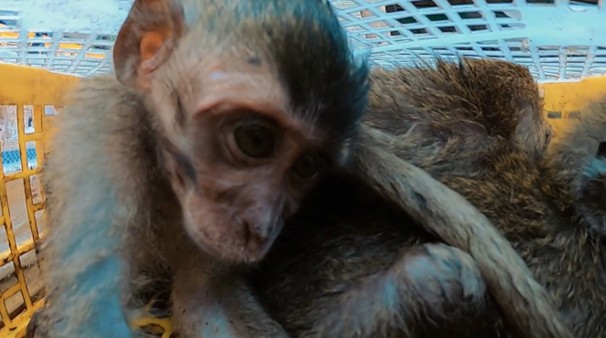
In 2021, JAAN's K9 Wildlife Detection program intercepted a shipment of Long-tailed Macaque (Macaca fascicularis) infants destined for the illegal pet trade. Over time, more rescues followed, eventually forming a group of 24 individuals in our care.
Baby monkeys in illegal smuggling box
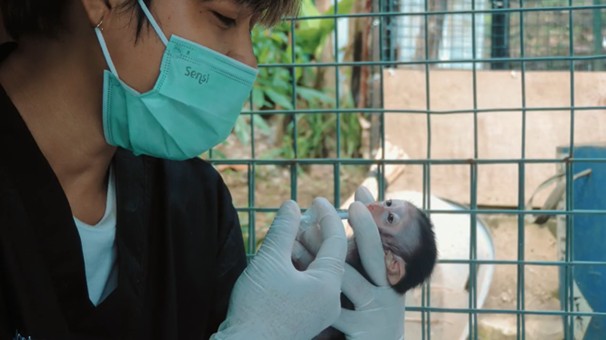
Raising infant macaques is demanding work. The team provided milk every four hours, from morning until night, to ensure each animal received adequate nutrition for healthy development. As the group grew, they were moved into larger enclosures fitted with natural climbing structures — tree trunks, branches — designed to reawaken their wild instincts for climbing, foraging, and socialising.
Vetrinary care for baby monkeys
Rehabilitation
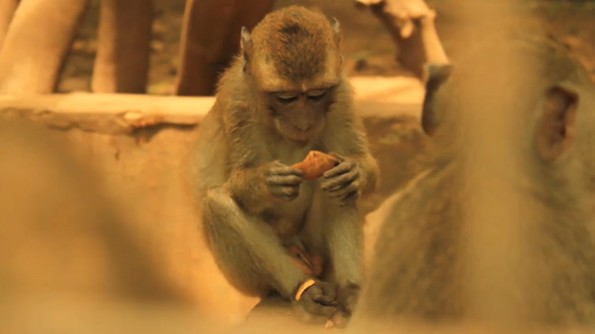
Once in the larger enclosures, keepers monitored the group daily, watching for signs of conflict or poor adaptation. Any individual showing stress or aggression was temporarily separated and reintegrated gradually. The team sourced most food from their own garden, with a fruit-dominant diet supplemented by vegetables and foraged leaves on a rotating schedule — always fresh, always cleaned before feeding.
Monkeys are reaching adulthood
Site Selection
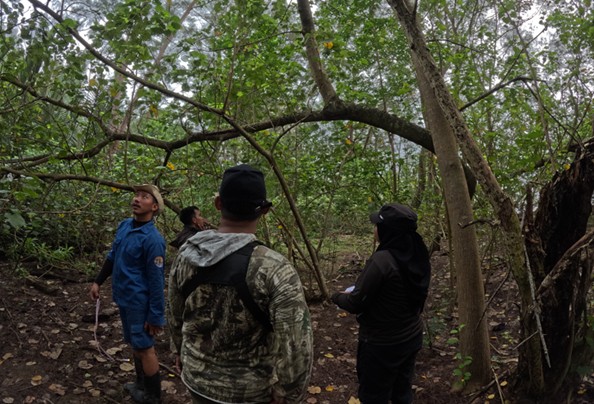
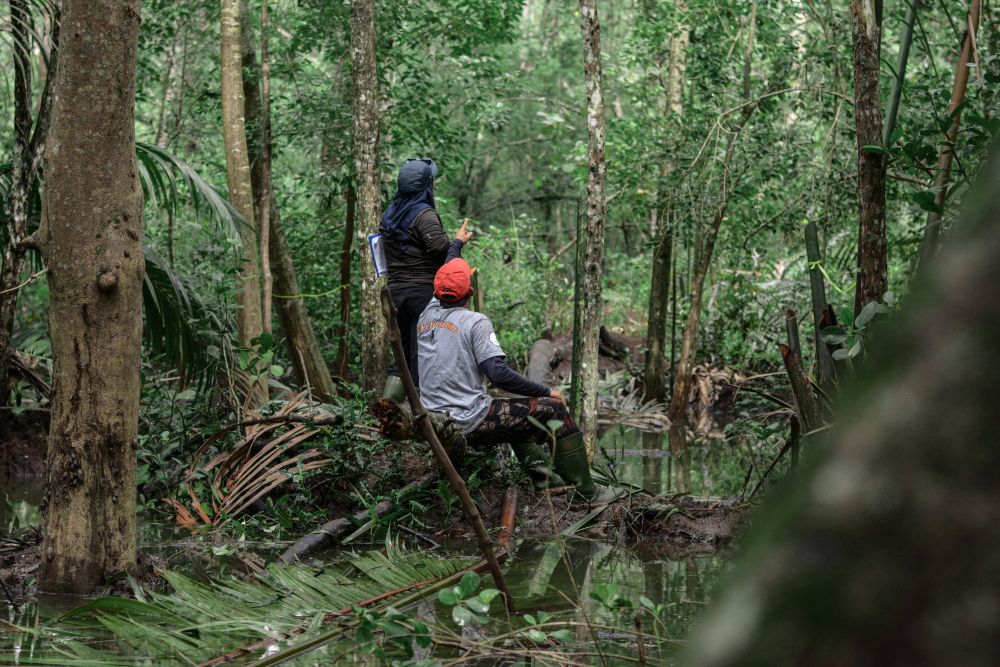
As the macaques reached adulthood, JAAN coordinated with Indonesia's Balai Konservasi Sumberdaya Alam (BKSDA) to identify a suitable release site. In January 2026, a joint team of biologists, keepers, BKSDA officers, and National Park officials conducted a field survey across three locations within Berbak and Sembilang National Parks in South Sumatra: Alanggantang Island, Bogem River, and Barong River.
Alanggantang Island was selected based on its natural vegetation, adequate food and water sources, and minimal human activity — ideal conditions for a successful release.
Advance Team & Habituation Enclosure
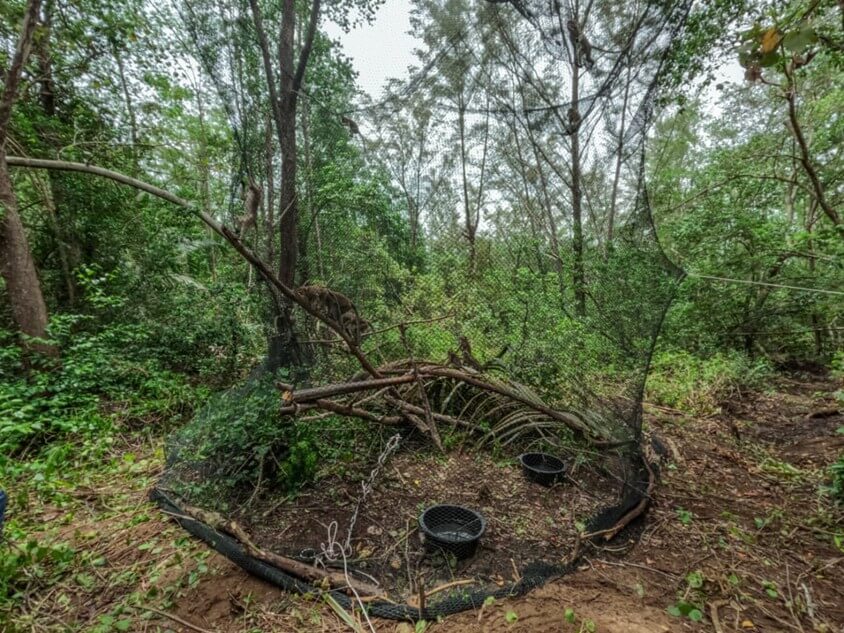
On February 10, 2026, an advance team was deployed to the island five days ahead of the main release. Over four days, they constructed a habituation enclosure from netting and natural materials, stocked with fruit, vegetables, and clean water to support the macaques during their initial adjustment to the new environment.
Pre-release for adjusting to new environment and recovering from the long journey
Transport
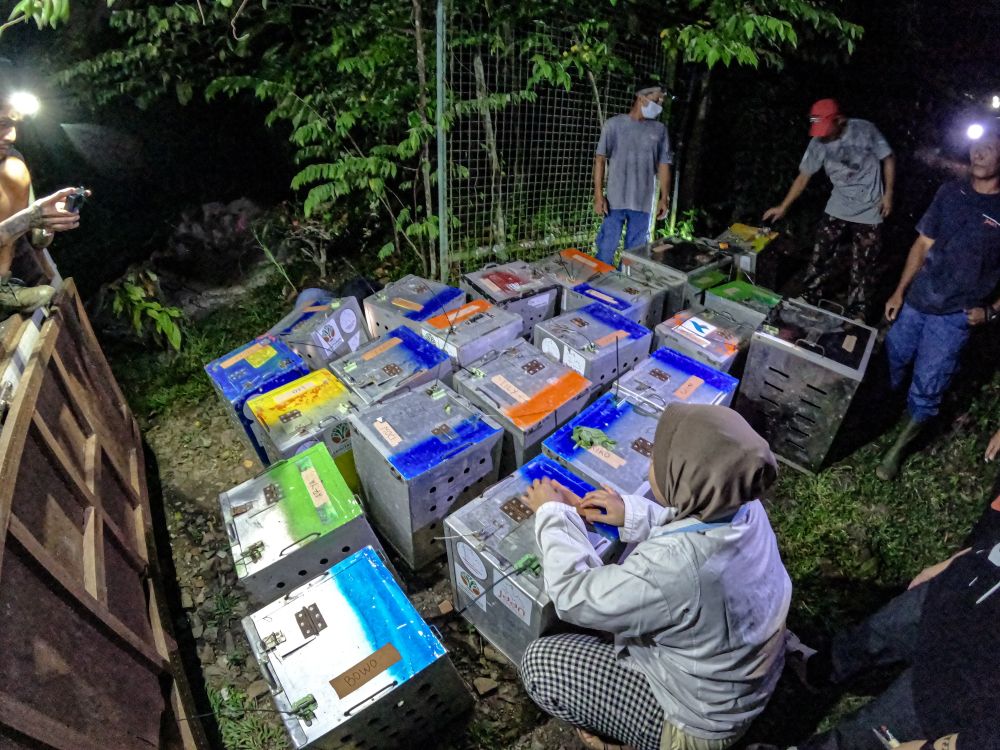
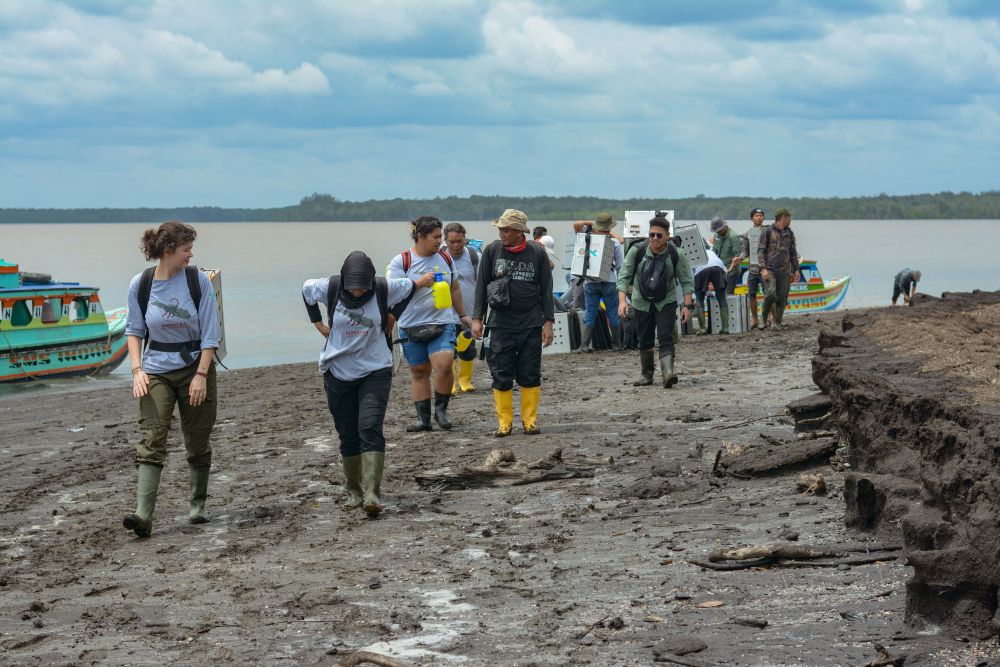
On February 14, the release team at the Sumatra Wildlife Center (SWC) carried out health examinations and transferred all 24 individuals into transport cages. The following morning, the team (accompanied by BKSDA and National Park representatives) began the journey from South Lampung: a 10-hour overland drive, followed by a 2.5-hour sea crossing by barge to Alanggantang Island. Animals were checked every three hours throughout, with rehydration solutions and multivitamins administered to manage stress. The barge maintained minimum speed to keep conditions as calm as possible.
Release
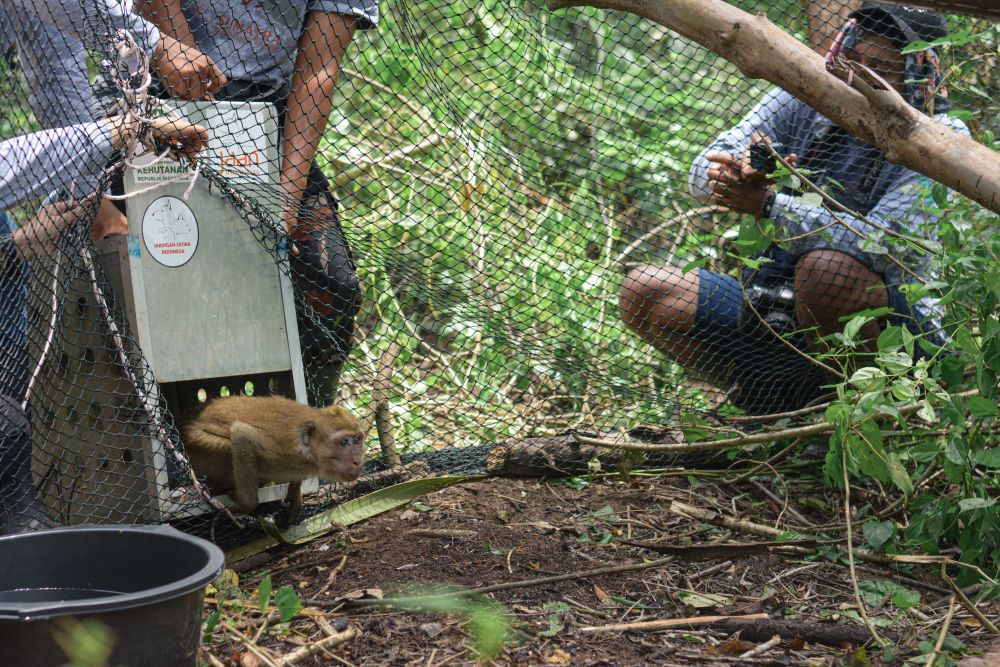
Upon arrival, cages were carefully carried to the habituation enclosure and opened gradually to minimise disturbance. The team kept noise to a minimum and maintained distance while the macaques settled in. One individual managed to breach the netting during the process — a reminder that even well-prepared releases carry their uncertainties.
Post-Release Monitoring
From February 16–22, 2026, a monitoring team conducted daily observations of the group's adaptation. Supplementary food was provided and reduced incrementally over four days to encourage independent foraging. The team recorded movement patterns, social interactions, feeding behaviour, and stress indicators throughout.
By the end of the monitoring period, the group showed strong signs of successful adaptation: active exploration of the mangrove habitat, stable social dynamics, and growing reliance on natural food sources. Long-term monitoring will continue to confirm their sustained success in the wild.