Translate

Posts tonen met het label Ukraine. Alle posts tonen

zaterdag 23 mei 2026

The 23 year old Simone saw pictures of the Ukraine war, animals left behind when families were forced to flee and joined the Animal Rescue Kharkiv

 News from Peoples Ethical Treatment of Animals ( PETA )  www.peta.org 


Simone Eisenbeiss never wanted to chase danger. But at just 23 years old, the longtime PETA Germany member and dedicated vegan animal advocate had already seen that sometimes doing what was right pushed her out of her comfort zone. She had faced fear before with calm and discipline, fighting alongside Captain Paul Watson and Sea Shepherd to defend marine animals from harm. And when she saw the pictures of one of the Ukraine war’s least visible tragedies—the animals left behind when families were forced to flee with only what they could carry—she knew she couldn’t sit idly by.


Two years ago, Simone joined the PETA-supported Animal Rescue Kharkiv teams,Animal Rescue Kharkiv risking their lives to reach animals trapped along the 800-mile battlefield frontline. Cats hiding in the rubble of their demolished homes. Cows sprayed with shrapnel. Pigs at risk of starvation. Dogs who had grown too big for their now-embedded collars. After specialized training, she was completing missions that require skill, composure, and readiness—because in a war zone, anything less puts everyone at risk, including the animals you’re trying to save. Recently, Simone spoke with PETA Germany about the daily challenges the rescuers face, one of her most unforgettable missions, and the difficult—and beautiful—realities of this work.


How does the situation feel right now? How do the rescue missions compare with those of a year ago?

Simone: Evacuations have changed extremely compared with a year ago. It comes down to how the war is being fought and how we can be safest. Every week, we see how technology in warfare continues to evolve, and that’s a huge challenge for us. We have to deal with that momentum and develop tactics to carry out evacuations as effectively and safely as possible.


A year ago, there weren’t as many drones as there are now. When we rescued animals in Toretsk, for example, there were, of course, lots of drones—the danger was always very high. But now, as soon as you’re not even 40 kilometers from the front line, the drone threat is already extremely high. They’re reaching farther and farther into the country.

Now, you basically always head toward Donbas with a knot in your stomach. A drone could be anywhere. You just have to be aware that you never really know when and where an incident might happen. But of course, that’s not a signal for us to stop rescuing animals. It’s simply a new challenge, and we have to find ways to deal with this problem—and we are.

How do you deal with this risk? How do you manage it personally?

Simone: You have to be very aware of what our work can mean—and what consequences it can have.

Of course, you have to expect that you could be injured—even killed. But when you weigh that against the animals you’ve rescued and the ones who still need to be rescued … and on the other side, what you might have to give up—your own life—it isn’t easy. But it shows that a human’s life is worth exactly as much as the life of an animal.

And I find that thought very beautiful—that we’re supported. It gives you hope.

In moments like that, it’s also important to realize that you have to stay clear-headed and find ways to cope. When we go to the front line, for example, it can sometimes be safer to take off your helmet. You have to understand that drones are looking for military personnel. They specifically target people wearing a helmet or body armor. In some areas, it’s therefore safer for us if we wear less protective gear. Many people don’t understand that, but if you understand the situation and act logically, you’re safer.

What condition are most of the animals in?

Simone: Very sick. We’re seeing that the animals are getting sicker and sicker. They have many more illnesses, and they’re also extremely thin. And there are simply countless animals. The longer the war goes on, the unbelievably greater the number of animals who are also reproducing—and bringing more diseases with them.

Have there been moments in recent months that you like to look back on? Is there a rescue story that has especially stayed with you?

Simone: Yes—this wasn’t that long ago. I was out with Ruslan, also a member of our team. We went to Rajske, and the situation there had changed dramatically in just a few weeks. It became more and more dangerous. We were searching for a cat in a completely destroyed house. It was really nothing but rubble, and I didn’t know whether the animal was still even there.

It was a very dangerous situation because there were drones everywhere. Then we saw the cat, severely emaciated. She was lying on the veranda waiting for her guardians. She had no water, no food. But she was there, truly waiting for her guardians to come back. That really hurt my heart. Ruslan and I knew this cat had to get out of there. But she was afraid of us and hid in the ruins. We had to somehow get her out of the debris, and we were there for a good half hour, even as the danger kept growing. We knew it was the only chance because the next day the cat would probably have already died. She was so dehydrated, so thin …


With a lot of patience, we finally managed it.

Those are the moments that truly confirm for you that we can achieve anything with the help of donors and PETA. With the help of people who actively step up to change animals’ lives. It’s not about somehow changing the whole world; it’s about each individual being, who also has a right to live, and we can actively change that life for the better.

And that brings you back to the question of how you deal with the situation on the front line. How can you live with this danger? This is exactly one of those key moments that shows why people are still doing this work.

Is there anything else you’d like to say in closing to the people who support us?

Simone: Without the supporters, this work wouldn’t be possible at all. Truly, it’s incredible what outside help can accomplish.

From PETA, from supporters and donors, you can see that help from outside is just as important as help on the ground. It’s a group effort, and everyone has a place in it.

PETA’s help is essential for survival. The rescues are only one part, but then the animals have to be cared for and placed in homes. We’re so grateful that so many supporters are out there and truly believe in the work. For that: a huge thank-you.


maandag 1 december 2025

Press Release: Dutch Christmas Village for street dogs in Ukraine

       www.houseofanimals.nl


First Christmas houses have arrived. | © House of Animals

PRESS RELEASE: Dutch Christmas village for war dogs in Ukraine

AMSTERDAM/DNIPRO, DECEMBER 1, 2025 - A Dutch Christmas village will be built in southeastern Ukraine on December 9. No people, no market stalls, no bright lights, but just one hundred small Christmas houses for dogs who have lost their owners. In the war zone near Dnipro, two Dutch animal rights activists will provide a sheltered, warm place during freezing temperatures, explosions, and air raid sirens.

The Dutch Christmas houses will be placed at the Pegasus animal shelter, where new displaced or injured pets are brought in daily by Ukrainian soldiers. The wooden houses will be filled with straw and blankets, and illuminated with Christmas lights.


Enjoy your new Christmas house Monika !!  

Monika

One of the dogs who will soon be getting a Christmas home is Monika, a female dog estimated to be six years old. She was found in the devastated city of Kramatorsk, chained next to an overturned dog kennel. Three dead puppies lay beside her. Monika was emaciated, her skin bitten by ticks, her body covered in wounds, and her stomach filled with mud and pebbles, the only food she could eat to survive. At Lucy's Emergency Animal Hostipal in the Netherlands, located at the Ukrainian shelter Pegasus, she received weeks of medical care, IVs, food, and rest. Now she is strong enough to walk again.


Street dog brought to the shelter by a Ukranian soldier

Christmas house full of warmth

"Monika lay there dying in silence – and now she gets a little Christmas house full of warmth," says Karen Soeters of House of Animals, the initiator of the Christmas village. "It's more than just wood and straw. It's a second chance." The animal welfare organization will travel to southeastern Ukraine on December 6th with two animal rights activists. Besides building the Christmas village, they will also open a crisis kitchen for more than 2,000 animals and pets. This will allow local caregivers to make porridge and mix kibble with water, flour, and oatmeal to keep the animals' stomachs full for longer.

Homeowner

Since the beginning of the invasion, House of Animals has been able to donate over €2 million in emergency aid to the displaced and injured animals, thanks to Dutch and Flemish donors. This includes food, medical care, an emergency hospital, a crisis kitchen, and new shelters. People who want to help expand the Christmas village can become co-owners of a dog house. 

For more information, visit: houseofanimals.nl .

-END PRESS RELEASE-

The photos you submit are free to use, provided you include the credits below. 
For an interview with Karen Soeters or other questions, please contact press coordinator Annebelle Nooteboom: +31 (0)85 222 1 444 / +31 (0)6 39 45 41 81 , or email a.nooteboom@houseofanimals.nl .


zondag 21 september 2025

Fundraising target reached to help 3 stranded lions in Ukraine: A charity appeal has raised the funds needed to help bring 3 lions from war-zone Ukraine to Yorkshire Wildlife Park (UK)


Rafael and Shanti

Stricken Oleg, Rafael and Shanti are currently in a Rescue and Rehabilitation centre in Kyiv.  The youngsters are thought to be about 1 year old.

 
Oleg was rescued as a cub from private owners who fled the Sumy region during the escalation of war. He was raised by humans but longs for connections with other lions.
 
Siblings Rafael and Shanti were found in the Kharkiv region next to their dying mother, a lioness who had been abandoned in a private menagerie and starved.
 

Oleg is still living alone

The WildLife Foundation, the charity based at the park, launched an appeal to fund their rescue and facilitate the 2000 mile journey which will bring the trio of lions to Doncaster – their new forever home.


Director of Animals, Charlotte MacDonald, revealed: “Oleg and Rafael and Shanti will be mixed together for the first time to live in a pride.
 
“Oleg currently lives alone and so we are looking forward to introducing him to the others.
 
“Rafael and Shanti survived against all odds and are now inseparable, gentle and curious around people.
 
“They will live safely together in their new home in Yorkshire.”
 
The first lion rescue took place back in 2010, which brought 13 African Lions to the Park.
 
Their rescue won international accolades for saving the lions from horrific conditions in Romania and giving them a new home in Yorkshire.

Romanian Rescue


Our story begins back in 2009 in Romania. Three prides of African Lions were living in filthy, tiny concrete pens, fed on a meagre diet of scraps and faced an uncertain future. The Zoos new director realised that they could not care for them and contacted Yorkshire Wildlife Park to see about re-homing the Lions.

The story of these Lions touched the hearts of people across Yorkshire and the surrounding areas and a public appeal raised a simply incredible £150,000 to build a new reserve to home these poor Animals.


maandag 8 september 2025

13,000 kilos of hay on its way to Ukraine for hungry animals in Ukraine


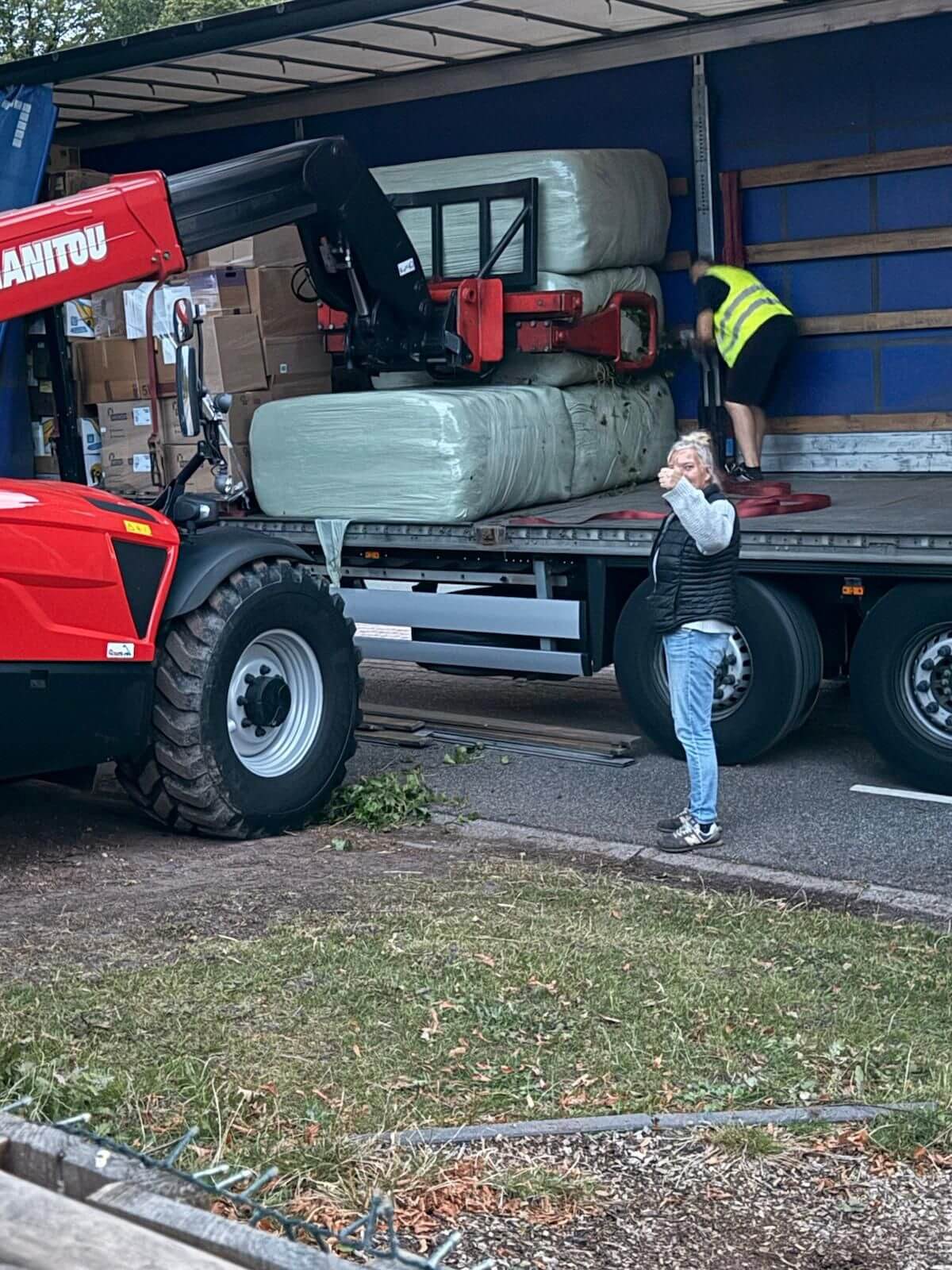
13,000 kilos of hay on its way to hungry war animals in Ukraine | Photo: Pegasus

A few weeks ago, House of Animals issued an urgent appeal due to the dire situation facing the Pegasus shelter in Ukraine. There is hardly any hay available for the horses, ponies, goats, donkeys, and cows. Patricia from Smilde (Drenthe) contacted House of Animals with fantastic news: she is donating 13,000 kilos of hay for the hungry animals at Pegasus.  

Patricia herself fosters 14 horses, some of whom are given a second chance by her. Her passion for animals is immense. When she saw our emergency call for hay, she didn't hesitate and immediately came to help. Patricia:

"I saw the call for Ukraine, saying there's no more hay. Then I thought: I have 30 bales of hay here, so I'll buy some new ones and donate what I have.

Patricia from Smilde donated 13,000 kilos of hay
Patricia from Smilde donated 13,000 kilos of hay | Photo: Patricia from Smilde

13,000 kilos of hay to Ukraine

No sooner said than done! On Wednesday, September 3rd, the truck full of hay departed for Ukraine. With 13,000 kilos of hay, Pegasus can feed its horses, ponies, and other animals for another two weeks. Patricia:

War is terrible for everyone, but animals have no voice. They are completely dependent on humans. That's why we must all work together to help them. Animals can't flee; they're trapped. They need help because they're hungry!

Previous hay donations for war animals

This donation reminds us of April 2022, when, shortly after the outbreak of war, Durkje Visser and René de Boer from Bears, Friesland, donated no fewer than 66 bales of silage and 75 bales of hay. With this donation, they helped a riding school that had to feed its 35 horses and 40 evacuated horses.

And another truck…

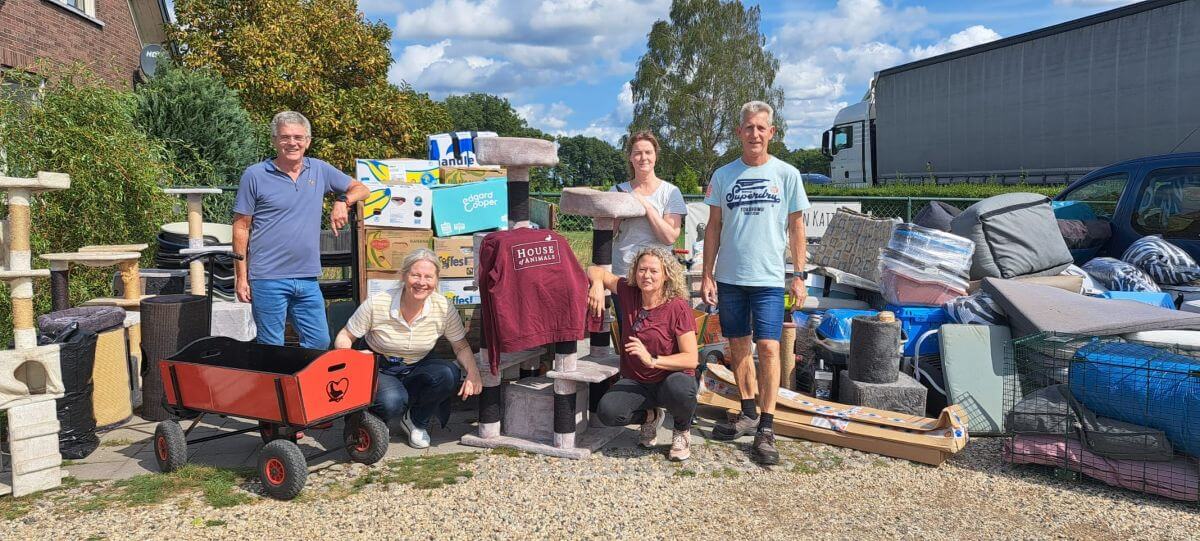
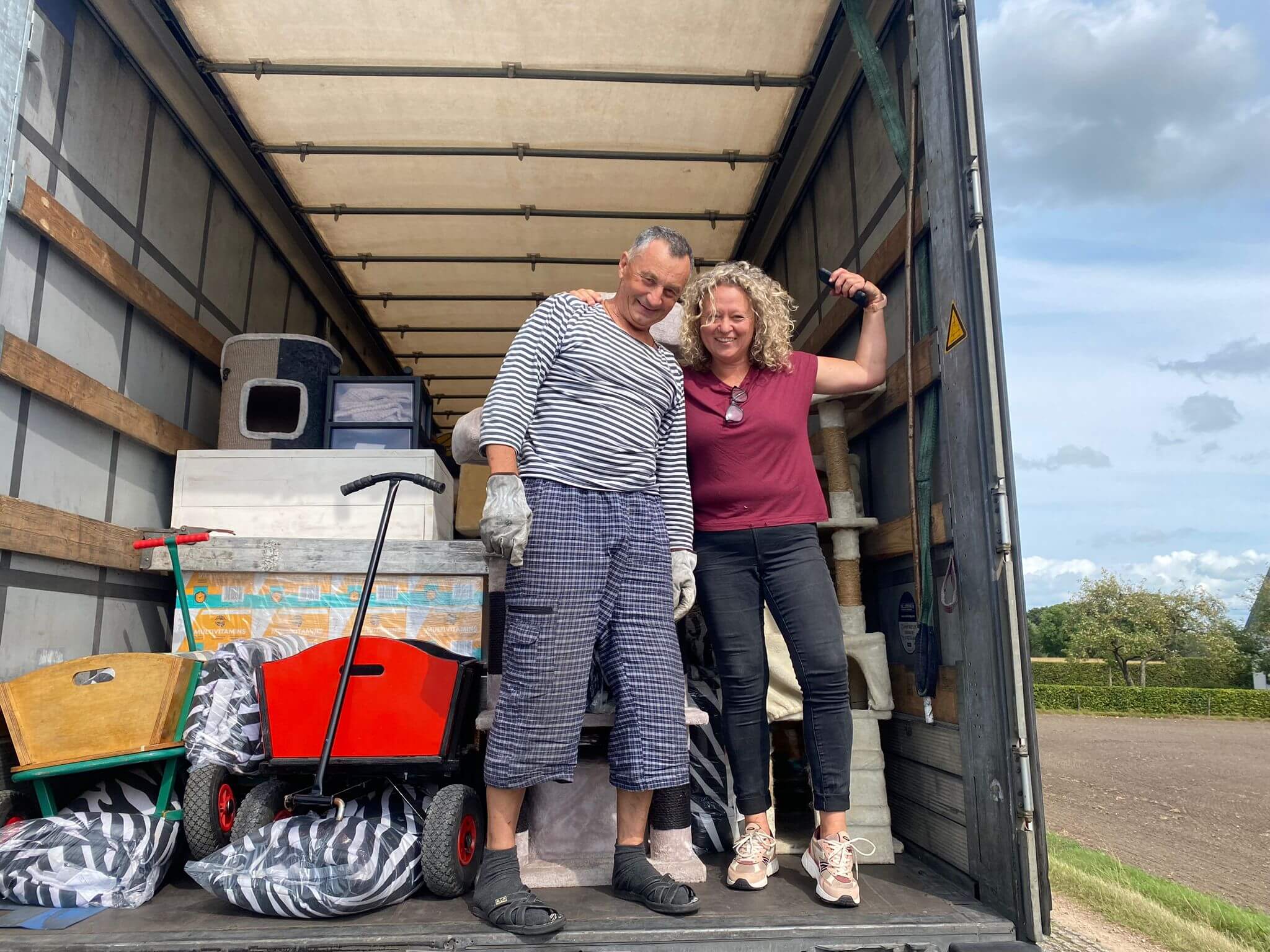
And we have more good news! Last week, a second truck left for Ukraine, fully loaded with pallets of food donated by WWAR and over 1,400 kilos of pet supplies collected through our fantastic colleague Frida, along with several wonderful donors from House of Animals! This truck will arrive at Pegasus next week.

Frida (bottom right) received help loading the truck | Photo: House of Animals

Many thanks to Patricia and WWAR for the donated food, to the Dopomoha Foundation for arranging the transport, to the Wings for Animals Foundation for the donated supplies, and to everyone who donated supplies and money for the war animals in Ukraine!      

Truck ready to leave for Ukraine | Photo: House of Animals

Pegasus provides shelter to approximately 1,800 animals and is very grateful for all donations. Hay remains urgently needed, and all donations are more than welcome.

What can you do?


©AnimalsToday.nl | House of Animals Estefania Pampin Zuidmeer