After months of sustained pressure from PETA and growing public backlash over the use of wild animals forced to perform under threat, Jordan World Circus has officially removed elephants from its performances, effective immediately, according to PETA.
Following the announcement, PETA has suspended its campaign targeting the circus’s elephant acts, which included dozens of demonstrations at tour stops nationwide, more than 600,000 emails sent by supporters, and formal complaints filed with the U.S. Department of Agriculture.
The shift comes after renewed scrutiny of the treatment of Viola, an elephant long used in circus performances. In March, PETA released a report from a leading elephant expert detailing serious foot and joint conditions affecting Viola—who has been described as “The Most Desperate Elephant in the World” due to multiple attempted escapes during her lifetime in captivity. Taken from her family in Asia as a calf, Viola has spent approximately five decades in chains with Carson & Barnes Circus, which has supplied elephants to Jordan World Circus. Throughout those years, she has been forced to perform physically demanding tricks despite her age and deteriorating health. PETA has documented that elephants used in traveling circuses are frequently transported across the country for most of the year, often denied consistent veterinary care, and controlled through violent training methods involving steel-tipped bullhooks.
“Jordan World Circus has heard the message loud and clear that kind people don’t want to see elderly elephants hit with sharp metal bullhooks and threatened into performing tricks,” says PETA President Tracy Reiman. “This is a great step forward, and PETA will continue pushing for these elephants to be released to reputable sanctuaries where they’ll never be chained or beaten again.”
While PETA has welcomed the circus’s decision to end elephant performances, the organization is now urging everyone to call on Carson & Barnes Circus to transfer Viola and the other elephants to accredited sanctuaries where they can receive proper care and live out their remaining years in peace.
The organization, whose motto is that “animals are not ours to use for entertainment or abuse in any other way,” advocates that Every Animal Is Someone while offering free Empathy Kits. For more information, Click HERE!
Viola’s Desperate Attempts to Escape Abuse in the Circus Industry
Elephants like Viola don’t perform in circuses because they want to—they perform because they’re afraid of what will happen if they don’t. Trainers use sharp weapons called bullhooks to threaten Viola and bully her into performing tricks and giving rides. The circus has been caught violently hitting Viola and other elephants with bullhooks during training and performances.
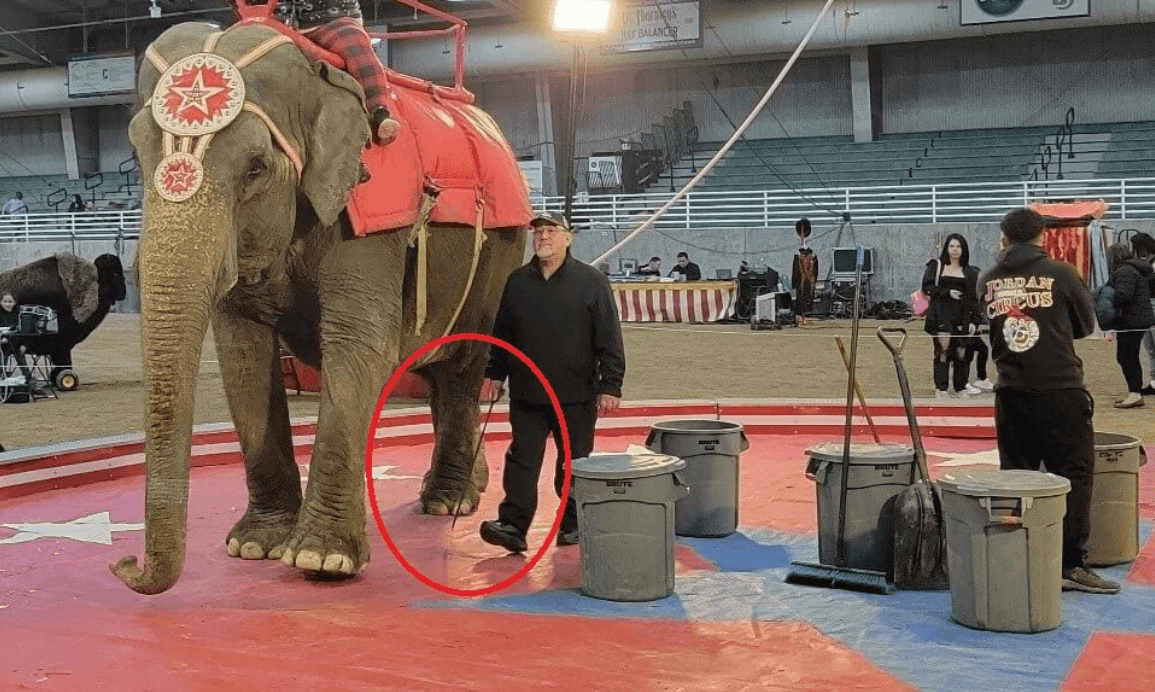
Viola being forced to give rides by a handler carrying a sharp metal bullhook. Photo: PETA
Viola has attempted to escape her captors on at least four separate occasions, demonstrating both her desperation to escape and the circus’s ineptitude to keep animals secure. Viola escaped as recently as 2024, dodging cars, pedestrians, and other chaos in a busy city center.
Escaping puts her and everyone around her in danger, but after decades in the circus, it seems like she’s willing to do anything to get away.
Viola and Other Elephants Suffer Even When Not Used for Circus Tricks
When not forced to perform uncomfortable and demeaning circus tricks, Viola and the other elephants she’s traveled with are confined at an elephant training compound misleadingly named the “Endangered Ark Foundation” in Oklahoma.
The Endangered Ark Foundation has a long history of elephant abuse and poor animal welfare. On March 14, 2026, Dr. Chris Draper, an elephant expert with over 25 years of experience in animal welfare science, visited the facility. There, he observed a trainer openly and forcefully using a bullhook on an elderly elephant named Traci who was trying to stand up during a “bathing” encounter. As the trainer approached her, it became abundantly clear why she had been so desperate to stand: She defecated very loose stool. Dr. Draper opined that the looseness may have been a result of trying to hold her down.

Escaping puts her and everyone around her in danger, but after decades in the circus, it seems like she’s willing to do anything to get away.
Viola and Other Elephants Suffer Even When Not Used for Circus Tricks
When not forced to perform uncomfortable and demeaning circus tricks, Viola and the other elephants she’s traveled with are confined at an elephant training compound misleadingly named the “Endangered Ark Foundation” in Oklahoma.
The Endangered Ark Foundation has a long history of elephant abuse and poor animal welfare. On March 14, 2026, Dr. Chris Draper, an elephant expert with over 25 years of experience in animal welfare science, visited the facility. There, he observed a trainer openly and forcefully using a bullhook on an elderly elephant named Traci who was trying to stand up during a “bathing” encounter. As the trainer approached her, it became abundantly clear why she had been so desperate to stand: She defecated very loose stool. Dr. Draper opined that the looseness may have been a result of trying to hold her Despite the crowd observing this incident and it being clear she’d been trying to stand in order to defecate, the trainer continued to insist that Traci needed to lie down for the bathing encounters, even if it meant lying in her own loose feces.
Dr. Draper also observed Viola at a 2026 Jordan World Circus performance. There, he saw her and another elderly elephant, Isa, being used for rides and a performance. During rides, Dr. Draper noted Viola was exhibiting signs of serious leg stiffness and chronic veterinary issues. According to his report, “[Viola] appeared reluctant or unable to bend the right front wrist, shuffling the leg forward without visible flexion.”
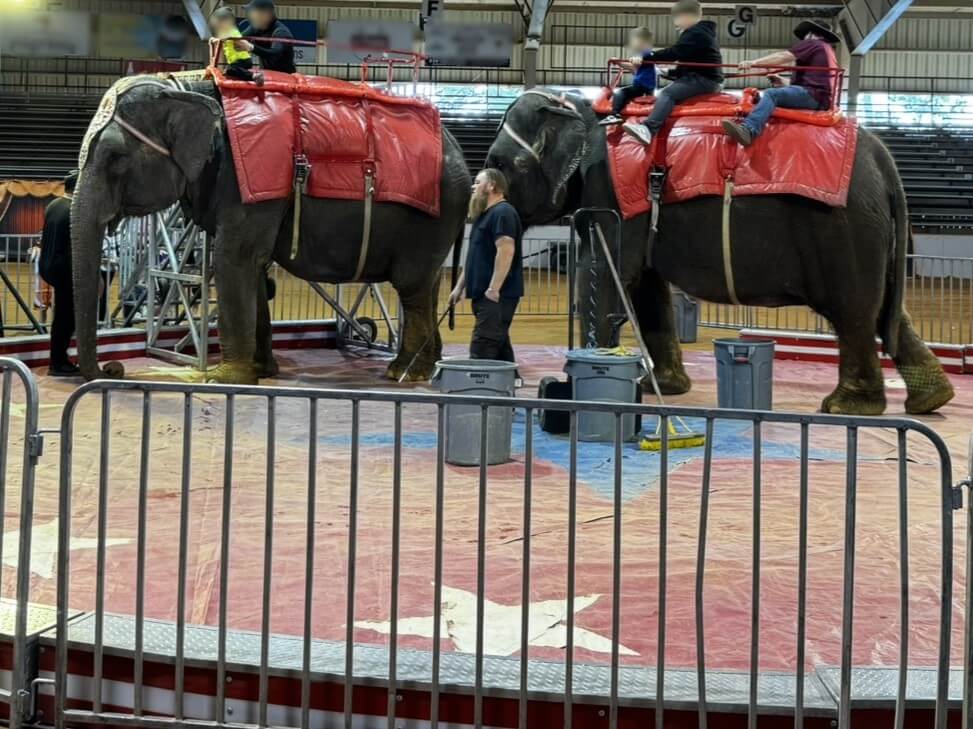
Viola’s abnormal gait is plainly visible, making it difficult to believe that Carson & Barnes is unaware of her condition, but they are still forcing her to carry as many as nine humans at once on a near-daily basis. This burden will only exacerbate her foot and joint issues.


