Translate

woensdag 24 september 2025

A year ago baby elephant Bani was hit by a train but look at her now!! 9 gorgeous photos and a video: "Let's go bananas with Bani"


Let’s Go Bananas With Bani!

Every morning at the Elephant Hospital Campus begins with the same question from the caregivers: “What mischief will Bani be up to today?” This little elephant calf, who had arrived critically injured and weak after a horrific train accident, has slowly transformed into a bundle of energy, determination, and undeniable charm in just over a year.
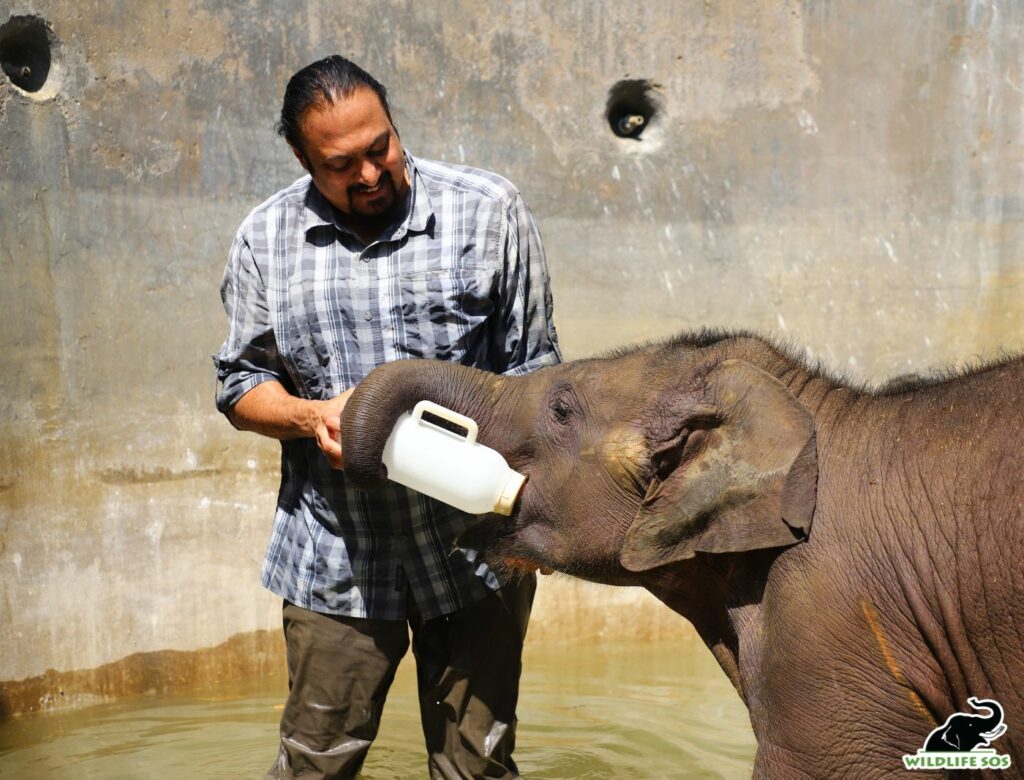
Our team, from the veterinarians, caregivers to our co-founders, have rallied around this cute little girl, who has stolen our hearts. [Photo (c) Wildlife SOS/Shresatha Pachori]

Bani starts her day with a loud rumble, which often wakes up her neighbours Manu and Taj as well. She knows that pretty soon, it will be time for her morning meal, so when she smells her warm porridge arriving, she lets out eager squeaks and flaps her ears, as if to say, “Hurry up, I’m hungry!”  If her caregivers don’t pick up the speed they should, her squeaking escalates into loud trumpets that echo across the centre!
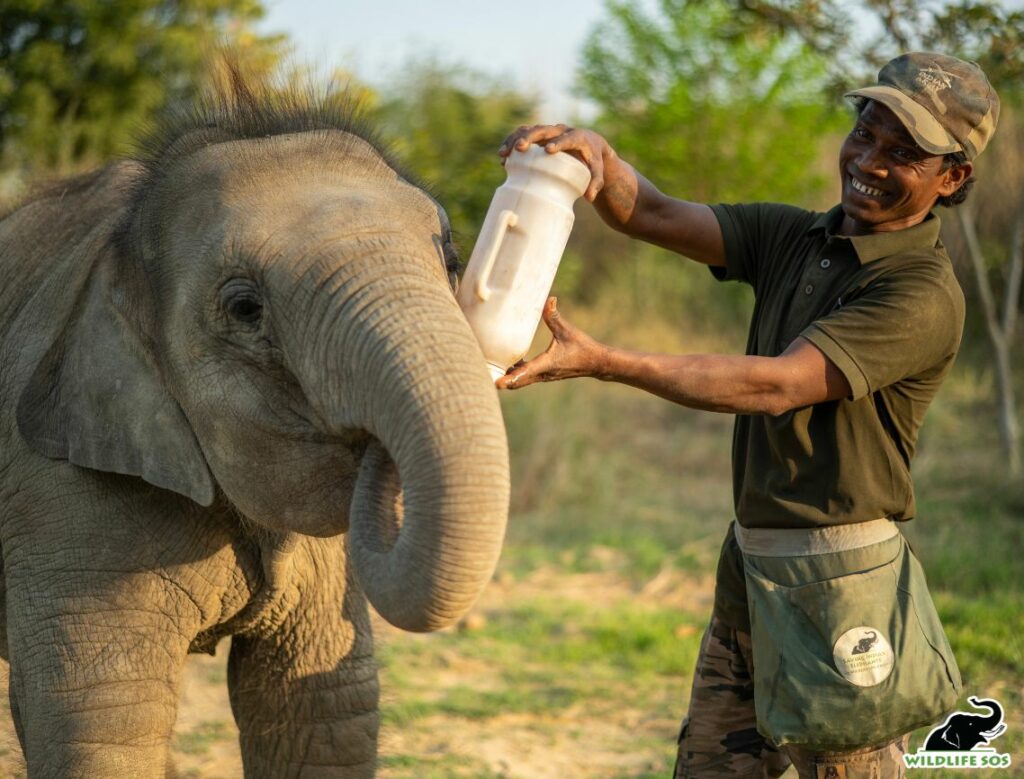
Bani drinking porridge
Once the bottle containing her morning porridge arrives, Bani insists on holding it herself, gulping down three litres of it in no time! [Photo (c) Wildlife SOS/ Atharva Pacharne]

After her hearty meal, and some frolicking, it’s time for Bani’s favourite activity of the day, her mud bath! The moment she sees the caregivers preparing the puddle in her enclosure, she rushes over to dive right in. She puts her head deep into the mud before rolling around in it — coating herself from trunk to tail! It’s her own messy playground, and she makes sure not a single patch of her skin is left uncovered.
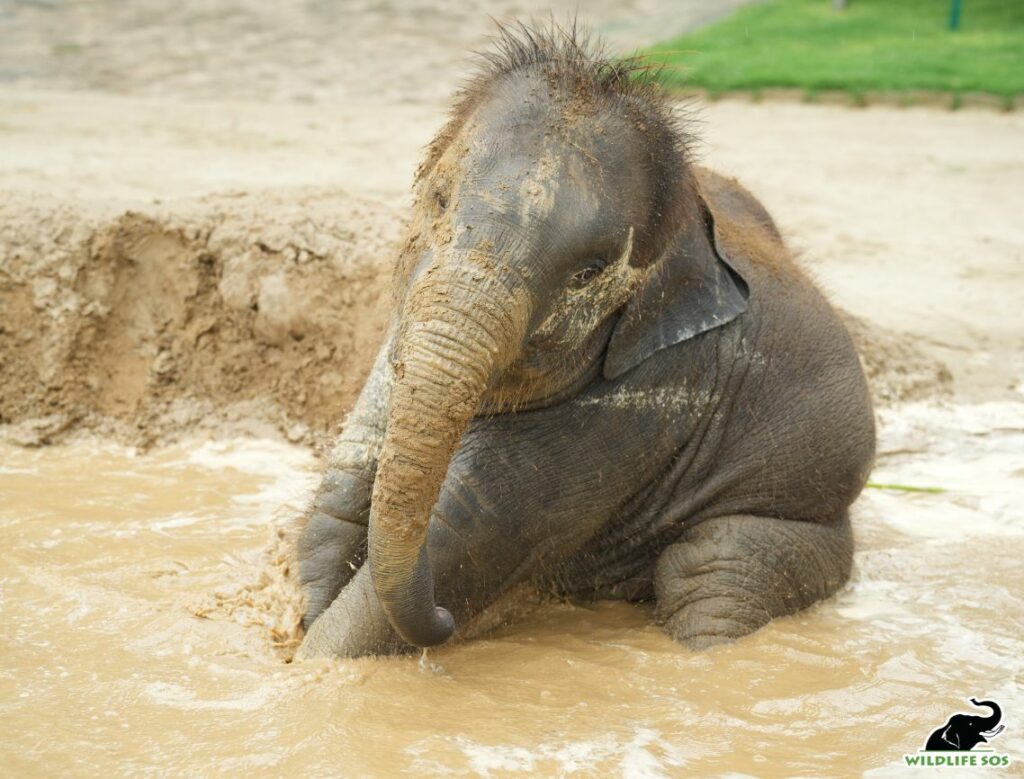
Bani taking a mud bath
Her caregivers call Bani’s mud bath “an organised chaos!” [Photo (c) Wildlife SOS/ Vineet Singh]

Recently, after one of the ‘muddy-makeover’ sessions, Bani was led to the pool, and this was where the real challenge began for her caregiver! Water, water everywhere made Bani fill her trunk, and each time she did, she would aim it directly at her caregiver to spurt it all out. Realising that the water gun just wouldn’t stop reloading, the caregiver came up with a solution — a steady supply of bananas were now to be brought in during pool time to stop the endless splashing. Bani has made sure to let everyone know who’s truly in charge!
Bani taking a mud bath
The moment bananas for Bani run out, she makes her displeasure known loud and clear — by squirting water everywhere! [Photo (c) Wildlife SOS/ Vineet Singh]

While Bani wants a good amount of time to enjoy her pool, her caregivers get busy cleaning her enclosure and arranging fresh treats and enrichments. But all this has to be ready before she gets out of the water, because if it isn’t, Bani is quick to notice. With sharp eyes and a curious trunk, she sneaks around to find the caregiver’s bag and check for the sugarcane and bananas inside it. And when she learns that they’re still in it, she makes sure to smoothly pull them out when her caregiver is distracted. Bani has made this as her little game of mischief, and more often than not, she walks away as the winner.
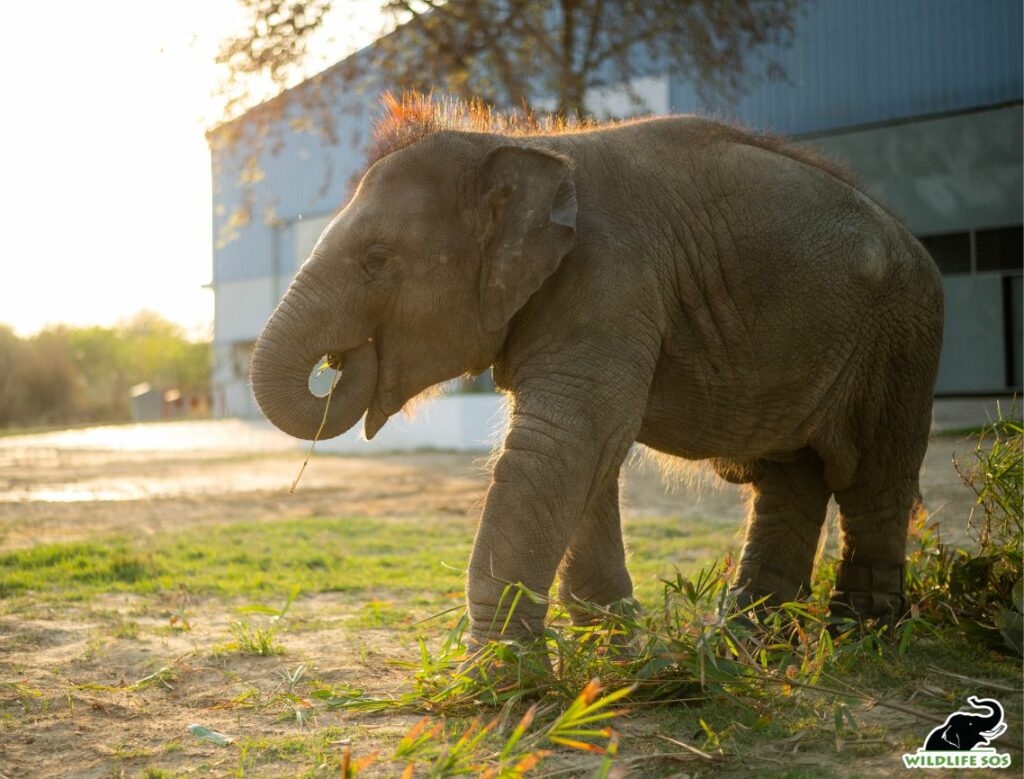
Bani having a stroll
There are strategic ways of gathering a mouthful of treats that Bani is well aware of — and she always outwits her caregivers, eyes twinkling with mischief! [Photo (c) Wildlife SOS/ Atharva Pacharne]

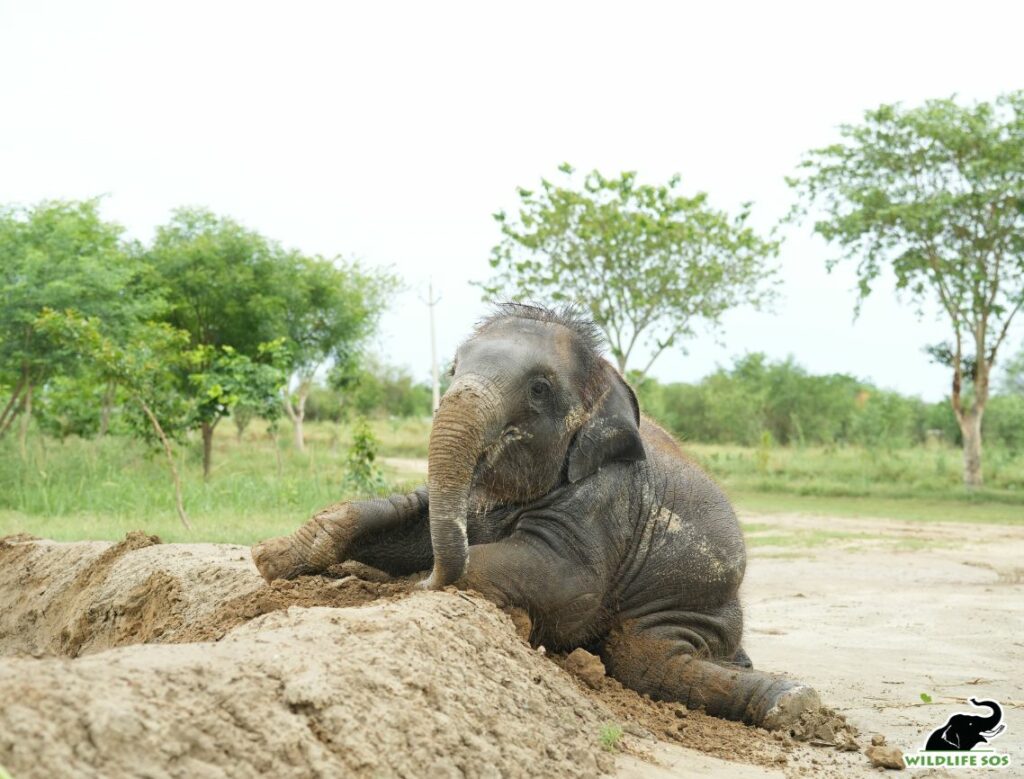
Bani has set aside a couple of photographers from our team that she’s especially fond of, and she never lets them down when they begin clicking! After giving them the best shots, she waits for what is promised to her — a lot of yummy bananas! But if they ever forget to reward her with them, she reaches out for their camera with her trunk, as if to capture and keep it locked with her until the bananas arrive.
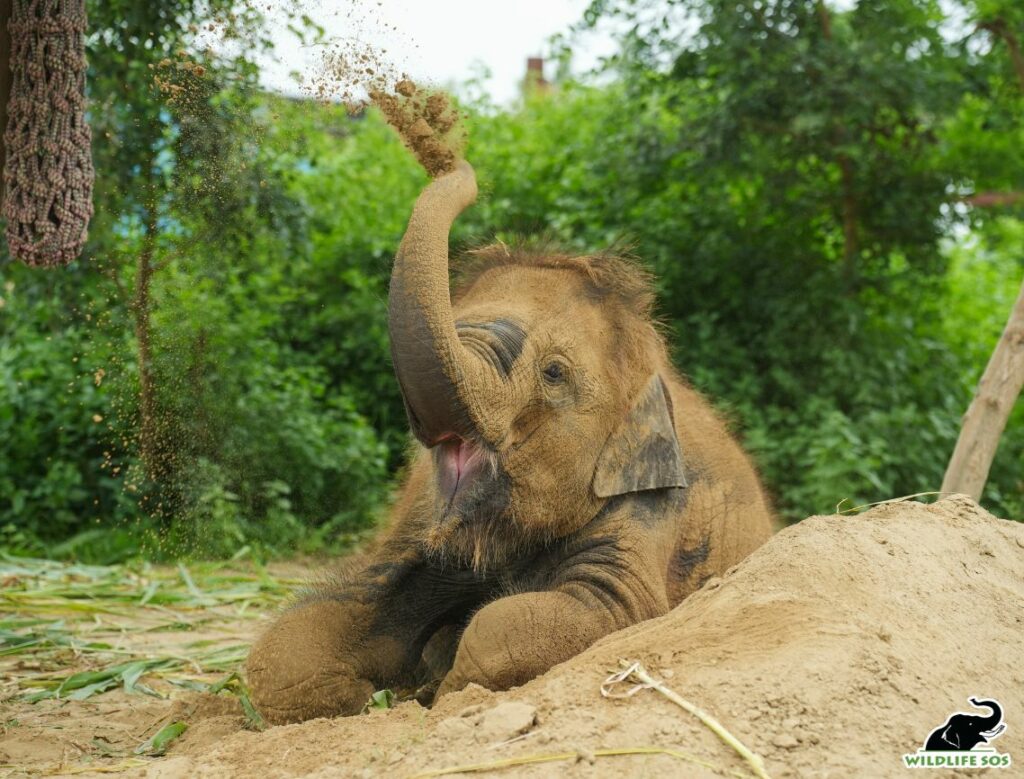
Bani playing with mud
Even candid pictures of her turn out looking professional, as if Bani knows that the spotlight is on her! [Photo (c) Wildlife SOS/ Vineet Kumar Singh]

Found partially paralysed when rescued, it’s remarkable to see how Bani is now becoming strong and is even standing on her legs with confidence. Her walking pace may be slow, but her energy and excitement are what lead her to take her every step. Bani has been given specially designed protective boots, since she drags her hind feet while walking. But this medical aid quickly turned into a playful activity for Bani. The moment her caregiver slips the boots on, Bani flings them off her feet! She then waits, with her trunk lifted and eyes alert, for one of her caregivers to put them back on her feet again. This ritual of tossing her little boots before finally wearing them is what Bani does for her own amusement.
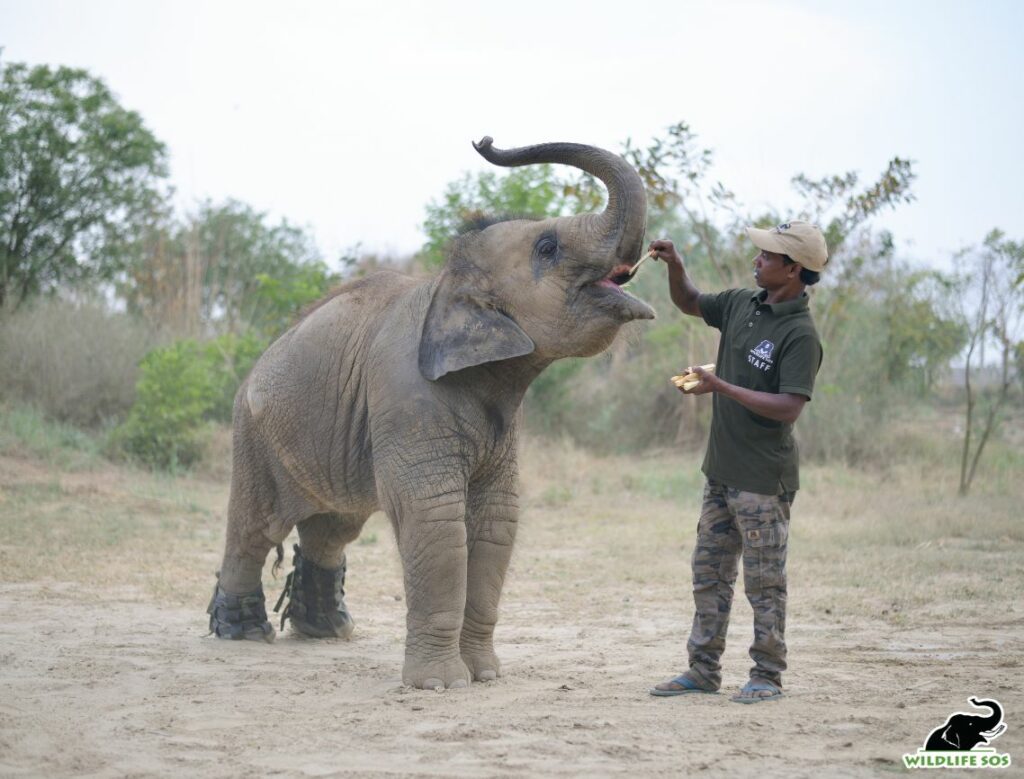
Bani in protective boots eating treats
The specially designed boots are helping to support Bani’s tender hindlegs, so that the dragging of her feet is controlled to protect her foot pads from injury or thinning. [Photo (c) Wildlife SOS/ Vineet Singh]

Bani’s tiny trumpets often sound like soft chuckles! One day, her caregiver, in a spur of the  moment, mimicked her baby trumpet and, surprisingly, Bani immediately responded with one of her own! It didn’t take long for this amusing interaction to also become part of her fun-filled days.
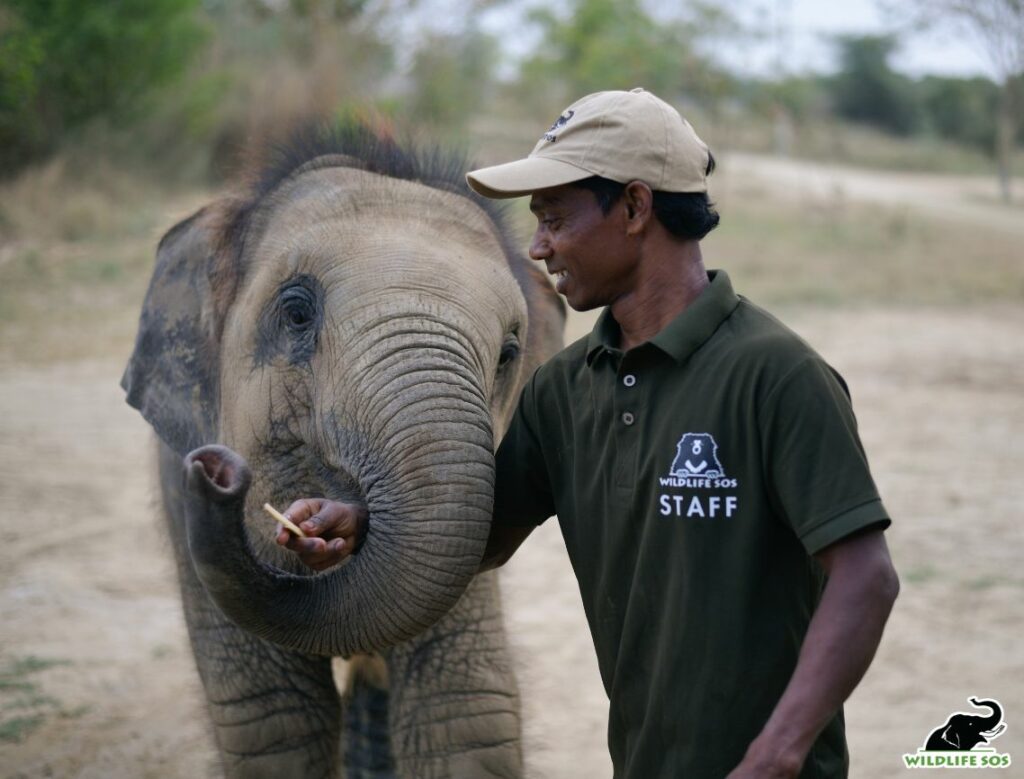
Bani eating treats

After a whole day of lively antics, Bani merrily heads over to eat her dinner.  But after filling her tummy and before lying down, there’s one last task she never forgets to do: check where her caregiver is. She waits for him to come sit by her side and offer her a few treats as she lays. With eyes blinking slowly, she soon drifts off to sleep — comforted by his presence (and that of the bananas and sugarcane around her).
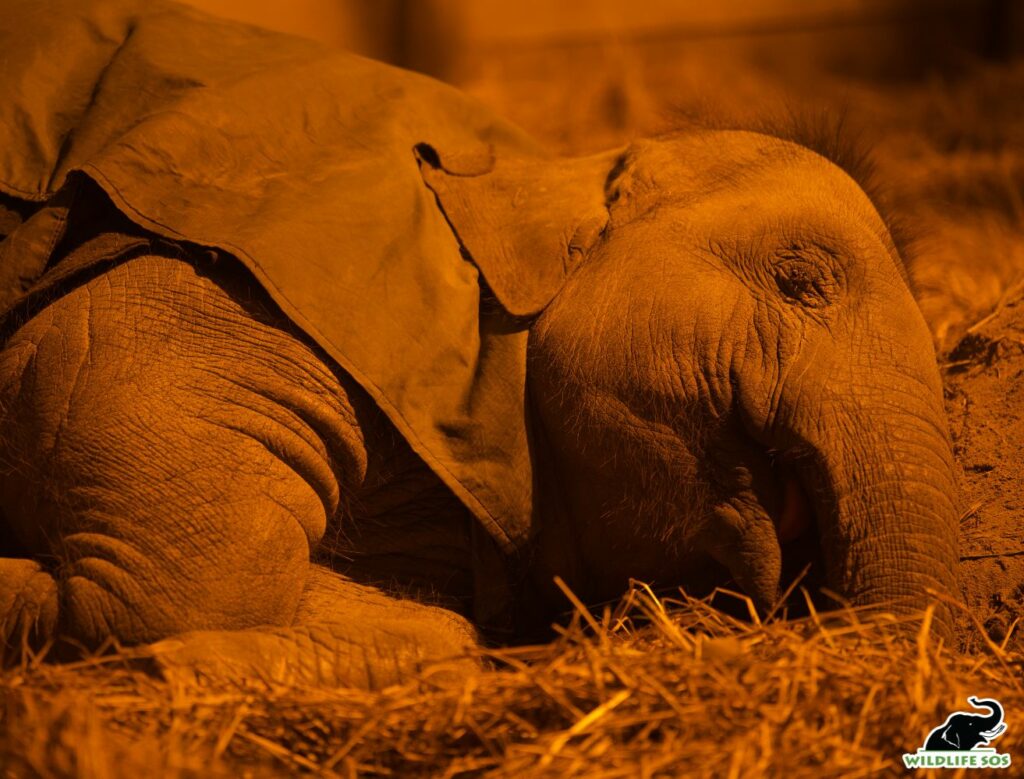
Bani sleeping
Bani sleeps soundly for almost six hours every night, so deeply that her caregiver says that not even an earthquake could wake her up! [Photo (c) Wildlife SOS/ Mradul Pathak]

Time spent with Bani at our centre has been nothing short of wonderful — she has reminded many of us of how amazing childhood is! But it takes constant effort and resources for her care and her journey of healing. By sponsoring her care, you can help us make sure Bani continues to grow, play, and live the life she deserves.

Feature image: Mradul Pathak/ Wildlife SOS


dinsdag 23 september 2025

New York City Mayor Eric Adams is urging the City Council to ban the cruel horse-carriage industry,: How many more horses have to die ?


New York City Mayor Eric Adams has just announced that he will sign an executive order to crack down on the cruel horse-carriage industry, and he’s urging the City Council to pass a full ban.


This order represents the strongest action yet from City Hall. It directs the NYPD to enforce laws against illegal and dangerous carriage operations, orders the Department of Transportation to move boarding areas to less-trafficked spots in Central Park, and prepares the city for the day that the New York City Council finally passes a ban.


This is just the initial step. Mayor Adams is unable to implement a full ban until the City Council approves Ryder’s Law. With deadlines approaching, time is of the essence.

Ryder’s Law was enacted following the tragic incident involving Ryder, a 26-year-old carriage horse who collapsed from exhaustion on a busy Manhattan street. Video footage of Ryder lying helplessly on the pavement, as his driver attempted to force him back to his feet, ignited worldwide outrage. Despite widespread protests and public calls for action, the carriage horse industry persists with little oversight and few consequences.


World Animal News (WAN ) traveled to New York City last year to meet with NYCLASS and witnessed firsthand the disturbing conditions these horses endure. We visited their stables, tucked between Midtown’s towering high-rises, where horses are kept in dark, cramped stalls with no pastures, little fresh air, and no true rest from the city’s relentless noise and stress.

Just last month, tragedy struck again. Lady, a 15-year-old carriage horse, collapsed and died in Hell’s Kitchen while returning to her stable from Central Park. The heartbreaking video, which was shared by Voters For Animal Rights, renewed calls for urgent action.

How many more horses have to collapse, suffer, or die before New York City ends this outdated and cruel industry?

www.worldanimalnews.nl


maandag 22 september 2025

Eyes on Animals gives training to reduce extreme suffering in slaughterhouses in Turkey introducing 'stunning before slaughter' acceptable under Halal rules


IRISH CALF MARKET FINED

Remember our investigation on RTÉ television in Ireland in 2023? I spent a week with their journalists, together with Ethical Farming Ireland, exposing what happens to young unweaned calves at auctions before they get trucked to veal farms in the Netherlands.
During our investigations, we witnessed and documented serious rough handling at the markets.
Following our investigation, RTÉ went to court, and one of the markets we exposed has now been fined €4,000. It’s not the justice we dream of - real victory would be calves treated with care. But this fine is a strong warning that may help prevent future cruelty.

More fines based on 2023 findings are expected to be issued as I write, and we’ll be watching closely.
OUR PROJECT: STOPPING THE TRANSPORT OF UNWEANED CALVES
■ We are working to end the long-distance transport of unweaned calves from Ireland. These calves, only a few weeks old, face exhausting journeys without proper feeding or care. By documenting conditions, publishing evidence, and pressuring both Irish authorities and EU institutions, we push for stricter enforcement and lasting policy change.
Support this project >

HUMANE SLAUGHTER SPREADS IN TURKEY

Our inspector Asalet returned to Turkey last week to follow up on slaughterhouses we trained in humane stunning practices there.

Good news: the cattle slaughterhouse near Ankara is still proudly using the captive bolt stunner we provided in 2022. Workers see the difference - less fear, less pain - and are convinced it aligns with Halal values.

Thousands of cattle have been spared suffering since then. Last week we gave them a brand-new stunner and refurbished the old one as a backup.
After years of building trust and respect, Asalet has made permanent changes to how animals are slaughtered. Here with the slaughterman in Ankara that continues to use the captive bolt stunner on all cattle since our first training in 2022.
Changing mentalities takes time, but this is real, lasting change. And it’s spreading. Imagine: Halal slaughterhouses in Turkey phasing out live hoisting and bleeding one day!

Challenges remain: not all visits brought good news. A sheep slaughterhouse near Ankara, trained last May, was not regularly using the electric stunner due to internal mismanagement.

Asalet immediately set up a new protocol with the veterinarian and ensured all 75 sheep that day were stunned. The vet is now in charge of stunning and will report back.

Step by step, change is taking root. We won’t give up.
Asalet never gives up. He patiently trains and conducts follow-up visits until the animals actually get the mercy they so badly need, as he did at this sheep abattoir near Ankara.
OUR PROJECT: REDUCE THE EXTREME SUFFERING IN SLAUGHTERHOUSES IN TURKEY
■ We help introduce stunning before slaughter in Turkey. Many animals there are still killed fully conscious, causing extreme suffering. By training slaughterhouse staff, providing equipment, and working with religious and veterinary authorities, we promote stunning as both humane and acceptable under Halal rules.
Support this project >

GENTLER CHICKEN-CATCHING GAINS GROUND

Our inspector Madelaine gave two well-received talks in Germany on upright chicken catching this summer, one at the University of Veterinary Medicine in Hannover and one to officials from Kassel. Over 80 official veterinarians attended the meetings.

In the Netherlands we have succeeded in getting all Demeter and Kipster farms to switch to upright catching, as well as all farms selling eggs at EkoPlaza. Now Germany is taking notice too!
Madelaine, full of positive and professional energy, is spreading upright chicken-catching to Germany.
OUR PROJECT: UPRIGHT CATCHING
■ We promote a gentler upright method of catching chickens. Instead of grabbing birds by their legs and stuffing them into crates—a practice that causes pain and injuries—this method lifts chickens in a natural, upright position. We train catching teams and show the poultry industry that a more humane and practical alternative is possible.
Support this project >

HELPING CONSUMERS DROP FACTORY FARMING

While visiting my parents in Canada during my summer holiday, I met some small local free-range farmers. They are raising pigs, cattle, chickens and even turkeys outdoors, with plenty of space and lots of compassion.

These small Canadian farmers chose this path, giving animals a happy, healthy life before they enter the food system.
Train Whistle Farm in Canada, where animals are raised with respect and reciprocity.
Together with two of the farmers I am organizing a community talk for next year, to help convince locals to switch to these kinder, small-scale farms and reduce their dependence on industrial animal agriculture.

I know many people in this beautiful lake area of Canada. A few are vegan, some vegetarian, but many will not give up meat completely. But if they are willing to get off of factory farming and only support local kind farmers, what a positive change that could be.

We already estimate 50 locals to attend!
OUR PROJECT: PROMOTING "BETTER FARMERS"
■ We encourage consumers to choose alternatives to factory farming. By promoting small-scale farms where animals are treated with respect, we show that more ethical and sustainable options exist. This project highlights “better farmers” and helps consumers support them through their choices.
Support this project >

ANOTHER FARM ADOPTS STUNNING IN GHANA

Safian and Satar from our Ghana team recently trained farmhands, managers, and slaughtermen at Pretty Piper Pig Farm.

The training focused on more ethical housing - such as adding extra water sources and providing rooting material - and on humane slaughter methods.

Instead of the widespread practice of using wooden clubs, staff learned to use a captive bolt stunner. Ethical tools like this are normally not available in Ghana.
Safian explaining how to humanely handle pigs with a captive bolt stunner, to put an end to clubbing pigs in Ghana.
This is not the first farm we have equipped with a stunner and training - and it won’t be the last. Our mission is clear: to end the clubbing of pigs in Ghana.

Since the training in early August, staff are now using the captive bolt stunner - for slaughter, and to end the suffering of sick or injured pigs.

Their attention and commitment give us real hope for lasting change.
OUR PROJECT: STOP CLUBBING TO DEATH OF PIGS IN GHANA
■ We work to end the clubbing of pigs in Ghana. Current slaughter methods are extremely cruel, with pigs beaten to death using wooden clubs. We introduce humane alternatives by providing captive bolt stunners and training slaughterhouse staff. This way, pigs can be stunned before slaughter, reducing suffering and setting new standards for animal welfare.
Support this project >

SOMETHING MORE PERSONAL: ZIGGY MY NEW DOG

Let me end with a personal story of love and resilience.

Ziggy, a small dog rescued by the grassroots group Bali Paws in 2024, suffered from severe mange and a failing heart. I learned about him through a book on dog rescue in Asia and soon connected with the sisters behind the organization.
Ziggy before and after - thanks to Bali Paws.
Today Ziggy lives with me and my partner. He is thriving, loved, and full of life.

But Bali Paws needs help. They care for countless neglected and abused street dogs in Indonesia, providing medical treatment, sterilization, and adoption. Their shelter is free-range, their staff walk, play with, and care for every single dog. Most importantly, they give animals like Ziggy a real second chance.

If you have a few euros to spare, please consider donating to Bali Paws. Their work is concrete, urgent, and driven by pure compassion - the kind we deeply admire. Click here to donate.

Thank you for reading, sharing, and believing that better is possible.

Each step, each act of kindness - it all adds up. Together, we are changing the story for animals.

Love from Lesley (with Ziggy) 
Lesley Moffat
Director Eyes on Animals

PS: here you can watch a video of Ziggy being rescued and me adopting him (you need instagram).
ShareShare
ShareShare
ForwardForward
ShareShare
IBAN: NL73 TRIO 0212 3642 19
Copyright © 2025 Eyes on Animals, All rights reserved.


Want to change how you receive these emails?
You can update your preferences or unsubscribe from this list.

zondag 21 september 2025

Fundraising target reached to help 3 stranded lions in Ukraine: A charity appeal has raised the funds needed to help bring 3 lions from war-zone Ukraine to Yorkshire Wildlife Park (UK)


Rafael and Shanti

Stricken Oleg, Rafael and Shanti are currently in a Rescue and Rehabilitation centre in Kyiv.  The youngsters are thought to be about 1 year old.

 
Oleg was rescued as a cub from private owners who fled the Sumy region during the escalation of war. He was raised by humans but longs for connections with other lions.
 
Siblings Rafael and Shanti were found in the Kharkiv region next to their dying mother, a lioness who had been abandoned in a private menagerie and starved.
 

Oleg is still living alone

The WildLife Foundation, the charity based at the park, launched an appeal to fund their rescue and facilitate the 2000 mile journey which will bring the trio of lions to Doncaster – their new forever home.


Director of Animals, Charlotte MacDonald, revealed: “Oleg and Rafael and Shanti will be mixed together for the first time to live in a pride.
 
“Oleg currently lives alone and so we are looking forward to introducing him to the others.
 
“Rafael and Shanti survived against all odds and are now inseparable, gentle and curious around people.
 
“They will live safely together in their new home in Yorkshire.”
 
The first lion rescue took place back in 2010, which brought 13 African Lions to the Park.
 
Their rescue won international accolades for saving the lions from horrific conditions in Romania and giving them a new home in Yorkshire.

Romanian Rescue


Our story begins back in 2009 in Romania. Three prides of African Lions were living in filthy, tiny concrete pens, fed on a meagre diet of scraps and faced an uncertain future. The Zoos new director realised that they could not care for them and contacted Yorkshire Wildlife Park to see about re-homing the Lions.

The story of these Lions touched the hearts of people across Yorkshire and the surrounding areas and a public appeal raised a simply incredible £150,000 to build a new reserve to home these poor Animals.