WELCOME TO WILDLIFE FRIENDS FOUNDATION THAILAND
Thank you for choosing to volunteer at Wildlife Friends Foundation Thailand. This
information pack will explain everything you will need to know in order to prepare for
your trip and volunteer experience, so please read it carefully.
Wildlife Friends Foundation Thailand was founded with the intention of providing
confiscated wild animals that have been used in the tourist industry, as pets or illegally
trafficked, a safe home in an environment as close to nature as possible.
The elephants ar close by
We aim to protect wild animals and their habitat from destruction through education.
By raising awareness, we hope to educate the people of Thailand as well as the
tourists that visit Thailand in animal welfare and ethical tourism. We are actively
developing programs to rescue, rehabilitate, and release captive wild animals with the
hope of restoring Thailand’s wild animal populations and habitats back to the thriving
ecosystems they once were.
Preparing food to feed the animals
Since our founding in 2001, we have rescued thousands
of wild animals.
As a non-profit organisation we are dependent on the compassion and generosity
of our donors and volunteers, without whom we would not be able to continue with
our work. Your help makes it possible for us to continue working to provide direct
protection and rehabilitation for captive wildlife and many other wild animals.
We are very passionate about our work and I’m thrilled to know that others actively
share our mission to end wildlife exploitation. You will be happy to know that all funds
that are donated, and part of your fee to volunteer with us, goes directly into the care
of the animals at the rescue center, in the form of food, medicine, new enclosures and
islands, enrichments and veterinary care.
We currently run four volunteer programs.
There always something that needs doing
Our Wildlife Rescue Centre (WRC), Elephant
Refuge (ER) and PAT Clinic (PAT) are open to all volunteers from around the world! Our
Wildlife Hospital (HOSP) welcomes veterinarians, veterinary technicians and veterinary
students to learn about wildlife medicine. Our WRC, ER and HOSP projects all run from
one location in a tiny village about 170km south of Bangkok. The PAT Clinic is based
between the seaside resort towns of Cha Am and Hua Hin, both of which are very close
to WFFT.
Working together and after work relax time or go out on the town together
As a volunteer you will be expected to respect our rules regarding the animals for their
well-being and your own safety. We expect all volunteers to work as a team and assist
where help is needed around the center. Some jobs may not be
directly with the wildlife, but they are just as important, and
keep us as a center functioning and working. We also ask
everyone to come with a good work ethic and positive
attitude, and of course a passion for animals,
including their welfare and conservation.
We hope you will enjoy your stay with us, and
help our animals to the best of your ability.
On behalf of the animals, we thank you for
choosing to volunteer with us.
Edwin Wiek
WFFT Founder
3
About WFFT
In Thailand, like in every country in the
world, animals are abused and exploited
for profit and human gratification. There
are many examples of animal exploitation
within the tourist industry, for example,
photo animals, animals performing in
degrading shows, and elephant camps.
There is still a thriving illegal trade in
wild animals for pets and medicine.
The major goals of our organisation are:
• To rescue captive wild animals and
rehabilitate them as far as is feasible,
allowing them to live the rest of their
lives in a safe environment, as close to
nature as possible and providing them
with the best care possible.
• To campaign against all forms of animal
abuse and exploitation in Thailand, work
towards ending the illegal pet trade and
discourage people from keeping all wild
animals as pets. WFFT actively seeks to
combat the illegal wildlife trade and to
rescue animals from poor conditions or
exploitation from human entertainment.
• To provide veterinary assistance to any
sick or injured animal; wild or domestic.
• To educate and encourage local people
(especially children), tourists and the
international community to appreciate,
understand and protect wildlife and their
natural habitats through our education
program.
One of the most significant
aspects of wildlife conservation is the
education of local communities and
raising awareness among tourists, who
often inadvertently create a big demand
for the exploitation of wildlife. WFFT
wishes to make people understand the
consequences of their actions
4
and aims to persuade them to change
their habits and attitudes towards life
(If the buying stops the killing will too).
This is a long and arduous process
and requires a holistic approach to
education. Tours are given regularly to
tourists at the rescue centre with the
aim of raising awareness for the plight
of the animals in promoting “responsible
eco-tourism”.
•
To assist in and develop new projects
involved in the protection, rehabilitation,
humane captive environments, and
welfare of all wild animals.
• To rehabilitate captive wild animals
and release them back into the wild,
repopulating forest areas in which they
are already endangered or extinct.
WFFT was founded in 2001 by Edwin
Wiek with the help of the local people
from Petchaburi province, including
the Abbot of Wat Khao Look Chang
who loaned a large piece of land to the
foundation to house rescued animals.
WFFT is a NGO (non-governmental
organisation).
We receive help from other
animal protection organisations such
as the International Primary Protection
League (IPPL), Free The Bears, and
Care for the Wild International, as well
as many individuals with a passion for
change. WFFT is a nationwide effort
involved in rescuing domesticated/
captive wild animals. Edwin Wiek still
heads this project with the help from a
team of full time staff, mostly from the
local village, and a team of international
volunteers who pay for their stay.
Without the dedication of volunteers,
WFFT would not be able to continue
to help these animals. We have
volunteers from all over the
world. Mostly, volunteers
are from Europe, America,
Australia and New Zealand,
with a broad age range
from
18 to 80. They
represent various
b
ackgrounds from
gap-year students, wildlife conservation/
animal husbandry related students and
scientists, career-breakers and retirees.
Everyone has to live and work together,
so please be considerate and respectful
to others and be flexible with an open
mind.
We are passionate about changing the
habits of international tourists who visit
Thailand, who unknowingly fuel the illegal
trade and the exploitation and abuse of
Thailand’s wildlife.
A ONCE IN A LIFETIME EXPERIENCE
FOR YOU IS A LIFETIME OF PAIN FOR
THEM.
DO NOT SUPPORT
ANIMAL CRUELTY.
WHAT CAN YOU DO TO HELP?
• DO NOT have photos with wild
animals being used as photo props, go
to animal shows or visit elephant camps
or tiger temples/petting zoos.
• DO your research! Only visit rescue
and rehab centers.
• DO NOT purchase animal souvenirs,
including snake or tiger wine, bush
meat, or ivory and other animal
products. When the buying stops the
killing stops too.
• DO tell family and friends.
Write a
story for your local newspaper back
home, describing your experience in
Thailand, ensuring our homepages
www.wfft.org and
www.wildlifevolunteer.org
are mentioned.
5
T
heWildlife
Since its inception the WFFT Wildlife
Rescue Centre has given shelter to 1000’s
of wild animals. Many of these animals
are rehabilitated and released back to the
wild. Those that cannot be released are
provided with shelter for the rest of their
lives.
The Wildlife Rescue Centre is the perfect
place for volunteering with animals. We
require a team of dedicated volunteers
throughout the year. With us, you will have
the amazing opportunity to volunteer
in Thailand working with animals and
helping us to care for a wide variety of
rescued wildlife.
Thailand has rich biological diversity.
However, sadly increasingly, human
pressures such as over exploitation,
habitat loss and habitat degradation, are
pushing many of Thailand creatures to
the brink of extinction. Young gibbons,
macaques, lorises, bears and other wild
animals are commonly illegally poached
from the wild to be sold as pets, photo
props and are used in other inhumane
tourist attractions. WFFT is trying its best
to get those animals out of the miserable
conditions they are living in, and to
educate both local and international
communities about animal welfare and
wildlife conservation.
At the rescue centre you will find 6
species of gibbon, 6 species of macaque,
lorises, 2 species of langur, 2 species of
bear, large and small wild cats, various
civet species, reptiles, otters, birds and
many more. All the animals you will see
6
Rescue
Centre
around the center have been rescued
from poor living conditions, saved from
the illegal wildlife trade, the pet industry,
the tourism and entertainment industry,
or directly from the wild, where they
may have been victims of road traffic
accidents, dog attacks or other human
caused accidents.
Where feasible we try to provide the
rescued animals within our care an
environment as close to “nature as
possible. Our overall objective will always
be to rehabilitate and release these
animals back to the wild. Unfortunately
for the majority of the animals you see
around the center, this is often difficult
and in some cases not feasible at all.
The center always needs help from animal
lovers and wildlife enthusiasts whether
in the form of volunteer work, donations
or professional help such as veterinary
experience.
At the Wildlife Rescue Centre volunteers
usually work long days, around 8-9 hours;
without the invaluable contribution from
volunteers the center would simply not
be able to function. Although difficult
at times the volunteer work at WFFT is
highly rewarding.
We take our rescue and rehabilitation
work very seriously. Please be aware the
WRC is strictly hands off. Volunteers will
have no physical interaction with animals
but will provide the essential daily and
long-term needs of the animals, such as
feeding, cleaning enclosures and providing
stimulation in the form of behavioral and
environmental enrichments.
WHAT WILL YOU DO AS A WRC
VOLUNTEER?
• Prepare and distribute food
• Prepare and distribute behavioral
enrichments
• Assist with environmental enrichments
• Clean enclosures, including scrubbing
animal pools
• General WRC maintenance including
forest area maintenance
IN ORDER TO BECOME A WRC
VOLUNTEER WITH US YOU NEED TO
FULFILL THE FOLLOWING CRITERIA:
• You must be in good physical and
mental condition
• You must be able to tolerate a hot and
humid climate
• You must be able to speak English or
Thai
• You must be at least 18 years old
• You must have a positive and practical
attitude towards animal welfare and
wildlife conservation
7
Elephant Refuge
If you wish to interact ethically with elephants, learn more about them and the problems
they face, and be a part of the solution, the WFFT ER is the place to come to and
volunteer.
The forested land around the rescue center gives our rescued elephants the chance to
roam around in near natural surroundings.
We have purchased large pieces of land to
make these forests and grasslands their home. Our largest elephant enclosure is 18
hectares with natural trees, lakes, and grazing areas which allow our elephants space
to move around and socialise with other elephants. We run Asia’s first completely chain
free elephant sanctuary! No elephant is ever chained up, day or night.
Thailand is home to both populations of wild and domesticated populations of the Asian
elephant. The domestic population is sadly made up of animals that have been caught
from the wild or bred in captivity. These animals have been trained/broken to live and work
in the tourist or logging industry. Today, Thailand’s wild population elephant population
is struggling for survival. The wild elephant population of
Thailand is estimated at 3000-3500 individuals, that live
in open grasslands and dense rainforests spread over
the country. Historically, domestic elephants have
been used predominantly in the logging industry,
ironically and unwillingly helping to destroy the
very habitat they rely on to survive.
After the ban on logging in 1989, most
of the logging elephants ended up being
used within the tourist industry or have
been used to make a living by begging on
the streets of big cities. Walking day and
night on these dirty and traffic-congested
streets is detrimental to the elephant’s
health, and unnatural. Street begging
elephants often end up being involved
in road traffic accidents, with fatalities
commonly occurring for both the elephant
and the mahout.
Unfortunately in Thailand there are
currently no laws to prevent this abuse and
mistreatment, although our founder Edwin is
working to change this.
The support of our volunteers is essential
to the ER. We have created a sanctuary for
elephants to retire, and be given the respect
that these amazing creatures deserve. When
volunteering with the elephants, you will help them
by providing essential care such as washing them, feeding them, cleaning and maintaining their enclosures, and collecting their food.
You will also be taught everything you need to know about the plight of the Asian
Elephant in Thailand, and we hope that you will help us to spread awareness and
educate others.
Volunteers with the Elephant Refuge will spend their time with the mahouts (elephant
handlers), following a daily schedule of elephant care. This includes the following:
• Feeding the elephants
• Cleaning their enclosures
• Washing elephants
• Walking elephants to the forest to allow them to forage on natural foods
• Creating enrichments to stimulate our elephants
• Maintaining enclosures and pools
• Harvesting plant matter, including banana trees to feed to our elephants
• Other activities depending on current needs of the Rescue Centre, e.g. helping the
WRC program, planting grasses and trees.
Please note we do allow interaction with some of our elephants as they will never
return back to the wild. However, we do not ride or swim with our elephants. They are
here for their well-deserved retirement and sanctuary.
In order to become an elephant volunteer with us you need to fulfill the following
criteria:
• You must be in good physical and mental condition
• You must be able to tolerate hot and humid climate
• You must be able to speak English or Thai
• You must be 18 years old or over
• You must have a positive and practical attitude towards animal welfare and wildlife
conservation
I would like to tell you my experience with WFFT. About 15 years ago I came across this amazing animal hero. He works day and night 24/7 for the welfare of the severely abused animals. His organisation has grown from scratch to what it is now and I have a huge admiration for all his achievements. I hope some of the readers will consider to visit as a tourist or as a volunteer. I am a supporter with my monthly donation.


.jpeg)


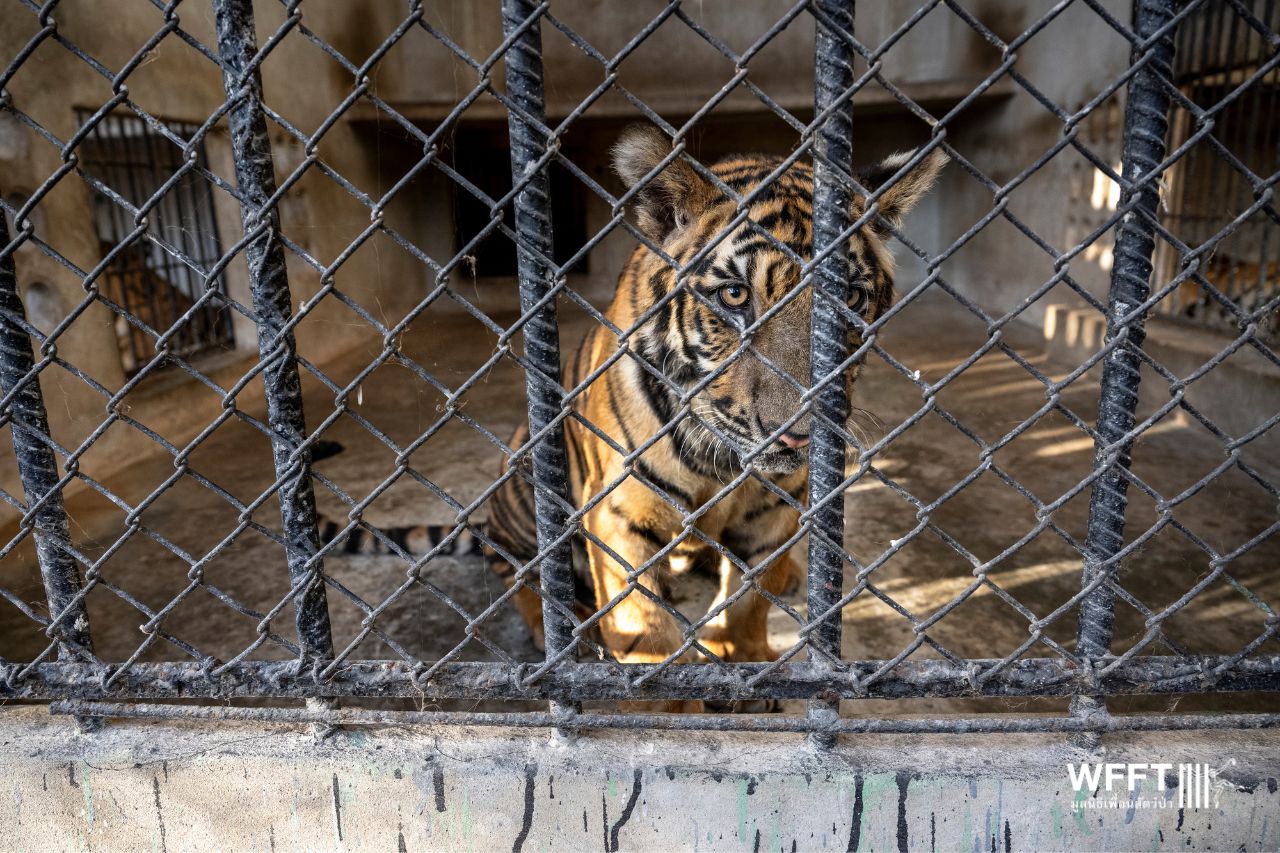
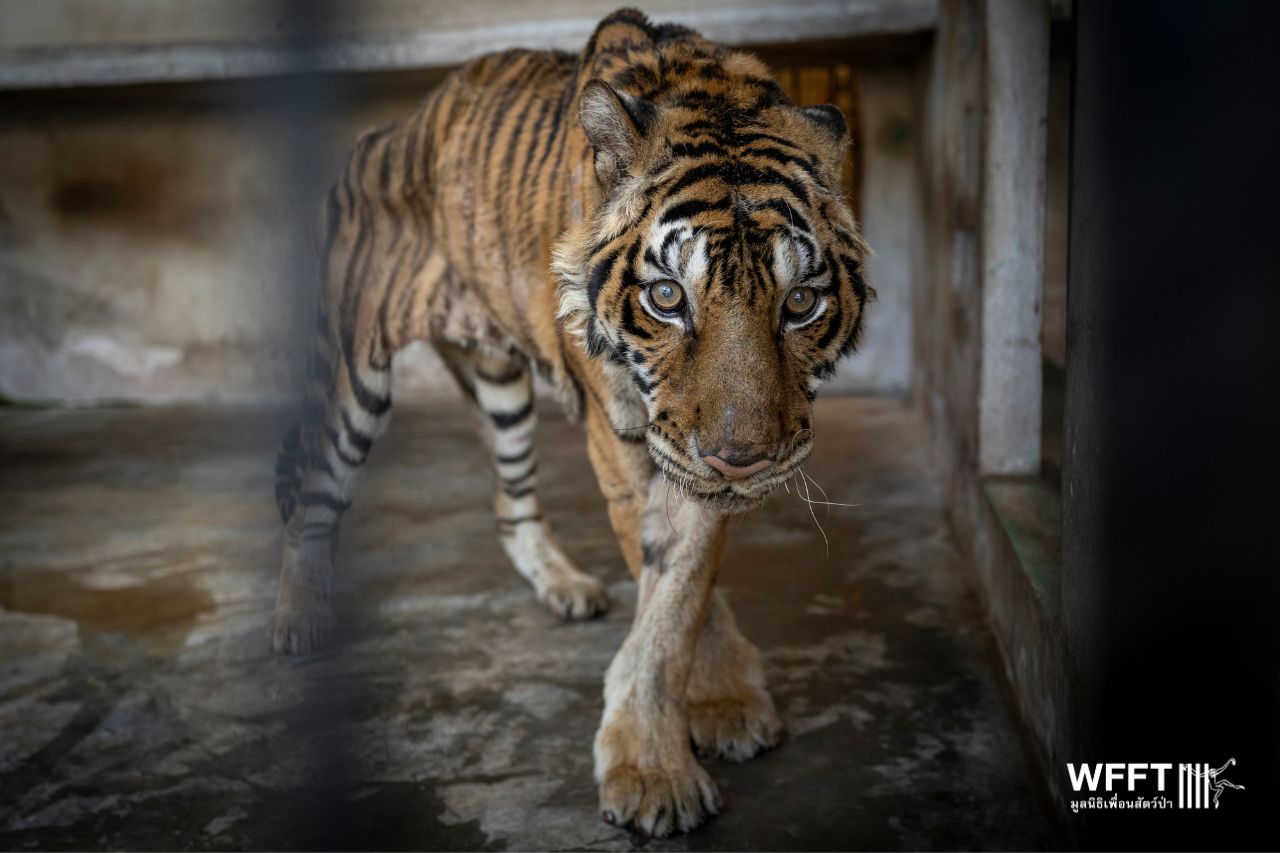
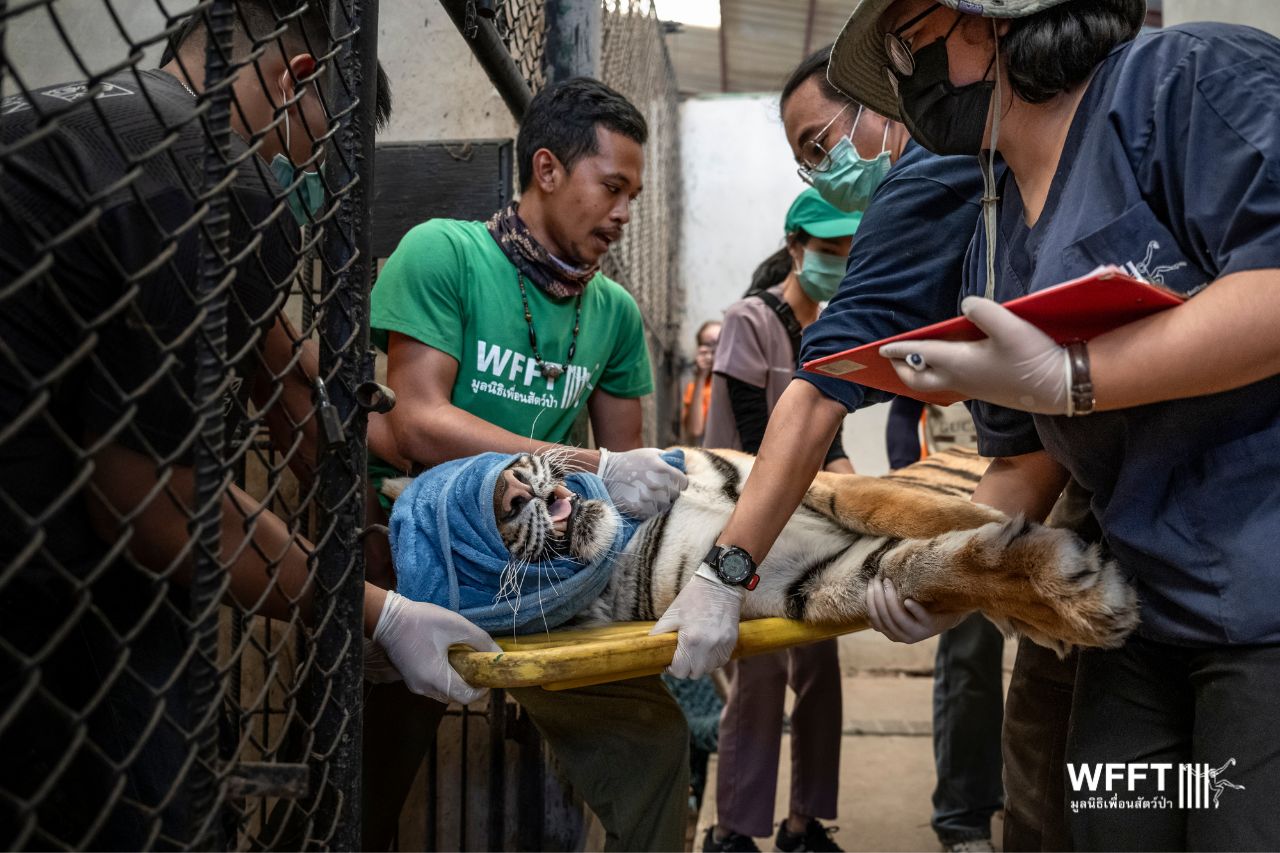
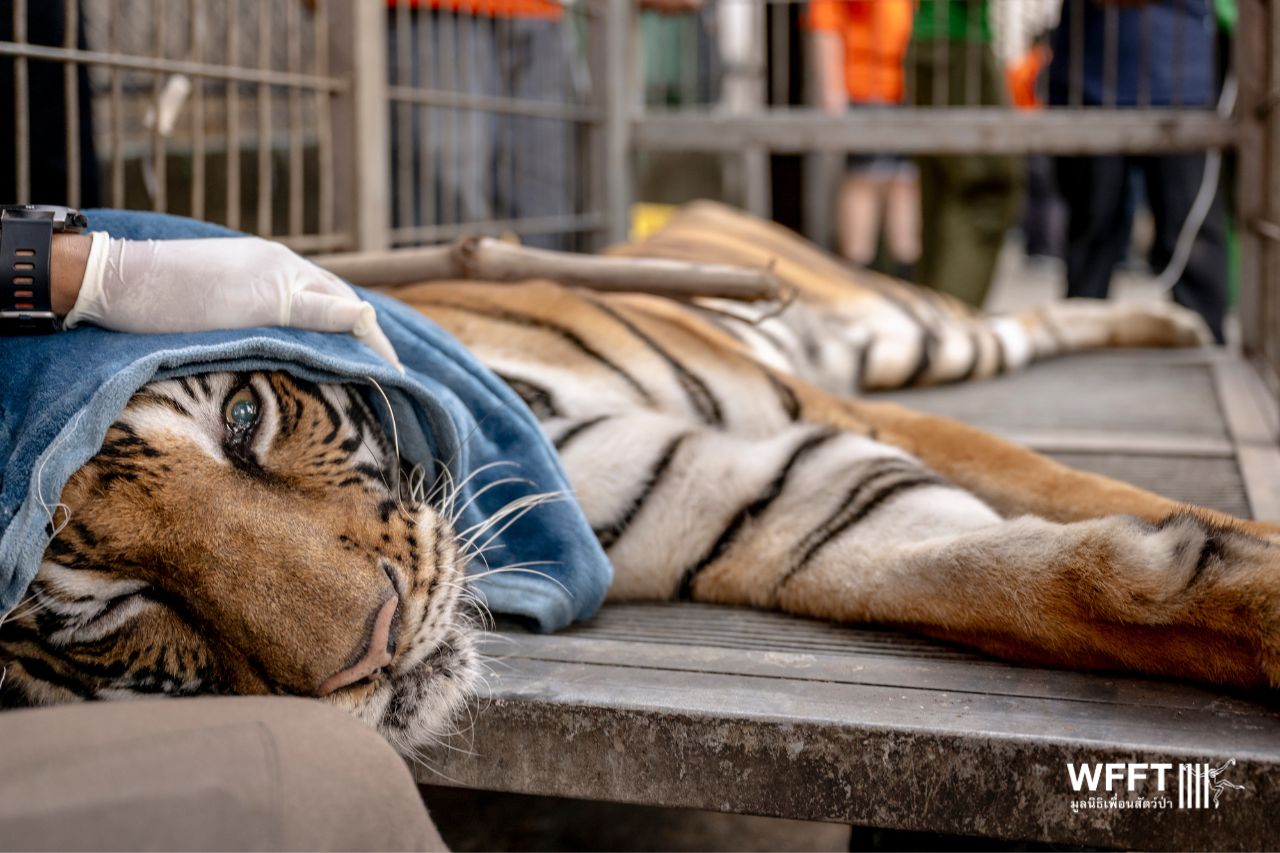
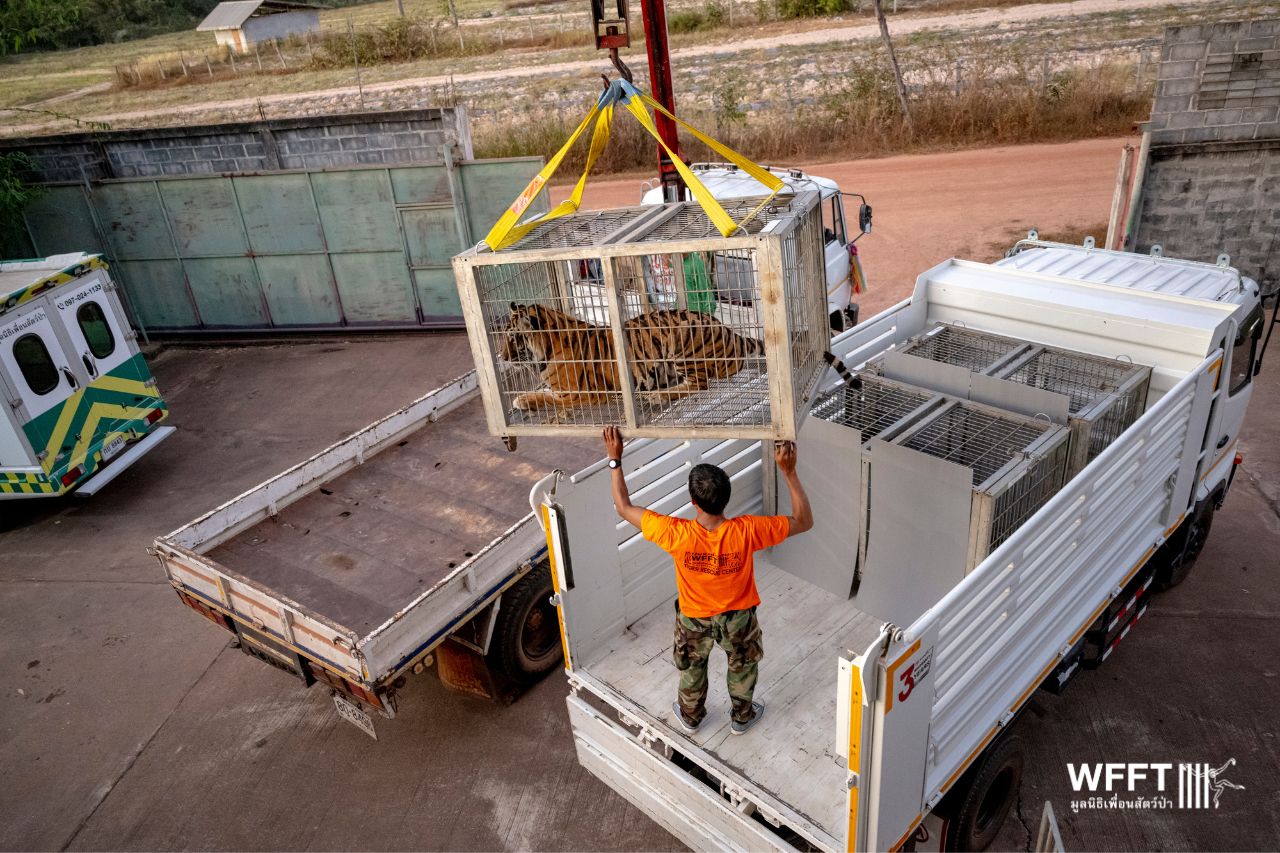
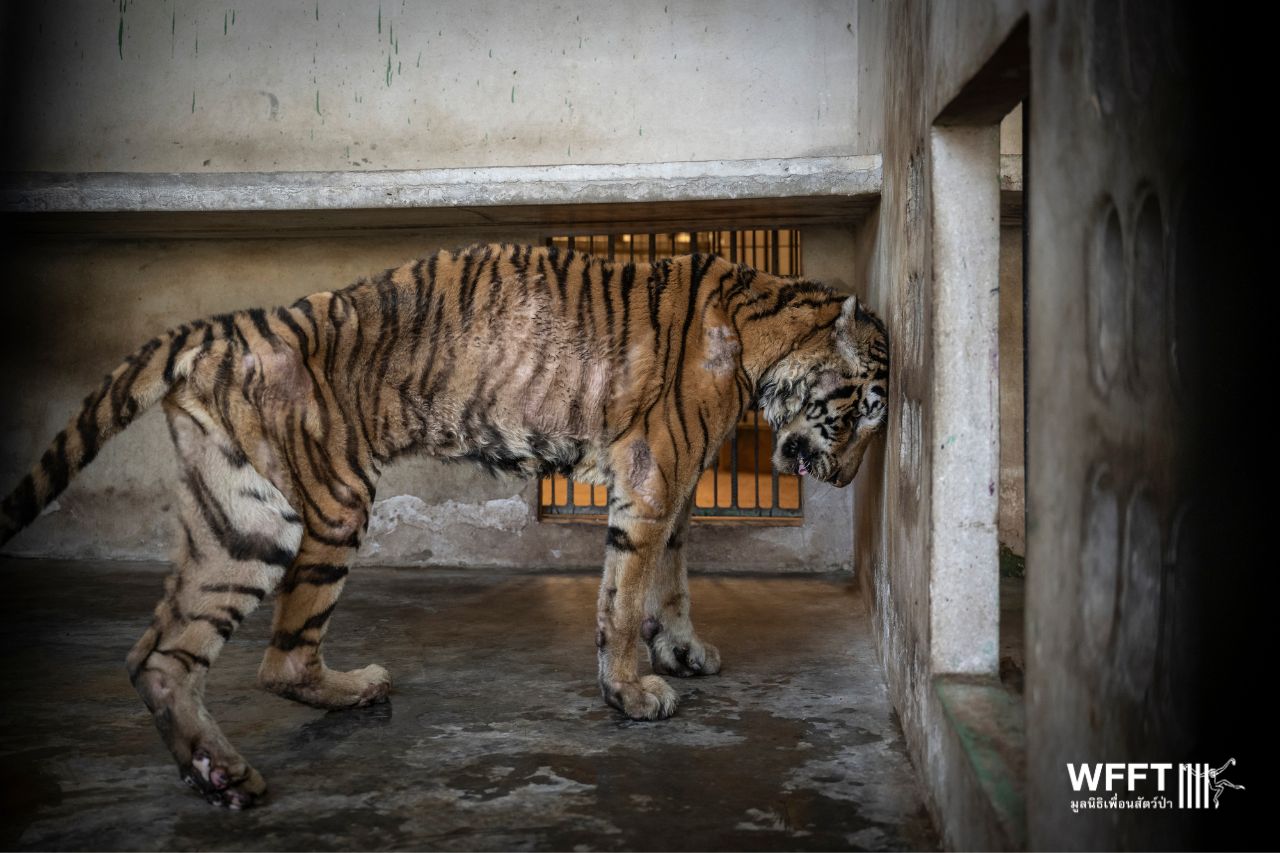
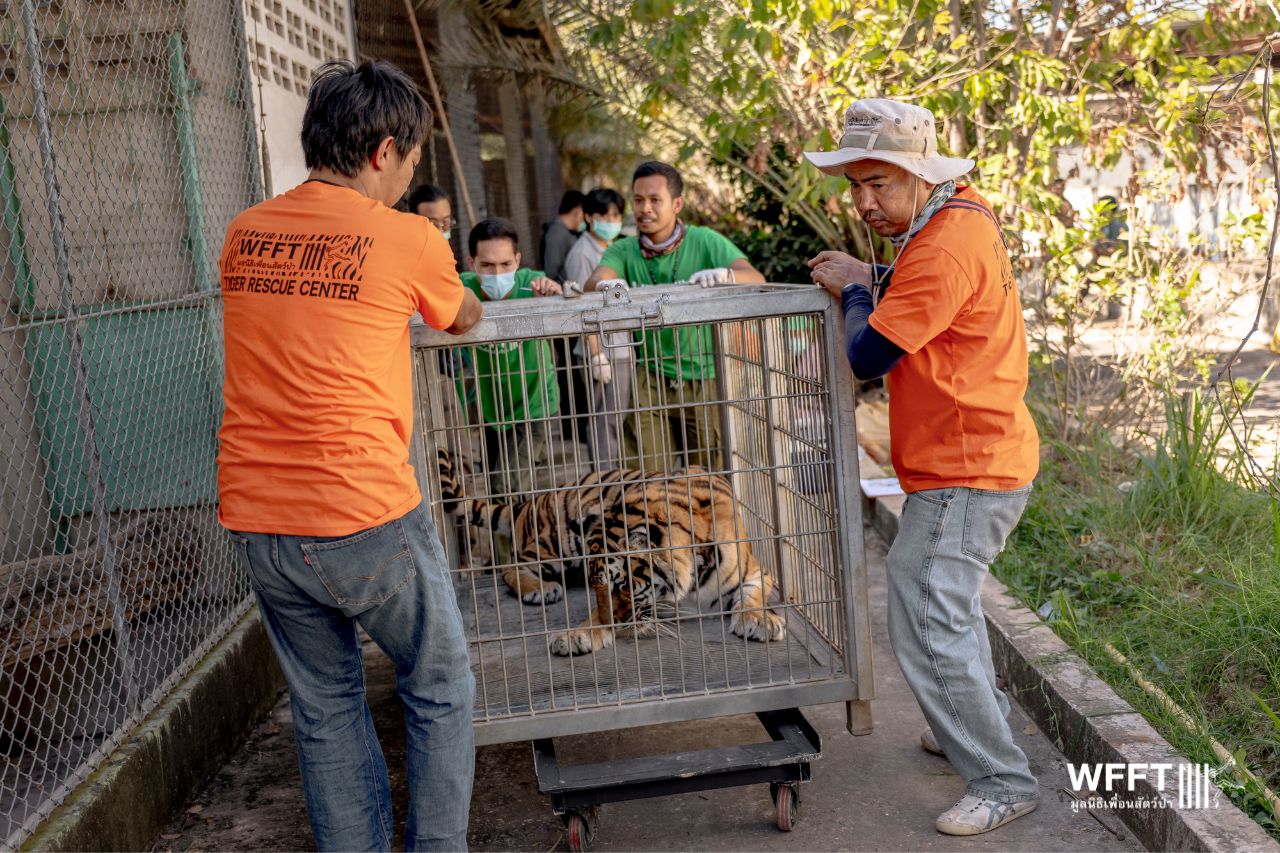 De uitgemergelde, bejaarde tijger Salamas was een van de eersten die werd gered. Terwijl de meeste andere tijgers werden verdoofd zodat ze veilig in transportkooien konden worden geplaatst, zorgde de zorgwekkende toestand van Salamas ervoor dat het veterinaire team dit afraadde vanwege het risico dat ze niet wakker zou worden van de verdoving.
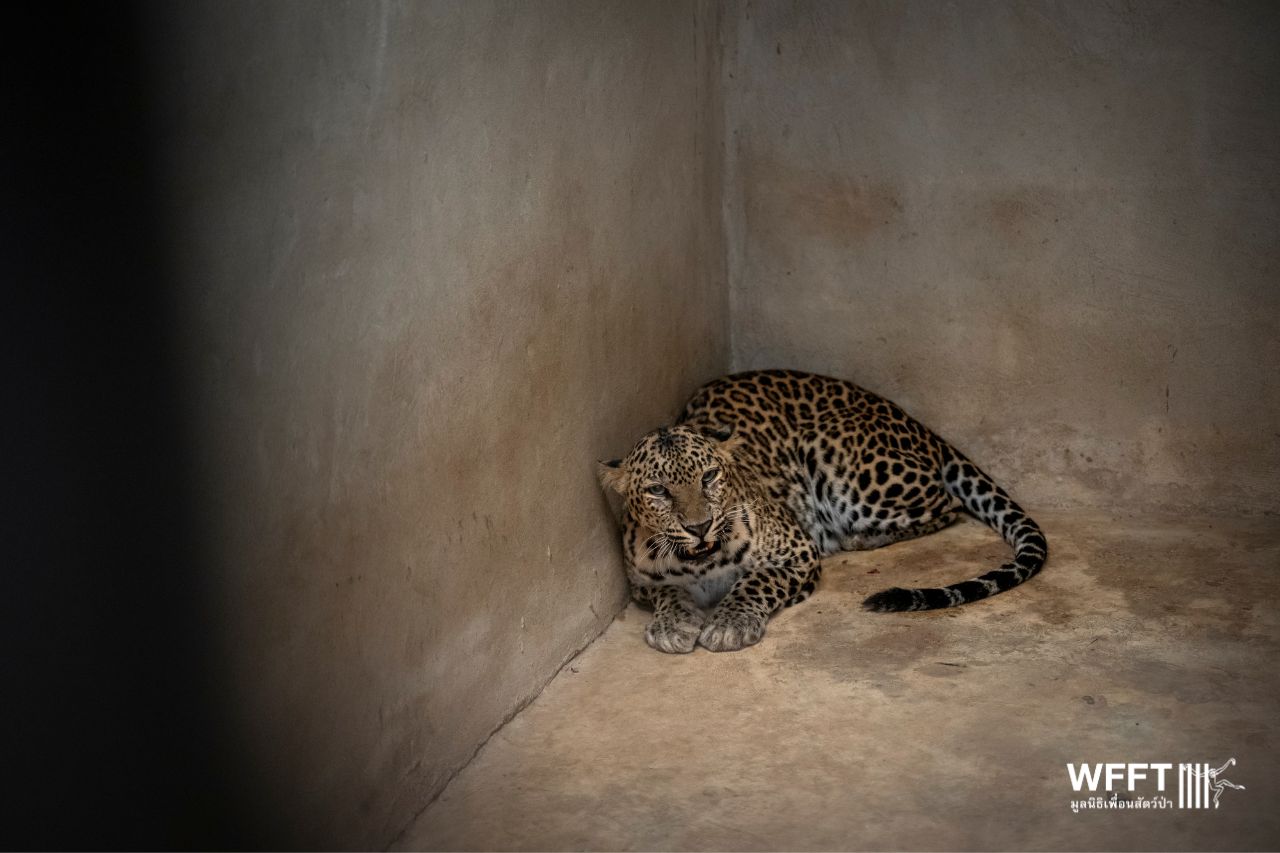
 Andere grote katachtigen die zijn gered, zijn onder meer een timide vrouwelijke tijger die de boerderij eenvoudigweg "A-1" noemt, een twintigjarige mannelijke tijger genaamd Rambo die ademhalingsmoeilijkheden heeft, en drie luipaarden.
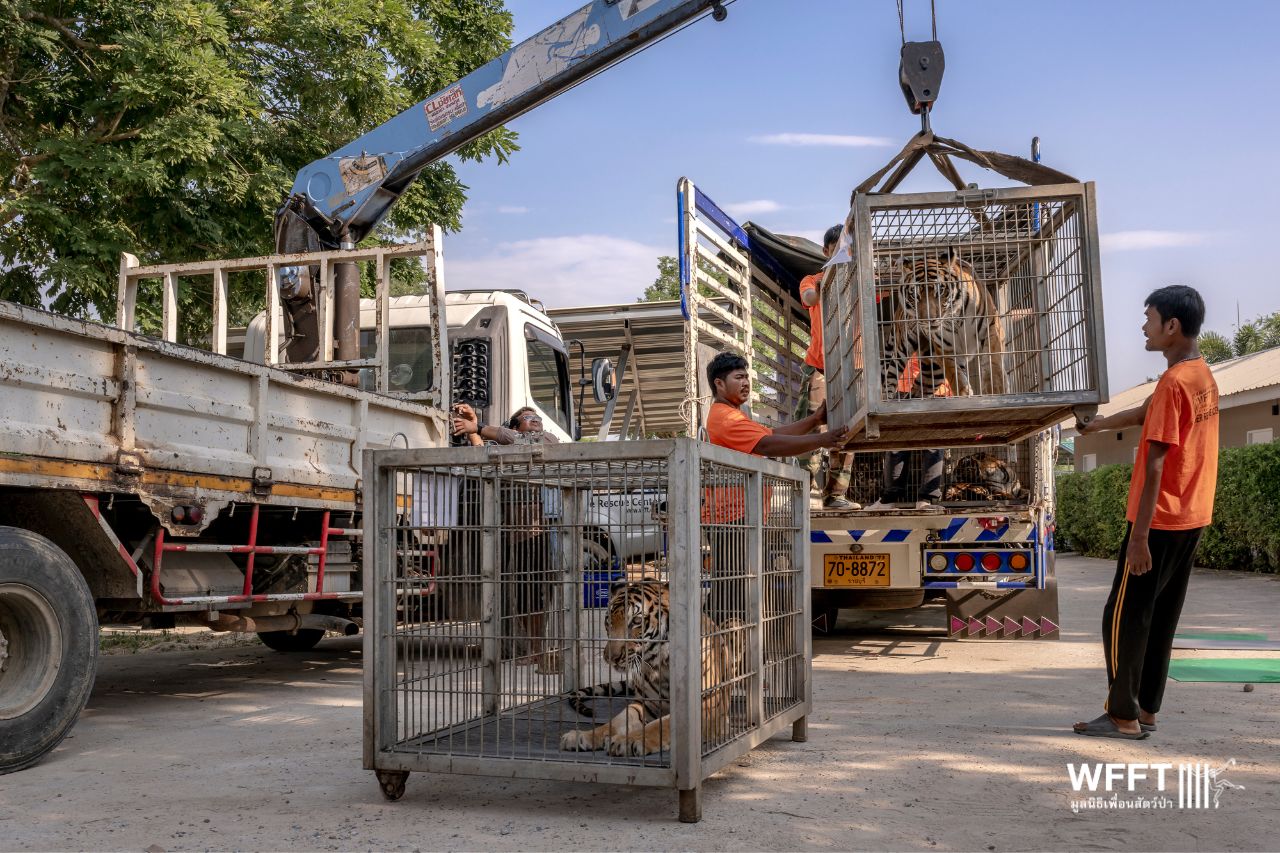 Na maanden van planning zijn we verheugd om deze prachtige dieren nu eindelijk een nieuw leven te geven in het Tiger Rescue Centre van WFFT. We zijn het Department of National Parks and Wildlife (DNP) van de Thaise regering dankbaar voor het ondernemen van actie tegen de illegale handel in wilde dieren en voor de samenwerking met ons om deze tijgers de tweede kans te geven die ze verdienen.