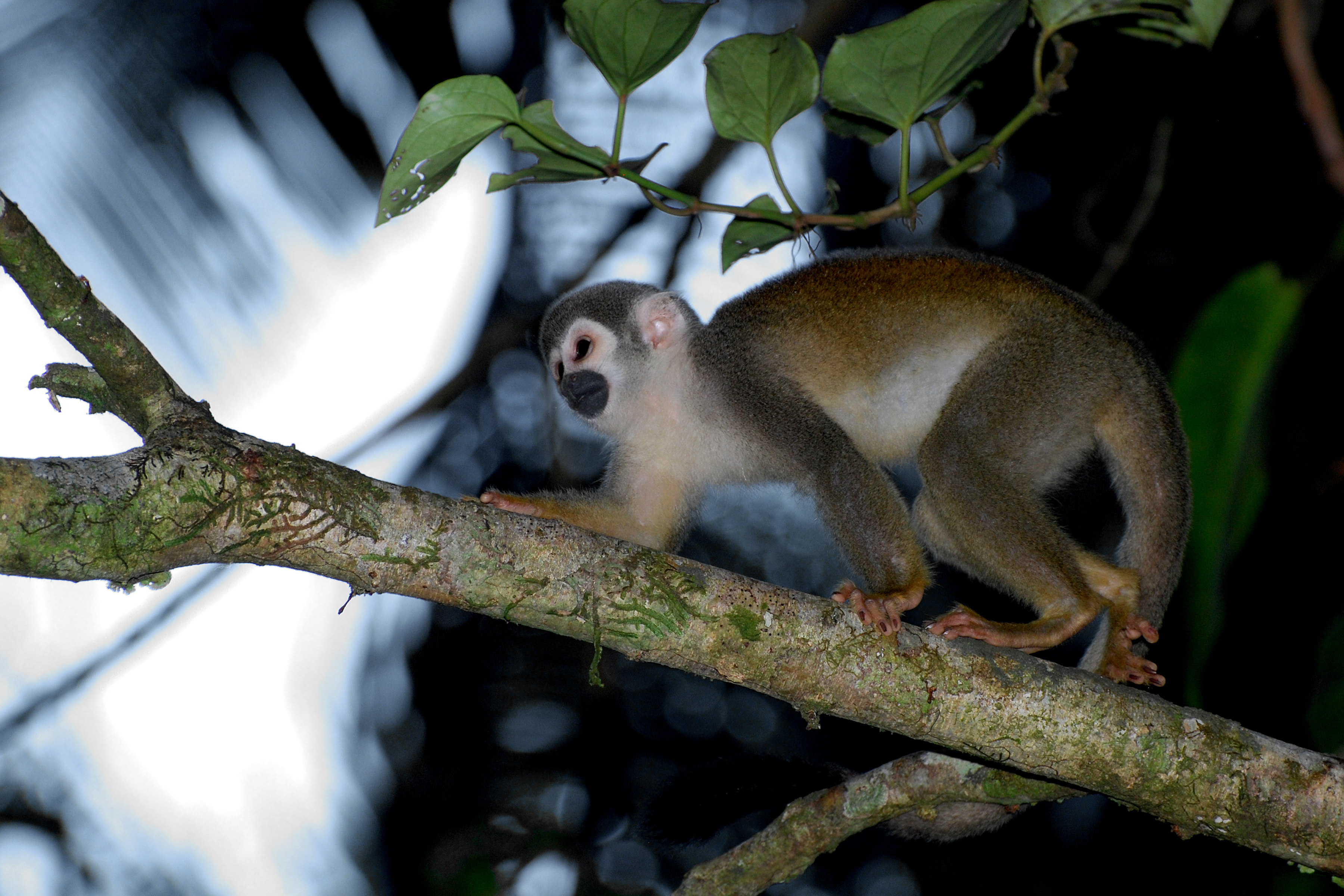
ggallice (Geoff Gallice)
https://commons.wikimedia.org/w/index.php?curid=13276099
Three adult male Guianan squirrel monkeys (over three years old) were subjected to brutal brain damage—and then killed—to see the effects on the part of the brain controlling their hands (Sengupta et al 2025). The experiment was done at Vanderbilt University in the state of Tennessee in the USA, and approved by their animal use committee. It was supported by the US tax payer through grant NS078680, comprising many millions of US dollars, from the National Institute of Neurological Disorders and Stroke, a branch of the National Institutes of Health.
Before being subjected to brain surgery, the researchers determined which was the preferred hand in each monkey. With this information, they anaesthetised the monkeys and performed craniotomies in order to access the portion of the brain controlling hand movements. After cutting open the skull and determining the relevant brain region, they used a combination of electric currents and a poison to destroy that part of the brain. One of the monkeys had to have two such surgeries because the first one did not produce the desired loss of hand function. Another monkey had to have a second destruction surgery for reasons not stated. The monkeys were kept alive for as many as 46 weeks.
After these surgeries, the monkeys were unable to use their preferred hand normally. They were reluctant to use the hand for climbing and were unable to handle food normally. Whether there were other negative welfare consequences was not mentioned by the researchers. The monkeys were tested to see how impaired their hand use was and then subjected to additional anaesthesia and craniotomies to compare responses to stimuli with those that had been recorded before the brains were damaged. After this, they individuals were killed (euphemistically referred to as euthanized
by the researchers).
Nothing of value for advancing the quality of human health was derived from this exceptionally cruel and brutal experiment. The public are repeatedly told that non-human primates are used in research only when absolutely necessary and only when there are no other alternatives available. This shameful experiment, which resulted in substantial suffering for the monkeys, followed by death, demonstrates the meaningless nature of such assurances and a lack of commitment to stop using non-human primates. Not only is the information in monkeys irrelevant to people given the fundamental differences between the two species, humane and ethical clinical studies have been and can continue to be done on human patients and volunteers in order to get data that are directly applicable to people. The monkeys in this experiment had to endure the stress of captivity, major survival surgery—twice— and death, clearly contrary to the Replacement criterion for the 3Rs.
What you can do to help:
- Click here – Dr Koroshetz – to create sample message you can edit and send to the director of the funding agency as well as those listed in box below; if you are using Web-based mail, use buttons below box to copy information to Clipboard for pasting into relevant parts of a blank message.
- If you are a US citizen, also let your President, Representative and Senators know that you do not approve of your taxes being used to fund such inhumane experiments: https://www.usa.gov/elected-officials
- If you are an alumnus of Vanderbilt University, let them know that you will not support the alumni association unless the university discontinues research on non-consenting beings: onlinegiving@vanderbilt.edu
Cited information:
- Sengupta, Anirban; Yang, Pai-Feng; Reed, Jamie L.; Mishra, Arabinda; Wang, Feng; Manzanera Esteve, Isaac V; Yang, Zhangyan; Chen, Li Min and Gore, John C. 2025-02-11 Correspondence between thalamic injury-induced changes in resting-state fMRI of monkeys and their sensorimotor behaviors and neural activities NeuroImage: Clinical 45:103753
| Craniotomy: This is a surgical procedure to access the brain. Typically, an area on the head is shaved. An incision is made through the skin and tissues underlying it, down to the surface of the skull, in such a way as to create a flap that can be pulled away to expose the skull. Depending on what type of access to the brain is required, holes may be drilled through the skull into the brain cavity, for example for injections, or a portion of the bone may be cut out in order to implant a bank of electrodes. When done, bone cement may be used to fill in the hole in the skull and the overlying tissues sutured. | 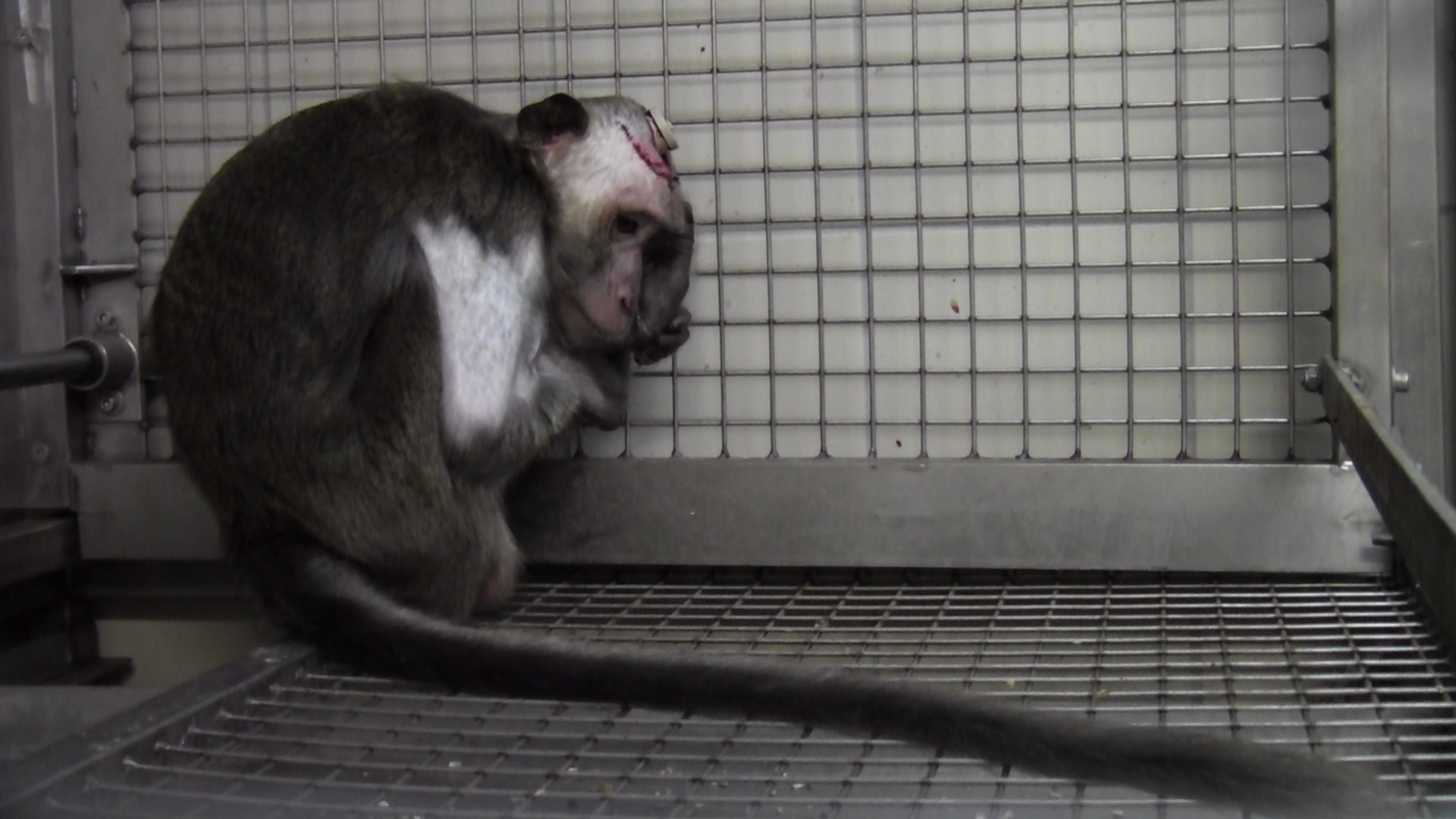 |
Information on NIH grant support (funding) is taken verbatim from relevant publications. If you have difficulty with any links provided, you can do your own search through the NIH RePORTER site: https://reporter.nih.gov/, by copying and pasting the grant number into the Search field on the form.
Be aware that some grants include funds for more than experiments on non-human primates.

Geen opmerkingen:
Een reactie posten