Touching story: Ukrainian soldier released from Russian penal colony after 6.5 years with cat Myshko who helped him survive the hell
He was imprisoned in a Russian penal colony for nearly seven years. Yet, Ukrainian soldier Stanislav Panchenko (26) did not leave that dark place alone. In his arms, he carried a silent witness to his suffering: the tomcat Myshko, who had been his support and confidante all those years. It is a statue that symbolizes the resilience of Ukrainian prisoners of war and the strong bond between humans and animals.
Karen Van EykenLast update: 13:38 Source: Ukrainska Pravda, Novyny Donbasu
Stanislav was captured in January 2019 in the Donetsk region. Shortly afterward, he was sentenced to seventeen years in prison on trumped-up charges. His mother recalls how he was first held in a pre-trial detention center and then transferred to Penal Colony No. 32 in Makiivka, a city now occupied by Russia. "Everything was fabricated, a charade to hold Ukrainian soldiers as long as possible," she told Ukrainian media.
Unexpected companion
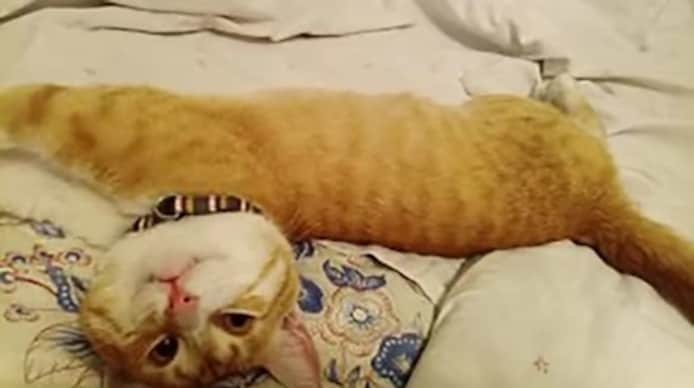
What the Ukrainian soldier didn't know then: in those dark years, an unexpected companion would play a crucial role in his survival. One day (about two years later), a weakened kitten appeared in the barracks, found by a fellow prisoner. The animal was barely a few weeks old and barely able to survive on its own. The men decided to feed and raise the little one together. At first, they named the animal Myshka, but it soon turned out to be a male cat, and the name was changed to Myshko.
He became part of our lives in captivity. For many, he provided comfort in moments of despair.
Stanislav Panchenko
"He was more than just a cat," says Stanislav. "He became part of our lives in captivity. For many, he provided comfort in moments of despair."
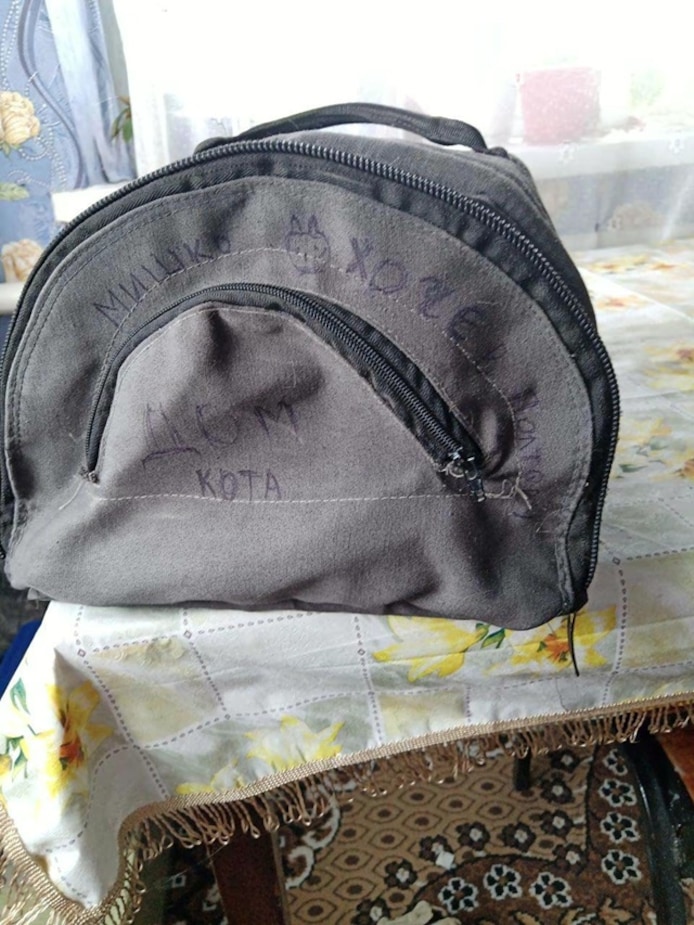
Myshko soon became the barracks' mascot. The POWs made him a special carrying bag, decorated with inscriptions. The animal took on a special place in their daily routine: he was present during their conversations and offered moral support.
The men made a pact: whoever was released first would take the cat with them to freedom. "We didn't want him to be left behind and end up a stray," says Stanislav. "He belonged to us. To me." Even the Russian guards sensed their attachment. Nevertheless, they confiscated the travel bag three times. Three times the prisoners managed to retrieve it. "It may have seemed like a minor detail, but for us it was vital. It was the only way we could ever take him out."
The long road to freedom
On August 14th, the moment Stanislav had been waiting for for almost seven years finally arrived: a prisoner exchange. Along with 83 other Ukrainians—including civilians and doctors who had been held for over six years—he was released. As the ambulances transported the released prisoners, Stanislav clutched his bag. Inside, Myshko sat silently.
The medical staff looked in disbelief when I told them there was a cat in my bag. 'Alive? From the penal colony?!' they asked. I showed it to them, and suddenly everyone smiled. For a moment, it felt like the war was far away.
Back home
Today, Myshko lives with Stanislav in Poltava, in northeastern Ukraine. The tomcat is slowly regaining his weight and remains the same intelligent, affectionate companion he was in prison. For Stanislav, his presence is priceless. "We've been through hell together. Now we're starting a new life together."
Still, the soldier can't completely clear his mind. "I raised Myshko with a friend who is still imprisoned. I hope with all my heart that he can soon be part of an exchange too. He deserves his freedom just as much."
Symbol of hope
Today, the bars are behind him, and Myshko purrs peacefully on his lap. Their story is more than a touching anecdote. It shows how even in the coldest penal colony, humanity endures. Because sometimes freedom isn't just a door opening, but also the simple realization that you're not alone.
.jpg)



Geen opmerkingen:
Een reactie posten