Translate

Posts tonen met het label exploitation. Alle posts tonen

woensdag 29 juli 2026

An undercover investigation into a circus in Italy has revealed the horrific reality behind the “entertaining” visuals: animal abuse and exploitation of workers


Graphic video

Images from animal circuses in Italy reveal bleak reality


An undercover investigation into a circus in Italy has revealed the sad reality behind the “entertaining” visuals: animal abuse and exploitation of workers.

Eurogroup for Animals’ member, LAV, in collaboration with Franz Weber Foundation, has just launched the investigation “Il sistema circhi”, a project that highlights the same systemic issues in circuses across 19  different locations.

The two organisations received images recorded at Circo Medini in the first month of 2026, revealing poor conditions including:

  • Physical abuse of animals.
  • Violation of labour conditions: workers without appropriate contracts, with no safety standards in the workplace and subjected to verbal abuse.
  • Unhygienic conditions and illegal dumping of manure.
     

For the first time, a person has managed to infiltrate a circus in Europe. For four months, he recorded footage both during the shows and, above all, behind the scenes, bringing to light a picture of violence and humiliation. Faced with these images, no one will be able to say that the circus is a cultural spectacle

LAV
Image
lav lion circus

The two organisations wanted to highlight, however, that this is not a one-off case, but rather a systematic status quo existing in circuses making use of animals. Touring in nine regions across 19 circuses, undercover investigations revealed the horrific situations animals face in such places, including being trapped for hours or days on end, facing beatings, kicks and blows. The findings of these videos have been reported to the relevant authorities.

Twenty-three of the EU's 27 Member States have introduced restrictions on the use of animals in circuses, or have banned the use of wild animals altogether. However, animals are still permitted to perform in circuses in several large EU countries, as decisions on circus animal legislation ultimately stand at national, and not EU level.

LAV calls on the relevant authorities in Italy to finally ban the use of animals in circuses, bringing Italy into line with the growing number of European countries that have already adopted similar measures.

Concerned citizens are encouraged to join the call here.


zondag 7 juni 2026

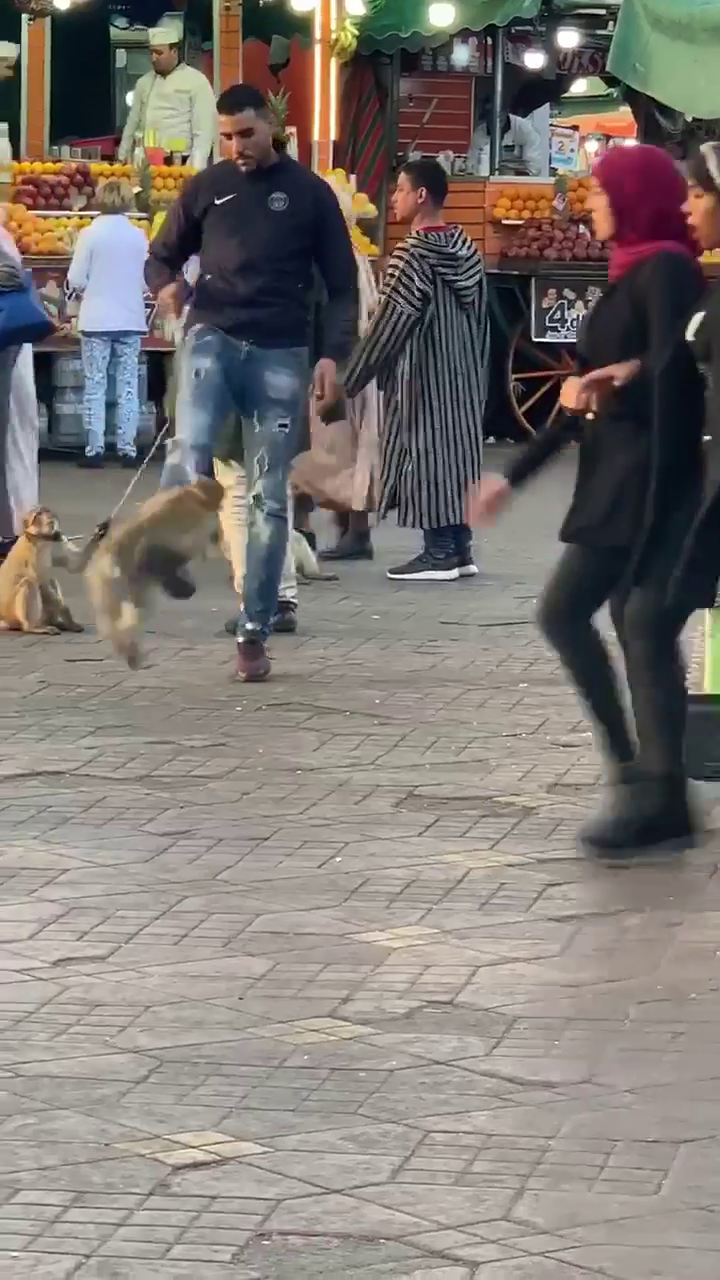
The cruel exploitation of Barbary macaques in Morocco dressed in children's clothes and begging is heartbreaking: Please take action !!


Poor little monkey locked up in this small wooden  cage begging to get out.

Disturbing photo's of Barbary macaques dressed in children's clothes, chained by the neck and dragged around by street handlers touting for photos and selfies to 'entertain' tourists, has been shared with Action for Primates by East Lothian Uncaged who recently filmed the monkeys at the Jemaa el-Fnaa square market in Marrakesh, Morocco. 


Making the monkey smile for a photo. The poor abused animal is also wearing nail polish.

Other heartbreaking images show imprisoned macaques reaching out from within dark wooden crates in which they are held and transported. Exposure to crowds of people and loud noises and the chaos of the busy streets would be extremely frightening and distressful for the macaques. The cruel and selfish exploitation of these macaques is morally reprehensible.


The Barbary macaque (Macaca sylvanus) is native to the Atlas Mountains of Algeria and Morocco, with a small population in Gibraltar. The species is classified as Endangered with a decreasing population trend, on the International Union for Conservation of Nature (IUCN) Red List of Threatened Species, and listed in CITES Appendix I (threatened with extinction). Major threats to the survival of wild populations of Barbary macaques include habitat loss and their capture and trade. Captured in the wild within Morocco, these macaques are sold as 'pets' and to supply the cruel photo prop trade for tourists, in particular in open air markets, such as Jemaa el-Fnaa in Marrakesh.

Barbary macaque being kicked by handler, Morocco; Nelly Moulin
Macaque being kicked by handler
Nelly Moulin

Earlier video footage previously shared with Action for Primates by Nelly Moulin also revealed the shocking way in which the macaques are treated by street handlers in Morocco. At the Jemaa el-Fnaa square market, street handlers were filmed dragging and physically abusing struggling and cowering young Barbary macaques.

The exploitation and physical and psychological cost to these wild animals for 'entertainment' is unacceptable.

Please speak up for the Barbary macaques:

  1. Write to the following:
    • Morocco tourist information centre, choosing the relevant country: https://www.visitmorocco.com/en/contact
    • Morocco embassy in your country: https://www.embassy-worldwide.com/country/morocco/
    • Urge the above to protect Barbary macaques by
      • enforcing the legislation that prevents their capture and 'possession';
      • taking action against the illegal trade; and
      • confiscating those macaques who are being exploited and abused as photo props by street handlers and re-homing them to genuine sanctuaries for rehabilitation and eventual release to a free-living state
    • Avoid tourist attractions that involve captive wildlife and always submit complaints to tourist and embassy outlets in individual countries as well as to travel and holiday companies.


zaterdag 30 mei 2026

In 1840, 20,000 camels were introduced into Australia for transportation of goods: in 2026 more than 500.000 camels are classified as pests and are suffering cruelty and exploitation (video)

Australia wake up !! 500.000 camels drink a lot of water which is very scarce in Australia  10 million  sheep were also imported. 


I must add that not all the camel 'owners' are cruel


Dromedary camels are interesting and deeply misunderstood creatures. They are naturally found roaming through Africa and Asia. In the 1840s camels were introduced into Australia, and have since established a prominent wild herd. With the cruelty associated with elephant rides coming to light in recent years, camel rides are interestingly not receiving the same attention - yet, the intelligence of camels is similar to that of elephants. This article explores the use of camels in the Australian tourism industry and the welfare issues it presents to the animals.


About Camels

Sadly, there has been minimal research into camels, their personalities and intelligence, leading to a disconnect in how we perceive them. Robyn Davidson, who spent months travelling the Australian dessert with four camels in the 1970s, has shared her insights into these wonderful creatures in her book, Tracks.

They are intelligent and emotional animals

Camels are often presented as grumpy and temperamental creatures, when in reality, they are just misunderstood. Camels are smart and have shown to have the intellect and emotional intelligence of an eight year old child [1, 2]. Both Bactrian and Dromedary camels have an encephalization quotient (EQ) value of 1.3, which is a similar level to the intelligence of the African elephant, and greater than that of the horse [3].

Robyn describes camels as “affectionate, cheeky, playful, witty, self-possessed, patient, hard-working and endlessly interesting and charming.” She noted that they also have “delicate” hearts and are highly sensitive [2].

Camels travel great distances

In the wild, camels like to stay together in herds, led by a dominate male. The remaining males form “bachelor herds”. Being nomadic animals, they spread themselves over hundreds of kilometres and can travel up to 160 km in a day. They enjoy exploring their environment and socializing with other individuals [4]. Studies have found that while they roam and feed during the day, wild dromedaries rest during the hottest hours - around noon [5].

Camels can live long lives

Camels can live for 40-50 years [6]!


The Industry

Camels are used as a tourist attraction in Egypt, Jordan, Morocco, China, Kenya, Dubai, Tanzania, and Australia. In all of these countries, there are little to no animal welfare laws or standards.

Camels in Australia

Approximately 20,000 camels were introduced to Australia between 1840 and 1907, for riding, the transportation of goods, and as draught animals (used to draw load like a plough) in the early development of arid areas. As they naturally live in arid environments and require less water, they were seen as a more suitable option than horses. When they were no longer needed, due to the increase in motor transport, people set them free. Since then, they have established a stable wild population [7 PDF]. Soon after, they were classified as a feral ‘pest’ species.

The estimated number of camels in Australia today ranges drastically from 300,000 [8] to over 1 million [7 PDF]. While few efforts have been taken to establish a more accurate count, the latter figure has driven the push for mass culls. Others saw this as an opportunity to exploit the camels, trapping and sending them to slaughter, using them in dairies for camel milk, or for rides and even racing.

Interestingly, camels are classified as a ‘pest’ due to the so-called damage they do to the environment. The impact of the estimated 1 million grazing camels, however, would be significantly less than that of the 25 million cattle and 63.7 million sheep in Australia. These farmed animals were not only introduced, but are continuously being bred, relying on cleared agricultural land and large amounts of water and resources. To learn more about these industries, read our articles on Cattle Farming and Sheep Farming.

All ferals show resilience, intelligence, self-organization, and a capacity to evade human captivity—all of the things that contradict a belief that livestock exist only to serve us, obey us. Going feral, they remind us that animals are neither machines, nor docile objects, but thinking, escaping, beings, and as such they help us to define the injustice of farming a little better. Perhaps this is why they are so hated; they are an uncomfortable reminder that animals are not “happy meat.”

Fiona Probyn-Rapsey [9 PDF]

My efforts to find a Australian Animal Welfare organisation to combine efforts with a  


dinsdag 25 februari 2025

Wales makes a historic move : no more exploitation of animals for profit and therefore the greyhound racing industry wil stop in 2026


Wales has taken a monumental step by announcing a ban on cruel greyhound racing. This marks a major victory for animal welfare, following Aotearoa New Zealand’s groundbreaking decision. This historic move is part of a growing global movement to end the exploitation of animals for profit.

During the announcement, the Welsh government indicated that the ban might be implemented as soon as possible and could be enforced before the next Senedd election in 2026.


Dogs are confined for 20 to 23 hours each day and barely have enough room to stand up or turn around.

Dogs live in warehouse-style kennels, side by side, and in jurisdictions like the United States, in stacked metal cages. They are confined for long hours each day with bedding that consists of carpet remnants or shredded newspaper.

“Now is the right time to move to ban greyhound racing in Wales,” said Deputy First Minister Huw Irranca-Davies, after 35,000 people signed a petition demanding an end to greyhound cruelty.


Wales would become the first country in the United Kingdom to formally outlaw greyhound racing. This historic news comes on the heels of several track closures in England over the past year, with only one track remaining in Scotland. It’s clear that this is part of a growing, global movement to end the exploitation of these gentle dogs for profit. The public sentiment surrounding greyhound racing has shifted dramatically, with increasing recognition of rampant animal cruelty inherent in the industry.

Animals like greyhounds have long been used as commodities in industries that profit from their suffering. From injuries and doping to overbreeding and mass killings, the greyhound racing industry has left a trail of harm in its wake. The race is not just for speed but for gambling — with little regard for the animals involved. This monumental decision represents a powerful stand against the commodification of animals for profit.

While this is a significant victory, it also underscores the urgency of continuing to fight for the liberation of all animals used in exploitative industries. Whether it’s greyhounds used for gambling, factory-farmed animals subjected to inhumane conditions, or wild animals exploited for entertainment, we cannot afford to rest. Every victory, like the one in Wales, serves as a reminder that our collective voices matter, but there is still so much more work that needs to be done.

We extend our deepest gratitude to the coalition of animal welfare organizations and advocates who have tirelessly fought for this historic change, including Dogs Trust, RSPCA Cymru, Blue Cross UK, Greyhound Rescue Wales, and Hope Rescue. Their efforts, along with the thousands of individuals who signed petitions, fostered greyhounds, and spoke out against this cruel industry, have paved the way for this groundbreaking announcement.

As we celebrate this victory, we must continue to press for further change, ensuring that no animal is used for profit, and that they are liberated from the systems of exploitation. The tide is turning, and with continued activism, we can look forward to seeing more countries follow in Wales’ footsteps. 

The fight for animal rights is far from over, but with every victory, we move one step closer to a world where animals are no longer seen as commodities but are recognized for the sentient beings they truly are. Let’s keep pushing for change — together, we can create a future free from exploitation.

dinsdag 26 april 2022

Actiegroep Scotland Against Greyhound Exploitation: Windhondenrennen 'verouderd en wreed en honden vaak gedrogeerd met cocaïne' meer dan 18.000 gewonde en 3000 dode honden in 3 jaar tijd


Honden van windhondenrennen in Schotland zijn "niet te hervormen" omdat sommige honden worden gedrogeerd met illegale stoffen zoals cocaïne, hebben MSP's te horen gekregen. (Members of Parlement )

Actievoerders hebben de commissie plattelandszaken van Holyrood gevraagd op te roepen tot een volledig verbod op de sport.

Er werd verteld dat 13 honden tussen 2018 en 2019 positief testten op doping op het enige gereguleerde circuit van Schotland.

De Greyhound Board of Great Britain (GBGB) zei dat welzijn "van het grootste belang" was.

Schotland heeft slechts één gereguleerd circuit, het Shawfield Stadium in Rutherglen bij Glasgow. Er is ook een ongereguleerde baan in Thornton in Kirkcaldy, Fife.

De GBGB meldde dat tussen 2017 en 2020 naar schatting 18.345 honden gewond raakten door het racen in het VK en dat er meer dan 3.000 doden vielen.

In Shawfield raakten 197 honden gewond en werden in hetzelfde tijdsbestek 15 sterfgevallen geregistreerd.

De actiegroep Scotland Against Greyhound Exploitation (Sage) schat echter dat het werkelijke dodental aanzienlijk hoger is, omdat Thornton niet verplicht is om het aantal slachtoffers te registreren.

Gill Docherty haalde namens Sage uit naar het gebrek aan regelgeving om de dieren te beschermen tegen letsel, dood en doping.

Ze zei: "Het gebrek aan regelgeving [bij Thornton] betekent dat er geen dierenarts aanwezig is bij een van de races en dat zou betekenen dat er geen eerste hulp of pijnverlichting is voor honden die gewond zijn.

"Er is geen dierenarts aanwezig om een hond te euthanaseren als hij een catastrofale verwonding oploopt, zoals een gebroken wervelkolom of nek."

Drugstests vinden plaats in Shawfield - maar in iets minder dan 2% van de races, zei ze.


Uit die tests bleek dat 13 honden positief testten op doping in de periode van 2018 tot 2019 - met klasse A-drugscocaïne gevonden in vijf van de honden.

Bijschrift afbeelding,


Demonstranten verzamelden zich buiten Holyrood om op te roepen tot een verbod op de sport.

Regulering werkt niet, zei Mevrouw Docherty, omdat wanneer doping voorkomt, het vaak enkele maanden niet wordt onthuld door de GBGB en het niet wordt gemeld aan de politie en de Schotse SPCA.

Ze voegde eraan toe: "Fundamenteel kunnen we de inherente risico's van windhondenraces zelf niet negeren. Deze risico's zijn aanwezig, ongeacht of het spoor gereguleerd of ongereguleerd is.

"Ze zijn niet te mitigeren met welzijnsmaatregelen of slim benoemde initiatieven. Het is een feit dat het laten racen van zes honden met een snelheid van meer dan 40 mph tegen de klok in rond een ovale baan resulteert in een hoog aantal botsingen en verwondingen, waarbij het eerste uiteinde berucht is voor het veroorzaken van de meeste verwondingen. "

Mark Ruskell, msp van de Schotse Groenen, steunde de petitie, die 130.159 handtekeningen ontving.

De Animal Welfare Act 2006, die een zorgplicht oplegt aan diereneigenaren om hen te beschermen tegen lijden, gaat niet ver genoeg om de schade aan windhonden te voorkomen, zei hij.

"Ik denk echt dat dit een industrie is die echt niet te hervormen is," zei hij

Bijschrift afbeelding,

De Schotse SPCA sprak zich onlangs uit voor een verbod op windhondenrennen.

In een brief aan de commissie zei Mark Flynn, de hoofdinspecteur van het orgaan, dat Schotland "de weg moet wijzen" bij het opleggen van een verbod.

De commissie zal nu relevante belanghebbenden, waaronder de Animal Welfare Commission, en de Schotse regering aanschrijven om duidelijkheid te vragen over de handhaving van de regelgeving voordat de petitie wordt voortgezet.

Mark Bird, chief executive van GBGB, zei dat er een "zero-tolerance" -benadering was voor mishandeling van honden.

Hij voegde eraan toe: "Wat vaak over het hoofd wordt gezien door degenen die graag zouden zien dat racen verboden is, is dat de bescherming die windhonden krijgen veel verder gaat dan wat wordt geboden aan huishonden in het VK.

"Als toezichthouder houden we het welzijn van alle GBGB-geregistreerde windhonden nauwlettend in de gaten en hebben we een nultolerantiebenadering voor elke mishandeling van windhonden binnen onze sport.

"Elke windhondenrace op een van onze circuits wordt zowel voor als na de race door een dierenarts gezien en de kennels van hun trainers worden regelmatig geïnspecteerd door dierenartsen, onze stewards en onafhankelijke auditors om ervoor te zorgen dat ze voldoen aan onze hoge welzijnsnormen."

De GBGB heeft ook een strikt antidopingbeleid en zegt dat alle gevallen worden gemeld aan de juiste autoriteiten en ook kunnen leiden tot een levenslang verbod voor trainers.


Hondenrennen in Nederland


In Nederland wordt het hondenrennen beoefend door fanatieke hondenliefhebbers. Er zijn 12 renbanen in Nederland waar voor de hobby races plaatsvinden. De hondenrenbaan bestaat uit twee rechte zijden en twee bochten, te vergelijken met de atletiekbaan. Eigenaren beoefenen de sport, omdat windhonden niets liever doen dan rennen. Eigenaren van honden die wedstrijden winnen, ontvangen een bos bloemen en een kleine vergoeding.

Om deel te nemen aan een hondenrace zal de hond minimaal 15 maanden en maximaal 8 jaar oud moeten zijn. Voordat een hond deelneemt aan een hondenrace heeft hij een verplichte startlicentie nodig. Als eerste moet de hond hiervoor een keuring ondergaan en de 'verklaring goed rond' ontvangen. Om deze verklaring te krijgen loopt de hond, met minimaal 2 andere honden, 2 ronden op de renbaan. Wanneer de hond zich niet stoort aan de anderen ontvangt hij de verklaring en kan bij het secretariaat van een renvereniging de startlicentie worden aangevraagd.