Photos by: Friends of the Koala

Photo: Australian wombat

200 koalas were admitted to one of Australia’s busiest koala hospitals during breeding season, sadly known as trauma season.
Infections, vehicle strikes, and dog attacks are the most common reasons that koalas are admitted to the Friends of the Koala veterinary hospital near Lismore in New South Wales. The veterinary team that is currently caring for the sick and injured koalas is generously sponsored by animal welfare organization IFAW.


“We predict these numbers are only set to rise during subsequent seasons as remnant habitat continues to become smaller and more fragmented, forcing koalas to travel long distances on foot through urbanised areas,” said vet Dr. Jodie Wakeman.
Sadly, 129 koalas had to be euthanized but 70 were able to be released back into the wild—where they belong—and to hopefully contribute to the future of the species.

“While many of the cases we admitted this trauma season ended in euthanasia, as a community we do have the ability to turn this around by ensuring injured or sick koalas are seen by our IFAW-sponsored vet team as quickly as possible,” said Dr. Wakeman.
IFAW Animal Rescue Program Officer Nicole Rojas-Marin said early intervention and treatment was vital to give sick or injured koalas a second chance at life.
“Every individual koala we can rescue, rehabilitate and release back into the wild is critical for the future of the species,” said Rojas-Marin. “This is more important now than ever given that koalas in Queensland, New South Wales, and the Australian Capital Territory are classified as Endangered and face more threats to their survival than ever before.”
Friends of the Koala rescues more than a third of the sick, injured, and orphaned koalas that are saved in New South Whales. If you would like to help them continue their incredible work, please consider donating HERE!
https://animalsaustralia.org/our-work/wildlife/stop-kangaroo-slaughter-in-nsw/
Licence to Kill
After two years of rigorous investigation, HSI Australia has launched its Licence to Kill report. For the first time ever we’ve been able to show what we’ve long suspected: that the scale of native animal killing in Australia is staggering. Our ‘she’ll be right’ attitude has become a callous and cavalier negligence as our desire to kill as the default solution to human–wildlife conflict is revealed as systemic both within our culture and our governments.
‘Our research uncovered an enormous scale of shooting, trapping, and poisoning going on across Australia,’ said Dr. Louise Boronyak, wildlife campaigner with HSI Australia and co-author of the Licence to Kill report.
‘Once we had compiled a data set—some going back ten years—we could see the scale. We knew we had a compelling story, but we also knew it was a tragic one.’
Widescale killing
Licence to Kill was so broad and included the licenced killing of so many native animals across Australia—from kangaroos and wallabies, to wombats, cockatoos and even lorikeets and black swans—that the need to urgently raise awareness about an obvious conservation and animal welfare crisis was clear.
The lack of publicly available data and knowledge—meaning governments could hand out licences to kill with little or no accountability—is also concerning.
‘It really surprised me that there was essentially no public record of the killing,’ said Meg Lamb, an animal protection campaigner, with HSI Australia and co-author of the report.
‘I had to request the information—often through Freedom of Information requests—perform my own analysis and then go back to the government departments to have them verify the data. For whatever reason, this information is not easily accessible.’
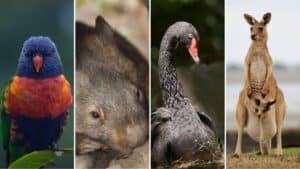
The enormous scale of licenced killing—and unlicenced
The numbers are shocking and perhaps that’s why. Between 2021–2023, more than 4.5 million native Australian animals were licenced to be killed. It was 1.2 million just in 2023.
It’s important to clarify that these are the animals ‘allowed’ to be killed, the number of native animals that governments have permitted private landholders to kill and granted them a licence to do so.
With the lack of accountability, as Lamb points out, the actual number of native animals killed—animals that as ‘native’ are otherwise protected by law—is anyone’s guess. And these are just the animals that require a licence. Some don’t.
‘Apart from the enormous scale of the licenced killing, what surprised me the most was how many native animals could be killed without a licence,’ Lamb said.
Tasmania is a case-in-point. Unlimited quotas are given out to kill possums, pademelons and wallabies. On average, 3000 animals are killed in the state every day.
‘We don’t think native animals should be allowed to be killed at all, but it was shocking that so much of our native wildlife can be killed without even the small level of accountability that a licence brings,’ Lamb said.
When upwards of 1 million native Australian animals are legally allowed to be shot, trapped, and poisoned every year, and when there is little to no accountability, and when there are no restrictions and no licencing requirements for the killing of some native species, then it’s clear that Australia has a love–hate relationship with our unique fauna.
The obvious question
The numbers raise more questions than answers, and the obvious question is, why do we kill so many of our native animals?
‘When wildlife impinges on livelihoods, or on our private interests, wellbeing and safety, or even if they are simply deemed a nuisance, the default is killing,’ Boronyak said.
‘By exterminating native wildlife at this scale, we risk losing the native animals we love and causing long term harm to ecological health and resilience.’
Adding to the issue are some of the methods used—poisons and traps—which means many other animals, ones that aren’t targeted including endangered species—are killed.
‘It has never been more important to press for reforms and highlight this important issue,’ Boronyak said.
What next?
We need to talk to governments about urgent reforms as we continue working closely with landholders to identify issues and find durable, humane solutions to human–wildlife conflict.
Changing our attitude from killing to coexistence is the first step if we are to stop declining ecological health and the unchecked killing of our native wildlife. It is what HSI Australia is advocating, and it is what we urgently need your support for. Let’s stop killing our native animals at such a shocking scale. Let’s learn to coexist, not kill.
Origin: Animals Australia and Humane Society International

Geen opmerkingen:
Een reactie posten