https://actionforprimates.org/
2026: Monkeys forced to consume alcohol by Canadian researchers in St Kitts and Nevis
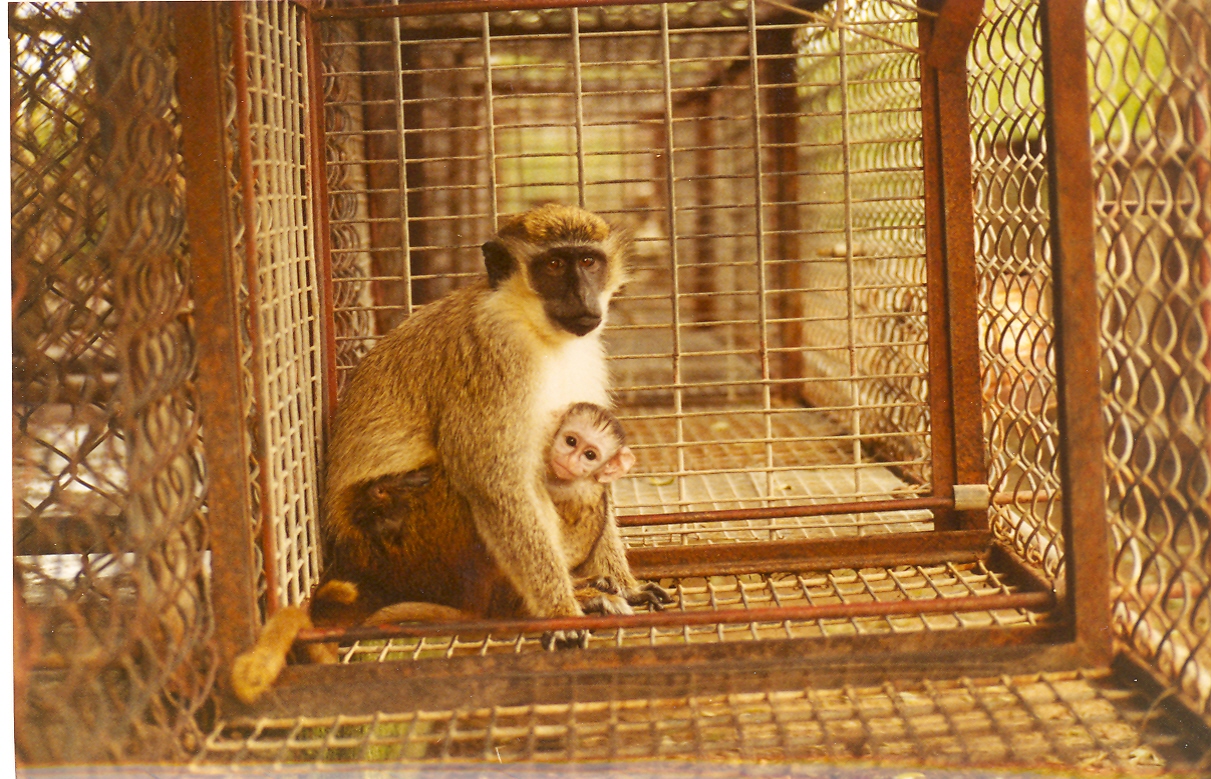
Photo: Cruelty Free International
African green monkeys (also called green monkeys) were used in a meaningless experiment by Canadian scientists at the Behavioural Science Foundation in St Kitts and Nevis (Bellemare et al 2025). The experiment was approved by animal use committees of the University of Montreal and the Behavioural Science Foundation, and funded by grants from the Canadian Institutes of Health Research and the Natural Sciences and Engineering Research Council of Canada.
Forty-nine pregnant green monkeys were used. Twenty-seven of them had been coerced into drinking alcohol-laced water (euphemistically referred to as "self-administration" and "the monkey decides to drink alcohol" by the researchers). The other 22 were used as 'controls'. Exposure to alcohol was timed to start after the second month of the pregnancy and continued until the birth of a single infant. Each of the 'control' monkeys also gave birth to a single infant.
For the alcohol consuming monkeys, water with an alcohol concentration of 10% was made available for four hours every day, four days a week. This was to prevent miscarriage and abnormal behavioural complications caused by alcohol.
The infants were taken from their mothers and anaesthetised so that various tests could be done on them. The tests are routinely done on human patients and included determining eye pressure, electrical activity in the retina and the amount of oxygen in the retinal blood vessels. Although there were differences in the results between the two groups of infants, the infants of alcohol-exposed mothers "looked otherwise healthy". No mention was made of the ultimate fate of the mothers and infants.
Because humans do drink alcohol during pregnancy, studying them would benefit them and their children, using humane and ethically defensible techniques. The researchers in this monkey experiment even cited examples of these studies, the results of which are directly relevant to the human situation. There was no reason to subject these monkeys to the inhumanity of captive life, being forced to consume alcohol and being subjected to capture and the unpleasantness of anaesthesia. This immoral treatment of our closest biological relatives continues despite the research community claiming they use non-human primates only when necessary and only for research vital to human health. This experiment is just one more example of the disingenuousness of such claims.
Bellemare, Guillaume; Catarina Micaelo-Fernandes; Hadi A. Belanger; Marie-Lou Garon; Maurice Ptito; Roberta M. Palmour; Sergio Crespo-Garcia and Jean-François Bouchard 2025-11-01 Impact of prenatal alcohol exposure in midlife: an assessment of the retina in the vervet monkey Experimental Eye Research 260:110638
We do not believe we need to accept nor expand upon the researchers' reasons or justifications for doing any research involving non-consenting beings such as non-human primates. Any information gained is at an unacceptable moral cost.

Geen opmerkingen:
Een reactie posten