Translate

Posts tonen met het label Animals Asia. Alle posts tonen

dinsdag 12 mei 2026

Animals Asia: Another bear farm closes as 4 more moon bears are rescued from decades in small metal cages (video Bear Breeze's first bath is adorable)


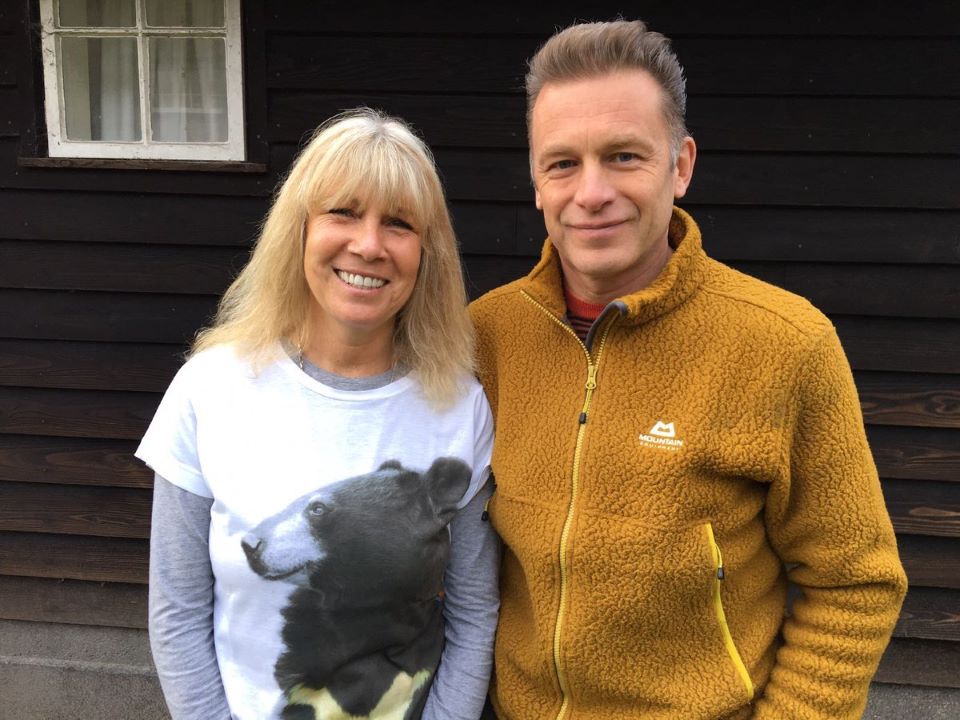
 Photo : Jill Robinson is the founder of Animals Asia


Oriole and Cuckoo during their rescue, conducted in part by Animals Asia<br>Credit: Courtesy of Animals Asia 


Breezer was rescued before. This is a 'must see' video Enjoy!!

After almost 12 months of careful negotiations, a bear farmer finally agreed to release the last two moon bears still held in cages at his home into the care of Animals Asia. The rescue of the bears, nicknamed Cuckoo and Oriole in recognition of their springtime freedom, marks the closure of another of Vietnam’s bear farms in one of the country’s bear bile farming hotspots.


Breaking down the strongholds

The bears were rescued from a farm in Nghe An province, around 375 km south of Hanoi. In May 2025, a national bear farm survey (part-funded by Animals Asia) identified 15 bears remaining across 5 farms in Nghe An province. The region is one of the top 5 bear bile farming areas left in Vietnam. The farmer was so concerned about what his local community would say about his decision to break with bear farming that he even suggested conducting the rescue at night to avoid being seen by his neighbours.

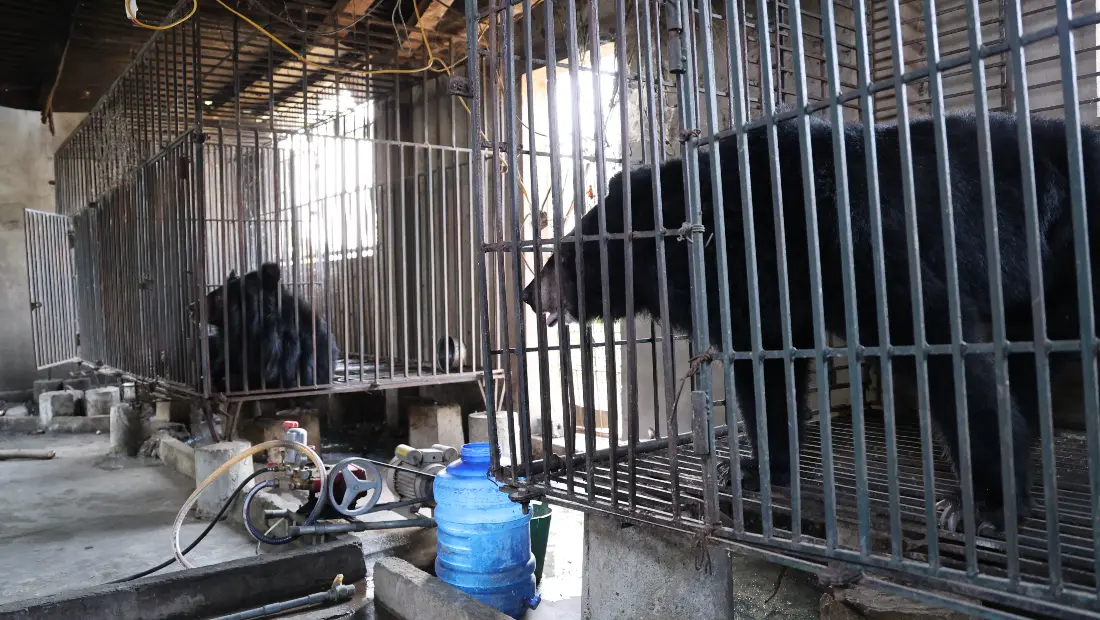
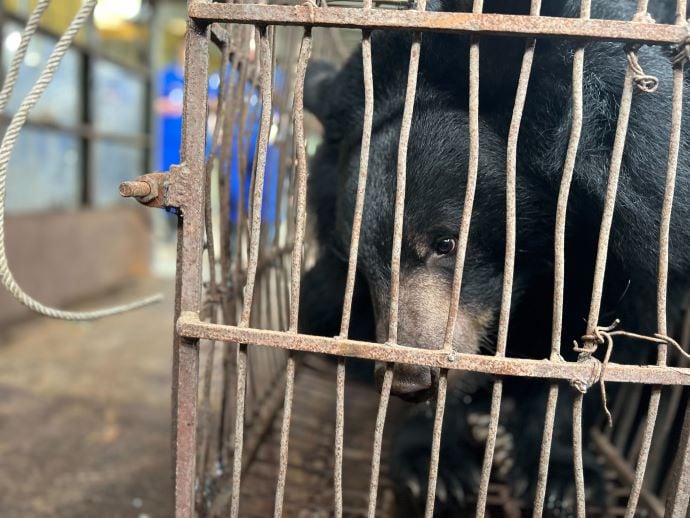
Two black bears stand inside small metal cages on a bear bile farm in Vietnam
Oriole and Cuckoo spent over 20 years in farm cages

A public opinion survey commissioned by Animals Asia found that, of the national regions of Vietnam surveyed, the Nghe An region was significantly more supportive of bear bile farming than any other region surveyed, with 70% of survey respondents based in the area in favour or neutral about the practice; compared to an average of just 8% across all other regions. Getting bears out of the region is very challenging because the practice is embedded in the socio-economics of the region.

Love and care are what Cuckoo and Oriole need

Cuckoo and Oriole were both in very poor condition, showing many of the physical and psychological scars caused by a life of captivity and harm.They were both underweight and dehydrated, with heavily callused paws and some fractured teeth. But their new life started as soon as we got their cages open.

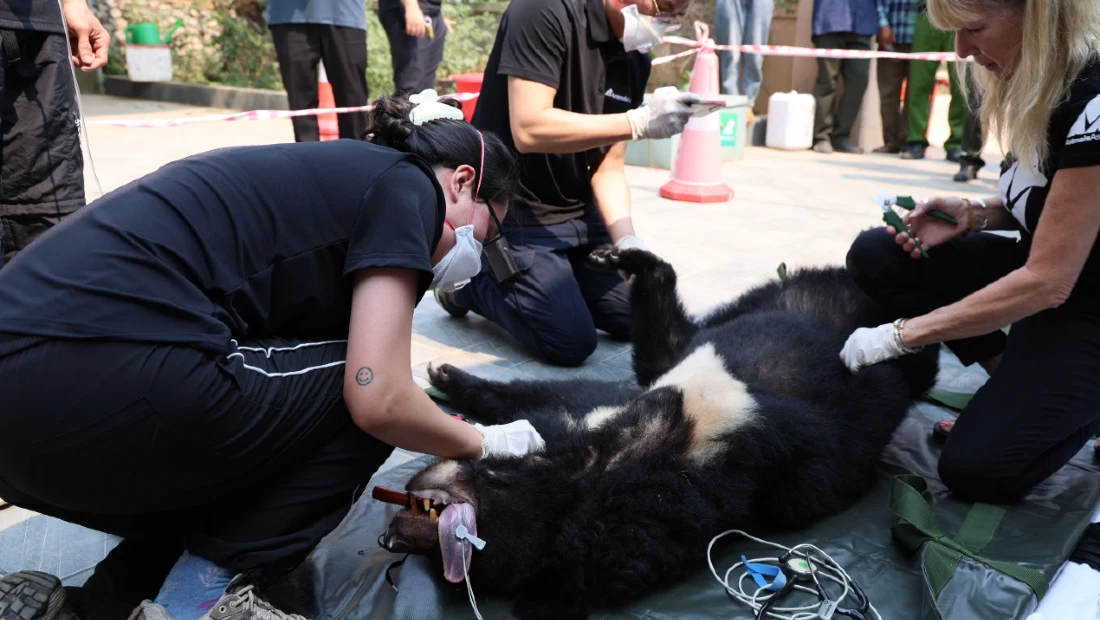
Bear under anaesthetic receives veterinary treatment from Animals Asia staff during a rescue operation
Our rescue team carried out health checks as soon as the bears were free from their cages

woensdag 17 december 2025

Across the world, animals are suffering – and Asia is no exception but I would like to show you that a small change for animal welfare is happening


https://youtu.be/foFNF7SUmik?si=0EnTukhfC_WBNTqw  This is what I mean from a life in misery and pain to freedom!!  www.animalsasia.org

In each cage a bear stolen from the wild some of the bears live 30 years in this horrific situation

While many people and local organisations care deeply for animals and inspire transformative change, certain traditional practices and industries continue to cause immense harm.


Many bears have to survive in very small rusty cages. 

In parts of Asia, some animals are still used in medicine, sold in brutal meat markets, or kept in poor conditions for entertainment.

Others are taken from the wild or the streets and denied the chance to live naturally and safely. These issues are complex, often rooted in history, poverty or lack of awareness.

Animals Asia works hand-in-hand with governments, local communities and grassroots groups to address the most urgent forms of animal suffering

What is bear bile farming?

Bear bile farming is the industrial exploitation of bears for their bile – a digestive fluid used in traditional Asian medicine. More than 10,000 bears, mostly moon bears but also sun and brown bears, are trapped in this cruel trade across Asia.

We’ve rescued bears in cages so small they couldn’t turn around or stand on all fours. Most are confined this way as cubs and can survive up to 30 years, suffering decades of physical pain and psychological trauma.

Bear rescues

Animals Asia has rescued over 270 bears from bile farms across Vietnam – each rescue the result of collaboration with government authorities, local enforcement agencies, traditional medicine practitioners and local communities.


We identify bears in need, negotiate their release, and carry out complex rescues. We transport each rescued bear safely to our sanctuaries, where their new lives begin.

Our approach is built on cooperation, not confrontation. We engage directly with bear farmers, listening with empathy and offering practical support.


Why does bear farming continue?

Despite bans in countries like Vietnam and Laos, bear bile farming continues due to demand and inconsistent law enforcement. Legal loopholes allow the practice to masquerade as pet ownership, and enforcement agencies are overstretched and under-resourced. In China, where the practice is still legal, farms operate on an industrial scale.

What is bear bile used for?

Bear bile contains ursodeoxycholic acid (UDCA), and is used to treat liver and gall bladder issues. It’s also found in other traditional remedies, cosmetics and even wine and toothpaste. 

https://www.animalsasia.org/celebrities-unite-to-help-free-the-final-bears-in-vietnam/

MEET THE BEARS IN THE SANCTUARIES


Bear rescues

Animals Asia has rescued over 270 bears from bile farms across Vietnam – each rescue the result of collaboration with government authorities, local enforcement agencies, traditional medicine practitioners and local communities.

We identify bears in need, negotiate their release, and carry out complex rescues. We transport each rescued bear safely to our sanctuaries, where their new lives begin.

Our approach is built on cooperation, not confrontation. We engage directly with bear farmers, listening with empathy and offering practical support.

Education and awareness

Animals Asia’s education programs reach schools, universities and communities where bile farming once thrived. In areas like Phung Thuong – a bear bile farming stronghold – our outreach has led to visible shifts in attitudes and public support for bear welfare.


We run workshops, bear-themed events and interactive lessons designed to teach empathy and environmental responsibility. Thousands of students across Vietnam have participated and brought the message home to their families.

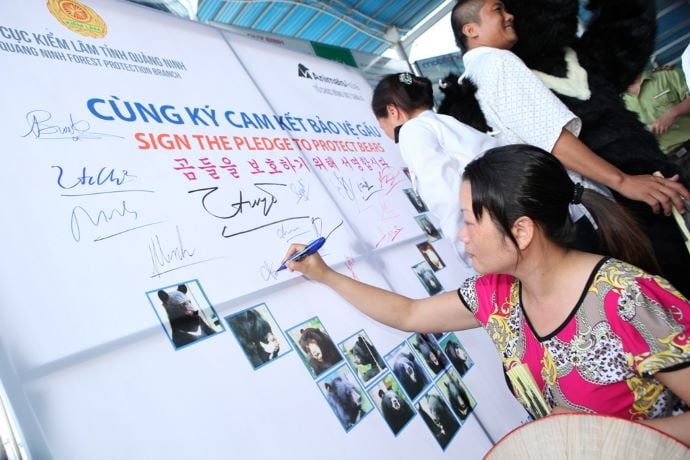
We also run national public awareness campaigns. These include billboard campaigns, social media outreach, and media partnerships with local celebrities and influencers. Student groups and NGOs partner with us to amplify this message across Vietnam.

vrijdag 20 juni 2025

Video and 16 photos: Vietnam will stop with bear bile farming in 2027 : Therefore a race against the clock where hundreds of bears living for decades in cages in deplorable conditions are to be rescued by Animals Asia


 With Spring's new growth celebrating warmth and sunshine in Vietnam, this week could not have been more appropriate to have been invited by the authorities to rescue more bears. At lightning speed, conversations turned into action, and we were driving to the government offices of the Hanoi Forest Protection Department to meet the officials who had transported three bears from two bear farms, after the farmers had been willing to give them up. 

The team discusses final details before the rescue begins.

The farms were in the notorious stronghold of bear bile farming – Phung Thuong, on the outskirts of Hanoi – and we were relieved to be heading back there again. The previous months had seen a re-organisation within government departments across the country, and consequent delays in such rescues, but now we could be optimistic that the authorities were committed to their confiscation of the bears, and to the spirit of our Memorandum of Understanding that, together, we would end bear bile farming in Vietnam.

The Head of FPD Phung Thuong, Mr Ha greets Jill, Heidi, Trinh and team on arrival at the FPD premises housing the bears.

Arriving at the office building just after 7am, we were immediately greeted by the wonderful Mr Ha, Head of the Hanoi Forest Protection Department Unit 5, beaming from ear to ear, despite the fact that he and his colleagues had stayed over at the office to guard the bears, all sleepless night.

Just as we were getting over that surprise, Heidi, our Vietnam Director, our bear and vet team and I were invited by Mr Ha to meet the bears who had languished in cages on the farms for almost 20 years.
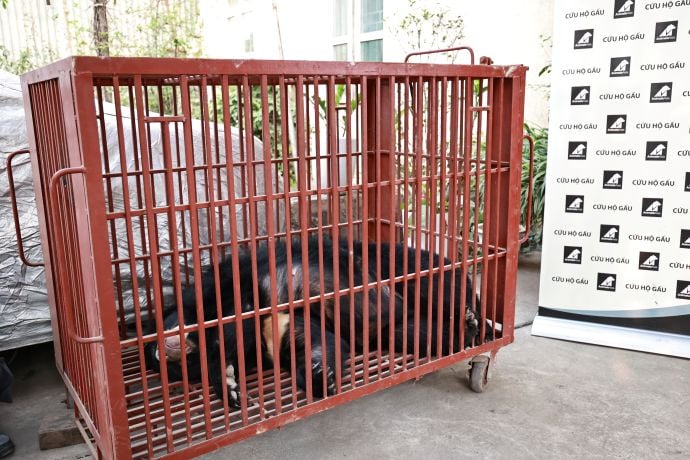
Our first glimpse of the bears in the care of FPD - Bud sleeping off that morning's transfer anaesthetic.

Just behind him was a cage with one very sleepy bear who had been anaesthetised at dawn that morning and brought over from the farm. Looking surprisingly well on the surface, we knew not to be over confident of his or her health given the years of bile extraction this bear would have suffered. Confidently, we all looked at what we were sure was a male bear – long and strong, with handsome boy looks, we named this bear Bud for the vibrant growth of spring.

Just behind Bud were another two cages containing two feisty females who we quickly named Bloom and Sprout, again in celebration of the new beginnings of spring. All three bears were now safely in the FPD's own wildlife cages and now our vet and bear care team had the challenging task of transferring them consciously into our own transport cages in preparation for the two-day journey home by road.

Bud is encouraged by rescue team member Tot, to transfer from the FPD cage to Animals Asia's transport cage for the trip home to Bach Ma.

While it took some time, Bud and Bloom were eventually coaxed into the cages by our resourceful and patient team. Tot and Nhung were especially calm and professional as they won the bears' confidence, with a little help from spoonfuls of caramel sauce and raspberry puree – and now they were loaded carefully on to the truck. After transfer to the transport cage, Bloom is moved out of the building ready for loading onto the truck.

Poor Sprout was so stressed throughout, and despite what must have been whole bunches of chopped bananas gently encouraging her from cage to cage over the next two hours, her nerves got the better of her and she stayed firmly put in her original cage. Vets Huong and Han decided that the government cage was robust and would be safe to feed and clean Sprout on the road, and she too was now loaded onto the back of the truck.

Bloom is moved to the truck for loading. 

Soon, we were waving Mr Ha and the officials farewell as we piled into the bus ready to follow our three new bears home to their new sanctuary in Bach Ma National Park in central Vietnam. Animals Asia's truck - a secure space for the bears on the journey home.
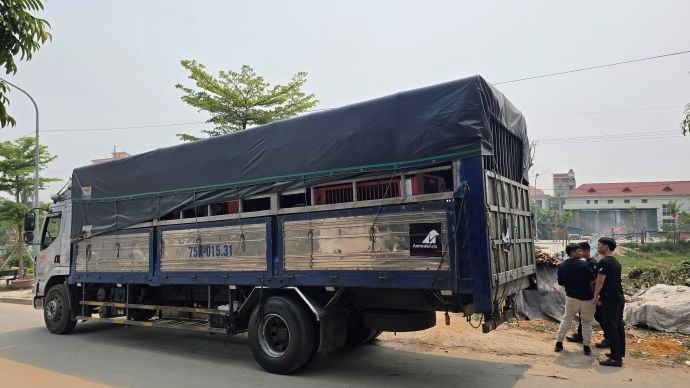
The next two days went by in a blur as the most dedicated carers, led by our Bach Ma Sanctuary Manager, Thuy, stopped every two or three hours to water, feed and clean the bears, to make notes of anything unique about every individual; to record if they ate or left kibble, how calm or reactive they were, and perhaps remember if one liked carrots, or another liked pears. Notes that would not only help on the journey but once they arrived back at the sanctuary, to assist with their ongoing care.
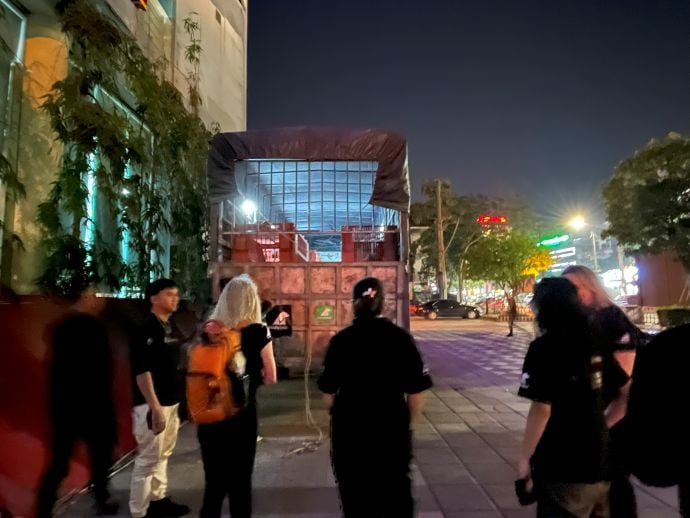
Stops are made along the way to feed and water the bears and check on their well-being.

At the back of the truck, we could hear Bud vocalising and moving around, now that the anaesthetic had worn off. Vet Han had been on a mission to determine the gender of this bear, and was now almost certain that Bud was a female. With that news announced, there were sheepish smiles all round knowing that this gorgeous, boyish bear had fooled almost the entire team.

Our bear Bud at loading time. 

As the feeding breaks continued along the road, we wondered what the bears would be thinking each time. Previously on the farm, with groups of people around them, this would often have meant one thing – the painful extraction of their bile. Now people gathering around them heralded only gentle voices, water bowls filled and a rich rainbow tapestry of dragon fruits, apples, carrots, oranges, bananas and kibble. 
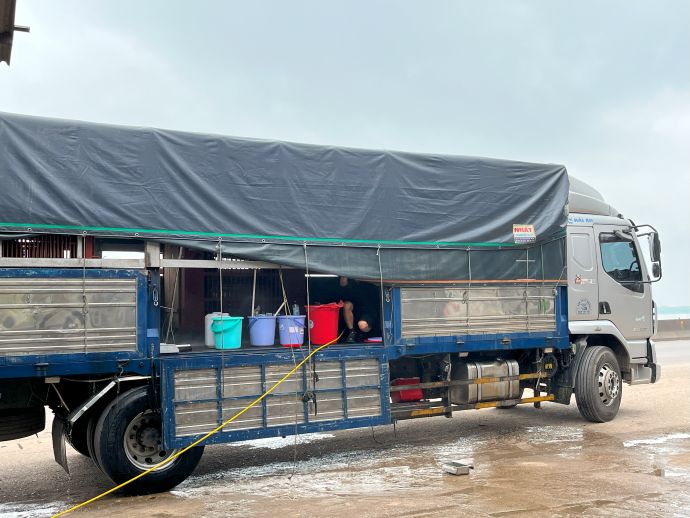
On the road bear care every two to three hours. 

Being at the back of the truck where the doors open to the outside world, Sprout took on the role of gate-keeper – and gave warning "huffs" as our team of carers hopped nimbly inside and began chopping up their food. After a few seconds, all three curious faces turned towards the delicious smells as something told them that these strange, but tempting, delights were all for them. Noses exploring, food bowls emptying, and we could even celebrate such milestones that they were pooping normally too!
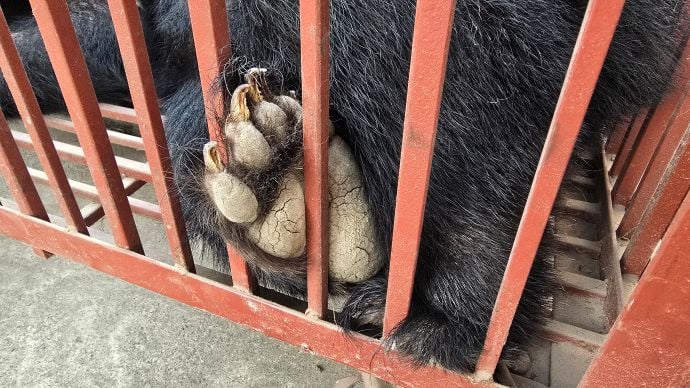
All of the bears have dry, cracked pads from years of standing only on cage bars.

Initial observations of them all revealed that there were wounds on Bloom's head from previous head rubbing on the bars of her farmed cage, and all three bears had cracked and calloused pads from the years of standing only on cage bars. Future health checks will inevitably reveal more but, for now, they were bright, curious and feisty – and alive.

On the second day, they continued to do well. it was clear that they continued to eye us with caution as they ate, but perhaps just a little less suspiciously than before. We knew that it would be a while before they would trust people for the very first time, but meanwhile, it was special to see them exploring food that they had never tasted before. Sprout suspiciously picked a piece of dragon fruit out of her bowl, before placing it on the back of her "dinner plate" paw. And sniffed. Finally reassured that this morsel was really OK to eat, she tucked in with gusto. I couldn't help smiling, knowing that once she enjoyed such treats every day, and her confidence had returned, she would likely become picky with her food!

And what must they have thought when everyone jumped back off the truck? Nothing hurt them, tummies full, before the truck doors closed, and the rumble of the road lulled them back to sleep.
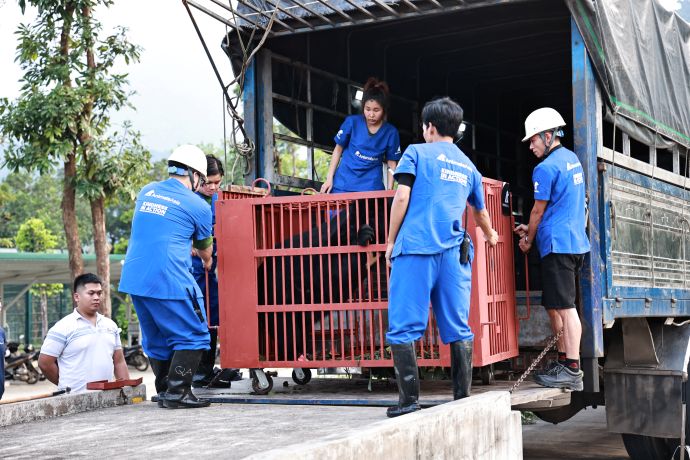
Bud, Bloom and Sprout arrive at the Bach Ma Bear Rescue Centre.

Finally, we rolled into Bach Ma that evening – and again I wondered what on earth they were thinking. From a dingy bear farm in a noisy street of Hanoi, to the forest of the National Park, with its choir of langurs hooting, birds singing, and the vision and smell of nature all around.

Bloom enters the Quarantine Area at Bach Ma, where the three bears will spend time adjusting to their new surroundings. 

I think we all shed a tear as Bear Manager Ellie and team slickly offloaded them all from the truck and transferred them into quarantine. Here they'll spend 30 days being cared for, understood and loved, until finally being integrated together with new friends, and placing bar-weary paws onto sweet earthy grass.

Bud transfers into her double-size quarantine cage - the first step on the road to her recovery. 

Over those two remarkable and emotional days, I thanked the heavens for a team whose only focus was those three broken bears. Professional, seamless and smiling throughout as they joined together to give these bears sanctuary. Bud, Bloom and Sprout are home.

And with endless gratitude to all the government departments of Vietnam who are implementing the full letter of the law and helping these animals to finally take their steps from farms to freedom.

Thanks to Mr Ha, Mr Linh and the FPD Phung Thuong team whose tireless work resulted in this rescue. 

And last but not least, our deepest thanks to those reading this Blog who have helped us to reach and rescue 703 bears, and to those who will help us free more. The promise we have made together draws closer… … as no bear is left behind.


zondag 12 januari 2025

Animals Asia: Vijf dingen die u moet weten over berengalboerderijen ( 8 foto's )

  www.animalsasia.org


1. Berengal heeft wel degelijk medicinale toepassingen

Berengal wordt al duizenden jaren gebruikt in de traditionele Aziatische geneeskunde. Het bevat hoge niveaus ursodeoxycholzuur (UDCA) waarvan bekend is dat het nuttig is voor de behandeling van lever- en galblaasaandoeningen. Berengal wordt verkocht in de vorm van poeder, tonic of pillen en wordt beschouwd als een 'kuur' voor een reeks kwalen, van acne, katers, verkoudheid, keelpijn, aambeien, conjunctivitis en zelfs kanker. Het wordt ook gebruikt in gewone huishoudelijke producten en cosmetica zoals shampoo en tandpasta. Het wordt zelfs gebruikt in wijn en 'galthee'.

Deze gelukkige beren zijn vrij !

2. Het extraheren van gal bij beren is net zo wreed en pijnlijk als je je kunt voorstellen

Het halen van berengal uit levende beren veroorzaakt onvoorstelbaar fysiek en psychisch lijden en langdurige gezondheidsproblemen.

Hoewel de extractiemethoden variëren, leven alle beren in kleine kooien gedurende hun tijd op galboerderijen. Beren groeien op in deze kleine kooien tot het punt waarop hun lichaam is verwrongen om in de tralies te passen. De meesten hebben ontbrekende en beschadigde tanden van het proberen eruit te knagen. Crush-kooien en volledige metalen omhulsels zijn nu illegaal in China, maar worden waarschijnlijk nog steeds gebruikt op armere boerderijen.


Sommige boerderijen in China hebben fokprogramma's, maar veel beren worden als welpen uit het wild gestroopt. Ze worden van hun moeders gestolen en zien haar waarschijnlijk door stropers worden gedood terwijl ze hen probeert te beschermen. De meeste van deze welpen worden nooit vrijgelaten en kunnen tot 30 jaar aan voortdurende pijn lijden door galwinning.

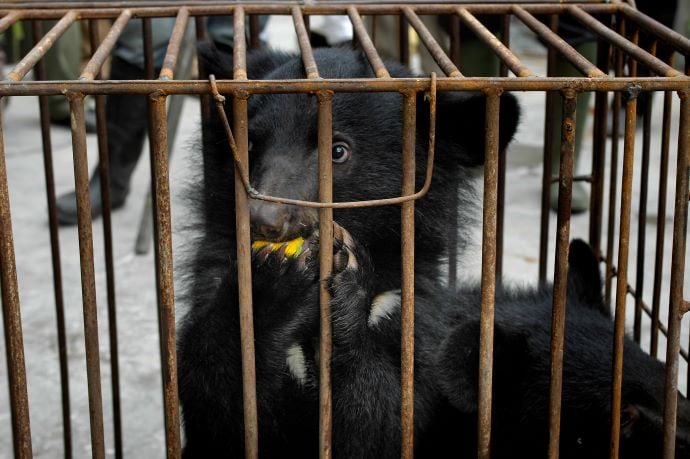
berenwelpen in kooi
De meeste gefokte beren zijn uitgehongerd en gedehydrateerd, omdat dit de galproductie kan stimuleren. Vanwege de onnatuurlijke en onhygiënische omstandigheden waarin ze gedwongen worden te leven, lijden velen ook aan meerdere ziektes en kwaadaardige tumoren die hen uiteindelijk doden.

3. Er zijn alternatieven voor berengal

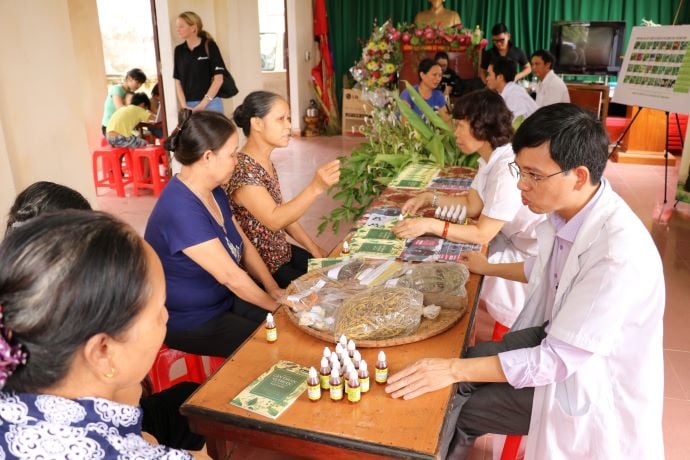
Er zijn meer dan 50 kruidenalternatieven en veel goedkope synthetische alternatieven voor berengal. Animals Asia werkt samen met de traditionele geneeskundegemeenschap en gebruikers van berengal om alternatieven te promoten en de vraag te verminderen via onze Healing without Harm-campagne. We hebben een gratis boekje gepubliceerd en verspreid, Herbal Alternatives to Bear Bile in heel Vietnam en een gids voor het kweken en onderhouden van kruidenalternatieven thuis en hebben samengewerkt met de Traditional Medical Association in Vietnam om een ​​kruidenalternatief voor berengal te creëren dat we regelmatig gratis uitdelen bij gemeenschapsevenementen.


Dankzij ons werk met lokale scholen en gemeenschappen zijn er in Vietnam inmiddels 13 kruidentuinen ontstaan.

schoolkinderen die planten water geven
Kai Bao, de grootste individuele koper van berengal in China, doet onderzoek naar alternatieven voor berengal met steun van de overheid. En de afdeling oogheelkunde van het Xian Traditional Chinese Medicine Hospital heeft het project Bear Bile Powder for the Treatment of Acute Conjunctivitis (Liver Meridian Fiery Heat Syndrome) met kunstmatig berengalpoeder gelanceerd. Deze acties, samen met andere bevindingen, suggereren dat de vraag naar berengal afneemt.

4. Berengalboerderijen zijn legaal in China, maar niet in Vietnam

In Vietnam is berengalboerderij sinds 1992 illegaal, maar het is blijven bestaan ​​vanwege juridische mazen en aanhoudende vraag. Door decennia van reddingen en campagnes heeft Animals Asia echter het vertrouwen van de Vietnamese overheid gewonnen en is het benoemd tot hun officiële partner om de industrie in het land volledig te beëindigen. Animals Asia en de Vietnamese overheid zullen elke beer redden en elke boerderij sluiten in de komende jaren.

5. We stoppen niet totdat de berengalboerderij definitief is beëindigd

Sinds de oprichting in 1998 heeft Animals Asia voortdurend campagne gevoerd om een ​​einde te maken aan berengalboerderijen. We hebben honderden beren in Vietnam en China gered van berengalboerderijen en zijn absoluut toegewijd om deze onmenselijke handel voor altijd te beëindigen.


Help ons een einde te maken aan de berengalboerderij

Sluit u aan bij  de wereldwijde beweging  die zich inzet om de berengalhouderij naar de geschiedenisboeken te verwijzen. Samen kunnen we de wereld veranderen voor duizenden beren die dringend onze hulp nodig hebben.

maandag 2 september 2024

Er moet een einde komen aan dierenmishandeling in het toerisme - het wordt tijd dat we allemaal #Travel With Kindness op vakantie gaan

 https://www.vier-voeters.nl/campagnes-en-themas/themas/wilde-dieren/circus-zonder-wilde-dieren

34 Europese landen hebben een verbod op wilde dieren in circussen

18 landen wereldwijd hebben een verbod

Het is vele jaren geleden dat ik voor het eerst undercover ging om misstanden in het dierentoerisme onder de aandacht te brengen - zittend in een arena van duizenden mensen, tussen een zee van lachende gezichten en klappende handen, terwijl de tranen over mijn gezicht rolden. Het filmen van beren die gedwongen worden op motorfietsen te rijden, tijgers die worden gegeseld en door brandende hoepels springen, en getraumatiseerde makaken die op nerveus uitziende geiten zitten die op een slappe koord lopen. Een trillende Duitse herdershond wordt gedwongen een hoge verticale trapladder te beklimmen, met de vreselijke, onvermijdelijke uitkomst die snel duidelijk zal worden.

Meerdere dierenprestaties, meerdere ongelukken en meerdere doden.

Een olifant gaat niet voor de lol of uit zichzelf zo zitten. Daar gaan enorm veel mishandelingen vooraf. De dompteur heeft altijd een olifantenhaak in de hand en gebruikt die herhaaldelijk


Vandaag is het tij gelukkig aan het keren, maar het keert niet snel genoeg. Het is aan ons - we vragen ons af of de levensduur die dieren lijden, voor een paar minuten van ons vermaak, zo'n wreedheid kan rechtvaardigen.

De dozen met "gezonde" koffie die toeristen worden overgehaald om te kopen in de winkels en luchthavens van Azië, zien een verachtelijke en geheime industrie van duizenden depressieve en hongerige civetkatten die worden gekweekt in legbatterijkooien. Gedwongen om een onnatuurlijke hoeveelheid koffiebessen te eten totdat ze de bonen uitpoepen, die uiteindelijk worden verkocht als een dure "traktatie" van Kopi Luwak. De geheimhouding van de industrie zorgt ervoor dat toeristen zich er totaal niet van bewust zijn dat deze dieren niet in het wild of vrij leven, zoals geadverteerd, maar lijden achter de tralies in schuren, neurotisch gedrag ontwikkelen en gecompromitteerde immuun aandoeningen, zoals pijnlijke huidaandoeningen, totdat ze alleen in hun kooi sterven.

Schattige maar doodsbange babydieren worden weggenomen van moeders die zijn gedood en in bijna elke uithoek van de wereld gebruikt als rekwisieten voor toeristische foto's.

Jonge tijgers, beren, primaten, bedreigd, gedrogeerd en vaak met geweld ontdaan van hun tanden en klauwen. Uiteindelijk worden ze gemakkelijker te hanteren door toeristen die zich niet bewust zijn van de barbaarse achtergrond en die buitensporige bedragen betalen voor een selfie of foto om op one time, one look, sociale platforms te posten. Het beeld wordt maar al te snel vergeten, terwijl de ellende van het onderwerp voortduurt.

Het gevoel van romantiek van het rijden op de rug van paardenkoetsen verhult uitgeputte paarden die gedwongen worden toeristen mee te trekken in alle extreme weersomstandigheden, terwijl ze slopende gezondheidsproblemen ontwikkelen als gevolg van het lopen op harde oppervlakken of het inademen van verkeersdampen de hele dag.

En de decennialange toeristenindustrie voor olifanten die zachte dikhuiden tot onderwerping ziet slaan als kalveren, en altijd onder het "bevel" van een pijnlijke stierenhaak die hen controleert en onderwerpt. Lachende toeristen klauteren over hun hoofd en lichaam op een comfortabele stoel die allesbehalve comfortabel is voor de olifanten die ze op hun rug dragen.

Zoveel mishandelingen is hier aan vooraf gegaan. Het slaan van de dieren met zwepen,  voedsel onthouden totdat een truc is gedaan zoals de dompteur dat wenst, enz......

De gevaren van deze praktijken schaden niet alleen de dieren zelf, want ongelukken, overlijden en de verspreiding van ziekten vormen een zeer reëel risico voor toeristen die een hoge prijs kunnen betalen voor een paar minuten plezier. Er zijn verhalen in overvloed over olifanten die "schurkenstaten" worden en toeristen pijn doen of zelfs doden, die vaak onbewust hebben bijgedragen aan het net te ver duwen van hen. Zo gefrustreerd, zo vaak hongerig, zonder keuzes over hoe ze hun leven of zelfs hun dagen moesten leiden, en uiteindelijk over de rand van hun geduld gekanteld om uit te halen en hun ellende bekend te maken. Andere risico's van toeristen die het slachtoffer worden van tuberculose, een veel voorkomende ziekte van olifanten, en zich binnen enkele seconden verspreiden via druppeltjes in de lucht.

Er moet zeker een einde komen aan deze wrede uitbuiting van dieren, met alle risico's van dien voor de mens. Bij Animals Asia proberen we oplossingen te vinden voor industrieën die economisch aantrekkelijk zijn geweest, door zowel de dieren als de belanghebbenden zelf te helpen.

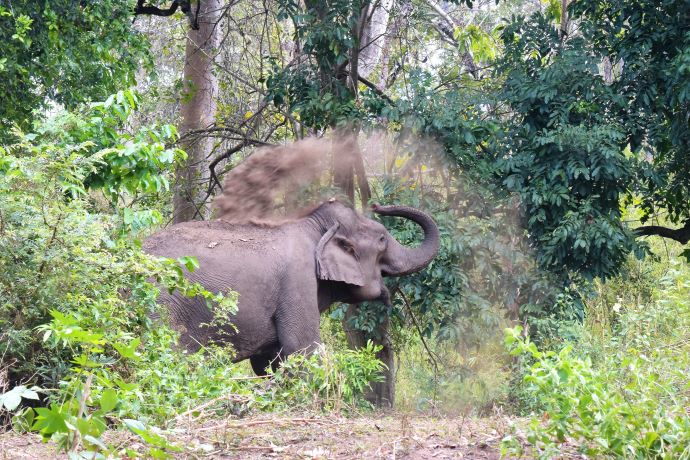
Het rijden op een toeristische olifant wordt vervangen door het bekijken van een olifant. Van weg naar bos - een win-winsituatie: voor de eigenaren die een vergoeding krijgen voor hun dieren, voor de mahouts die nog steeds in dienst zijn om toezicht te houden op de dieren die ze goed hebben leren kennen, en voor de olifanten die nu gewoon de keuze krijgen wat ze eten en waar ze willen rondzwerven, slapen of zwemmen in het wild van het Yok Don National Park in Vietnam. Deze overwinning strekt zich nu uit tot toeristen die kunnen genieten van het kijken naar deze machtige dieren die gewoon hun gelukkige, tevreden ding doen - vaak samen met nieuw gevonden vrienden - voor het leven.

Met de Vietnamese regering die ons begeleidt en helpt, en met supporters die ons aanmoedigen, hebben we aanzienlijke vooruitgang kunnen boeken bij het beëindigen van wrede voorbeelden van toeristische uitbuiting. Bijvoorbeeld, na ons bewijs en onze rapporten, maakte het centrale circus van Hanoi uiteindelijk een einde aan het gebruik van olifanten en beren in voorstellingen en droeg het hun laatste beren over aan ons heiligdom in Tam Dao.

Talloze andere voorbeelden hebben wrede en illegale reizende circussen zien eindigen in China, en de veel gerapporteerde "afnemende industrie" van circussen in het algemeen, nadat de aandacht van de samenleving is gevestigd op hoe onnatuurlijk en wreed prachtige megafauna is behandeld voor ons korte en egoïstische plezier.

Er is nog een lange, lange weg te gaan over de hele wereld - en we kunnen, en we moeten, allemaal ons steentje bijdragen om de wilde en gedomesticeerde dieren te helpen en vrij te laten die momenteel worden geslagen, uitgehongerd en opgejaagd om trucs uit te voeren voor ons vermaak.

Door onze gids voor ethisch toerisme te lezen, kunt u leren van - en deel uitmaken van - onze beweging om nee te zeggen tegen praktijken die dieren schade en leed berokkenen. Door onze eenvoudige "Do's en Don'ts" kunt u ervoor zorgen dat u en uw reisgenoten ethische keuzes maken voor dieren, waar u ook gaat, en ervoor zorgen dat u #TravelWithKindness.

Als we er allemaal aan gewend raken om te denken "dit ziet er niet goed uit, dit voelt niet goed" als we kijken naar dieren die geen keuzes hebben, dan kan er snel verandering komen. Als iets niet goed lijkt, is het vaak niet goed en samen moeten we de stem zijn die het verschil maakt, de mensen die weglopen en de beïnvloedde die dichter bij de tijd komen dat er een einde komt aan wrede praktijken op het gebied van dierentoerisme.

Doe nu met ons mee en sluit je aan bij onze geweldige campagnesupporters zoals natuuronderzoeker, auteur en presentator Chris Packham in de strijd tegen wreedheid in naam van entertainment. Chris is al heel lang een vriend van Animals Asia en een gepassioneerde voorstander en pleitbezorger van een vriendelijkere wereld.

U kunt hier een artikel lezen dat hij speciaal heeft geschreven voor de lancering van onze campagne voor ethisch toerisme: The Guardian Opinion - Ik betreur het ten zeerste dat ik op vakantie op een olifant rijd. Dit jaar moeten we allemaal de ethische keuze maken | Chris Packham