This week, I’m pleased to share a special update from our teams working in the brick kilns of El Saf, Egypt.
Thanks to your kindness, our mobile vets are reaching working donkeys and mules who urgently need care - animals who simply wouldn’t receive help without you.
Everything you’ll read in this report is made possible by your support. On behalf of all of us - and the animals you’re helping - thank you so much.
Wendy Safe Haven UK Office
An update from Dr Shaaban, Egypt
An 11-year old donkey who has worked in the El Saf brick kilns for three years was recently reported to our team after developing a sudden and painful eye problem. He couldn’t open his right eye. It was constantly watering, and he was clearly in severe discomfort.
Close-up of the corneal ulcer before treatment.
When our team arrived, he was nervous and in obvious pain. A full eye examination revealed a corneal ulcer - a serious condition that can quickly lead to permanent sight loss if left untreated.
Treatment began immediately. He received antibiotics to fight infection and medication to ease pain and inflammation. Our vets also applied a specialised treatment called platelet-rich plasma to help speed healing of the damaged surface of his eye.
Medication is carefully applied to fight infection and reduce pain.
But this donkey will need ongoing care, so we took time to train the stockman who looks after him, carefully explaining how and when to apply the eye medication so treatment could continue.
Thankfully the donkey improved daily and went on to make a full recovery - with his vision completely restored.
Corneal ulcers are common in the dusty, harsh conditions of the brick kilns. But because of our regular visits, cases like this are becoming less frequent in El Saf. This progress is only possible because of you.
The donkey after his sight has been fully restored.
In another urgent case, we received a call about a working donkey involved in a cart accident. He was in severe pain and bleeding heavily from one of his hooves. When our team arrived, he was badly lame on his left hind leg and visibly shaking.
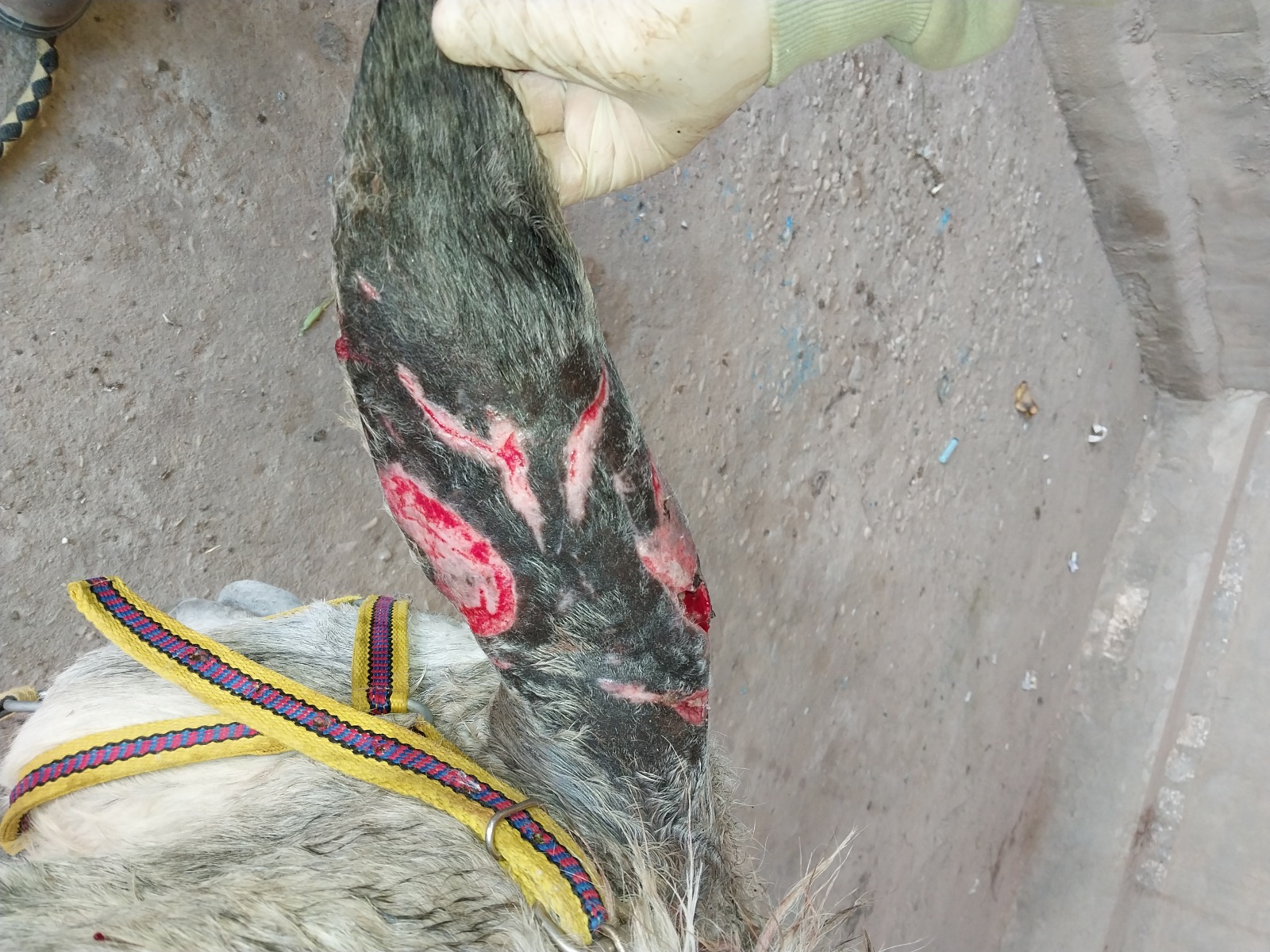
Front view of the damaged hoof before treatment began.
On examination, we found a deep wound at the coronary band - the top of the hoof. An X-ray confirmed a fracture to a small bone inside the hoof.Our first priority was to stop the bleeding and prevent infection.
The wound was carefully cleaned and soaked to reduce contamination, before a pressure bandage was applied. He was given antibiotics and strong pain relief, along with medication to reduce swelling and tissue damage.
The team carefully repeat the hoof soak as part of ongoing care.
Over the following weeks, the team provided regular follow-up care including gengle hoof trims to support healthy regrowth, and healing was closely monitored.
Gradually the wound healed, and the hoof began to grow back normally. Today, he is standing comfortably again, a remarkable recovery from what could have been a life-ending injury.
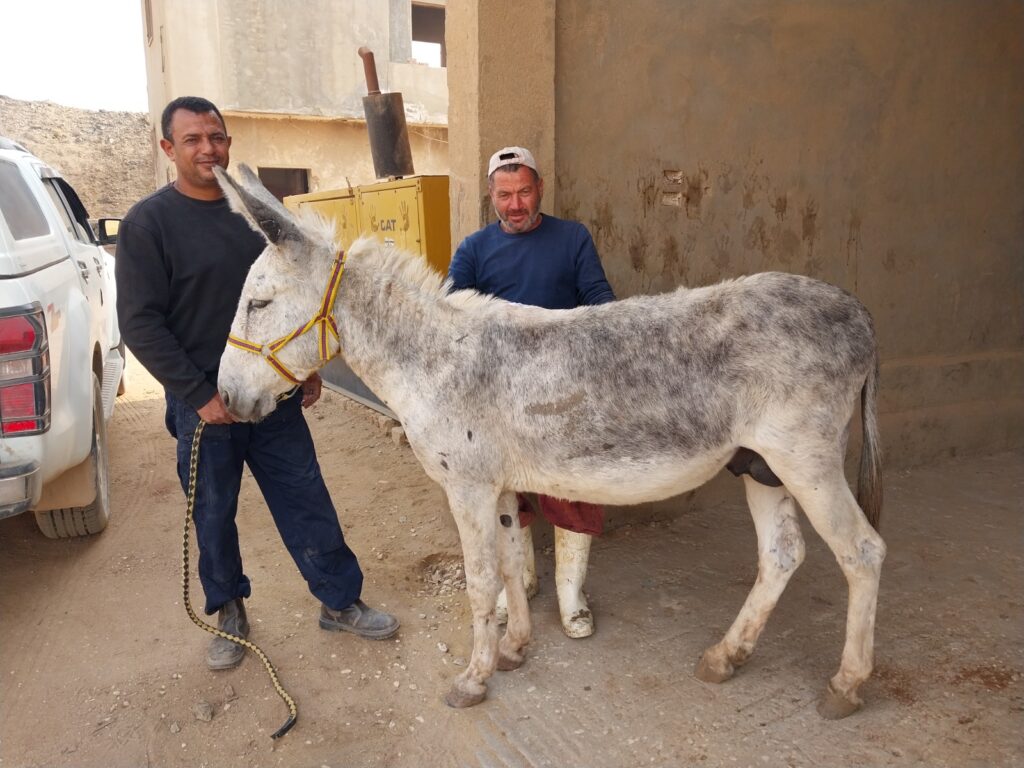
Amr, one of the Egypt team, with the donkey after his full recovery.
Thank You
Your support funds our mobile vet teams in the West Bank, Gaza and Egypt, bringing veterinary care directly to working donkeys in desperate need. It also helps us care for rescue donkeys at our sanctuaries in Israel and the West Bank, where they receive nutritious food, specialist care, and the safety of a forever home.
Thank you for everything you do for donkeys, mules and horses living in the toughest conditions.
Your support means our vet teams can be there when animals are injured, exhausted or in pain, giving them care they would never otherwise receive. I’m so grateful you're able to support our small charity.
Today, I’d like to share an update from Egypt that shows exactly how your kindness helps working animals recover and keep going.
With very best wishes,
Wendy Safe Haven UK Office
Working in a bick kiln in Egypt. Why always a whip?
Dr Shaaban's update from Egypt
This 11-year-old donkey works long days in the brick kilns. When we met him, he had been kicked in the head by another donkey and was in obvious discomfort. The left side of his face was badly swollen, and he was quiet, withdrawn and refusing food.
You can clearly see the swelling on the side of this donkey’s face after being kicked by another donkey while working in the brick kilns.
When we examined him, we could see he was dehydrated. The swelling made it painful for him to chew and move his jaw, so eating had become difficult. We carefully checked his mouth and teeth and took X-rays to make sure there were no broken bones. Thankfully, his skull was not fractured.
Side view of the donkey's abscess - his cheek was clearly very swollen and painful.
However, we discovered that the swelling was caused by a badly infected haematoma. This is a blood-filled swelling that had turned into a painful abscess. To ease his pain and stop the infection spreading, we carried out a small surgical procedure to drain the abscess.
Dr Shaaban undertakes careful, delicate surgery to relieve the donkey's pain and prevent the infection spreading.
We inserted a drain so fluid could continue to escape, and the wound was cleaned every day. He was also given antibiotics to fight the infection and medication to reduce pain and swelling. Throughout his recovery, our team kept a close eye on him.
Dr Shaaban and Moharram with the donkey after his recovery.
Slowly, we began to see a change. The swelling went down, his appetite returned, and his energy started to come back. With time and careful treatment, the wound healed completely.
A close-up showing how well the wound has healed.
This recovery was only possible because your support allows us to reach donkeys like him, right where they are working, and give them the care they urgently need. Thank you for making that possible.
Thank You
Everything we do is made possible by you. Your support keeps our vet teams working in Egypt, reaching donkeys in the brick kilns, helping animals who have nowhere else to turn to. It also helps our vet teams in Gaza and across the West Bank respond when animals are injured or unwell, and ensures rescued donkeys in our sanctuaries in Israel and the West Bank receive the daily care they depend on.
Thank you for bringing comfort and healing to these gentle animals.
Thanks to your incredible support to our Christmas appeal in November we raised £33,878 to fund our Egypt program and launch a second mobile vet team.
We were overwhelmed by your support – and we’re pleased to say your money was immediately put to work.
You are helping us to widen our programme in the brick kilns – and beyond – and this week’s e-news includes an update from Dr Shaaban, showing how many more donkeys they are able to provide veterinary care to – all thanks to you.
Thank you again for your unwavering support to Safe Haven. It means the world to our vet teams, sanctuary staff, and of course the thousands of donkeys who are able to lead better lives.
News from Egypt
Dr Saif told us:
Thanks to your support, our Egypt program has greatly improved the welfare of working donkeys in brick kilns.
When our programme commenced Dr Shaaban assessed the brick kilns and categorised them as red, amber or green – with red kilns having poor welfare for the donkeys working there. In 2023, 14 kilns were green, 20 amber, and 86 red. By the end of 2024, only 31 kilns remained red, showing a dramatic improvement in welfare standards for donkeys.
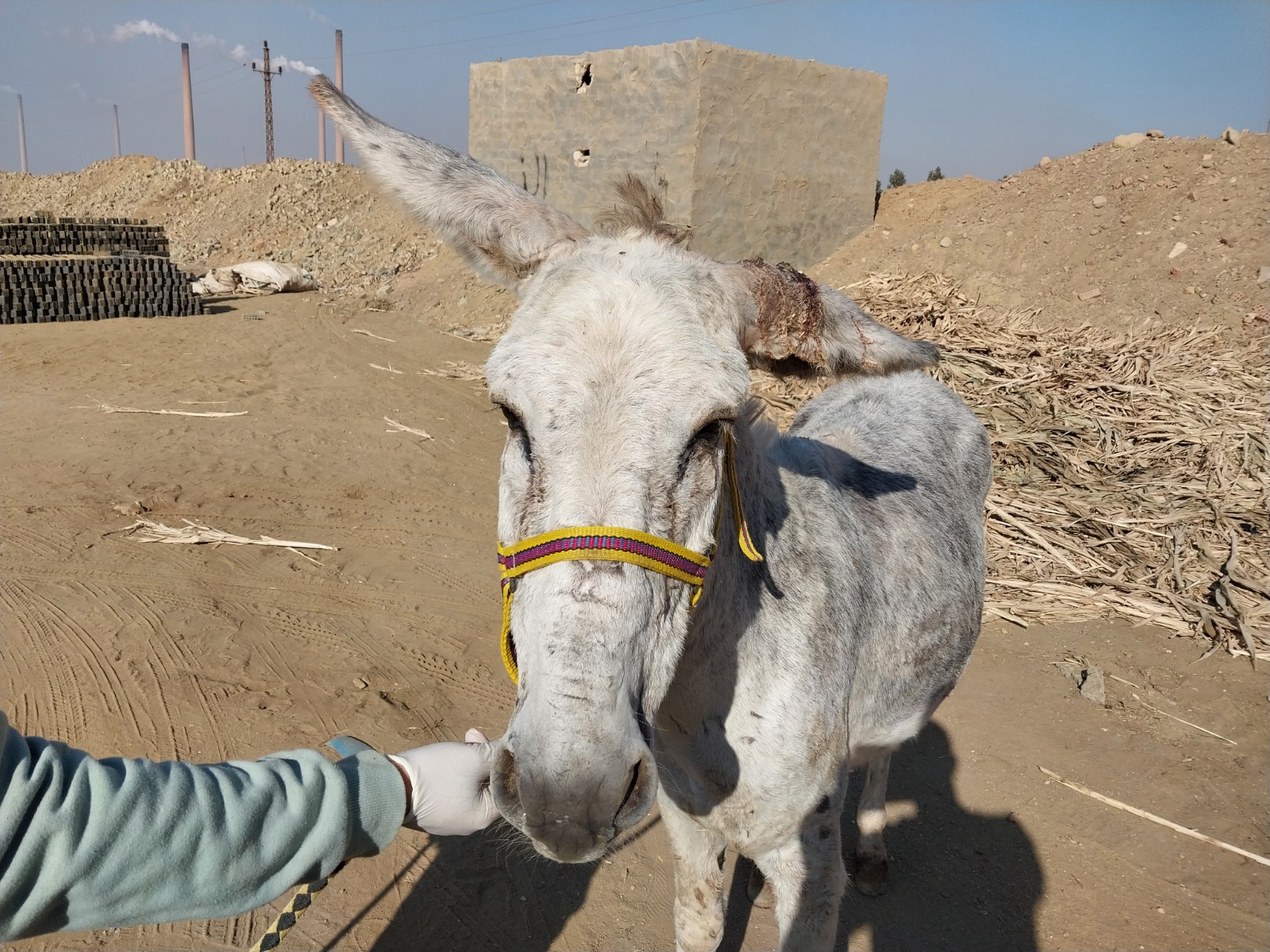
This donkey is in a ‘green’ kiln but sustained a bite wound to his ear
Even when kiln conditions improve, donkeys still need ongoing care. One such donkey is this 11-year-old male who works in a ‘green’ kiln, or one with good welfare conditions.
However, he unfortunately sustained a bite on his ear during a fight with another donkey, which led to a severe infected wound. His owner noticed he started tilting his head and showing movement discoordination.
Following treatment by our team, within days the ear started healing
Our team conducted a full examination and suspected that the infection had spread internally within the ear. We immediately placed the donkey on a treatment plan including antibiotics and anti-inflammatory medication.
The donkey has now made a full recovery due to our team’s care
After a prolonged period of care and treatment, along with daily wound dressings and surgical removal of necrotic (or dead) tissue, we’re pleased to say the donkey is fully recovered, and all neurological signs disappeared.
With a second mobile vet team, we have also been able to extend out work out into local villages, to help working donkeys in the community.
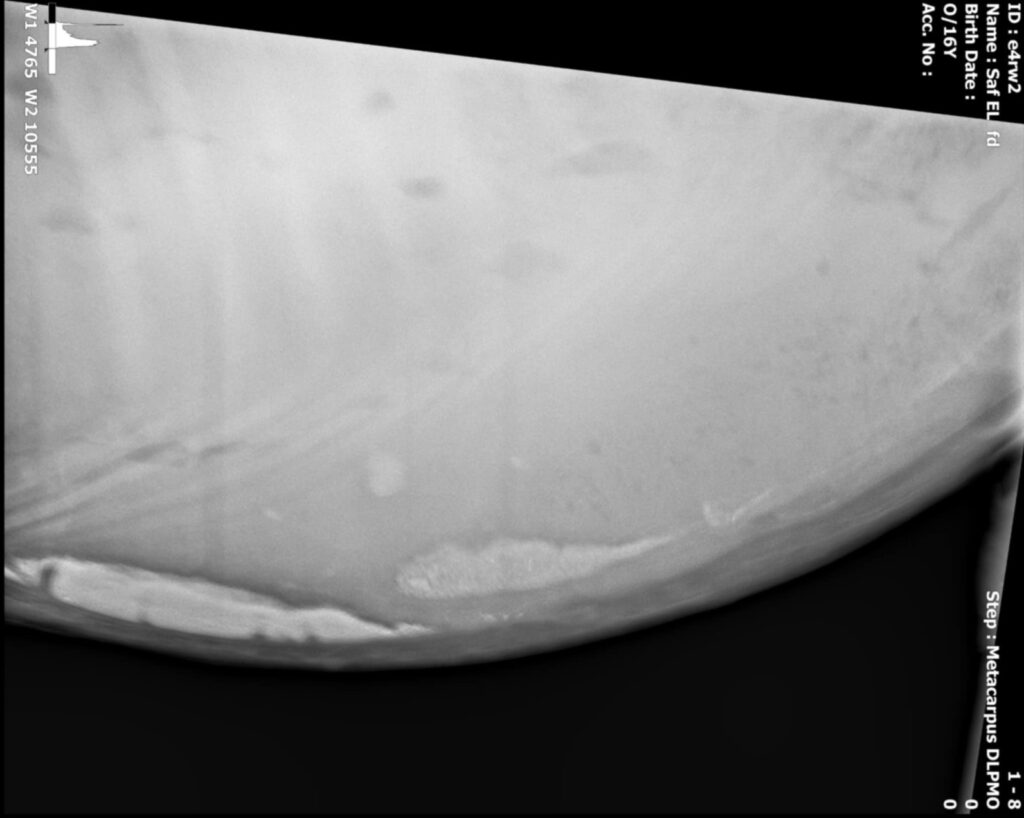
This X-ray of a village donkey’s stomach shows he has ingested sand
With your support our second mobile vet team is able to reach out to local communities to treat working donkeys outside of the brick kilns.
This donkey had recurrent colic and signs of dental disorders. After a full examination, including an X-ray, we found the donkey had sand in his stomach. We dewormed the donkey, performed dental rasping, and administered sand-fix powder along with anti-inflammatory medication for five days.
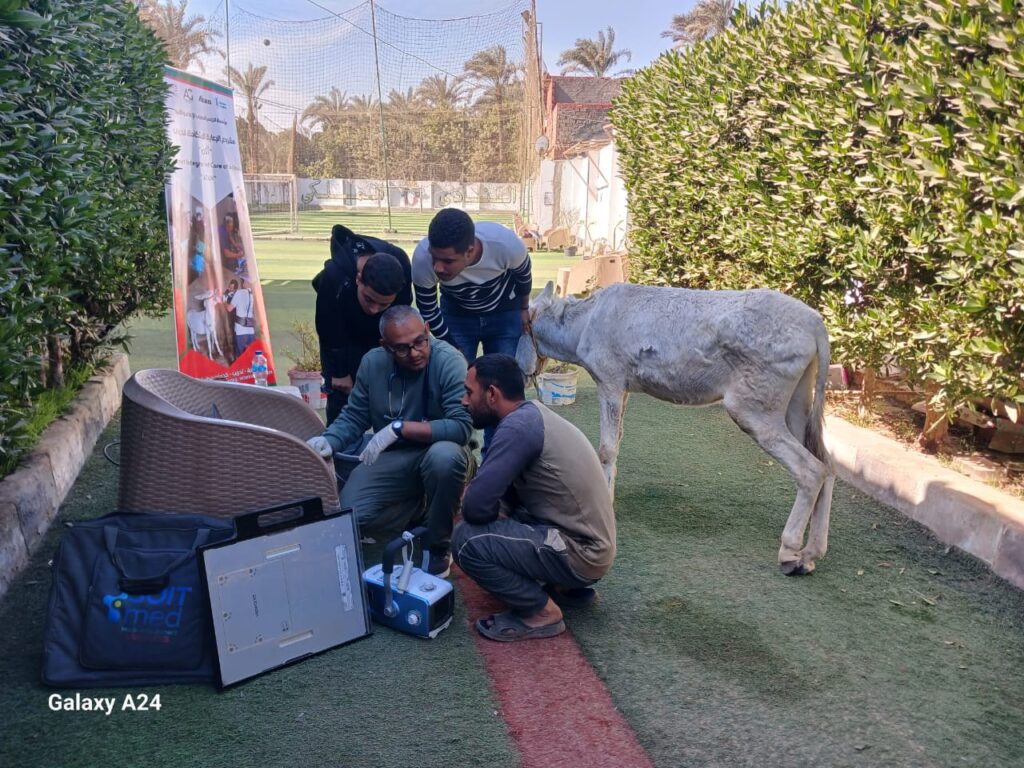
Dr Shaaban shows the donkey’s owner the X-ray and explains the treatment the team will provide
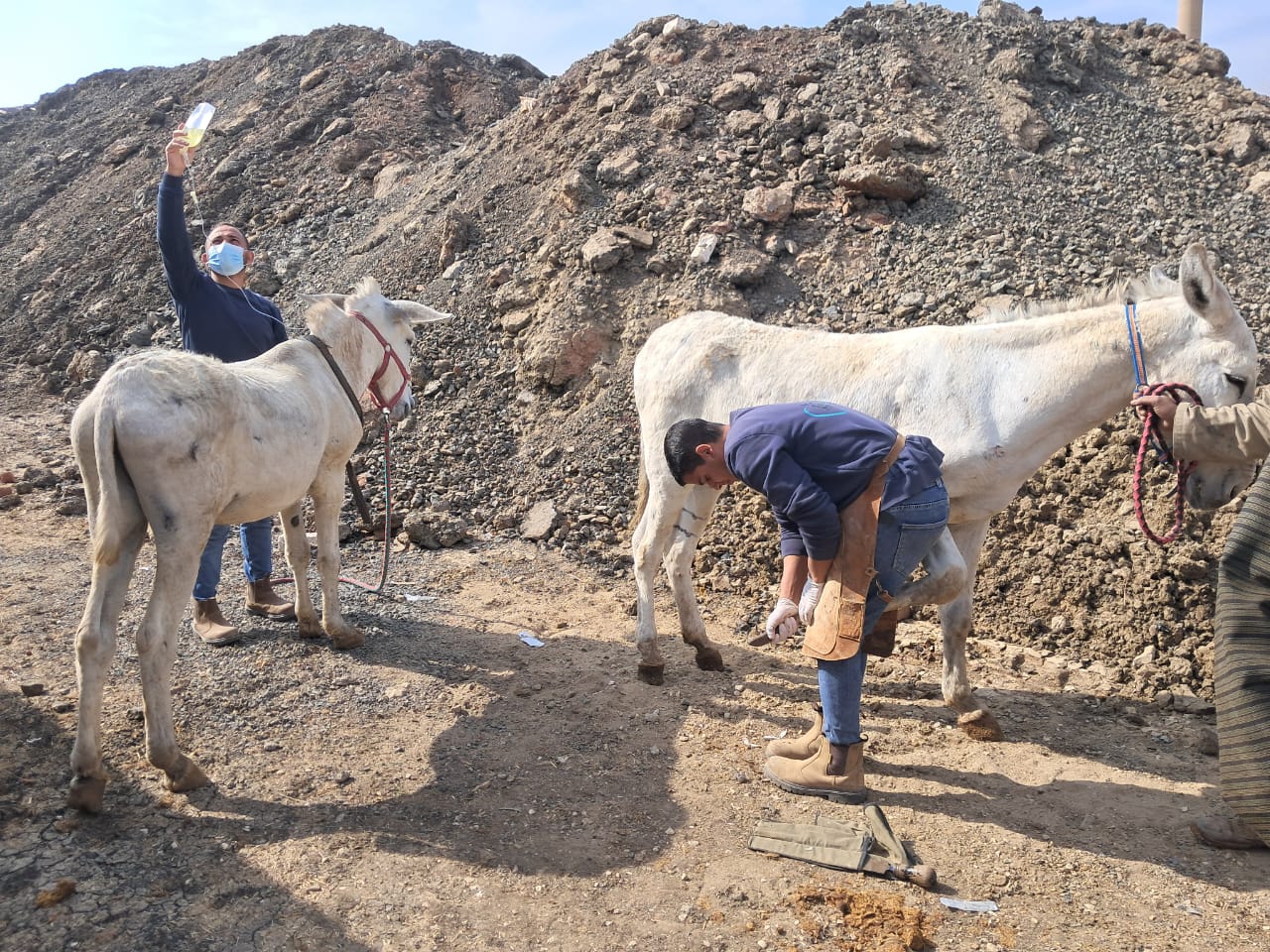
We hope this short update helps to show the impact your donations have had to our work in Egypt. It’s just a small part of the work being undertaken every day. Since Christmas the teams have also conducted farrier training and a dental campaign in the local villages, as well as their regular visits to kilns to treat working donkeys in need. All thanks to you.
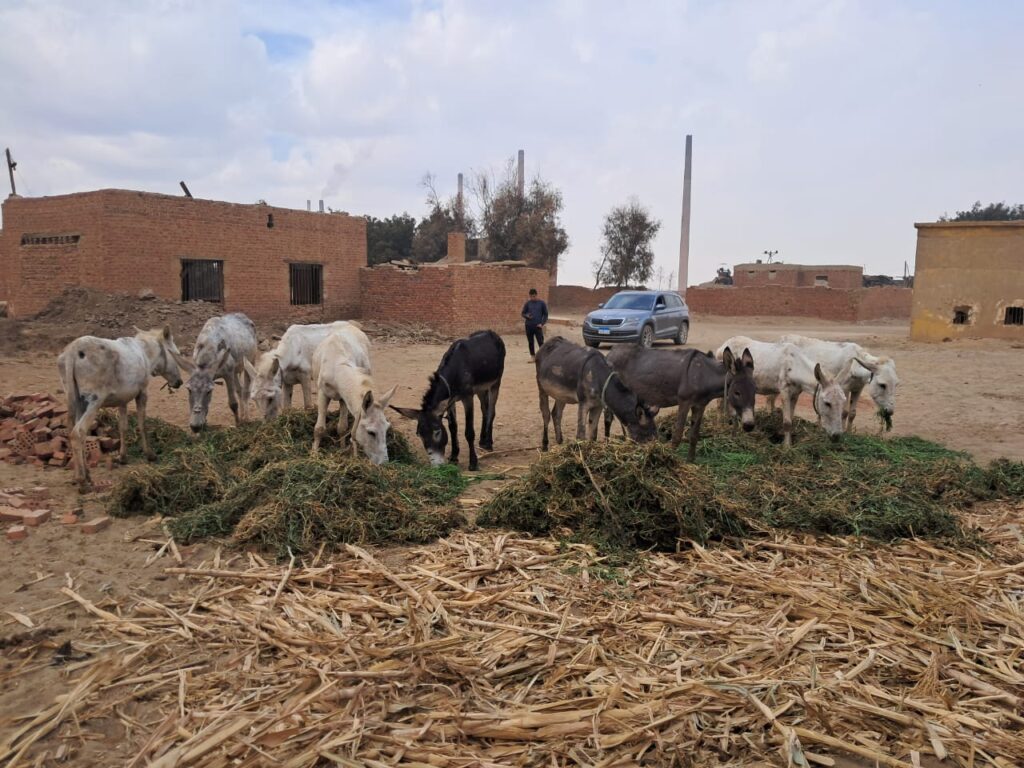
Donkeys at the Egypt brick kilns are living better lives thanks to you
Thank you ♥️♥️
It’s only with your help we are able to improve the lives of working donkeys, mules and horses in the West Bank, Gaza and Egypt. You’re also helping to fund our hospital in Nablus in the West Bank and care for our rescue donkeys in Arrana, as well as our donkeys at our sanctuary in Israel.
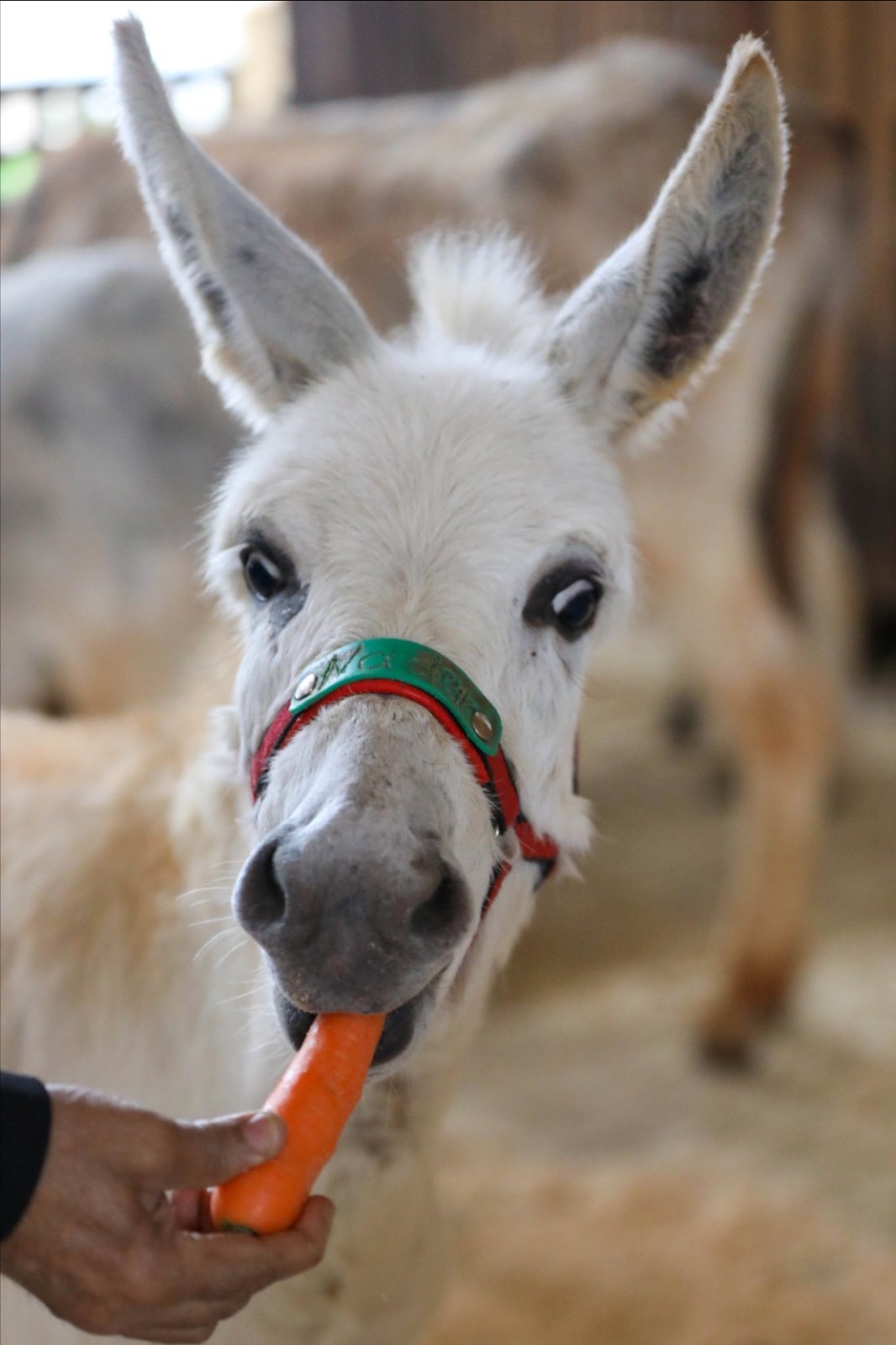
Pssst. Our donkeys love treats – from carrots to watermelon and cucumber. Will you make a donkey’s Valentine and give £5 to fund some tasty treats for Nader and his friends?

.jpg)