Thank you for everything you do for donkeys, mules and horses living in the toughest conditions.
Your support means our vet teams can be there when animals are injured, exhausted or in pain, giving them care they would never otherwise receive. I’m so grateful you're able to support our small charity.
Today, I’d like to share an update from Egypt that shows exactly how your kindness helps working animals recover and keep going.
With very best wishes,
Wendy Safe Haven UK Office
Working in a bick kiln in Egypt. Why always a whip?
Dr Shaaban's update from Egypt
This 11-year-old donkey works long days in the brick kilns. When we met him, he had been kicked in the head by another donkey and was in obvious discomfort. The left side of his face was badly swollen, and he was quiet, withdrawn and refusing food.
You can clearly see the swelling on the side of this donkey’s face after being kicked by another donkey while working in the brick kilns.
When we examined him, we could see he was dehydrated. The swelling made it painful for him to chew and move his jaw, so eating had become difficult. We carefully checked his mouth and teeth and took X-rays to make sure there were no broken bones. Thankfully, his skull was not fractured.
Side view of the donkey's abscess - his cheek was clearly very swollen and painful.
However, we discovered that the swelling was caused by a badly infected haematoma. This is a blood-filled swelling that had turned into a painful abscess. To ease his pain and stop the infection spreading, we carried out a small surgical procedure to drain the abscess.
Dr Shaaban undertakes careful, delicate surgery to relieve the donkey's pain and prevent the infection spreading.
We inserted a drain so fluid could continue to escape, and the wound was cleaned every day. He was also given antibiotics to fight the infection and medication to reduce pain and swelling. Throughout his recovery, our team kept a close eye on him.
Dr Shaaban and Moharram with the donkey after his recovery.
Slowly, we began to see a change. The swelling went down, his appetite returned, and his energy started to come back. With time and careful treatment, the wound healed completely.
A close-up showing how well the wound has healed.
This recovery was only possible because your support allows us to reach donkeys like him, right where they are working, and give them the care they urgently need. Thank you for making that possible.
Thank You
Everything we do is made possible by you. Your support keeps our vet teams working in Egypt, reaching donkeys in the brick kilns, helping animals who have nowhere else to turn to. It also helps our vet teams in Gaza and across the West Bank respond when animals are injured or unwell, and ensures rescued donkeys in our sanctuaries in Israel and the West Bank receive the daily care they depend on.
Thank you for bringing comfort and healing to these gentle animals.
In a controversial decision, the Greek Ministry of Rural Development and Food has significantly relaxed protection measures for working donkeys, horses, and mules during extreme heat . While these animals were prohibited from working at all in 2023 when temperatures exceed 39°C, this ban now applies only between 1:00 PM and 5:00 PM when temperatures exceed 35°C. Animal welfare organizations call it a dangerous step backward, creating a "torture window" for exploited working animals.
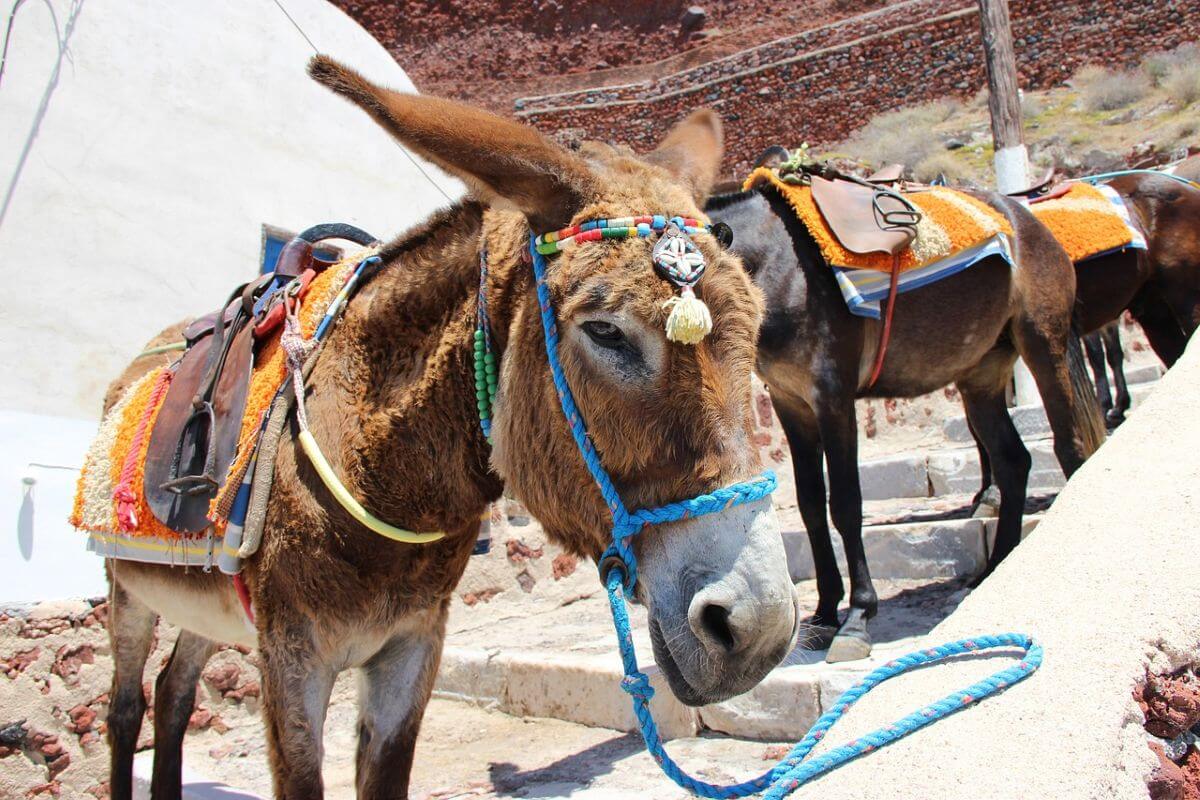
Working donkeys in Greece allowed again amid extreme heat | Photo: Public domain No Shade, no water.
Greece is experiencing increasingly intense and prolonged heatwaves . Temperatures regularly exceed 40°C, nights offer little relief, and extreme weather conditions are becoming the new norm. In 2023, the country experienced its longest heatwave ever recorded, with temperatures exceeding 40°C for weeks. This climate change impacts not only Greece's residents and visitors, but also its working animals, who have no choice or shelter.
Meteorological data shows that heatwaves in 2025 will be at least as severe as in previous years. Despite this, the Greek government has decided to relax protection measures for working animals. This decision contradicts the advice of animal welfare experts.
Centuries-old 'tradition' under pressure
Donkeys, horses, and mules have been used for centuries as cheap labor in daily life in Greece, especially on the islands. What once began as a necessity is now largely a tradition that comes at the expense of the animals. They are still used for tourist trips, carrying heavy loads, and tasks for which alternatives have long existed.
The problem is that this traditional role increasingly clashes with modern insights into animal welfare and the realities of climate change. Especially during the tourist season, when cruise ships bring thousands of visitors to the islands daily, the animals are severely overburdened.
Donkeys, horses, and mules have been used for centuries as cheap labor in daily life in Greece, especially on the islands | Photo: Public domain
From protection of working donkeys to relaxation
Until 2023, a rule was in effect that actually protected animals: at temperatures of 39°C or higher, donkeys, horses, and mules were not allowed to work at all. This scientifically based measure recognized what every veterinarian knows: extreme heat is fatal for working animals.
But in 2025, the Greek ministry decided to weaken this protection. The new rules create a "torture window": animals can once again be exploited in the blazing morning sun and scorching afternoon heat, as long as a few hours' rest is provided between 1:00 PM and 5:00 PM.
The result is predictable: exhausted donkeys lugging tourists around in temperatures of 40°C on Santorini or Hydra, for an industry that puts profit above well-being.
Why this dangerous relaxation?
The question that preoccupies both animal welfare organizations and citizens is: why this step backward? There are no new scientific insights that justify this relaxation. On the contrary, climate change makes stricter protection even more necessary. The relaxation also does not appear to be the result of recommendations from scientific committees or consultation with veterinarians. Moreover, it came at a time when the EU is working on a new, stricter strategy for the welfare of working animals, and while public awareness of animal rights is growing. The Greek decision therefore appears to go against the European and international trend.
Many organizations therefore suspect that pressure has been exerted by commercial interests: entrepreneurs who see animals as instruments for profit, not as living beings with needs and rights.
Tips for responsible tourists
The easing of heat restrictions in Greece is unfortunately not an isolated incident, but part of a broader culture where animal welfare is subordinated to economic gain. From the neglected cows on Kos, kept in parking lots and other unsuitable locations for EU subsidies, to the exploited donkeys on Santorini. Only through collective pressure from tourists, animal welfare organizations, and the international community can we hope that Greece will return to stricter protections for its working animals.
What can tourists do for working donkeys and horses:
Visitors to Greece can make a big difference themselves. Here are a few tips:
Avoid donkey rides, no matter how romantic they're presented. Take the cable car or use your own two feet.
Support animal-friendly tour and accommodation providers that do not use animals for transport or entertainment.
Report abuse to local animal organizations if you see animals suffering or being abused.
Share your experiences through reviews and social media so that other travelers are better informed.
Every day, our hardworking veterinary teams travel across the West Bank to bring vital free veterinary care to donkeys, mules, and horses. From busy city markets to remote hillsides, they are a lifeline for working animals and the people in the West Bank who depend on them.
Thanks to your generous support of our recent vet kit appeal, these teams - along with our vet teams in Gaza and Egypt - are now better equipped than ever.
The new equipment and medicines you helped to fund are already making a real difference - and in this week’s email, we’ll take you behind the scenes with our three dedicated vet teams, led by Dr Omran, Dr Eyed, and Dr Rakan, to show you how.
We hope you enjoy the photos - and thank you again for making this work possible.
With kindest regards,
Wendy, Safe Haven UK Office
News from the West Bank
Dr Omran and his farrier Ali, travel across the hills and countryside of the West Bank to care for rural animals. Here you can see Ali fitting a head collar to a donkey - this was made possible by your support to our recent vet kit appeal.
We provide head collars to animals in the West Bank to replace painful chain collars.
Thanks to Dr Omran’s dedication, these donkeys receive the vital medical care they would otherwise go without - from wound treatment and parasite control to hoof trimming and dental checks. All this vet care is provided free thanks to your support.
Your support to our appeal helped to fund a range of medicines and treatments.
In the bustling city of Hebron, donkeys, mules and horses are used daily to pull heavy carts loaded with fruit, vegetables, and other goods. It’s hard, physical work - and Dr Eyed and his farrier Ahmad are there to make sure these animals are as healthy and pain-free as possible.
They carry out regular welfare checks and provide essential treatments right where they’re needed, including at the city’s busy vegetable market.
Our vet teams visit a range of places - including busy markets.
Dr Rakan leads our team in the Nablus area, working alongside farriers Wael and Nour. They visit communities to check on working animals, treating injuries, infections and other health issues. This includes hard-working builder donkeys who carry heavy loads of bricks.
Our vets provide a range of care, from treating simple wounds through to field operations such as castration.
The team also care for shepherd donkeys. These animals help herders look after their flocks in some of the most isolated and difficult-to-reach areas.
Shepherd donkeys bond with their herd and help to keep them safe.
Dr Rakan also runs our drop-in veterinary clinic at our Nablus hospital, where owners can bring their animals for free vet care. And he makes regular visits to the Arrana rescue centre to provide check-ups to our donkeys who live there.
Dr Rakan also provides free vet care from our Nablus hospital through a drop-in clinic.
Thank You
Everything our vet teams do to support working donkeys, mules, and horses is only possible because of you. Your generosity helps us protect animals and support their owners across the West Bank, Gaza, and Egypt - as well as care for rescued donkeys at our sanctuary in Israel and our rescue centre and hospital in the West Bank.
I wanted to begin by reassuring you that all of our rescue donkeys at the sanctuary in Israel, and at our rescue centre and hospital in the West Bank, are safe and well - despite the recent, distressing reports of wildfires in the region.
We’re keeping a close eye on the situation and will take action if needed. For now, our vital work continues as normal - and today, I’m pleased to share an update from our dedicated vet teams in the West Bank.
I also want to say a heartfelt thank you for your incredible support of our Easter Appeal. Your generosity is helping us equip vet teams across all our programmes - in Israel, the West Bank, Gaza and Egypt - with the tools they need to treat donkeys, mules and horses in urgent need.
Thanks to you, countless working animals will get the expert veterinary care they deserve.
Our teams have been busy over the past few weeks, caring for donkeys, mules and horses right across the West Bank.
Builder donkeys are so hardworking and deserve to receive the best possible vet care.
Dr Rakan and his team treat all sorts of working animals - including builder donkeys, who carry heavy loads up steps and through tight alleyways, just like the ones you can see above and below.
Nour gives this hardworking builder donkey a much-needed hoof trim.
We pay extra attention to their hooves - builder donkeys carry such heavy loads that any pain or injury can make their lives even harder. Regular hoof checks and treatment are a big part of keeping them comfortable.
Builder donkeys are so hardworking and deserve to receive the best possible vet care.
Sometimes our work in the West Bank takes real patience.
Dr Rakan recently heard from an owner whose horse had escaped from his stable and become badly tangled in barbed wire. The poor horse was left with a painful injury.
Because of ongoing road blocks in the region, it took a few days for Dr Rakan to reach him - but he didn’t give up. Our vet teams always persevere, no matter how tough things get.
Your support means we can be there to help horses in desperate need - just like this horse with awful leg wounds to his front (shown above) and back legs.
Dr Rakan explained to the owner that the horse’s wounds were deep and would take time to heal – but he made sure he had everything he needed, including all the right medication to continue the horse's treatment.
And of course, Dr Rakan will be back soon to check on the horse and provide any extra treatment that may be needed.
Dr Rakan treated the leg wounds to make sure the horse was comfortable and able to recover.
It’s thanks to your support that Dr Rakan and his team can be there for animals like this – no matter how challenging it is to reach them. Your kindness helps give working horses, donkeys and mules the care they need, and the chance of a healthier, more comfortable life.
Thank you for making this work possible.
Thank You
It's only with your help we are able to improve the lives of working donkeys, mules and horses in the West Bank, Gaza and Egypt. You're also helping to fund our hospital in Nablus in the West Bank and care for our rescue donkeys in Arrana, as well as our donkeys at our sanctuary in Israel.
Royal Patron: Her Royal Highness Princess Alexandra the Hon Lady Ogilvy KG GCVO Patrons: The Rt Hon the Earl of Stockton, The Rt Hon Ann Widdecombe DSG, Desmond Lynam OBE, Peter Egan, Kay Burley, Jan Leeming, and Anthony Head