The use of cocaine to make the dogs run faster, and the betting on the dogs at the races, ruining human lives, are according to insiders also reasons to ban greyhound racing ( I have no proof to write about these allegations )
In a historic win for animal welfare, Wales has moved to ban greyhound racing following a decisive vote in the Senedd, while Scotland has passed legislation outlawing the sport altogether.
Photo: BBC
According to the League Against Cruel Sports, in 2024, there were 123 greyhound fatalities recorded at licensed tracks in Great Britain, and 3,809 injuries were reported to racing greyhounds.
Photo: Greyhound racing Scotland
Since 2017, the industry has recorded hundreds of deaths each year and thousands of injuries: at least 1,357 trackside fatalities and more than 35,000 injuries over that period.
On March 17, 2026, members of the Welsh Senedd voted 39 to 10 in favor of the Prohibition of Greyhound Racing (Wales) Bill, which will make it illegal to operate greyhound racing venues or organize races in the country.
Greyhound Racing Scotland
The ban is expected to be implemented in stages between April 2027 and April 2030. Wales currently has only one active track, Valley Greyhound Stadium in Ystrad Mynach.
Animal welfare groups hailed the vote as a major victory for greyhounds. Jamie Adair of the League Against Cruel Sports stated:
“The death and injury toll of greyhound racing is quite simply shocking, and goes beyond what people see at the racetracks.”
Welsh Democrat Jane Dodds, a supporter of the bill, added that it sends a clear message:
“Foreseeable and unavoidable harm to animals cannot be justified in the name of sport or in the service of gambling revenues.”
Despite some legal challenges and criticism, supporters say the legislation is a historic step toward protecting greyhounds from unnecessary harm.
The following day, on March 18, 2026, the Scottish Parliament voted to pass the Greyhound Racing (Offences) (Scotland) Bill, effectively banning greyhound racing in Scotland. The bill, introduced by Green MSP Mark Russell, makes it illegal for greyhounds to race on oval tracks, with penalties including fines and up to five years in prison. During debate, Russell told MSPs:
“Racing greyhounds at up to speeds of 40 pmh around an oval track results in catastrophic injuries and deaths. Dogs break their legs, break their backs, end up paralysed and with serious head trauma.”
Scotland’s last remaining track, Thornton Stadium in Kirkcaldy, Fife, closed in 2025, leaving the country without active racing venues. Supporters say the legislation prevents future harm and aligns Scotland with other countries that have already outlawed the cruel sport.
In recent years, the industry has sharply declined. Advocates point to injury data and the number of greyhounds killed to highlight the risks faced by racing dogs. The back-to-back actions in Wales and Scotland mark a historic moment for animal welfare, signaling that the UK is moving to end greyhound racing and protect dogs from avoidable harm, another historic win for animal welfare.
Wales has taken a monumental step by announcing a ban on cruel greyhound racing. This marks a major victory for animal welfare, following Aotearoa New Zealand’s groundbreaking decision. This historic move is part of a growing global movement to end the exploitation of animals for profit.
During the announcement, the Welsh government indicated that the ban might be implemented as soon as possible and could be enforced before the next Senedd election in 2026.
Dogs are confined for 20 to 23 hours each day and barely have enough room to stand up or turn around.
Dogs live in warehouse-style kennels, side by side, and in jurisdictions like the United States, in stacked metal cages. They are confined for long hours each day with bedding that consists of carpet remnants or shredded newspaper.
“Now is the right time to move to ban greyhound racing in Wales,” said Deputy First Minister Huw Irranca-Davies, after 35,000 people signed a petition demanding an end to greyhound cruelty.
Wales would become the first country in the United Kingdom to formally outlaw greyhound racing. This historic news comes on the heels of several track closures in England over the past year, with only one track remaining in Scotland. It’s clear that this is part of a growing, global movement to end the exploitation of these gentle dogs for profit. The public sentiment surrounding greyhound racing has shifted dramatically, with increasing recognition of rampant animal cruelty inherent in the industry.
Animals like greyhounds have long been used as commodities in industries that profit from their suffering. From injuries and doping to overbreeding and mass killings, the greyhound racing industry has left a trail of harm in its wake. The race is not just for speed but for gambling — with little regard for the animals involved. This monumental decision represents a powerful stand against the commodification of animals for profit.
While this is a significant victory, it also underscores the urgency of continuing to fight for the liberation of all animals used in exploitative industries. Whether it’s greyhounds used for gambling, factory-farmed animals subjected to inhumane conditions, or wild animals exploited for entertainment, we cannot afford to rest. Every victory, like the one in Wales, serves as a reminder that our collective voices matter, but there is still so much more work that needs to be done.
We extend our deepest gratitude to the coalition of animal welfare organizations and advocates who have tirelessly fought for this historic change, including Dogs Trust, RSPCA Cymru, Blue Cross UK, Greyhound Rescue Wales, and Hope Rescue. Their efforts, along with the thousands of individuals who signed petitions, fostered greyhounds, and spoke out against this cruel industry, have paved the way for this groundbreaking announcement.
As we celebrate this victory, we must continue to press for further change, ensuring that no animal is used for profit, and that they are liberated from the systems of exploitation. The tide is turning, and with continued activism, we can look forward to seeing more countries follow in Wales’ footsteps.
The fight for animal rights is far from over, but with every victory, we move one step closer to a world where animals are no longer seen as commodities but are recognized for the sentient beings they truly are. Let’s keep pushing for change — together, we can create a future free from exploitation.
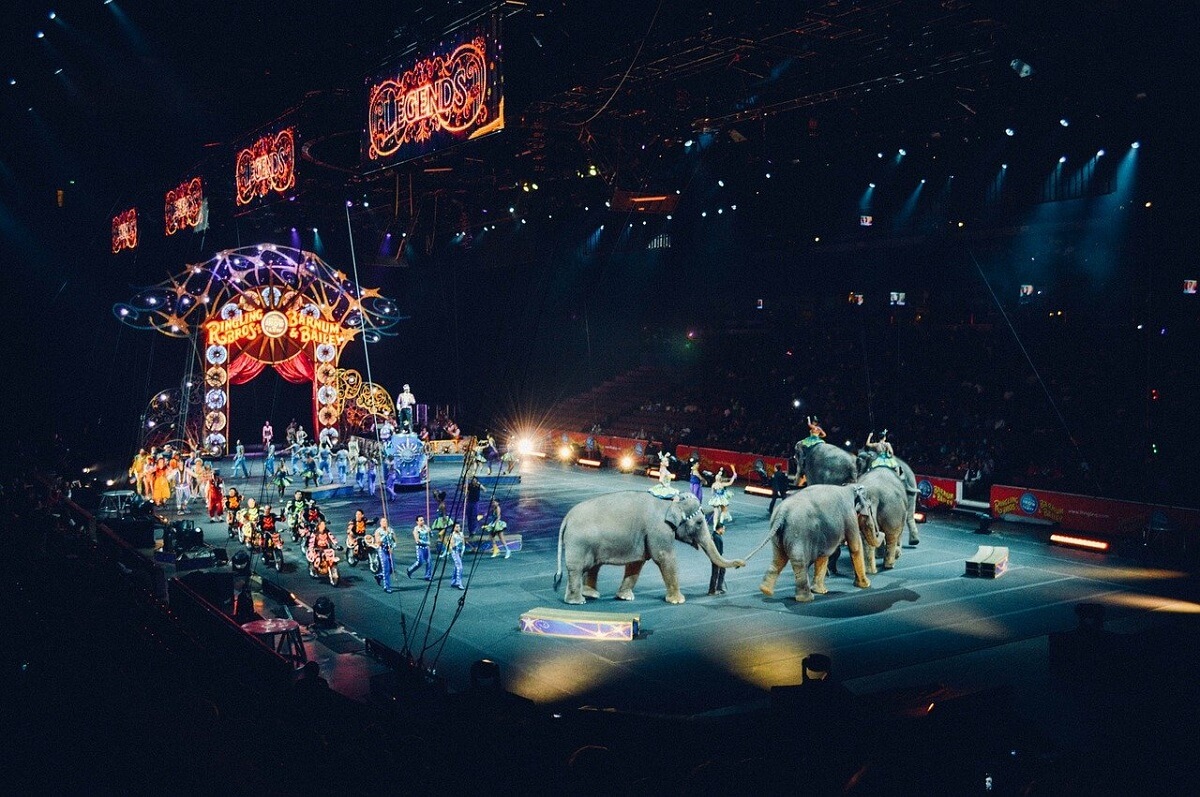
Wie van ons herinnert zich Dumbo niet? Tranen met tuiten vergieten de meeste kinderen als Dumbo van zijn moeder gescheiden wordt en alleen in een hokje moet verblijven. Voor veel circusdieren is dit echter de realiteit. Daarom is het goed nieuws dat Wales vorige week een wet aannam waarbij het gebruik van exotische en wilde dieren voor optredens van reizende circussen verboden wordt. Deze wet zal vanaf 1 december 2020 gelden. Wales is hiermee het laatste land in Groot-Brittannië en het 47e land ter wereld dat dit verbod invoert. In Nederland is dit verbod in 2015 van start gegaan.
Wales verbiedt gebruik van wilde dieren in reizende circussen | Foto: Pixabay
Dierenmisbruik in het circus
De discussie rondom het welzijn van circusdieren leeft al lange tijd. Niet alleen door de toenemende bewustwording van de emotionele capaciteiten van dieren. Ook is er ondertussen een overvloed aan bewijs beschikbaar waardoor het niet meer ontkend kan worden dat dieren in circussen gedwongen worden onder erbarmelijke omstandigheden te leven. Onder andere Animal Defenders international (ADI) heeft de mishandeling van circusdieren binnen meerdere circussen onder de aandacht gebracht door middel van undercoverbeelden. Hierdoor kwamen de verschrikkelijke levensomstandigheden van de dieren, de stress die ze ervaren in een circus en de vreselijke afranselingen aan het licht.
Training
De manier waarop de dieren geleerd wordt kunstjes te doen is onverdedigbaar. Kunstjes worden op jonge leeftijd aangeleerd, waarbij over het algemeen verstaan wordt dat de dieren eerst ‘gebroken’ moeten worden. Zo worden jonge olifanten herhaaldelijk geslagen met een bullhook, een scherpe metalen stang, totdat ze meegaand genoeg zijn om orders op te volgen. Berenwelpen wordt geleerd om langdurig op hun achterpoten te balanceren door ze aan een ketting te leggen die niet tot aan de grond reikt. Als de welpen dan op vier poten proberen te staan sluiten ze hun eigen luchttoevoer af en lopen ze het gevaar zichzelf op te hangen. Dit toont onderzoek van PETA aan.
Verblijf
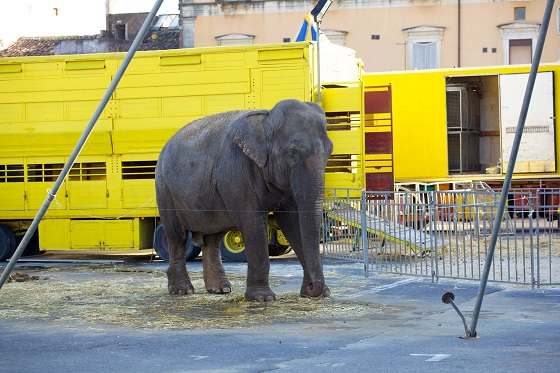
Wetenschappelijk onderzoek heeft aangetoond dat de trainingen van de circusdieren slechts een kort deel van de dag worden gegeven. De rest van de tijd zitten ze (vaak alleen) opgesloten in te kleine, kale kooien of zijn ze vastgeketend zonder enige bewegingsruimte. Wanneer een dier in enige vorm van gevangenschap leeft is de bewegingsvrijheid altijd beperkter dan voor dieren die in het wild leven. Echter, zelfs vergeleken met de verblijven in de dierentuin zijn die in het circus ver onder de minimumstandaard. De vaste verblijven van circusdieren bedragen slechts 8,2% van de minimaal vereiste ruimte in een dierentuin, terwijl dit bij de vervoers wagons slechts 4,2% bedraagt.
Sociaal welzijn
Circusdieren verblijven vrijwel altijd alleen in hun verblijven, wat de sociale ontwikkeling van de dieren nagenoeg compleet remt. Ook wordt het sociale leven wat ze wel kunnen opbouwen vaak verstoord omdat circussen vaak onderling handelen met de dieren en liever volwassen dieren verkrijgen dan ze zelf te fokken. Dit is namelijk erg lastig met wilde dieren en weinig ruimte. Zowel jonge als volwassen dieren kunnen dus verscheidene keren van circus veranderen, waardoor ze telkens weggehaald worden van hun vertrouwde omgeving. Dit kan een enorme stressfactor vormen voor hoog-sociale diersoorten zoals olifanten, en negatieve gevolgen hebben voor hun welzijn. Zoals gezegd, we kennen allemaal Dumbo toch nog wel?
Foto: ISPCA/Facebook
Één schepje erbovenop
Het welzijn van dieren wordt op de proef gesteld in elke vorm van gevangenschap, maar circussen in het bijzonder zijn niet in staat de dieren te voorzien van de minimale voeding, ruimtelijke en sociale behoeften. Het vermogen van de dieren om zich natuurlijk te gedragen wordt compleet weggenomen. Zowel de mentale als fysieke gesteldheid van het dier lijdt hieronder.
Alhoewel het een overwinning is dat Wales de wet aannam zou deze nog een stuk verder mogen gaan. Ook gedomesticeerde dieren horen namelijk niet in het circus thuis. Daarom zou het bezit van dieren door een circus in het algeheel verboden moeten worden. Niet alleen in het reizende circus en niet alleen voor wilde dieren, maar dat is dan de volgende stap.


.jpg)