Wales has taken a monumental step by announcing a ban on cruel greyhound racing. This marks a major victory for animal welfare, following Aotearoa New Zealand’s groundbreaking decision. This historic move is part of a growing global movement to end the exploitation of animals for profit.
During the announcement, the Welsh government indicated that the ban might be implemented as soon as possible and could be enforced before the next Senedd election in 2026.
Dogs are confined for 20 to 23 hours each day and barely have enough room to stand up or turn around.
Dogs live in warehouse-style kennels, side by side, and in jurisdictions like the United States, in stacked metal cages. They are confined for long hours each day with bedding that consists of carpet remnants or shredded newspaper.
“Now is the right time to move to ban greyhound racing in Wales,” said Deputy First Minister Huw Irranca-Davies, after 35,000 people signed a petition demanding an end to greyhound cruelty.
Wales would become the first country in the United Kingdom to formally outlaw greyhound racing. This historic news comes on the heels of several track closures in England over the past year, with only one track remaining in Scotland. It’s clear that this is part of a growing, global movement to end the exploitation of these gentle dogs for profit. The public sentiment surrounding greyhound racing has shifted dramatically, with increasing recognition of rampant animal cruelty inherent in the industry.
Animals like greyhounds have long been used as commodities in industries that profit from their suffering. From injuries and doping to overbreeding and mass killings, the greyhound racing industry has left a trail of harm in its wake. The race is not just for speed but for gambling — with little regard for the animals involved. This monumental decision represents a powerful stand against the commodification of animals for profit.
While this is a significant victory, it also underscores the urgency of continuing to fight for the liberation of all animals used in exploitative industries. Whether it’s greyhounds used for gambling, factory-farmed animals subjected to inhumane conditions, or wild animals exploited for entertainment, we cannot afford to rest. Every victory, like the one in Wales, serves as a reminder that our collective voices matter, but there is still so much more work that needs to be done.
We extend our deepest gratitude to the coalition of animal welfare organizations and advocates who have tirelessly fought for this historic change, including Dogs Trust, RSPCA Cymru, Blue Cross UK, Greyhound Rescue Wales, and Hope Rescue. Their efforts, along with the thousands of individuals who signed petitions, fostered greyhounds, and spoke out against this cruel industry, have paved the way for this groundbreaking announcement.
As we celebrate this victory, we must continue to press for further change, ensuring that no animal is used for profit, and that they are liberated from the systems of exploitation. The tide is turning, and with continued activism, we can look forward to seeing more countries follow in Wales’ footsteps.
The fight for animal rights is far from over, but with every victory, we move one step closer to a world where animals are no longer seen as commodities but are recognized for the sentient beings they truly are. Let’s keep pushing for change — together, we can create a future free from exploitation.
120 southern white rhinos have been successfully translocated to reserves represented by the Greater Kruger Environmental Protection Foundation (GKEPF) in Mpumalanga and Limpopo, South Africa. This translocation is the second move under Rhino Rewild, an African Parks initiative to rewild 2,000 southern white rhinos into secure, protected African areas.
One hundred and twenty southern white rhinos have just been translocated to member reserves of the Greater Kruger Environmental Protection Foundation (GKEPF) in Mpumalanga and Limpopo provinces, South Africa. This boost to the southern white rhino population in the Greater Kruger area is part of African Parks’ Rhino Rewild initiative, an ambitious plan to rewild 2,000 southern white rhinos into secure, protected areas in Africa over the next ten years. This follows the translocation of 40 southern white rhino to Munywana Conservancy in South Africa in May.
GKEPF, established in 2016, is an alliance of nine private reserves, one provincial park, and one national park to service the protection needs of the western and eastern buffers of the Kruger National Park (KNP) and the Greater Limpopo Transfrontier National Park. This translocation comes when poaching rates within GKEPF reserves have significantly declined, indicating the effectiveness of security and anti-poaching measures.
In September 2023, African Parks purchased the world’s largest captive rhino breeding operation from John Hume in a bid to rescue 2,000 southern white rhinos following a failed auction, with one primary objective: to rewild them all to well-managed and secure protected areas, to establish or supplement strategic populations, ultimately helping to de-risk the future of the species.
DID YOU KNOW that African Parks offers safari camps (lodges and campsites) where 100% of tourism revenue goes to conservation and local communities? Find out more and book your African Parks safari.
Through Rhino Rewild, African Parks is dedicated to bolstering healthy southern white rhino populations in South Africa – and recognises the country’s efforts in rhino conservation for the benefit of the African continent.
Rhinos are darted with tranquilliser from a helicopter
“Moving 120 rhinos under the Rhino Rewild initiative to GKEPF will augment the existing rhino population in the Greater Kruger and ensure that these rhino are fulfilling their role in their natural environment, which has been our vision from the start,” says Peter Fearnhead, CEO of African Parks. “Despite significant pressures, GKEPF members have played a critical role in the conservation of the Greater Kruger landscape, providing an important buffer to the Kruger, and we support their commendable progress in protecting rhino populations in their native range.”
Sharon Haussmann, CEO of GKEPF, says, “The rewilding itself bears testament to the cumulative knowledge, partnerships, and insights of a protracted period of anti-poaching efforts in the Greater Kruger landscape. That the benefits so clearly outweigh the risks presents a significant opportunity for rewarding the efforts of everyone who has remained committed to safeguarding rhino populations amid extremely challenging circumstances over the past 10 to 15 years.”
Collaboration is at the heart of GKEPF’s mandate. While rhinos will not be released into the KNP itself but into private game reserves along its western boundary, the project received consensus, collaboration, and expert inputs from KNP and South African National Parks (SANParks). This strategic placement to private reserves sharing an unfenced border with the KNP strengthens the rhino metapopulation and lays the groundwork for potential future collaboration as the Kruger continues its fight against poaching.
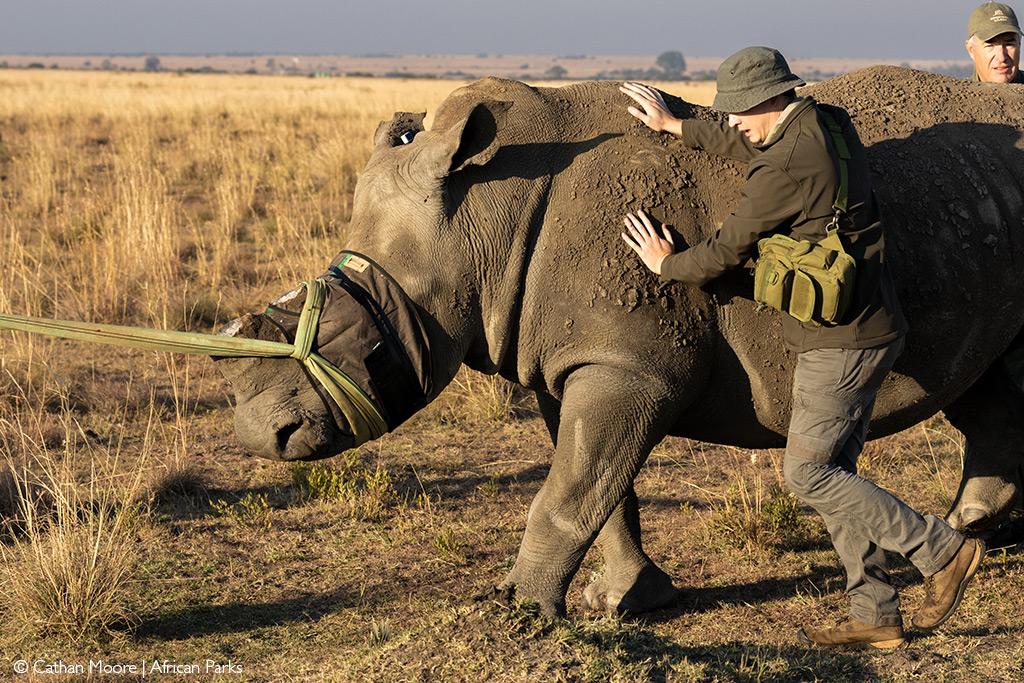
GKEPF vet, Günter Nowak, carefully guides a sedated rhino to a translocation crate
This region of South Africa is an ideal habitat for southern white rhinos. The fertile and water-rich grasslands of the selected release areas are suitable for ensuring optimal rhino health and population growth. Through a decade-long collaborative effort to combat rhino poaching, reserves and stakeholders have developed and shared a wealth of expertise. This has significantly bolstered their ability to proactively and effectively address poaching threats and safeguard the species.
The safety of these translocated rhinos is at the forefront for everyone involved. “The rhino will come in dehorned, which is a very effective way to decrease the poaching risk in this landscape. We’re at a point where this risk is well calculated,” says Markus Hofmeyr, a wildlife vet and Director of the Rhino Recovery Fund. “This will be the first reintroduction of rhinos into this landscape in about 50 years,” he adds.
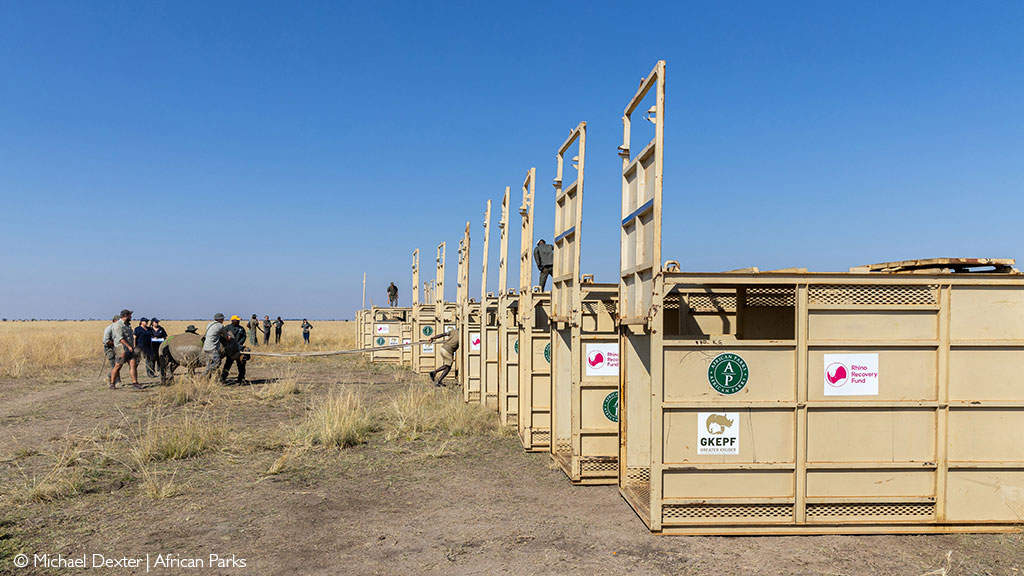
A rhino is led towards transportation crates
Moving 120 rhinos is an enormous undertaking in every way, and it has taken, as Haussmann explains, “many, many sleepless nights” and extensive funding. African Parks is donating the animals to the reserve, with GKEPF donors contributing to the translocation costs and the subsequent ongoing monitoring of the rhino, a critical element for the project’s long-term success.
A word of thanks from African Parks: The Rob Walton Foundation and the Pershing Square Foundation are the initial funders of Rhino Rewild. Thanks to the OAK Foundation, Rhino Recovery Fund, Hancock Family, Max Planck Institute & Contemplate Wild, and Land Rover Sandton/SMH Group for their support of this translocation to GKEPF.
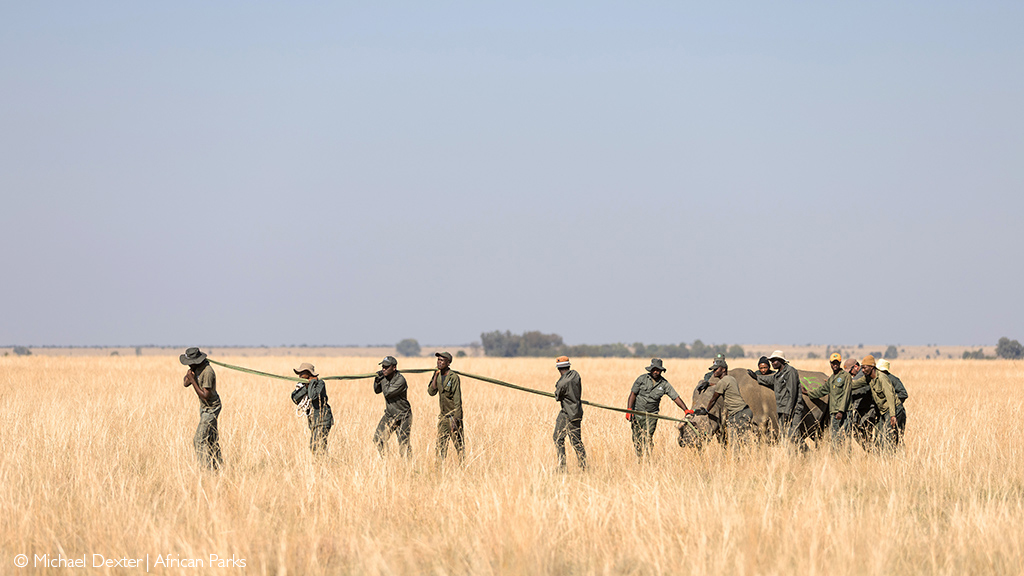
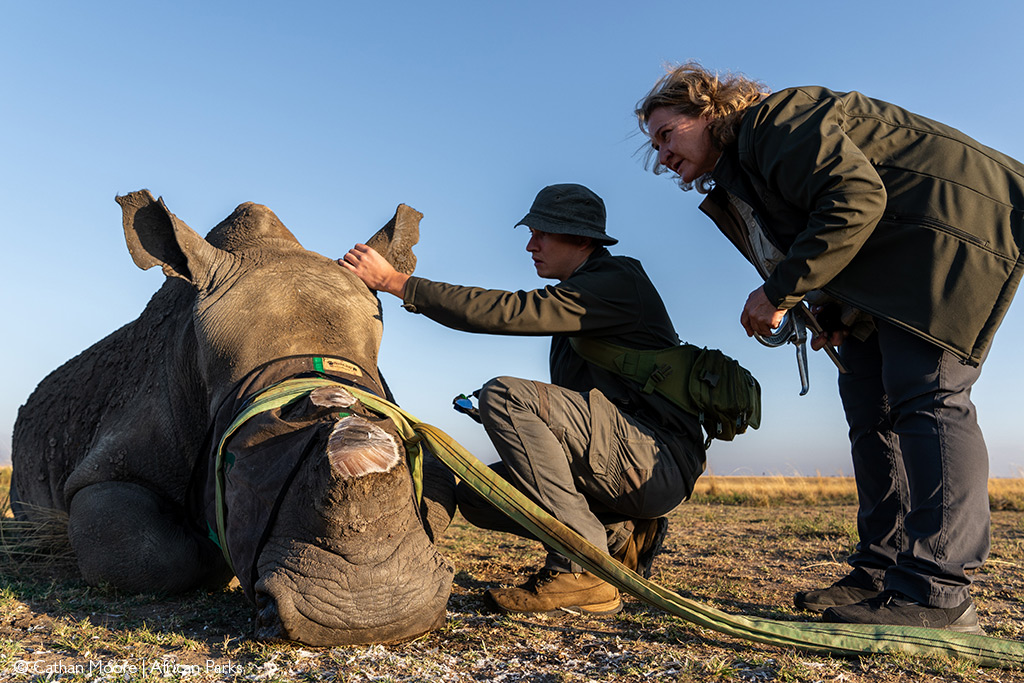
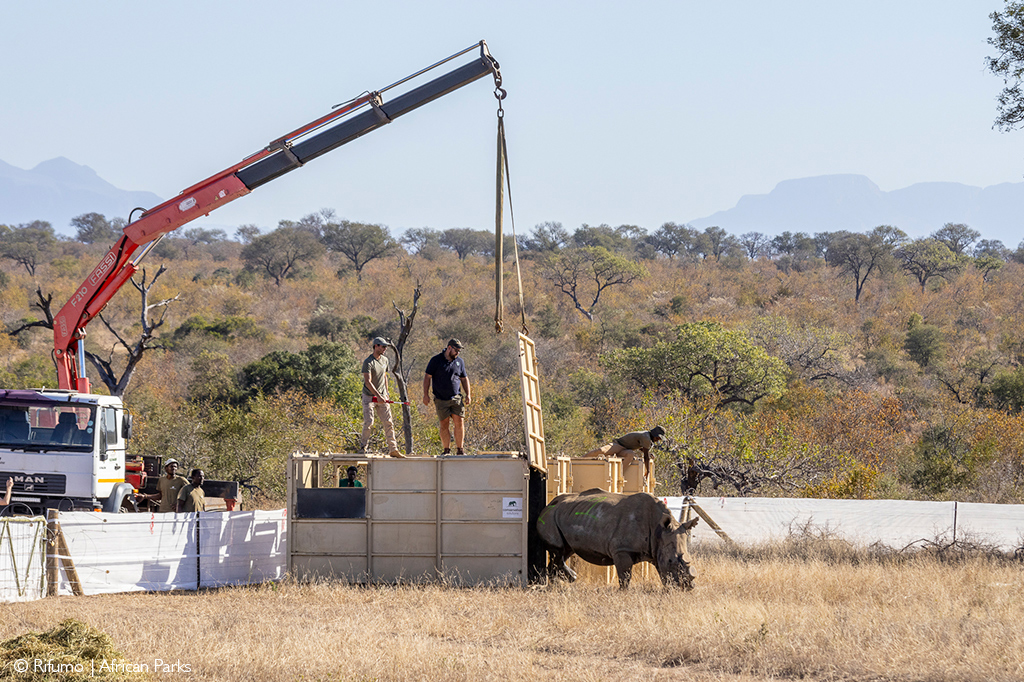
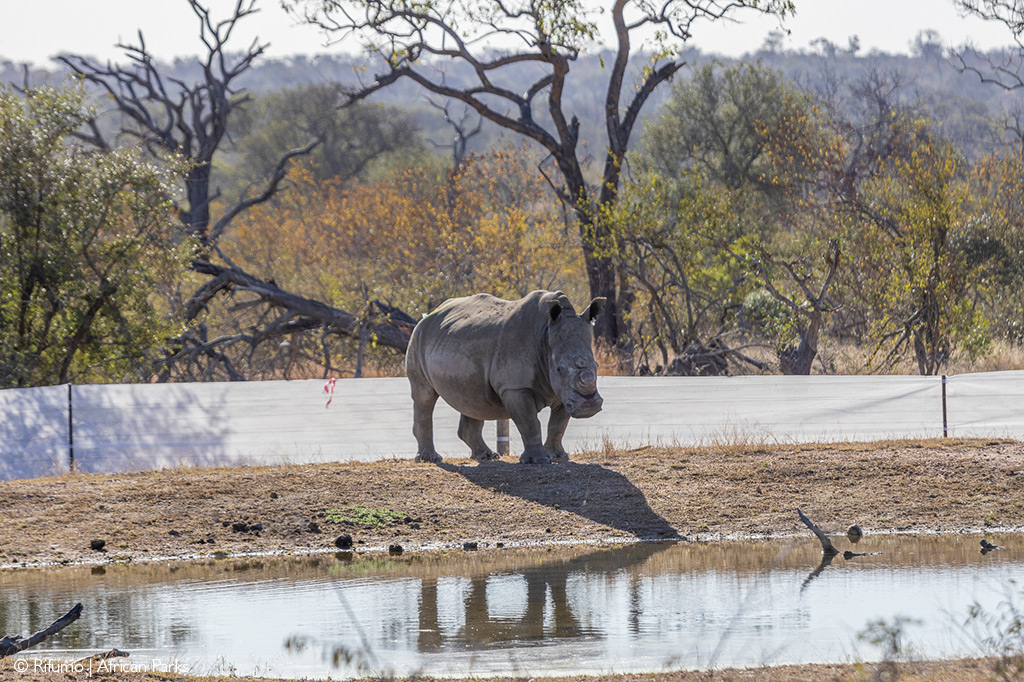
The translocation team leads a rhino towards a crate for translocationGünter Nowak and GKEPF CEO Sharon Haussmann inspect the ear of a tranquillised rhino prior to attaching a tracking deviceA rewilded rhino takes it first steps into Greater Kruger from a transport crateA rewilded rhino approaches the water hole inside the boma in Greater KrugerMoving animals over thousands of kilometres is a serious endeavour. With 30 animals, chartered jumbo jets are the best way. This requires considerable veterinary and logistical coordination to capture the animals, load into crates, transport to the aircraft, load as quickly as possible, unload similarly, transport to the site and release into well-sited and secure bomas. Documentation needs to be in order with customs and immigration officials on both ends to make it as smooth as possible.
Travel with us. Travel in Africa is about knowing when and where to go, and with whom. A few weeks too early / late and a few kilometres off course and you could miss the greatest show on Earth. And wouldn’t that be a pity? Browse our ready-made packages or answer a few questions to start planning your dream safari.


 DID YOU KNOW that African Parks offers safari camps (lodges and campsites) where 100% of tourism revenue goes to conservation and local communities?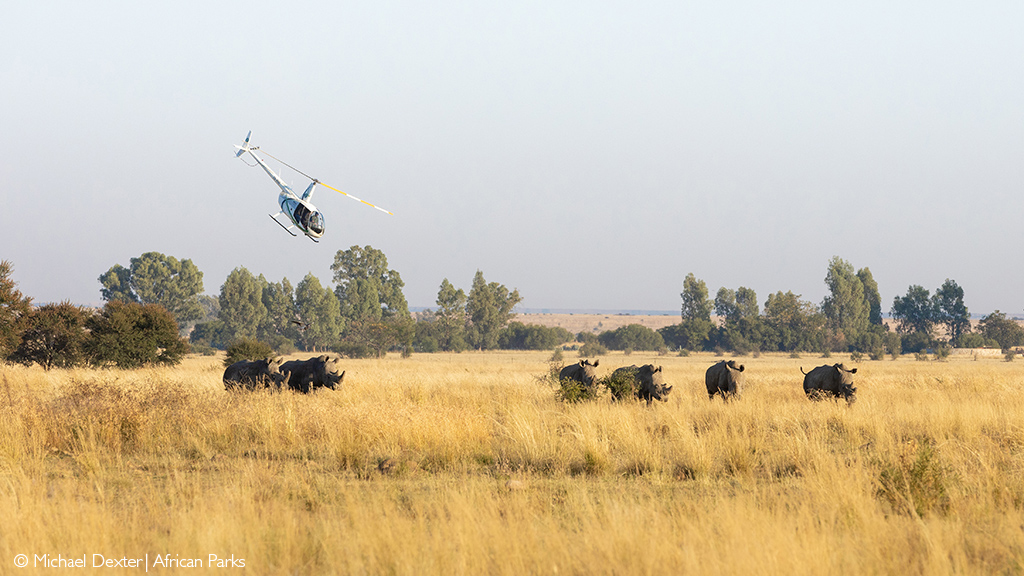
 .
.