Translate

Posts tonen met het label investigation. Alle posts tonen

woensdag 29 juli 2026

An undercover investigation into a circus in Italy has revealed the horrific reality behind the “entertaining” visuals: animal abuse and exploitation of workers


Graphic video

Images from animal circuses in Italy reveal bleak reality


An undercover investigation into a circus in Italy has revealed the sad reality behind the “entertaining” visuals: animal abuse and exploitation of workers.

Eurogroup for Animals’ member, LAV, in collaboration with Franz Weber Foundation, has just launched the investigation “Il sistema circhi”, a project that highlights the same systemic issues in circuses across 19  different locations.

The two organisations received images recorded at Circo Medini in the first month of 2026, revealing poor conditions including:

  • Physical abuse of animals.
  • Violation of labour conditions: workers without appropriate contracts, with no safety standards in the workplace and subjected to verbal abuse.
  • Unhygienic conditions and illegal dumping of manure.
     

For the first time, a person has managed to infiltrate a circus in Europe. For four months, he recorded footage both during the shows and, above all, behind the scenes, bringing to light a picture of violence and humiliation. Faced with these images, no one will be able to say that the circus is a cultural spectacle

LAV
Image
lav lion circus

The two organisations wanted to highlight, however, that this is not a one-off case, but rather a systematic status quo existing in circuses making use of animals. Touring in nine regions across 19 circuses, undercover investigations revealed the horrific situations animals face in such places, including being trapped for hours or days on end, facing beatings, kicks and blows. The findings of these videos have been reported to the relevant authorities.

Twenty-three of the EU's 27 Member States have introduced restrictions on the use of animals in circuses, or have banned the use of wild animals altogether. However, animals are still permitted to perform in circuses in several large EU countries, as decisions on circus animal legislation ultimately stand at national, and not EU level.

LAV calls on the relevant authorities in Italy to finally ban the use of animals in circuses, bringing Italy into line with the growing number of European countries that have already adopted similar measures.

Concerned citizens are encouraged to join the call here.


donderdag 14 augustus 2025

Sign the petition please: A new undercover investigation has revealed heartbreaking conditions for animals at a monkey zoo and show in Thailand.


PETITION:

 https://www.wfft.org/close-down-monkey-zoo-and-show/


A new undercover investigation has revealed heartbreaking conditions for animals at a monkey zoo and show on Koh Samui, in Thailand.


Dozens of monkeys, including infants, are being kept in tiny, rubbish-filled cages. Some even chained by their neck. Footage shows the primates frantically pacing back and forth non-stop, a sign of psychological despair called ‘zoocosis’.

Moved by their plight, Wildlife Friends Foundation Thailand (WFFT) have launched a campaign calling for their rescue. As one of South East Asia’s largest animal sanctuaries across 90 hectares of forested land and an on-site wildlife hospital, we stand ready to assist in rehoming all the animals trapped in this hellhole.


In addition to the disturbing animal cruelty documented at the zoo, the investigation has unveiled alarming public health concerns. Many monkeys at the facility were observed coughing persistently, potentially indicating the presence of infectious diseases such as tuberculosis (TB).


What is particularly concerning is that visitors are actively encouraged to engage in physical interaction with the animals, including feeding, touching, and even hugging the coughing monkeys. Thailand’s burden of human TB is one of the highest in the world, and zoonotic transmission between infected humans and wild or captive macaques is an ongoing public health concern. With Koh Samui a hotspot for tourists around the world, there is legitimate concern about the public health risk posed by this facility.

For years, this zoo has been abusing animals and putting the public at risk. We must finally come together to put a stop to this.

Please sign and share the campaign calling for the zoo and show to be shut down immediately and the animals moved to an appropriate rescue centre. Together, we hope to give these animals the life they deserve.


https://www.wfft.org/close-down-monkey-zoo-and-show/


https://www.wfft.org/


zondag 6 juli 2025

A CNN investigation has uncovered rise in cat torture videos made in China where a global demand for this horrific cruelty is growing daily


A CNN investigation has uncovered a disturbing rise in cat torture videos made in China and shared online. These violent videos are part of a dark global market aimed at people who enjoy watching animals suffer.

The investigation reveals how weak animal protection laws, poor online moderation, and global demand have created a dangerous and growing problem.

Over several months, CNN infiltrated secret online communities that share these videos. The reporters discovered that many of the videos are created in countries with little to no protection for animals. These videos are then sold or traded through international networks.

CNN’s Ivan Watson spoke with animal rights activists and online investigators who are working to expose and shut down these torture networks.

Feline Guardians

Animal rights group Feline Guardians reported a shocking 500% increase in cat torture videos produced in China in less than a year.

In June 2024, a new video was uploaded every 14 hours. By February 2025, the number had increased to one every 2 hours and 38 minutes.

In just the first two months of 2025, over 500 new videos were uploaded. These videos showed more than 300 cats being tortured and killed.

Criminologist Jenny Edwards explained that some people make or watch these videos due to “sexual sadism,” a mental disorder where people enjoy the pain of others.

CNN also interviewed a man who admitted to buying these videos. He called it “a fetish I can’t quit.” He explained that he often searched for more extreme scenes and even asked the video creators to perform specific acts of abuse.

These requests show how dangerous and organized this market is. People are not just watching; they are ordering cruelty like a product.

Activists threatened by abusers

The people trying to stop this network face serious risks. Activists working with Feline Guardians often choose to remain anonymous to protect themselves.


Photo of Laura

One volunteer, known only as Laura, told CNN that she hides her identity for safety reasons. She said many of the people making or buying these videos are part of hidden communities, and exposing them can lead to threats or worse.

These activists often track the creators, collect evidence, and report them to authorities or social media platforms.

The videos are usually shared on encrypted apps like Telegram, where it is hard for outsiders or police to find them.

However, they also appear on public platforms like Facebook, YouTube, and X (formerly Twitter), where children and other users can easily come across them. This raises serious concerns about online safety and the failure of big tech companies to remove harmful content.

Weak animal welfare laws in China

Chen, a Chinese volunteer for Feline Guardians, said the Chinese government is quick to censor political speech and pornography but rarely acts against animal cruelty. This lack of action has made China a hub for these violent videos.

While China fails to respond, other countries are starting to act. Police in the United States and Turkey have arrested people involved in creating or distributing similar content.

In these countries, animal cruelty is treated as a serious crime, especially when it involves online videos. But in China, where there are no strong laws protecting pets and companion animals, most offenders are not punished.

One Chinese university student was caught torturing over 80 stray cats. In another shocking case, a man poured boiling water over a pregnant cat.

In Hangzhou, a kitten was killed with steel blow darts. After that attack, a popular Chinese influencer asked a chilling question: “What if he shoots humans one day?”

The legal situation in China remains a big part of the problem. China only has one national law protecting wildlife, not pets or companion animals like cats and dogs.

A draft law to punish animal cruelty with jail time has been discussed, but it has not been passed. Cultural views and lack of political interest have blocked its progress. This gap in the law allows abusers to act without fear of arrest or punishment.

Animal abusers often also torture humans

The issue also goes beyond animal cruelty. Studies have shown a strong link between abuse of animals and violence against people.

The FBI in the United States has long said that many serial killers and violent criminals started their crimes by hurting animals. One famous case is Jeffrey Dahmer, who tortured animals as a child before going on to kill people.

20-year study showed that people who abuse animals are five times more likely to commit violent crimes against humans.

Another study found that 70% of animal abusers had committed other crimes, and nearly 40% had committed violent crimes. In the most extreme cases, like sexual homicide, 100% of the offenders had a history of abusing animals.

Psychologists say that these offenders often show signs of low empathy, bullying behavior, and a need for power or control. These feelings can easily shift from animals to humans.

Convicted animal abuser kills three people

In September 2023, a 32-year-old university student in Rotterdam opened fire at a hospital and a nearby house, killing three people. He had been known to police and had a 2021 conviction for animal abuse.

Another global case that highlights this risk is Luka Rocco Magnotta, a Canadian who murdered and dismembered Chinese student Jun Lin in 2012.

Before the murder, Magnotta had become known online for torturing and killing cats. He posted videos showing him suffocating and drowning kittens. Activists had warned authorities that he was a threat to humans, but no action was taken until it was too late.

Social media accountability

Social media companies are also failing. Platforms owned by Meta, including Facebook and Instagram, host the majority of online animal cruelty content. Yet only about 36% of reported content is actually removed, according to data from Feline Guardians.

This poor enforcement allows the videos to keep spreading and puts children at risk.

In response, countries like the UK and the EU are taking stronger steps. The UK’s Online Safety Act and the EU’s Digital Services Act both classify animal cruelty as illegal online content.

These laws demand better action from social media companies and allow large fines if they fail to act.

The rise in online animal torture is a serious and growing problem. Activists, lawmakers, and tech companies must work together to stop this cruelty and prevent it from spreading further.

https://www.theanimalreader.com/


zaterdag 14 juni 2025

Animal Equality breaking investigation: Ahold Delhaize cruelty exposed reveals extreem animal cruelty ( video )


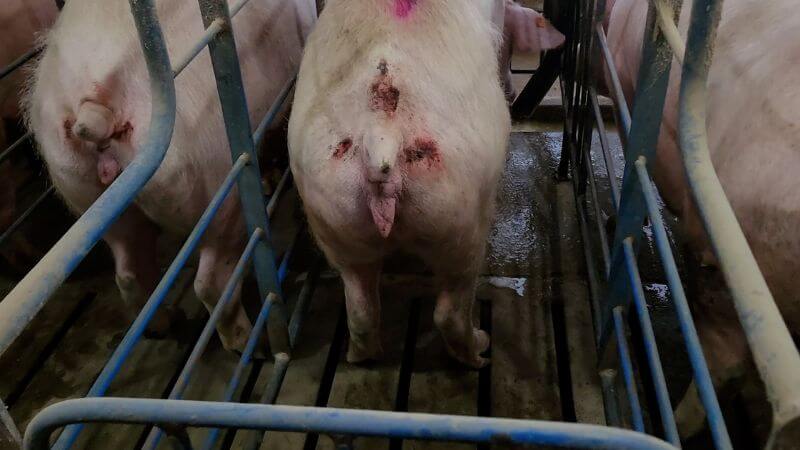
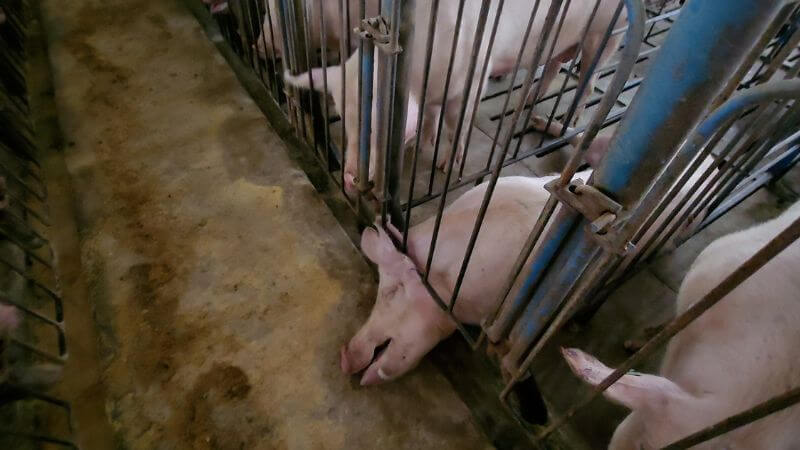
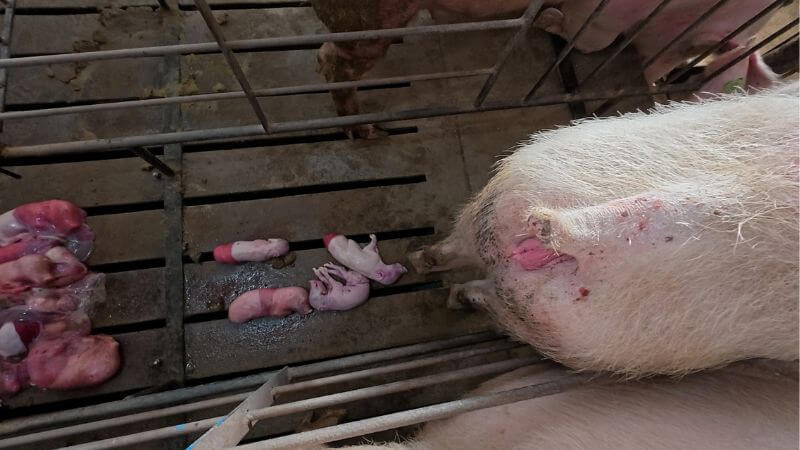
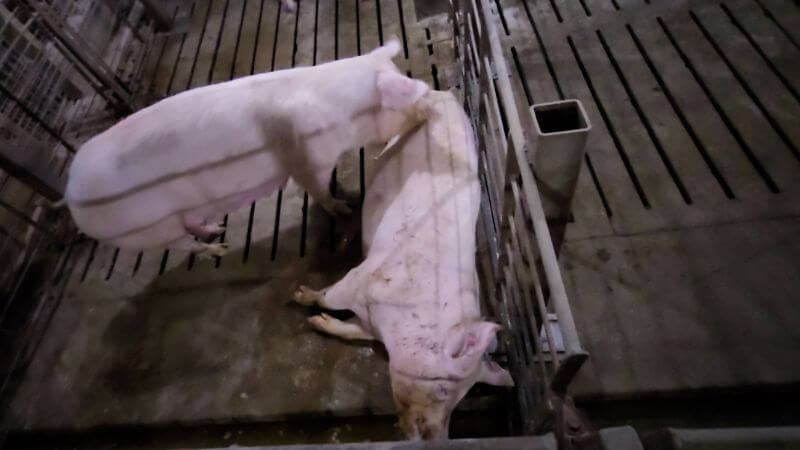
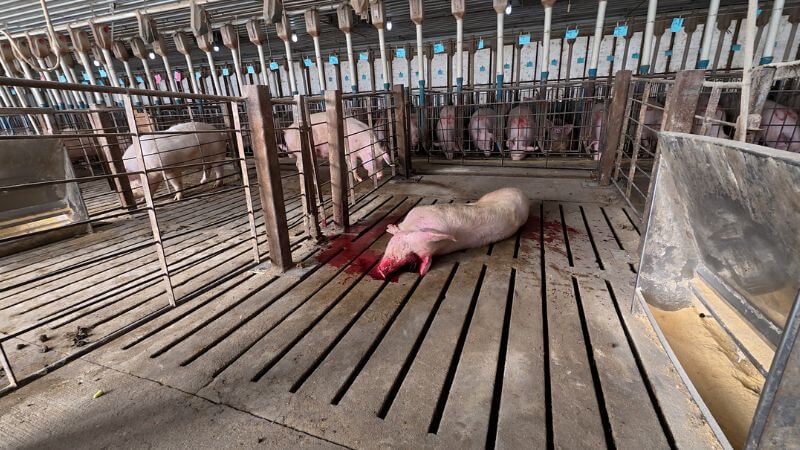
Animal Equality’s latest exposé of a US pig farm linked to major supermarket chains reveals extreme animal cruelty. Footage shows pigs trapped in tiny cages, dead piglets on filthy floors, and pigs engaging in repetitive, stress-induced behaviours.


  • Animal Equality investigated a Kansas pig farm linked to Ahold Delhaize, the parent company of Stop & Shop, Giant, and Food Lion.
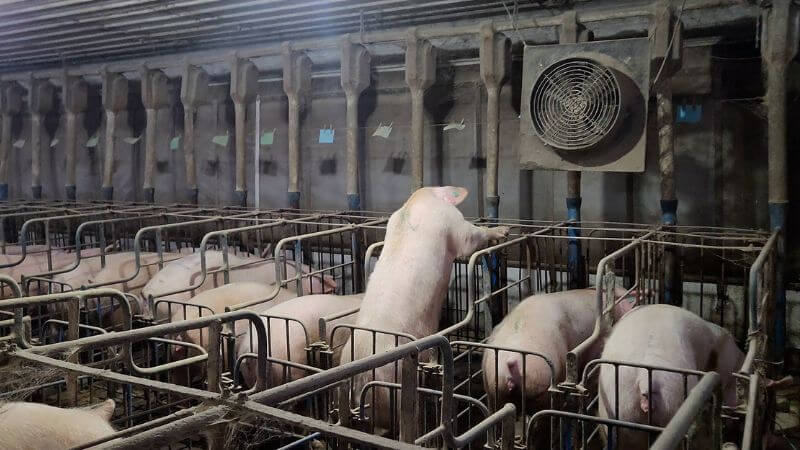
  • Pregnant pigs were locked in crates so small they couldn’t turn around for nearly four months at a time. 
  • Footage showed dead piglets, pigs with wounds, and stress behaviours like chewing the air. Some pigs were too big for the crates and got stuck under the doors.
  • One pig nudged her dead companion; another was shot in full view of other pigs.
  • In the US, about 3.5 million pigs are kept in gestation crates condemned by experts as extremely cruel.
  • Ahold Delhaize’s brands promised to ban crates nearly 10 years ago. It has delayed action until 2028.

A new exposé by Animal Equality has revealed animal cruelty at a Kansas pig breeding facility linked to Ahold Delhaize – the parent company of US supermarket stores including Stop & Shop, Giant, and Food Lion.

The 2024-2025 footage shows pregnant pigs locked inside gestation crates – metal cages so small they couldn’t turn around or take more than a single step. For nearly four months at a time, the animals were forced to struggle against the bars, desperate for even a hint of movement. 

The video reveals a pattern of suffering: piglets dead on the floors, mothers with open wounds, and signs of severe psychological stress. Pigs were seen chewing the air, trying to escape, or lying still and unresponsive.

Confinement triggers abnormal behaviour in pigs

Many pigs were covered in bloody sores where the metal bars dug into their skin, left vulnerable to infection on faeces-covered floors. Some showed signs of prolapsed organs after repeated pregnancies.

Several pigs were too large for the crates and struggled to move. Some wedged their faces beneath the cage doors in search of space. One pig became stuck and screamed until a worker intervened.

Our investigator also observed repetitive behaviours, many of which are stress-induced. Some pigs bit the bars or chewed the air. Others pushed their bodies into the backs of their crates repeatedly.

Some screamed. Others lay still, pressed against the metal – silent and unresponsive. A few tried to climb the bars, pawing at the air.

Piglets and mothers die behind bars

Investigators documented premature piglets born inside gestation crates, many of whom died within an hour. Their mothers, trapped in cages too small to turn around, could not see or reach their dead piglets. 

Outside the facility, the decaying bodies of discarded piglets were filmed on the ground and in wheelbarrows. These piglets had been removed from the farm floors as part of the workers’ regular duties. 

Adult pigs also died prematurely on this farm. In one scene, a pig nudged the body of her dead companion, appearing to search for a response. 

In another, a wounded pig was shot with a captive bolt gun and left to die in a holding pen while others looked on, unable to turn away.

Gestation crates face global controversy

Across the United States, an estimated 3.5 million mother pigs are confined in gestation crates. 

Experts have condemned them as “one of the cruelest forms of confinement devised by humankind”. Some have compared this extreme confinement to spending months in an airplane seat. 

When it’s time to give birth, pigs are moved to slightly different enclosures known as farrowing crates. After nursing their piglets, they’re returned to gestation crates to start the cycle again.

The only time these animals walk is between cages – and eventually, to slaughter.

Pigs are bred repeatedly until their bodies can no longer meet industry demands. Then they’re killed and replaced with younger animals.

Despite growing public criticism and bans in several US states and countries, including the UK, gestation crates remain common across the pig farming industry. In some barns, more than a thousand pigs are lined up in crates just slightly wider than their bodies.

Who’s holding Ahold Delhaize accountable?

Ahold Delhaize continues to allow gestation crates in its US supply chain, prompting global backlash. 

Nearly ten years ago, some of the company’s brands promised to stop using gestation crates. Ahold Delhaize reaffirmed that promise in 2020. It has made little progress since then and has shared no clear updates.

The company has now delayed its deadline to 2028. Even then, the change will apply only to some products.

While Ahold Delhaize has made improvements in Europe – mainly due to stronger laws – its US operations still rely on extreme confinement. Other grocery companies have already stopped using gestation crates. Some of Ahold Delhaize’s own brands in Europe have, too.

In response, Animal Equality launched a campaign for accountability. This includes secondary campaigns against Pandora Jewellery and Symrise – two companies that share board member, Jan Zijderveld, with Ahold Delhaize. 

Zijderveld sits on the Supervisory Board that oversees the company’s animal welfare policies.

Demonstrations have taken place in the US, Germany, Italy, the Netherlands, Spain, Denmark and the UK. Meanwhile, advocates have been emailing company executives and flooding social media.

Join them today. Tell Ahold Delhaize that delays cost lives.

The UK pig meat industry 

While the UK has banned gestation crates, the use of farrowing crates is still widespread; 60% of mother pigs spend up to a quarter of their lives in these cruel conditions. 

At Cross Farm in Devon, a Red Tractor – assured facility, Animal Equality documented mothers staring blankly through metal bars, surrounded by cold concrete, their only ‘enrichment’ a single wooden stick. Some were trapped so tightly that they accidentally crushed their own babies to death.

Even in so-called ‘cage-free’ systems, their welfare is far from guaranteed; when it comes time to kill them, most pigs in the UK face one of the cruellest stunning methods – high intensity CO₂ gas, which causes them to essentially feel as though they are burning from the inside out.

Shifting demand away from cages

This system exists to meet demand for pig meat – but that demand is shifting.

Across the UK, plant-based options like bacon, sausage, and whole-food protein alternatives are becoming easier to find and prepare. Many fit seamlessly into everyday meals.

For those concerned about animal suffering, choosing plant-based foods is the most effective way to end confinement.

protect pigs

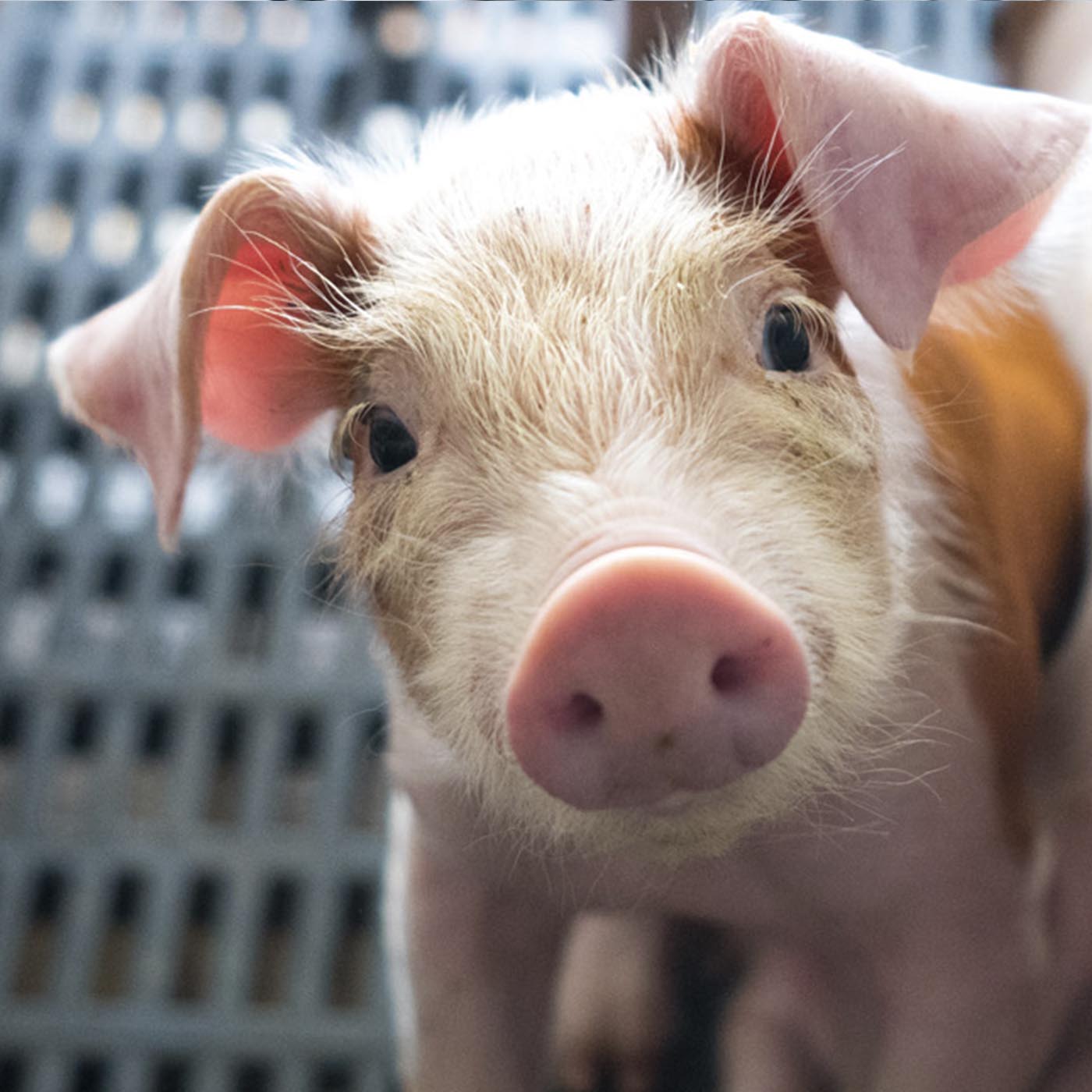
Pigs are highly social animals who are often considered smarter than dogs. You can protect these intelligent animals by simply choosing plant-based alternatives.