Translate

Posts tonen met het label social media. Alle posts tonen

dinsdag 6 januari 2026

'Scrolling Through Cruelty' reveals thousands of horrific videos circulating on social media platforms where animals are tortured and killed in 2025 ( 1 billion+ views)


Philadelphia Man Sentenced to Prison for Participating in Disturbing Online Monkey Torture Network


This monster Monkey Koki is still active on Facebook


A man from Philadelphia, Pennsylvania, has been sentenced to 38 months in prison and three years of supervised release for participating in online groups that created and shared videos of monkeys being tortured, mutilated, and sexually abused, according to a press release from the Department of Justice.


Robert Berndt pleaded guilty in May to conspiring to create and distribute these horrific “animal crush videos.”


Court documents state that Berndt conspired with others to use encrypted messaging platforms to send money to people in Indonesia who carried out the specific torture requests against baby and adult monkeys on camera.

 https://ladyfreethinker.org/

https://actionforprimates.org/index.php

In 2021, Lady Freethinker and Action for Primates exposed the hidden online network dedicated to the abuse of baby monkeys after uncovering a private group that paid for custom torture videos. Findings from our investigations were shared with law enforcement agencies worldwide and also contributed to the BBC documentary “The Monkey Haters.”

Since that time, numerous individuals involved with these groups have been charged and convicted.

The cruelty inflicted on these defenseless monkeys is both devastating and unacceptable. Although Berndt’s sentence is an important step, dismantling these networks will require continued scrutiny, enforcement, and public pressure. Lady Freethinker remains committed to exposing this abuse and pushing for justice until all animals are free from exploitation.


https://ladyfreethinker.org/wp-content/uploads/2025/09/Scrolling-Through-Cruelty-A-Report-by-Lady-Freethinker.pdf  Cruelty Report 

A new report compiled by investigators at Lady Freethinker, Scrolling Through Cruelty, reveals thousands of disturbing videos circulating openly on major social media platforms, where animals are tortured and killed, forced into staged rescues, pitted against one another in fights, and even sexually abused — all for views, clicks, and profit.

Collectively, these videos racked up an astonishing 1 billion+ views.
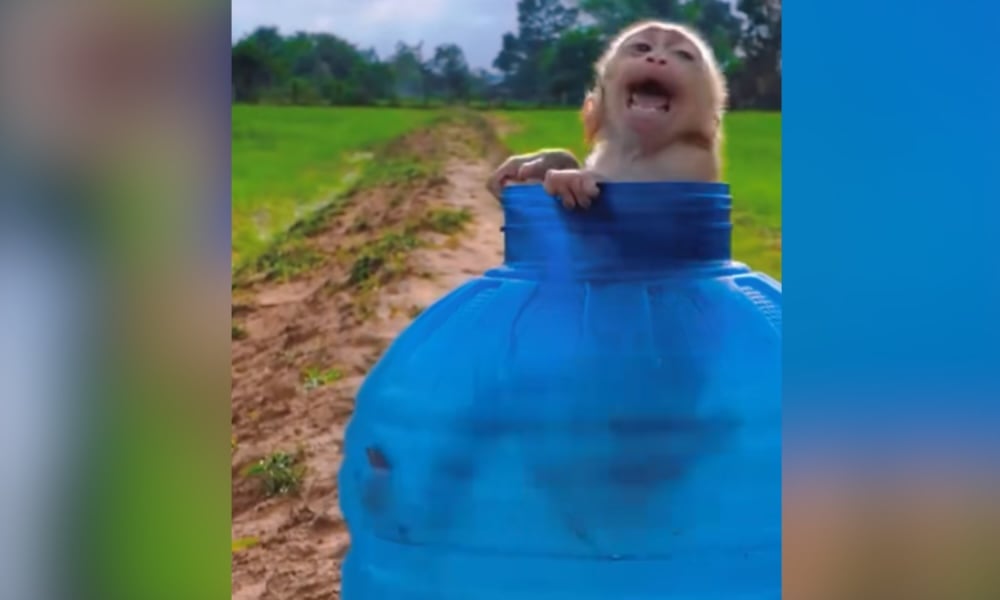
Baby monkey stuck in jug

Baby monkey trapped in jug in social media video

The most common animal cruelty content documented was monkey torture, animal fighting, and fake rescues, where animals are deliberately put into dangerous situations so perpetrators can film dramatic “rescues.”

Some videos showed dogs, cats, snakes, roosters, and other animals forced into fights, while others displayed puppies, kittens, and chickens being crushed, burned, or subjected to sexual violence.

Researchers also found extensive evidence of viewers of this content being funneled from social media platforms to encrypted messaging apps like Telegram, where longer and even more horrifying videos are shared, sold, and requested by paying customers.
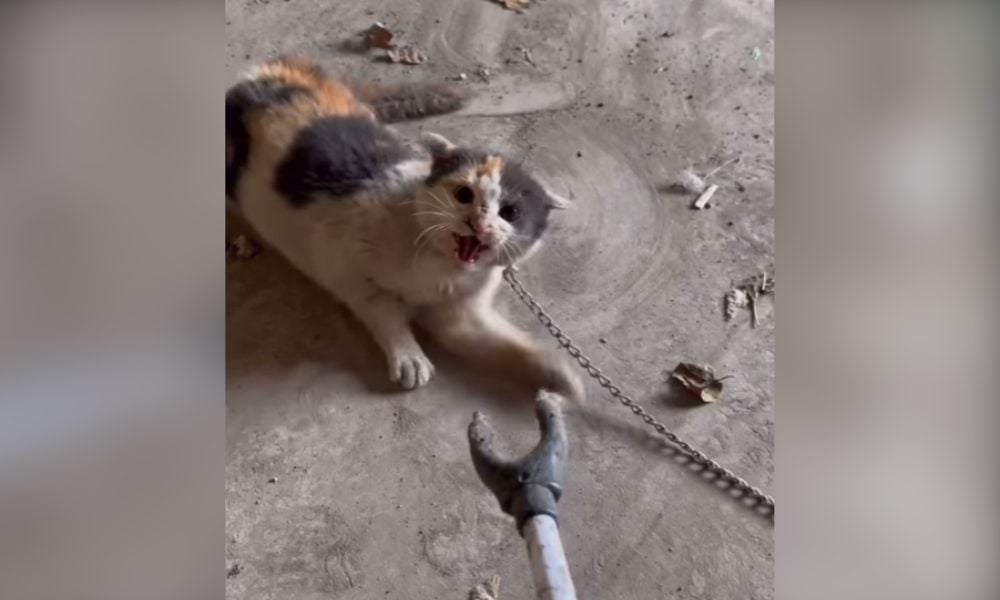
A terrified cat is approached by a man with a prod

Cat tormented in social media video

The Scope of the Problem

Between May 1 and June 30, 2025, LFT investigators identified 2,341 links to animal cruelty content across Facebook, Instagram, TikTok, YouTube, and X (formerly Twitter). Of those, 1,744 were still active at the time of analysis.

Facebook was by far the worst offender, hosting more than three-quarters of the videos, with TikTok, YouTube, X, and Instagram each hosting smaller but still significant shares. Nearly all of the monkey torture content identified (95%) was found on Facebook.

Why It Matters

These videos depict unimaginable suffering for innocent animals who are beaten, starved, abused, and killed in the name of entertainment. The platforms also incentivize the creation of these videos by allowing creators to profit, promote, and grow their profiles through posting viral clips.

Additionally, this content causes harm to people — especially children — who are exposed to cruelty disguised as humor, “cute” videos, or even education. Researchers warn that this exposure can desensitize viewers, normalize violence, and encourage copycat abuse.
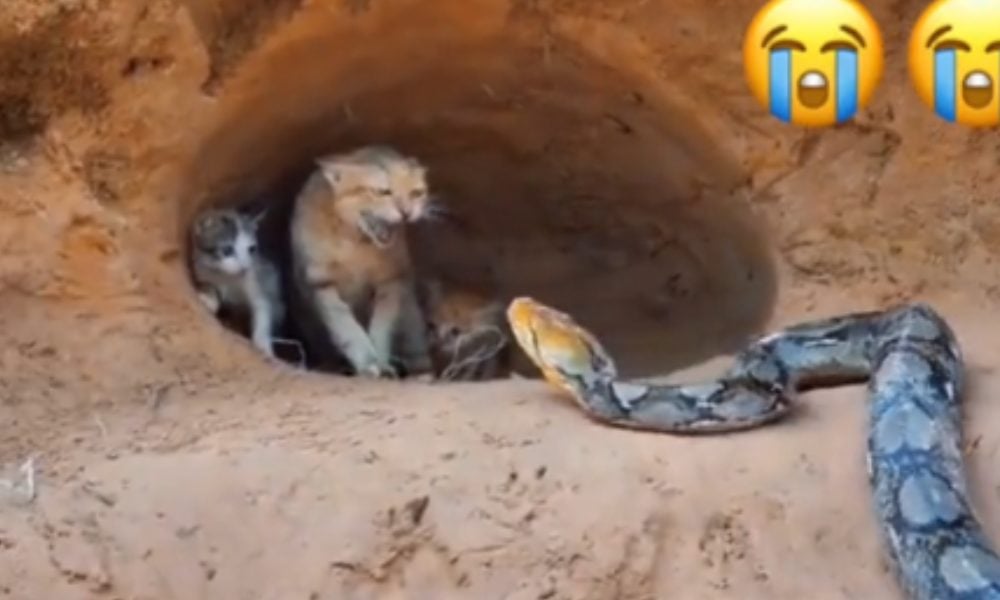
A mother cat and her kittens are approached by a snake

Snake attacking cat in social media video

Platforms Failing to Protect Animals

Despite having policies against showing animal abuse on their platforms, social media companies are failing to enforce them effectively. LFT’s team never ran out of new cruelty content to document — new content was uploaded daily — and reporting rarely resulted in its removal.

What Needs to Change

  • Social media companies have to adopt clearer and stronger bans on animal-cruelty content, and proactively prevent, regulate, and remove it.
  • Lawmakers need to pass stronger laws to criminalize the creation and sharing of this content to protect children and vulnerable users.
  • The public must report this content to platforms, authorities, and to Lady Freethinker’s e-tipline: reportposts@ladyfreethinker.org.
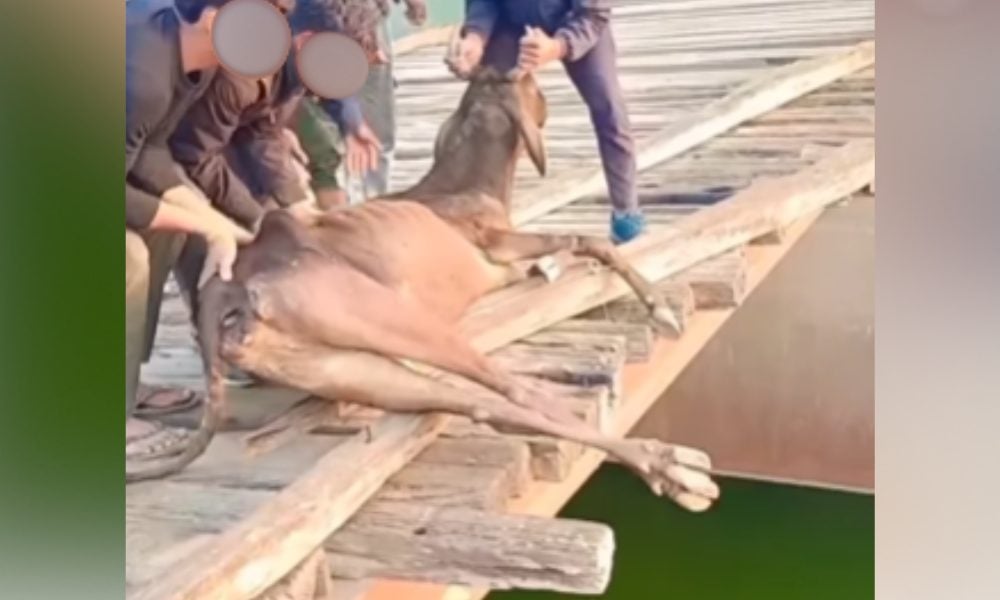
Men push a cow into a river

Cow pushed into river in social media video

Take Action

No animal should be tortured, staged in a fake rescue, or killed for clicks. Join us in calling on social media platforms and lawmakers to crack down on this horrific abuse.

Please sign our petition to demand that Facebook take urgent action to remove and prevent the spread of animal cruelty content.

We also encourage you to read and share our full report as widely as possible, including with local and federal lawmakers.

 By Evan Shamoon |  2025

woensdag 15 oktober 2025

Alarming evidence that TikTok is being used as an open marketplace for endangered wildlife: the videos reached 1,8 miljoen vieuws and thousands of likes and shares


A Pangolin 

TikTok fuelling the endangered wild animal trade

A new investigation has uncovered alarming evidence that TikTok is being used as an open marketplace for endangered wildlife, threatening species survival and undermining global conservation efforts.New research has found that traders in Togo, Africa are openly advertising and selling carcasses of wild animals, including the critically threatened pangolin. Despite international protections, this trade is thriving on social media platforms where enforcement is failing.

According to the study, undertaken by Head of Research at World Animal Protection Dr. Angie Elwin among other researchers, TikTok is becoming a hub for the illegal wild animal trade. Researchers reviewed 80 public videos from two accounts, posted between November 2022 and April 2024, which revealed:

  • Over 3,500 carcasses of smoked wild animals;
  • 27 different species, many of them legally protected;
  • More than 130 white-bellied pangolins, an endangered species that is banned from international trade.

The videos reached massive audiences, with nearly 1.8 million views and thousands of likes and shares. One video featuring smoked pangolins alone attracted more than 216,000 views.

Social media is becoming the new marketplace for endangered wildlife. It is easily accessible and massively unregulated, placing a direct threat to species' survival.

Dr Angie Elwin, Head of Research, World Animal Protection

This trade poses risks beyond biodiversity loss:

  • Animal welfare: captured animals suffer extreme cruelty, with reports of pangolins being boiled alive or burned.
  • Public health: wild meat from pangolins, rodents, mongooses and jackals carries zoonotic diseases.
  • Local livelihoods: communities are increasingly reliant on a trade that threatens both sustainability and survival of species.

World Animal Protection is calling for urgent regulation of the online wildlife trade. In order to ensure the survival of endangered species, social media platforms must not become a safe haven for traffickers. 

woensdag 2 oktober 2024

Bizarre social media-trend: dieren expres in gevaar gebracht en daarna gered 'Fake Rescue' Facebook, Instagram, TikTok, YouTube verdienen miljoenen


Het bange jonge aapje wordt in een gat in klei/modder gezet. Het diertje kan er onmogelijk zelf uitkomen. De dierenbeul, haalt het diertje eruit en maakt er een video van om te verkopen op internet. Helaas wordt het diertje daarna in diep water gegooid om vervolgens  weer gered te worden door de monsters voor video's. 

Altijd een rapport opsturen naast de video ( stipjes .....) Zelf stuur ik dan ook nog een rapport op naar : https://www.smaccoalition.com/report-a-concern  Deze organisatie hoopt de monsters voor de rechter te krijgen. Dit jaar zijn er 3 opgepakt en een gevangenis straf gekregen
 

DEN HAAG - Dierenwelzijnsorganisaties waarschuwen voor een „bizarre trend”: dieren die voor filmpjes in levensgevaarlijke situaties worden gebracht om daar vervolgens uit te worden ’gered’. Deze ’reddingsvideo’s’ circuleren volgens de organisaties, waaronder World Animal Protection Nederland, veelvuldig op sociale media als Facebook, Instagram, TikTok en YouTube.


Katten levend begraven

„We zagen katten die levend werden begraven, en apen die tegenover een agressieve slang werden gezet. Onder sommige video’s stond een oproep voor donatie, zogenaamd om meer dieren te kunnen redden. Maar deze makers brengen opzettelijk weerloze dieren in gevaar, alleen om viraal te kunnen gaan. Het was hartverscheurend om te zien.”


Eerst zet de dierenbeul het aapje in een grot, Daarna pakt hij de slang en laat die naar het aapje toe glijden en dan neemt een andere dierenbeul de video op om te verkopen aan de media.

Onderzoekers vonden in een tijdsbestek van zes weken 1022 video’s met naar eigen zeggen „neppe reddingsacties.” Ook waren ze erg populair, aldus de organisaties. „Samen werden ze al meer dan 572 miljoen keer bekeken”, aldus de dertien organisaties in een verklaring.


zondag 26 mei 2024

Report it Week: May 24-30, 2024 Animal cruely on social media report to the platform and then report to Social Media Animal Cruelty Coalition ( SMACC )

 So, have you ever seen animal cruelty content on social media and tried to report it to the platform ? That’s a good start!

But, did the platform notify you that the content would be removed?
If not, we want to share a fact: in 2022, 1 out of 3 posts containing cruelty content were removed by the platforms after being reported!


It is vital to keep reporting animal cruelty content—each report feeds into something bigger.

Let’s #ReportIt2EndIt

Learn how to report animal cruelty content here: https://www.smaccoalition.com/how-to-report

All photos SMACCoalition   REPORT !!


#ReportIt2EndIt #AsiaforAnimals #AnimalWelfare #StopAnimalCruelty #PrimatesAreNotPets #WildlifeAreNotPets #Online #SocialMedia #Movement 🌍❤️ 


CUTE??  Perverse animal cruelty !!

Did you know that the exploitation of macaques is not just an isolated incident, but a web of interconnected issues? (Available in English, Vietnamese, Hindi, and Bahasa Indonesia)
From being hunted as ‘pests’ to being showcased in harmful social media content, these intelligent creatures endure a cycle of exploitation that knows no bounds.
Explore ‘𝘛𝘩𝘦 𝘔𝘢𝘤𝘢𝘲𝘶𝘦 𝘙𝘦𝘱𝘰𝘳𝘵: 𝘐𝘯𝘥𝘰𝘯𝘦𝘴𝘪𝘢’𝘴 𝘜𝘯𝘱𝘳𝘰𝘵𝘦𝘤𝘵𝘦𝘥 𝘗𝘳𝘪𝘮𝘢𝘵𝘦𝘴’ to uncover the intricate challenges long-tailed and pig-tailed macaques face - now available in English and Bahasa Indonesia.
Together, let’s create a world where all beings are treated with compassion and respect.

Alle reacti