Translate

Posts tonen met het label Action for primates. Alle posts tonen

dinsdag 13 januari 2026

Shameful experiments on 14 rhesus macaques at Louisiana State University US were injected with 30% alcohol voor 14 months and 3 months later a virus injected into their vagina, 9 months later, killed

Rhesus macaques force-fed alcohol for many months, infected with a virus, then killed in USA research

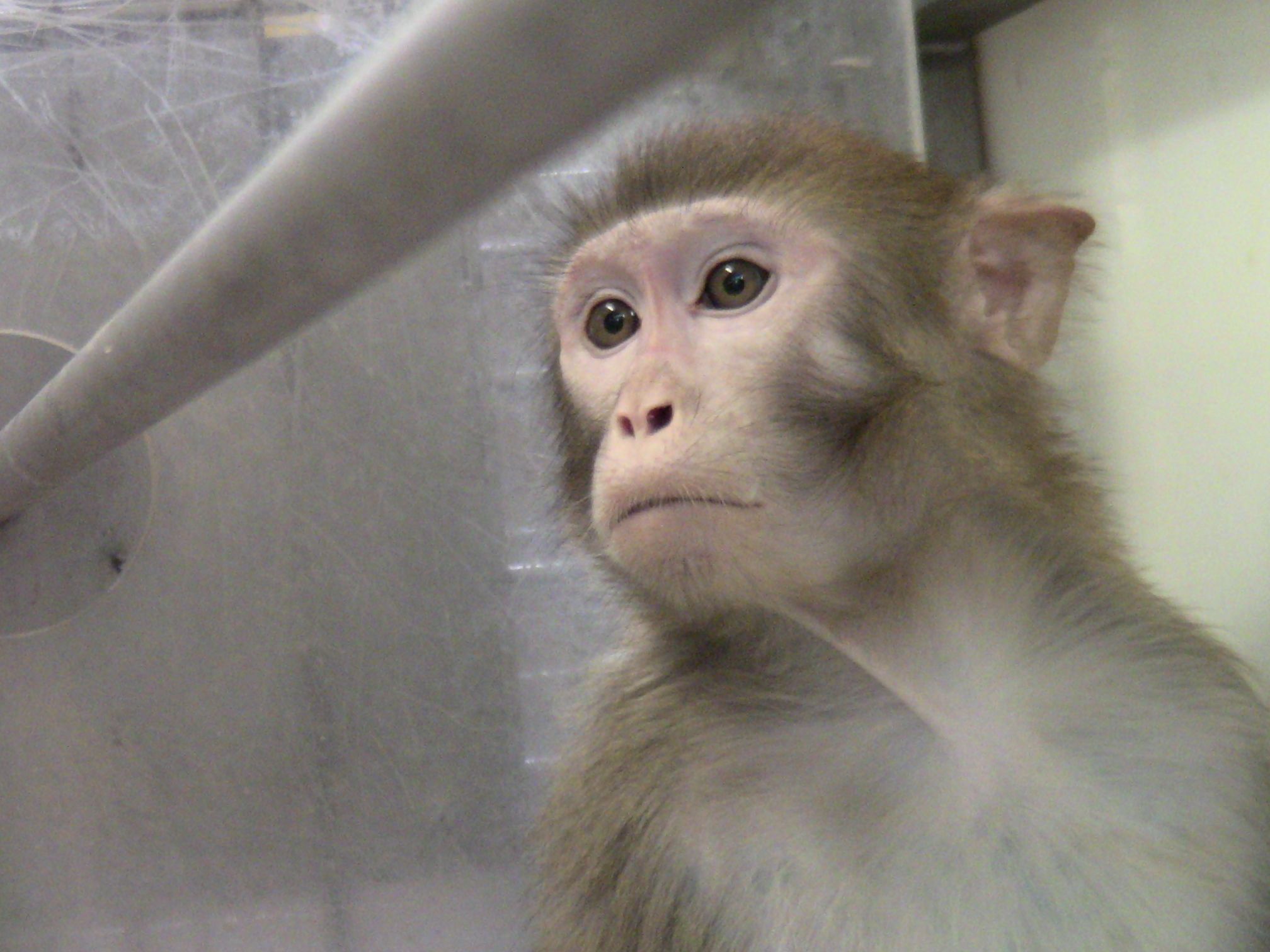
A rhesus macaque in a laboratory cage
SOKO Tierschutz/Cruelty Free International


In another tragic waste of lives and critical resources, rhesus macaques were used and killed as "models" of chronic binge drinking in people (Poret et al 2025). The work was done at the Louisiana State University Health Sciences Center in the USA, and was approved by its animal use committee. The US taxpayer paid for this inhumane and brutal treatment of monkeys through grants AA009803 and AA028459, from the National Institute on Alcohol Abuse and Alcoholism (NIAAA), totalling many millions of US dollars.

Fourteen adult female Indian-origin rhesus macaques were used. The macaques were subjected to surgery to implant catheters that went into their stomachs. One group received ethanol injections to simulate "chronic binge" alcohol use. A 'control' group received water. The alcohol was at a concentration of 30%, totalling 13-14 grams of ethanol per kilogram of body weight, injected five days a week for over 14 months. No information was provided on the impact the alcohol had on the macaques.

Three months into the alcohol treatment, all the macaques were given the simian immunodeficiency virus into their vaginas. A little over two months later, they were treated with an antiviral medication. Nine months after the viral infection, all were subjected to 24 hours of food deprivation and then killed (euphemistically referred to as euthanized by the researchers) by anaesthetising them and injecting them with a salt solution using an "embalming machine", to get tissues for study.

The researchers stated that macaques were to be killed before their scheduled deaths, if at any point any lost 25% of their body weight, refused to eat for four days, had major organ failure or had other medical or surgical complications that could not be treated. It was stated that two of the macaques were killed before the end of the study, but no reasons were provided.

Surprisingly, there was no description of how the macaques were housed, contrary to the ARRIVE guidelines required by many reputable journals (ARRIVE). As a result, we have to assume the macaques were singly caged with the standard lack of any meaningful social or other enrichment.

The researchers found that forced chronic alcohol use during infection with the simian immunodeficiency virus has effects on fatty tissue. These chronic effects are already known to occur in humans.

The public are repeatedly told that non-human primates are used in research only when absolutely necessary and only when there are no other alternatives available. This shameful experiment, which resulted in substantial suffering for the monkeys, demonstrates the meaningless nature of such assurances and a lack of commitment to stop using non-human primates. Not only is the information in macaques irrelevant to people given the fundamental differences between the two species, humane and ethical clinical studies have been and can continue to be done on human patients and volunteers in order to get data that are directly applicable to people. The macaques in this study had to endure the stress of captivity, almost certainly virtual social isolation, survival surgery, the severe negative effects of alcohol and death for what can only be considered frivolous reasons and clearly contrary to the Replacement criterion for the 3Rs.

Substance abuse, such as with the alcohol forced into these macaques, is a purely human disease. It is far more complex than simply using a drug. There are genetic, socioeconomic and other factors that must be considered if humans with drug addiction are to be helped. Continuing to concoct cruel and fatal experiments using non-human primates in the search for a 'magic bullet' that will cure people is not only costly, it is futile (Magliaro & Ahluwalia 2022). If we are serious about helping people, then we need to put all our intellectual and limited financial and other resources into responsibly and ethically studying the existing and huge laboratory already available to us: the world human population.

What you can do to help:

  • Click here—Dr George F. Koob—to create sample message you can edit and send to the director of the NIAAA, responsible for this inhumane research, and to others below who are directly and indirectly responsible as well; if you are using Web-based mail, use buttons below box to copy information to Clipboard for pasting into relevant parts of a blank message.
    To:
    George F. Koob, Ph.D., Director, National Institute on Alcohol Abuse and Alcoholism <george.koob@nih.gov>
    Cc:
    Jay Bhattacharya, M.D., Ph.D., Director, National Institutes of Health <jayanta.bhattacharya@nih.gov>
    Heather Narver, DVM, Animal Program Director/Facility Veterinarian, National Institute on Alcohol Abuse and Alcoholism <narverh@mail.nih.gov>
    Steve Nelson, MD, Chancellor of LSU Health New Orleans <snelso1@lsuhsc.edu>
    NIH Office of Laboratory Animal Welfare <olaw@od.nih.gov>
    Michael F. Miles, M.D. Ph.D., Editor, Alcohol, Clinical and Experimental Research <michael.miles@vcuhealth.org>
    admin@actionforprimates.org

  •    
  • If you are a US citizen, also let your President, Representative and Senators know that you do not approve of your taxes being used to fund such inhumane experimentshttps://www.usa.gov/elected-officials
  • If you are an alumnus of Louisiana State University, click this E-mail address to let them know that you will not support the alumni association unless the university discontinues research on non-consenting beings: info@lsualumni.org

Cited information:

  1. Poret, Jonquil M.; Liz Simon and Patricia E. Molina 2025-04-01 Chronic binge alcohol dysregulates omental adipose tissue extracellular matrix in simian immunodeficiency virus-infected macaques Alcohol, Clinical and Experimental Research 49(4):741-753
  2. ARRIVE (Animal Research: Reporting of In Vivo Experiments) https://arriveguidelines.org/ Accessed 2024-06-21
  3. recommendations for the full and transparent reporting of research involving animals – maximising the quality and reliability of published research, and enabling others to better scrutinise, evaluate and reproduce it
  4. Magliaro, Chiara and Ahluwalia, Arti 2022-11-01 "Biomedical Research on Substances of Abuse: The Italian Case StudyAlternatives to Laboratory Animals 50(6):423-436
  5. ...the impact of social, psychological and economic factors that determine the onset and persistence of addiction (and recovery from it) in humans. Indeed, the predictive validity of animal models of addiction is poor, with few effective treatments deriving from animal studies. ...the principal argument against animal experiments in the field of substances of abuse is that addiction in humans is a complex disorder which encompasses psychological, social and emotional variables that are impossible to model in animals.

Information on NIH grant support (funding) is taken verbatim from relevant publications. If you have difficulty with any links provided, you can do your own search through the NIH RePORTER site: https://reporter.nih.gov/, by copying and pasting the grant number into the Search field on the form.

Be aware that some grants include funds for more than experiments on non-human primates.


Facebook icon Instagram icon Bluesky icon X icon Vimeo icon

Contact us via E-mail

Copyright © 2020-2026 Action for Primates. All rights reserved.

dinsdag 6 januari 2026

'Scrolling Through Cruelty' reveals thousands of horrific videos circulating on social media platforms where animals are tortured and killed in 2025 ( 1 billion+ views)


Philadelphia Man Sentenced to Prison for Participating in Disturbing Online Monkey Torture Network


This monster Monkey Koki is still active on Facebook


A man from Philadelphia, Pennsylvania, has been sentenced to 38 months in prison and three years of supervised release for participating in online groups that created and shared videos of monkeys being tortured, mutilated, and sexually abused, according to a press release from the Department of Justice.


Robert Berndt pleaded guilty in May to conspiring to create and distribute these horrific “animal crush videos.”


Court documents state that Berndt conspired with others to use encrypted messaging platforms to send money to people in Indonesia who carried out the specific torture requests against baby and adult monkeys on camera.

 https://ladyfreethinker.org/

https://actionforprimates.org/index.php

In 2021, Lady Freethinker and Action for Primates exposed the hidden online network dedicated to the abuse of baby monkeys after uncovering a private group that paid for custom torture videos. Findings from our investigations were shared with law enforcement agencies worldwide and also contributed to the BBC documentary “The Monkey Haters.”

Since that time, numerous individuals involved with these groups have been charged and convicted.

The cruelty inflicted on these defenseless monkeys is both devastating and unacceptable. Although Berndt’s sentence is an important step, dismantling these networks will require continued scrutiny, enforcement, and public pressure. Lady Freethinker remains committed to exposing this abuse and pushing for justice until all animals are free from exploitation.


https://ladyfreethinker.org/wp-content/uploads/2025/09/Scrolling-Through-Cruelty-A-Report-by-Lady-Freethinker.pdf  Cruelty Report 

A new report compiled by investigators at Lady Freethinker, Scrolling Through Cruelty, reveals thousands of disturbing videos circulating openly on major social media platforms, where animals are tortured and killed, forced into staged rescues, pitted against one another in fights, and even sexually abused — all for views, clicks, and profit.

Collectively, these videos racked up an astonishing 1 billion+ views.

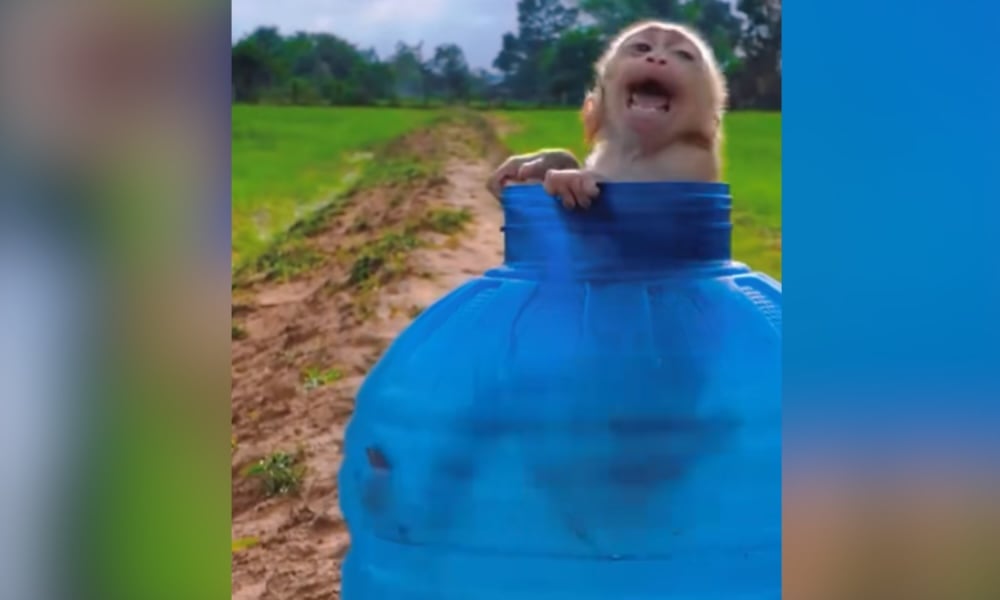
Baby monkey stuck in jug

Baby monkey trapped in jug in social media video

The most common animal cruelty content documented was monkey torture, animal fighting, and fake rescues, where animals are deliberately put into dangerous situations so perpetrators can film dramatic “rescues.”

Some videos showed dogs, cats, snakes, roosters, and other animals forced into fights, while others displayed puppies, kittens, and chickens being crushed, burned, or subjected to sexual violence.

Researchers also found extensive evidence of viewers of this content being funneled from social media platforms to encrypted messaging apps like Telegram, where longer and even more horrifying videos are shared, sold, and requested by paying customers.

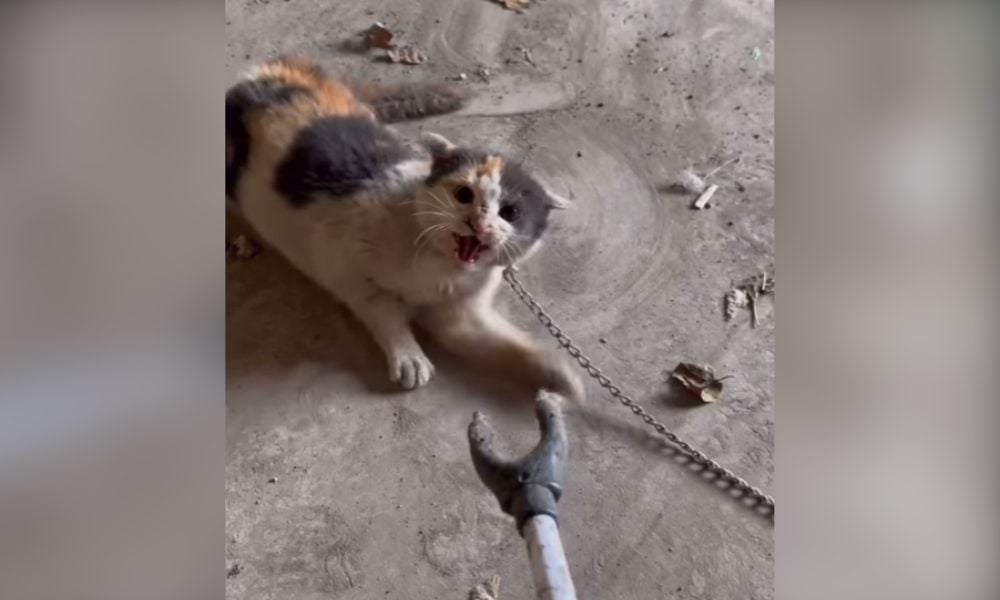
A terrified cat is approached by a man with a prod

Cat tormented in social media video

The Scope of the Problem

Between May 1 and June 30, 2025, LFT investigators identified 2,341 links to animal cruelty content across Facebook, Instagram, TikTok, YouTube, and X (formerly Twitter). Of those, 1,744 were still active at the time of analysis.

Facebook was by far the worst offender, hosting more than three-quarters of the videos, with TikTok, YouTube, X, and Instagram each hosting smaller but still significant shares. Nearly all of the monkey torture content identified (95%) was found on Facebook.

Why It Matters

These videos depict unimaginable suffering for innocent animals who are beaten, starved, abused, and killed in the name of entertainment. The platforms also incentivize the creation of these videos by allowing creators to profit, promote, and grow their profiles through posting viral clips.

Additionally, this content causes harm to people — especially children — who are exposed to cruelty disguised as humor, “cute” videos, or even education. Researchers warn that this exposure can desensitize viewers, normalize violence, and encourage copycat abuse.

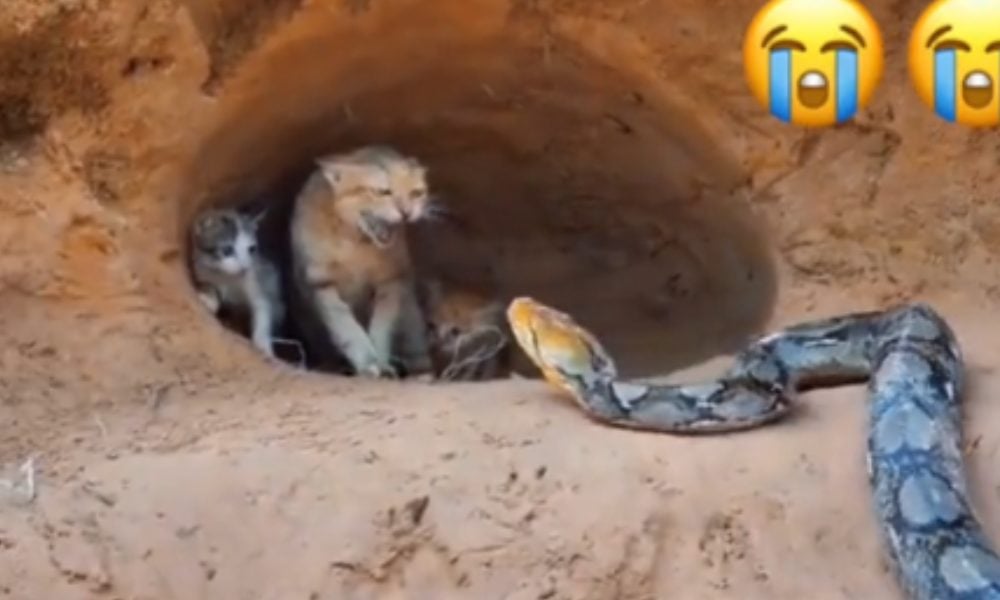
A mother cat and her kittens are approached by a snake

Snake attacking cat in social media video

Platforms Failing to Protect Animals

Despite having policies against showing animal abuse on their platforms, social media companies are failing to enforce them effectively. LFT’s team never ran out of new cruelty content to document — new content was uploaded daily — and reporting rarely resulted in its removal.

What Needs to Change

  • Social media companies have to adopt clearer and stronger bans on animal-cruelty content, and proactively prevent, regulate, and remove it.
  • Lawmakers need to pass stronger laws to criminalize the creation and sharing of this content to protect children and vulnerable users.
  • The public must report this content to platforms, authorities, and to Lady Freethinker’s e-tipline: reportposts@ladyfreethinker.org.
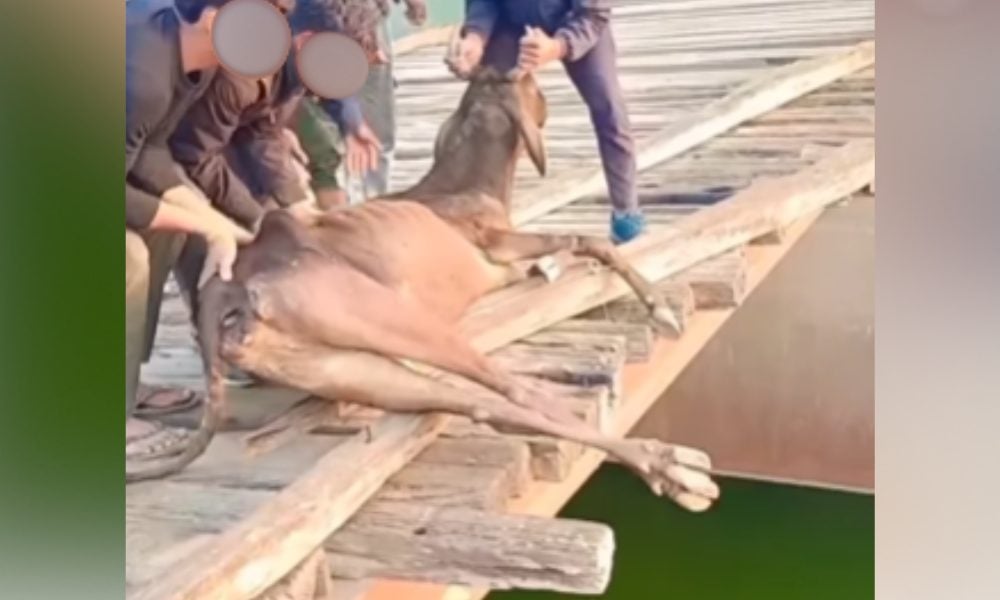
Men push a cow into a river

Cow pushed into river in social media video

Take Action

No animal should be tortured, staged in a fake rescue, or killed for clicks. Join us in calling on social media platforms and lawmakers to crack down on this horrific abuse.

Please sign our petition to demand that Facebook take urgent action to remove and prevent the spread of animal cruelty content.

We also encourage you to read and share our full report as widely as possible, including with local and federal lawmakers.

 By Evan Shamoon |  2025

vrijdag 12 september 2025

Rhesus monkeys used in an inhumane and wasteful experiment simulating human exposure to high voltage power lines in Iran ( the experiment has been done with humans making this cruelty senseless

  In Iran, rhesus macaques used to study impact of high voltage power transmission

Rhesus macaque in laboratory cage; Cruelty Free International/SOKO Tierschutz
Rhesus macaque in laboratory cage
Cruelty Free International/SOKO Tierschutz

Two adult male rhesus macaques were used in an inhumane and wasteful experiment simulating human exposure to high voltage power transmission lines in Iran. The work was approved by the Baqiyatallah University of Medical Sciences institutional review board.

The macaques were kept in a controlled environment for 12 months to adapt. One of the individuals was exposed to a high voltage electric field for 4 hours a day for a month. The electric field was simulated using two metal sheets, each two x two metres. A crane was used to place the sheets at the bottom and on top of a cage, which was only one x one x one metres. The sheets were exposed to a voltage of six kV to create the electric field. The other macaque was kept outside this field as a "control".

Tests designed to determine memory were done before, during and after the exposure to the electric field. The tests comprised the ability of each macaque to find food comprising a peanut in different settings, several times a day. The macaques were deprived of food for 17 hours before tests. The macaques were also subjected to magnetic resonance imaging (MRI) to determine activity in the brain. The fate of the macaques was not stated.

These two macaques had to live in tiny cages, under laboratory conditions, deprived of any meaningful social contact, in a scientifically poor study that had no value for human health. The researchers pointed out that there have already been numerous studies in humans to determine the effects of electromagnetic radiation. Given that literally tens of thousands of humans live in close proximity to high voltage transmission lines worldwide, humane and relevant studies could be carried out with them. This experiment is just another example of the unwillingness of the research industry to use and improve methodologies that do not depend on subjecting non-human primates to exceptionally inhumane experiments and conditions.   Action for Primates)


Reference:

Aliyari, Hamed; Hosseinian, Mohsen; Menhaj, Mohammad Bagher; Sahraei, Hedayat; Shabani, Mohsen and Kazemi, Masoomeh 2025-01-01 Effect of High-voltage Electrical Field Exposure on Neurobiological Factors and Visual Working Memory of Macaques Basic and Clinical Neuroscience 16(Spec Issue):251-264

donderdag 21 augustus 2025

Inhumane conditions!! Action for Primates received information that in May 2025, 800 monkeys were transported by air for 43 hours involving 7 flights in 7 countries to Miami


Trown away not useful anymore for lab testing

https://actionforprimates.org/public/archives/afp_news_2025.php#20250820

 Concerns raised over Mauritius' compliance with CITES Convention regarding monkey trade and transportation

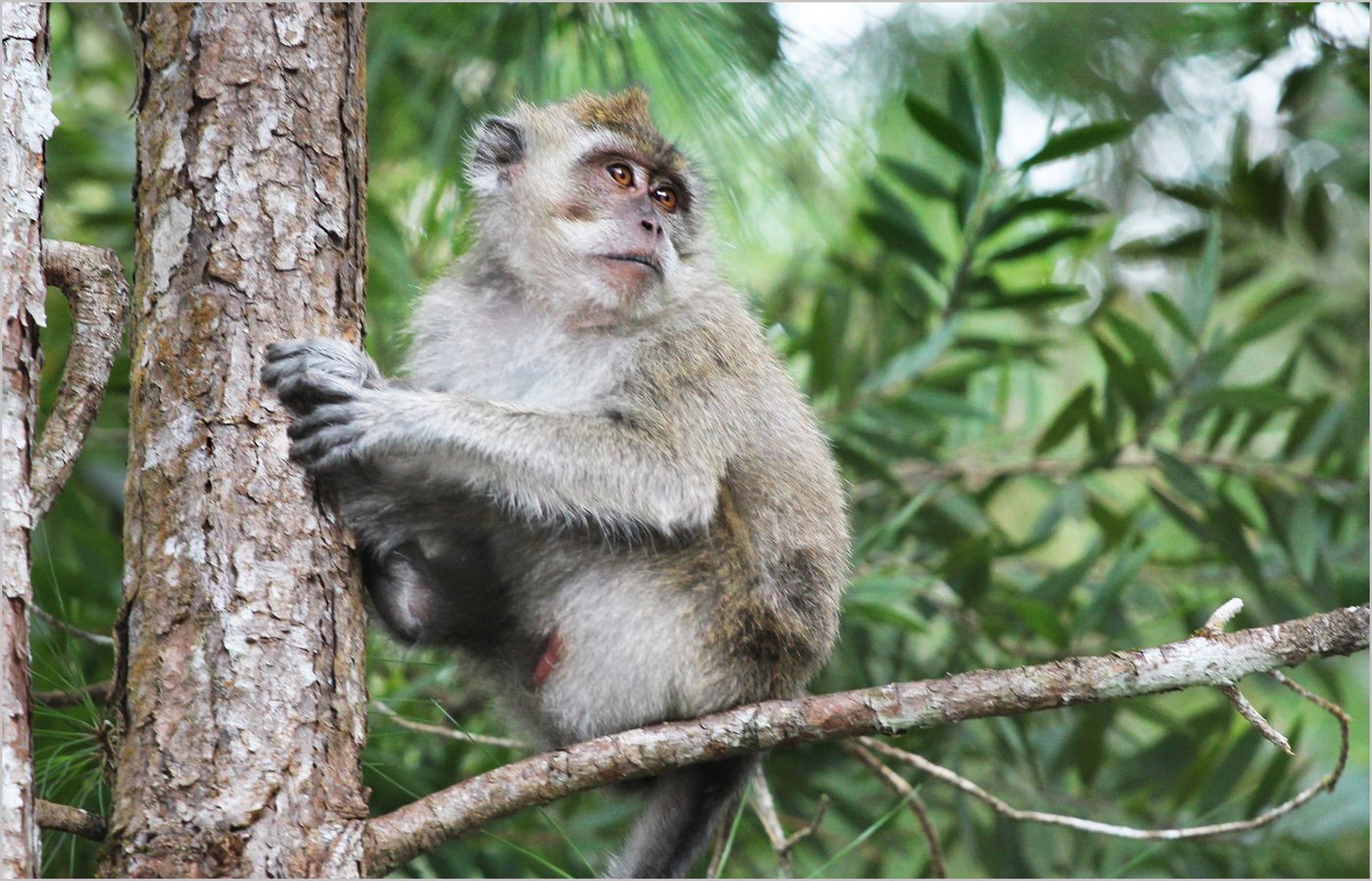
Long-tailed macaque living freely in Mauritius

Information uncovered by Action for Primates points to a failure by Mauritius to comply with its obligations under the CITES Convention in issuing CITES permits for the export of long-tailed macaques—a CITES Appendix II listed species—and their export from Mauritius during which they are subjected to inhumane and lengthy air transportation. Dr Buyukmihci, veterinary adviser and co-founder of Action for Primates, has written to the CITES Secretariat requesting that it investigate the status of Mauritius's compliance with its obligations under Article IV of the CITES Convention.

There has been an alarming escalation in the numbers of long-tailed macaques exported from Mauritius in recent years for research and testing purposes—primarily to the USA—up from 7,691 individuals in 2019 to 14,623 in 2024, and a resurgence of the wild-caught trade. According to the CITES trade database, between 2020 and 2023, 12,304 long-tailed macaques sourced as wild-caught were exported (1).

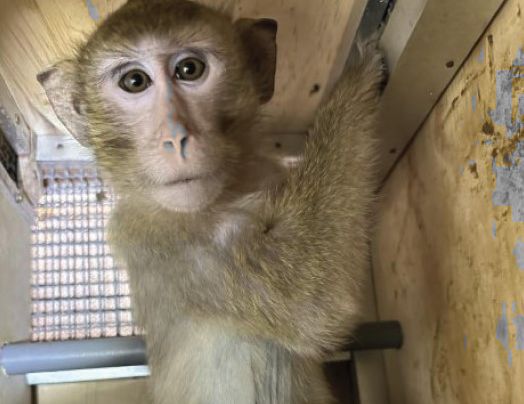
Long-tailed macaque in transport crate; Animal Rights
Long-tailed macaque in transport crate
Animal Rights

Under clause (a) Article IV of the Convention on International Trade in Endangered Species of Wild Fauna and Flora (CITES) (Regulation of Trade in Specimens of Species Included in Appendix II). This clause states that an export permit shall only be granted when a Scientific Authority of the State of export has advised that such export will not be detrimental to the survival of that species (2). This involves establishing a quota and providing an explanation of the scientific basis by which it was determined that the quota would not be detrimental to the survival of the species in the wild. These are known as Non-Detrimental Findings or NDFs (3).

A request was made to the National Parks and Conservation Service (the Mauritius CITES Management Authority) seeking information on what basis CITES export permits were issued for the export of wild-caught long-tailed macaques between 2020 and 2023, and on what basis they were currently being issued. In response, the director stated that NDFs for long-tailed macaque exports are not necessary:

The Non Detriment Finding (NDF) for the wild monkeys in Mauritius is not warranted given that the population is an exotic invasive species and that extraction has no incidence in the wild.

This policy, however, is at odds with what is required by CITES. NDFs are required by the Convention for any export of a CITES-listed species, regardless whether the population is native or introduced.


An NDF usually involves population surveys. No population census on wild long-tailed macaques, however, has been carried out in Mauritius since the 1980s. If there are no recent population surveys, the Mauritius authorities cannot conclude that the export trade does not have an impact. Wild long-tailed macaques are also captured by macaque farms for breeding purposes, which has a further impact on the population.

The Mauritius authorities have regularly pushed the narrative that, as an 'introduced' species, the long-tailed macaque in Mauritius is a 'pest' and, by implication, not worthy of conservation concerns. The species is persecuted, and it is in the interests of those who benefit commercially from the primate trade for the people of Mauritius to maintain a negative attitude towards the macaques, to view them as a problem and trapping and exporting as solutions.

Concerns were also raised about Mauritius' compliance with clause (c) of the Article IV of the CITES Convention: ...a Management Authority of the State of export is satisfied that any living specimen will be so prepared and shipped as to minimize the risk of injury, damage to health or cruel treatment... Long-tailed macaques exported from Mauritius by air are being subjected to inhumane and lengthy transportation times. For example, in May 2025, Action for Primates received information that 800 long-tailed macaques transported by air from Mauritius to Miami, were subjected to a journey of over 43 hours, involving seven flights and stop-overs in Ethiopia, Greece, France, Iceland, Boston, New York and Miami; there was an eight and a half hour stop-over in Paris. The 43 hours does not include the hours spent at Sir Seewoosagur Ramgoolam International Airport, nor the unloading in Miami and the onward journey by road to the US importer's premises.

We believe that the Mauritius CITES Management Authority is allowing unacceptable and inhumane conditions for exporting long-tailed macaques.

For more information, read this article by environmental journalist, Tracy Keeling::

Probe points to rule breach in Mauritius' lab monkey business. Mauritius says the sustainability assessments required under global regulations are 'unwarranted' in its trade of long-tailed macaqueshttps://tracyk.substack.com/p/probe-points-to-rule-breach-in-mauritius

References:

  1. https://trade.cites.org/
  2. Article IV of the CITES Convention: An export permit shall only be granted when the following conditions have been met: (a) a Scientific Authority of the State of export has advised that such export will not be detrimental to the survival of that species; (b) a Management Authority of the State of export is satisfied that the specimen was not obtained in contravention of the laws of that State for the protection of fauna and flora; and (c) a Management Authority of the State of export is satisfied that any living specimen will be so prepared and shipped as to minimize the risk of injury, damage to health or cruel treatment... (https://cites.org/eng/disc/text.php)
  3. https://cites.org/eng/prog/ndf/index.php