Translate

Posts tonen met het label Japan. Alle posts tonen

zondag 21 december 2025

Animal welfare organisations are concerned about Japan's growing exotic animal cafe trend for human entertainment ( video )


Animal Welfare Charities Demand Urgent Legislative Reform in Japan


A growing animal welfare crisis is unfolding in Japan, as the trend of keeping primates as pets, along with the proliferation of exotic animal cafes across major cities, raises significant ethical and welfare concerns. Global recognised charity Wild Welfare, in collaboration with the Japanese Coalition for Animal Welfare (JCAW), are urgently calling for critical legislative reforms to address these pressing animal welfare and public health issues.

Fennec Foxes in cramped Animal Cafe window, Tokyo, Japan.

Wild Welfare works tirelessly with partners around the globe to safeguard the welfare of captive wild animals in zoos, aquariums, rescue centres and sanctuaries. Along with JCAW, an organisation dedicated to raising animal welfare standards in Japan through public education and the lobbying of policymakers, a joint petition letter to the Japanese government seeking significant changes in the ‘Act on Welfare and Management of Animals’ has been developed and sent to the Japanese government for consideration.

The Japanese government is poised to review and revise the country’s animal welfare law, making now the ideal time to ensure that vital key animal welfare considerations are included within the new bill. Wild Welfare and JCAW jointly published the powerful letter, which directly addresses important issues regarding the trend for keeping pet primates and the inherent welfare issues within exotic animal cafes across Japan.
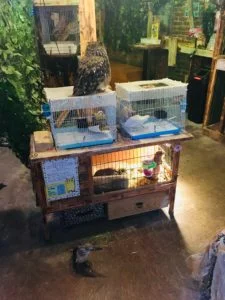
Animals stacked in cages inside an animal café in Japan.

Animals stacked in cages inside an animal café in Japan.

The letter highlights the complexities of proper husbandry required to appropriately care for highly intelligent and socially complex primates. “By not providing suitable environments and species appropriate social opportunities, the welfare of the animals is compromised, which can lead to abnormal behaviours and suffering. Although the owners might be providing care (food and water), they will not be able to meet the behavioural and psychological needs of the animals, as well as it being very difficult to appropriately provide for their nutritional and veterinary care needs” explained Simon Marsh, Director at Wild Welfare.

The joint letter further elaborates on how the absence of properly enriched environments and specialised treatments can fundamentally erode the physical and psychological health of non domesticated animals placed in these unnatural settings.

The collective appeal also outlines the increasing issue of Japan’s growing exotic animal cafe trend. Wild Welfare and JCAW have shown particular concern for the welfare of a diverse array of wild animals exhibited within these locations. From nocturnal owls confined indoors under bright unnatural light for many hours of the day, to socially complex animals such as meerkats kept segregated from groups. These unnatural and artificial environments force a high level of direct human interaction onto the animals, taking away the choice or control each animal has over their own life. “There is no place in a modern society for the keeping of exotic species in cafes for human entertainment” Simon expressed.

Wild Welfare and JCAW also highlight the heightened risk of zoonotic disease transmission within these confined and close contact facilities. As there are little to no effective national regulations governing these facilities, it is currently impossible to ensure both animals and customers are protected from the real risk of such disease exposure.

Two Prairie dogs in a small animal café cage.

Prairie dogs in a small animal café cage, Japan.

Another key issue raised by the appeal letter regards the troubling issue of illicit wildlife trade. Many of the thousands of exotic animals kept within Japanese animal cafes may also be pets, a number of which will be subject to international trade prohibitions. Without a robust system that allows traceability, there is a real risk that illegally traded animals may be exhibited at these cafe locations. In this circumstance, customers could unknowingly be supporting the illegal pet trade.

Wild Welfare and JCAW propose that deep legislative reform is necessary to tackle the many issues at hand. “Our joint letter makes a number of recommendations for reform, for instance, the prohibition or restriction of keeping primates as pets and close control of primate ownership. In the case of exotic animal cafes, the coalition recommends implementing a new regulatory framework for the industry” explained Simon.

two flamingos standing in an animal cafe in Japan

Two flamingos standing in a tiny pool by a chained Owl inside of an animal cafe in Tokyo.

The board members of the Japanese Coalition for Animal Welfare (JCAW), expressed how they are committed to lobbying for laws that protect all animals in Japan. “In recent years, there has been a global focus on issues regarding wildlife in captivity, and in Japan too, there is an array of unresolved issues related to the keeping of wildlife. JCAW believes that bringing each and every one of these issues to the attention of stakeholders as well as the general public would serve as the first step to creating a world that is compassionate to all animals.” said JCAW.

The comprehensive report is now available to download, with content currently only provided in a Japanese language version at https://www.dokyoren.com/250426/

“Our joint report with JCAW underscores Wild Welfare’s unwavering commitment to improving wild animal welfare globally” Simon exclaimed. It is hoped that this vital work by JCAW and Wild Welfare will encourage the government to act on the proposed suggestions and take real steps towards enhancing animal welfare across Japan, reducing the risk of zoonotic disease, and protecting the public, as well as conserving important wildlife by addressing the illegal trade of wild animals. 


Wild Welfare is devoted to improving the welfare of captive animals across the world. You can support our efforts by sharing this article, signing up to our newsletter, following our social media accounts (Facebook and Instagram), or by making an online donation. Every small contribution can help us to develop our vital accessible animal resources. Thank you.


maandag 25 augustus 2025

Animal welfare organisations are concerned about Japan's growing exotic animal cafe trend for human entertainment ( video )


Animal Welfare Charities Demand Urgent Legislative Reform in Japan


A growing animal welfare crisis is unfolding in Japan, as the trend of keeping primates as pets, along with the proliferation of exotic animal cafes across major cities, raises significant ethical and welfare concerns. Global recognised charity Wild Welfare, in collaboration with the Japanese Coalition for Animal Welfare (JCAW), are urgently calling for critical legislative reforms to address these pressing animal welfare and public health issues.

Fennec Foxes in cramped Animal Cafe window, Tokyo, Japan.

Wild Welfare works tirelessly with partners around the globe to safeguard the welfare of captive wild animals in zoos, aquariums, rescue centres and sanctuaries. Along with JCAW, an organisation dedicated to raising animal welfare standards in Japan through public education and the lobbying of policymakers, a joint petition letter to the Japanese government seeking significant changes in the ‘Act on Welfare and Management of Animals’ has been developed and sent to the Japanese government for consideration.

The Japanese government is poised to review and revise the country’s animal welfare law, making now the ideal time to ensure that vital key animal welfare considerations are included within the new bill. Wild Welfare and JCAW jointly published the powerful letter, which directly addresses important issues regarding the trend for keeping pet primates and the inherent welfare issues within exotic animal cafes across Japan.

Animals stacked in cages inside an animal café in Japan.

Animals stacked in cages inside an animal café in Japan.

The letter highlights the complexities of proper husbandry required to appropriately care for highly intelligent and socially complex primates. “By not providing suitable environments and species appropriate social opportunities, the welfare of the animals is compromised, which can lead to abnormal behaviours and suffering. Although the owners might be providing care (food and water), they will not be able to meet the behavioural and psychological needs of the animals, as well as it being very difficult to appropriately provide for their nutritional and veterinary care needs” explained Simon Marsh, Director at Wild Welfare.

The joint letter further elaborates on how the absence of properly enriched environments and specialised treatments can fundamentally erode the physical and psychological health of non domesticated animals placed in these unnatural settings.

The collective appeal also outlines the increasing issue of Japan’s growing exotic animal cafe trend. Wild Welfare and JCAW have shown particular concern for the welfare of a diverse array of wild animals exhibited within these locations. From nocturnal owls confined indoors under bright unnatural light for many hours of the day, to socially complex animals such as meerkats kept segregated from groups. These unnatural and artificial environments force a high level of direct human interaction onto the animals, taking away the choice or control each animal has over their own life. “There is no place in a modern society for the keeping of exotic species in cafes for human entertainment” Simon expressed.

Wild Welfare and JCAW also highlight the heightened risk of zoonotic disease transmission within these confined and close contact facilities. As there are little to no effective national regulations governing these facilities, it is currently impossible to ensure both animals and customers are protected from the real risk of such disease exposure.

Two Prairie dogs in a small animal café cage.

Prairie dogs in a small animal café cage, Japan.

Another key issue raised by the appeal letter regards the troubling issue of illicit wildlife trade. Many of the thousands of exotic animals kept within Japanese animal cafes may also be pets, a number of which will be subject to international trade prohibitions. Without a robust system that allows traceability, there is a real risk that illegally traded animals may be exhibited at these cafe locations. In this circumstance, customers could unknowingly be supporting the illegal pet trade.

Wild Welfare and JCAW propose that deep legislative reform is necessary to tackle the many issues at hand. “Our joint letter makes a number of recommendations for reform, for instance, the prohibition or restriction of keeping primates as pets and close control of primate ownership. In the case of exotic animal cafes, the coalition recommends implementing a new regulatory framework for the industry” explained Simon.

two flamingos standing in an animal cafe in Japan

Two flamingos standing in a tiny pool by a chained Owl inside of an animal cafe in Tokyo.

The board members of the Japanese Coalition for Animal Welfare (JCAW), expressed how they are committed to lobbying for laws that protect all animals in Japan. “In recent years, there has been a global focus on issues regarding wildlife in captivity, and in Japan too, there is an array of unresolved issues related to the keeping of wildlife. JCAW believes that bringing each and every one of these issues to the attention of stakeholders as well as the general public would serve as the first step to creating a world that is compassionate to all animals.” said JCAW.

The comprehensive report is now available to download, with content currently only provided in a Japanese language version at https://www.dokyoren.com/250426/

“Our joint report with JCAW underscores Wild Welfare’s unwavering commitment to improving wild animal welfare globally” Simon exclaimed. It is hoped that this vital work by JCAW and Wild Welfare will encourage the government to act on the proposed suggestions and take real steps towards enhancing animal welfare across Japan, reducing the risk of zoonotic disease, and protecting the public, as well as conserving important wildlife by addressing the illegal trade of wild animals. 


Wild Welfare is devoted to improving the welfare of captive animals across the world. You can support our efforts by sharing this article, signing up to our newsletter, following our social media accounts (Facebook and Instagram), or by making an online donation. Every small contribution can help us to develop our vital accessible animal resources. Thank you.


Notes to Editors

For more information or interview requests please contact Wild Welfare on communications@wildwelfare.org

Wild Welfare is a global organisation committed to improving animal welfare for captive wild animals. By uniting the world’s leading zoos, zoo associations and animal welfare organisations, we build trusting partnerships that help provide long-term solutions to critical wild animal welfare issues.

Our vision is to end the suffering of captive wild animals around the world and ensure full and sustainable protection is given to all animals in human care. Find out more at wildwelfare.org. Registered charity in England (no.1165941).


vrijdag 18 juli 2025

Animal welfare crisis in Japan: animal cafes with wildlife and primates kept as pets, the tradgic lives of captive animals in zoo's, urgently calls for legislative reforms


Animal Welfare Charities Demand Urgent Legislative Reform in Japan


A growing animal welfare crisis is unfolding in Japan, as the trend of keeping primates as pets, along with the proliferation of exotic animal cafes across major cities, raises significant ethical and welfare concerns. Global recognised charity Wild Welfare, in collaboration with the Japanese Coalition for Animal Welfare (JCAW), are urgently calling for critical legislative reforms to address these pressing animal welfare and public health issues.

Fennec Foxes in cramped Animal Cafe window, Tokyo, Japan.

Wild Welfare works tirelessly with partners around the globe to safeguard the welfare of captive wild animals in zoos, aquariums, rescue centres and sanctuaries. Along with JCAW, an organisation dedicated to raising animal welfare standards in Japan through public education and the lobbying of policymakers, a joint petition letter to the Japanese government seeking significant changes in the ‘Act on Welfare and Management of Animals’ has been developed and sent to the Japanese government for consideration.

The Japanese government is poised to review and revise the country’s animal welfare law, making now the ideal time to ensure that vital key animal welfare considerations are included within the new bill. Wild Welfare and JCAW jointly published the powerful letter, which directly addresses important issues regarding the trend for keeping pet primates and the inherent welfare issues within exotic animal cafes across Japan.

Animals stacked in cages inside an animal café in Japan.

Animals stacked in cages inside an animal café in Japan.

The letter highlights the complexities of proper husbandry required to appropriately care for highly intelligent and socially complex primates. “By not providing suitable environments and species appropriate social opportunities, the welfare of the animals is compromised, which can lead to abnormal behaviours and suffering. Although the owners might be providing care (food and water), they will not be able to meet the behavioural and psychological needs of the animals, as well as it being very difficult to appropriately provide for their nutritional and veterinary care needs” explained Simon Marsh, Director at Wild Welfare.

The joint letter further elaborates on how the absence of properly enriched environments and specialised treatments can fundamentally erode the physical and psychological health of non domesticated animals placed in these unnatural settings.

The collective appeal also outlines the increasing issue of Japan’s growing exotic animal cafe trend. Wild Welfare and JCAW have shown particular concern for the welfare of a diverse array of wild animals exhibited within these locations. From nocturnal owls confined indoors under bright unnatural light for many hours of the day, to socially complex animals such as meerkats kept segregated from groups. These unnatural and artificial environments force a high level of direct human interaction onto the animals, taking away the choice or control each animal has over their own life. “There is no place in a modern society for the keeping of exotic species in cafes for human entertainment” Simon expressed.

Wild Welfare and JCAW also highlight the heightened risk of zoonotic disease transmission within these confined and close contact facilities. As there are little to no effective national regulations governing these facilities, it is currently impossible to ensure both animals and customers are protected from the real risk of such disease exposure.

Two Prairie dogs in a small animal café cage.

Prairie dogs in a small animal café cage, Japan.

Another key issue raised by the appeal letter regards the troubling issue of illicit wildlife trade. Many of the thousands of exotic animals kept within Japanese animal cafes may also be pets, a number of which will be subject to international trade prohibitions. Without a robust system that allows traceability, there is a real risk that illegally traded animals may be exhibited at these cafe locations. In this circumstance, customers could unknowingly be supporting the illegal pet trade.

Wild Welfare and JCAW propose that deep legislative reform is necessary to tackle the many issues at hand. “Our joint letter makes a number of recommendations for reform, for instance, the prohibition or restriction of keeping primates as pets and close control of primate ownership. In the case of exotic animal cafes, the coalition recommends implementing a new regulatory framework for the industry” explained Simon.

two flamingos standing in an animal cafe in Japan

Two flamingos standing in a tiny pool by a chained Owl inside of an animal cafe in Tokyo.

Executive director of the Animal Literacy Research Institute and member of Japanese Coalition of Animal Welfare (JCAW), Sakiko Yamazaki, expressed how they are committed to lobbying for laws that protect all animals in Japan. “In recent years, there has been a global focus on issues regarding wildlife in captivity, and in Japan too, there is an array of unresolved issues related to the keeping of wildlife. JCAW believes that bringing each and every one of these issues to the attention of stakeholders as well as the general public would serve as the first step to creating a world that is compassionate to all animals.” said Sakiko.

The comprehensive report is now available to download, with content currently only provided in a Japanese language version at https://www.dokyoren.com/250426/

“Our joint report with JCAW underscores Wild Welfare’s unwavering commitment to improving wild animal welfare globally” Simon exclaimed. It is hoped that this vital work by JCAW and Wild Welfare will encourage the government to act on the proposed suggestions and take real steps towards enhancing animal welfare across Japan, reducing the risk of zoonotic disease, and protecting the public, as well as conserving important wildlife by addressing the illegal trade of wild animals.


Wild Welfare is devoted to improving the welfare of captive animals across the world. You can support our efforts by sharing this article, signing up to our newsletter, following our social media accounts (Facebook and Instagram), or by making an online donation. Every small contribution can help us to develop our vital accessible animal resources. Thank you.


Notes to Editors

For more information or interview requests please contact Wild Welfare on communications@wildwelfare.org

Wild Welfare is a global organisation committed to improving animal welfare for captive wild animals. By uniting the world’s leading zoos, zoo associations and animal welfare organisations, we build trusting partnerships that help provide long-term solutions to critical wild animal welfare issues.

Our vision is to end the suffering of captive wild animals around the world and ensure full and sustainable protection is given to all animals in human care. Find out more at wildwelfare.org. Registered charity in England (no.1165941).


dinsdag 13 mei 2025

Hotel guests in Japan hide 160kg of hermit crabs in suitcases, and are arrested for illegal possession ( 1 crab sells for 120 euros )

 English Translation underneath the Dutch


De Japanse politie heeft drie Chinese mannen gearresteerd die duizenden heremietkreeften in hun koffers verborgen hadden. De schaaldieren wogen samen ongeveer 160 kilo.

Een hotelmedewerker op de Japanse Amami-eilanden schakelde de politie in nadat hij de situatie niet vertrouwde, melden onder meer Kyodo News en The Japen Times. De gasten hadden het hotel namelijk gevraagd om op hun koffers te letten. Uit de bagage kwam een ritselend geluid.


Toen de politie een kijkje kwam nemen, trof ze duizenden heremietkreeften aan in zes verschillende koffers. Het ging om zo'n 160 kilo aan levende schaaldieren. Het drietal is opgepakt voor het in bezit hebben van de schaaldieren zonder de juiste vergunning.

De heremietkreeften zijn "vanwege de culturele en wetenschappelijke waarde aangewezen als nationale natuurmonumenten", schrijven de Japanse media. Eén heremietkreeft kan 20.000 yen (zo'n 120 euro) opleveren.

De politie onderzoekt momenteel of de mannen de heremietkreeften wilden verkopen, als huisdier wilden houden of wilden opeten.


English


Japanese police have arrested three Chinese nationals for attempting to smuggle thousands of protected hermit crabs from the Amami Islands.

Hotel staff became suspicious of unusual rustling sounds coming from their luggage.

The hotel, located on the island of Amami Oshima, alerted authorities, who found around 160 kilograms of live hermit crabs packed into six suitcases. Police arrested the three men for violating Japan’s nature conservation laws.

Hermit crabs on the Amami Islands are considered “national natural monuments” in Japan. This means they are protected due to their environmental and cultural importance. Possessing or transporting them without special permission is illegal.

Each crab can be sold for as much as 20,000 yen (about $137) on the black market. Police are investigating whether the suspects intended to sell the animals as pets, consume them, or ship them abroad.

The case highlights ongoing problems with wildlife smuggling in Japan and across Asia, where exotic animals are often targeted for profit.

Hermit crabs

Hermit crabs are small crustaceans that do not grow their own shells. Instead, they live in abandoned shells, often from sea snails. They are popular pets in some countries.

Removing them from their natural environment threatens local ecosystems. In Japan, protecting these animals is part of a broader effort to preserve the country’s rich biodiversity, especially on unique island habitats like Amami Oshima.


woensdag 29 mei 2024

Natuurbeschermers en dierenwelzijnsorganisaties wereldwijd woedend; Een nieuw Japans walvis moordschip gaat weer jagen op deze majestueuze dieren


Kangei Maru's predecessor, Nisshin Maru (File image courtesy Australian Customs and Border Protection Service

Het nieuws van het nieuwe Japanse walvisvaardersschip, de Kangei Maru, dat uitvaart om het walvismoordseizoen in de noordelijke Stille Oceaan te beginnen, heeft geleid tot bezorgdheid en verontwaardiging onder natuurbeschermers en voorstanders van dierenwelzijn. Het schip van 9.300 ton is uitgerust om vinvissen te jagen en op te slaan, een soort die door de International Union for Conservation of Nature (IUCN) is geclassificeerd als kwetsbaar voor uitsterven en het op een na grootste zoogdier ter wereld is.

Het besluit om vinvissen toe te voegen aan de Japanse lijst van doelsoorten, naast Bryde's, noordse vinvissen en dwergvinvissen, heeft ernstige ethische en milieuvragen opgeroepen. De Humane Society International heeft alarm geslagen over het vooruitzicht dat deze majestueuze wezens op de rand van uitsterven worden gejaagd voor commercieel gewin.

"Alle walvissoorten hebben te maken met een reeks bedreigingen in hun mariene milieu, waaronder klimaatverandering, geluidsoverlast, aanvaringen met schepen en bijvangst van de visserij. Er is geen nutritionele, wetenschappelijke of morele rechtvaardiging voor het doden van deze prachtige oceaanreuzen, dus de lancering van de Kangei Maru is een huiveringwekkend gezicht in een tijd waarin de noodzaak om walvissen te behouden in plaats van te doden zo dringend is, "zei Adam Peyman, HSI's directeur van natuurprogramma's.

De terugtrekking van Japan uit de Internationale Walvisvaartcommissie (IWC) in 2019 stuitte op wijdverbreide kritiek, omdat het een flagrante minachting voor internationale instandhoudingsovereenkomsten aangaf. Desondanks heeft Japan zijn walvisvangstactiviteiten voortgezet binnen zijn Exclusieve Economische Zone in de noordelijke Stille Oceaan, wat leidt tot het doden van aanzienlijke aantallen walvissen per jaar. In 2022 meldde Japan de moord op 25 Noordse vinvissen, 187 Bryde's walvissen en 58 dwergvinvissen, wat de omvang van het probleem benadrukt.

Met name het vissen op gewone vinvissen is zorgwekkend vanwege hun toch al kwetsbare status in het wild. Deze majestueuze dieren spelen een cruciale rol bij het handhaven van het evenwicht van mariene ecosystemen en hun achteruitgang kan verstrekkende gevolgen hebben voor de gezondheid van de oceaan.

De voortdurende praktijk van de walvisjacht, vooral op bedreigde diersoorten zoals gewone vinvissen, roept belangrijke vragen op over de ethiek van menselijke interacties met dieren in het wild. Terwijl de wereldgemeenschap ernaar streeft de biodiversiteit te beschermen en te behouden, is het essentieel dat landen als Japan hun walvisvangstpraktijken heroverwegen en prioriteit geven aan het welzijn van deze prachtige wezens.

Het vertrek van de Kangei Maru en de toevoeging van gewone vinvissen aan de dodenlijst van Japan dient als een grimmige herinnering aan de voortdurende bedreiging van het zeeleven. Het is absoluut noodzakelijk dat we samenwerken om deze ongelooflijke wezens te beschermen en ervoor te zorgen dat ze bewaard blijven voor toekomstige generaties om te waarderen en te bewonderen.

Bron: Animal Reader  www.animalreader.com